


Fatah to Form Joint Electoral List with 5 Other Factions

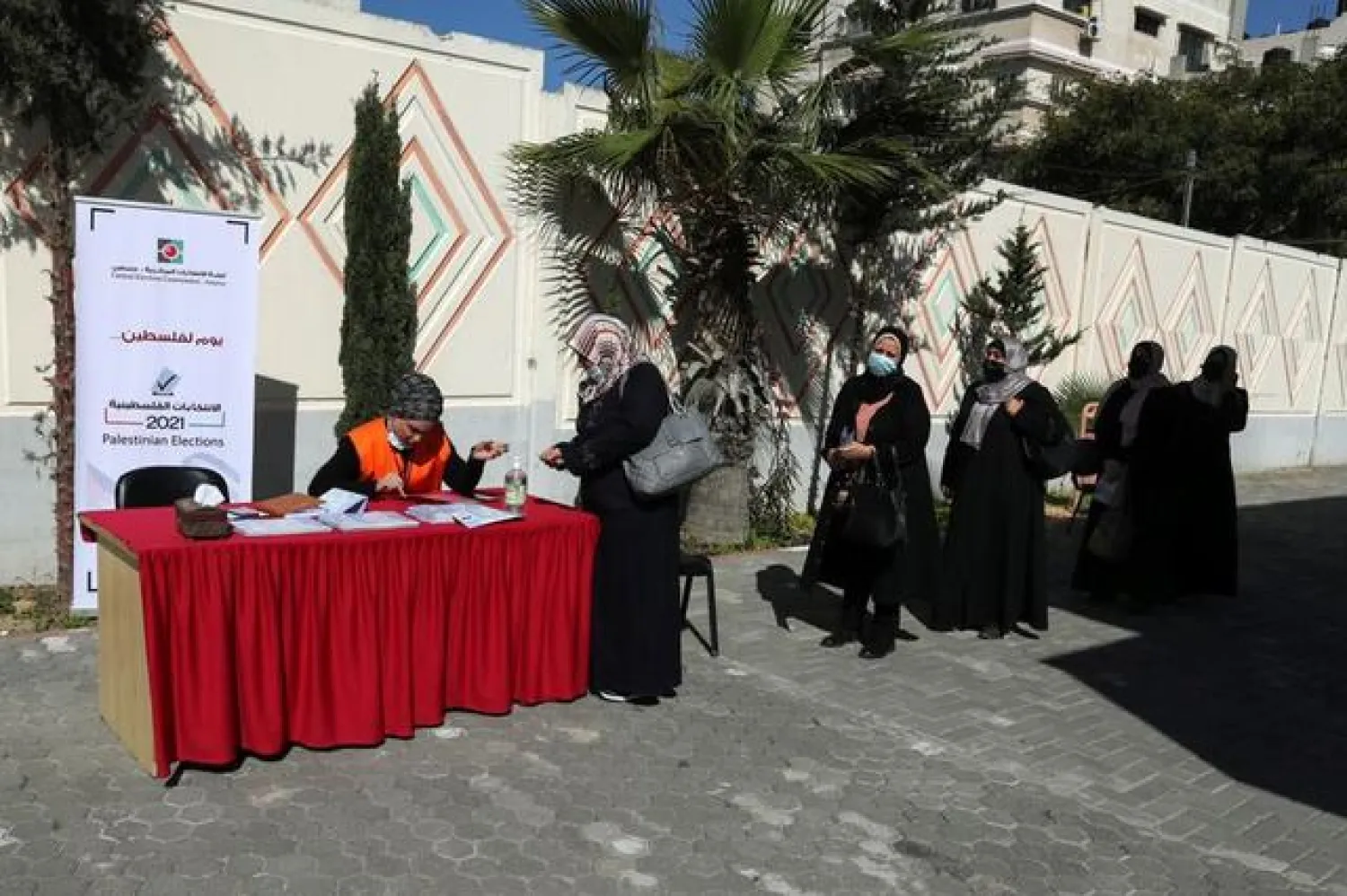
Palestinian women register their names for parliamentary and presidential elections, in a school in Gaza City (Reuters)
TT

Fatah to Form Joint Electoral List with 5 Other Factions

Palestinian women register their names for parliamentary and presidential elections, in a school in Gaza City (Reuters)

Fatah movement has entered into an alliance with five other factions in the upcoming general elections, according to a senior Palestinian official.

Member of the central committee Azzam al-Ahmad announced that five factions have informed Fatah they are ready to form a unified list.

Ahmad also indicated during an interview with Voice of Palestine radio that discussions are open with other factions to join the alliance.

He did not specify which factions are included in the agreement, but observers believe they are the Palestinian Democratic Union, the Palestinian Liberation Front, the Palestinian Popular Struggle Front, the Arab Liberation Front, and the Palestinian Arab Front.

If Fatah includes other factions from the Palestinian Liberation Organization (PLO) in the list, it may run in the elections against Hamas movement.

Fatah is also discussing with Hamas joining the list. However, no agreement has been reached yet and the coming days will be decisive in deciding the outcome of the talks.

Fatah says it is open to an alliance with Hamas, but the latter prefers such an alliance within a joint national list.

Fatah and Hamas agreed to hold elections on the basis of pushing the electoral process forward. Their possible formation of a joint list will be part of a long-term agreement that also includes forming a government.

For the first time in nearly 15 years, Palestinians are looking forward to holding the elections, following their suspension in light of the intra-division between the two movements.

In January, Palestinian President Mahmoud Abbas announced that the general elections will include legislative polls on May 22, presidential elections on July 31, and the Palestinian National Council elections on August 31.

The results of the Legislative Council elections are the first stage in the formation of the Palestinian National Council, according to the Basic Law of the PLO and national understandings.

The Secretary of the Fatah Central Committee, Jibril Rajoub, confirmed the Committee will discuss with all factions and various components joining one list that addresses the aspirations of the Palestinians.

Rajoub announced Fatah will devise a roadmap to control the organizational state, indicating that mechanisms have been approved to select candidates in a way that guarantees the formation of a list reflecting the interests of all Palestinians.

He stressed that Fatah is committed to ending the division and establishing the national partnership, noting that the presidential decree to promote freedoms opens the horizons for creating a positive environment for a popular mass movement to engage in the democratic process.

Rajoub hoped everyone would realize the importance of the decree, and overcome all obstacles and the repercussions of the division.



Former Syrian Officer Killed in Mysterious Circumstances in Lebanon

A woman arriving from Syria walks with her luggage into Lebanon through the northern crossing of Al-Arida on December 10, 2024. (AFP)
TT

Former Syrian Officer Killed in Mysterious Circumstances in Lebanon

A woman arriving from Syria walks with her luggage into Lebanon through the northern crossing of Al-Arida on December 10, 2024. (AFP)

Lebanese security agencies discovered the body of former Syrian officer Ghassan Naasan al-Sakhni in the Keserwan region.

Authorities are investigating whether his killing was purely criminal or had a political angle.

The Lebanese army said the killer, a Syrian, has been arrested.

In a statement, it said that the perpetrator had lured Sakhni to the outskirts of the town of Kfar Yassine in Keserwan on December 22. He shot him dead over a financial dispute and fled the scene. He was arrested in the border town of Tal Bire in the northern Akkar region.

Investigations are underway.

Information has so far revealed that Sakhani was an officer in Syrian intelligence agency under the ousted regime of Bashar al-Assad.

He enjoyed close ties with Suheil al-Hassan, also known as the “Tiger”, and who was one of the most prominent members of Syria’s air intelligence. He was involved in bloody clashes during Syria’s civil war, most notably in eastern Ghouta.

Information obtained by Asharq Al-Awsat revealed that Sakhni and dozens of regime members had fled Syria to Lebanon after Assad’s ouster in December 2024.

The probe has so far found that Sakhni had resided in a chalet in the Tabarja region before moving to an apartment in the same area.

While serving in Syria, he headed a military group that was active in the Hama countryside.

The murder has deepened concerns in Lebanon that the country will turn into an arena for settling scores with former regime members, especially since several regime officers and officials had sought shelter in the country after Assad’s ouster.

A judicial source told Asharq Al-Awsat that Keserwan was an unusual place for Sakhni to have sought refuge given that it lies outside Hezbollah’s areas of influence, such as the Bekaa and Beirut’s southern suburbs. Hezbollah was a main ally of the regime.

The new authorities in Syria have reportedly filed requests to Lebanon to turn over some 200 former regime security and military officials.

The judicial source denied the reports.

The only requests tied to former regime officials have been received from the United States, calling for the arrest of former air intelligence chief Jamil al-Hassan and former national security chief Ali Mamlouk, and from France, calling for the probes into Hassan, Mamlouk and Abdul Salam Mahmoud over suspicions they were involved in the killing of French nationals.


Lebanon Probe Points to Israel's Abduction of Officer Tied to Arad Case

Israeli pilot Ron Arad, who went missing in southern Lebanon in 1986. (Israeli Air Force)
TT

Lebanon Probe Points to Israel's Abduction of Officer Tied to Arad Case

Israeli pilot Ron Arad, who went missing in southern Lebanon in 1986. (Israeli Air Force)

A senior Lebanese judicial source told Asharq Al-Awsat that investigations into the disappearance of a retired General Security officer a week ago are increasingly pointing to an Israeli abduction, following what the source described as a covert intelligence entrapment operation tied to suspicions over the decades-old mystery of missing Israeli pilot Ron Arad, who vanished in southern Lebanon in 1986.

The source said the Information Branch of the Internal Security Forces has intensified its inquiries since the disappearance of retired Captain Ahmed Shukr was reported about a week ago in the eastern Bekaa region.

He told Asharq Al-Awsat that investigators traced surveillance camera footage and analyzed communications data, uncovering initial leads suggesting that Shukr was subjected to a carefully planned entrapment operation that began in his hometown of Nabi Sheet in the northern Bekaa, before he vanished near the city of Zahle, where security efforts are now focused on determining his fate.

Intelligence entrapment

As conflicting accounts have emerged over the reasons and circumstances behind Shukr’s disappearance, the theory that Israel is behind his abduction has gained ground over other scenarios, based on preliminary findings from the ongoing investigation.

What strengthens the security and intelligence angle is suspicion surrounding non-Lebanese individuals linked to the incident.

The judicial source said information obtained from initial inquiries and surveillance indicates that the entrapment operation was carried out by two Swedish nationals, one of Lebanese origin, who arrived in Lebanon just two days before the disappearance via Beirut’s Rafik Hariri International Airport.

One of them left the country through the airport on the same day Shukr went missing, raising serious questions about his potential role in the operation.

As for the second individual, who is also of Lebanese origin, the source said he is believed to have taken part in the entrapment and remains inside Lebanon. Records from General Security at the airport and land and sea crossings show that he has not left the country, unless he did so illegally.

The source did not rule out the involvement of other individuals inside Lebanon in monitoring Shukr and preparing the conditions for his abduction.

Assassination or abduction?

Several scenarios are being examined regarding the fate of the retired officer, ranging from the possibility that he was killed, similar to what was attributed to the Israeli Mossad in the killing of currency exchanger Mohammad Srour, who was linked to Hezbollah, last year, to a more dangerous but increasingly plausible hypothesis that he was transferred out of Lebanon to Israel.

In this context, the judicial source overseeing the preliminary investigation said the Information Branch has not yet found any physical or technical evidence indicating that Shukr remains on Lebanese territory.

This strengthens the theory that he was drugged and abducted to Israel, either by air in a complex operation, or by sea using a boat that departed from the Lebanese coast, as occurred in the abduction of maritime captain Imad Amhaz from the beach of the northern city of Batroun on November 2 last year.

Links to the Ron Arad file

The case goes beyond an individual disappearance, intersecting with a highly sensitive security file between Lebanon and Israel.

Sources close to Shukr’s family told Asharq Al-Awsat that the missing officer is the brother of Hassan Shukr, who was killed along with eight others in the Battle of Maydoun in the western Bekaa on May 22, 1988, which involved fighters from the “Islamic Resistance”, other armed groups and Israeli occupation forces.

Information suggests that Hassan Shukr was a fighter within a group led by Mustafa Dirani, who at the time was affiliated with the Amal Movement before later joining Hezbollah.

That group is believed to have taken part in the capture of Arad after his aircraft was shot down over southern Lebanon on October 16, 1986. The armed group reportedly transferred Arad to the home of a relative of the Shukr family in Nabi Sheet before moving him to an unknown location, after which he disappeared entirely.

Ahmed Shukr also belongs to the family of Fouad Shukr, Hezbollah’s second in command, who was assassinated in an Israeli air strike on a building in the Haret Hreik area of Beirut’s southern suburbs on July 30, 2024.

The suspected operation revives a long record of Israeli operations targeting individuals directly or indirectly linked to the Arad case, through assassinations, abductions or recruitment attempts.

In light of this, the judicial source voiced concern that Ahmed Shukr’s disappearance may represent another chapter in what he described as Israel’s destabilizing interference in Lebanon.


Libya’s Military Chief, 7 Others Killed in Plane Crash After Takeoff from Türkiye

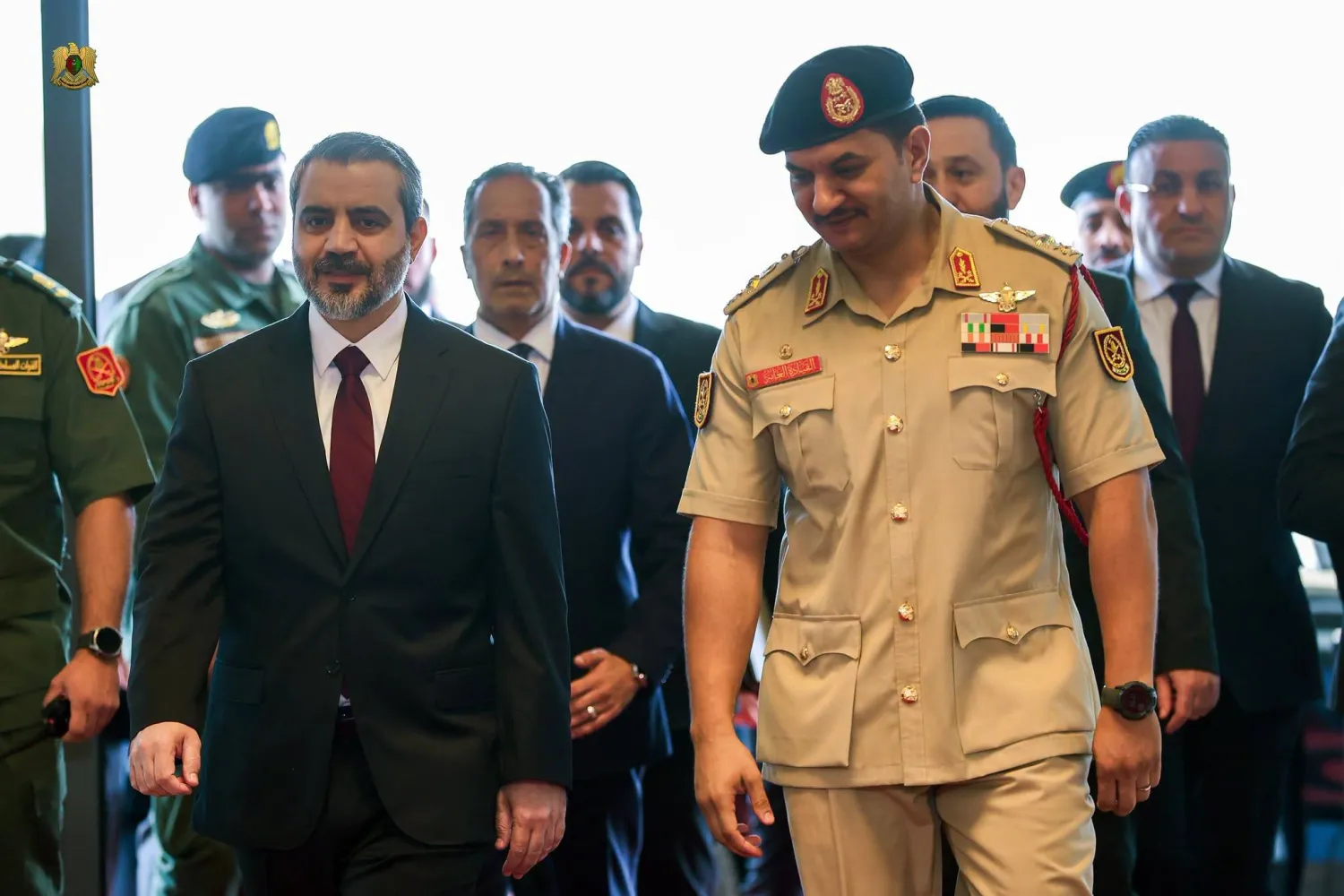
Search and rescue team members and emergency services try to reach the wreckage after a plane crash as five people including Libyan Chief of General Staff Muhammad Ali Ahmad al-Haddad were killed at Haymana District in Ankara, Türkiye, early 24 December 2025. (EPA)
TT

Libya’s Military Chief, 7 Others Killed in Plane Crash After Takeoff from Türkiye

Search and rescue team members and emergency services try to reach the wreckage after a plane crash as five people including Libyan Chief of General Staff Muhammad Ali Ahmad al-Haddad were killed at Haymana District in Ankara, Türkiye, early 24 December 2025. (EPA)

A private jet carrying Libya’s military chief, four other officers and three crew members crashed on Tuesday after takeoff from Türkiy’s capital, Ankara, killing everyone on board. Libyan officials said the cause of the crash was a technical malfunction on the plane.

The Libyan delegation was in Ankara for high-level defense talks aimed at boosting military cooperation between the two countries, Turkish officials said.

Head of Libya’s Government of National Unity (GNU) Abdul Hamid al-Dbeibah confirmed the death of Gen. Muhammad Ali Ahmad al-Haddad and the four officers, saying in a statement on Facebook that the “tragic accident" took place as the delegation was returning home. Dbeibah called it a "great loss” for Libya.

Al-Hadad was the top military commander in western Libya and played a crucial role in the ongoing, UN-brokered efforts to unify Libya’s military, which has split, much like Libya’s institutions.

The four other officers who died in the crash were Gen. Al-Fitouri Ghraibil, the head of Libya’s ground forces, Brig. Gen. Mahmoud Al-Qatawi, who led the military manufacturing authority, Mohammed Al-Asawi Diab, advisor to the chief of staff, and Mohammed Omar Ahmed Mahjoub, a military photographer with the chief of staff’s office.

The identities of the three crew members were not immediately known.

Turkish officials said the wreckage of the Falcon 50 type business jet had been found near the village of Kesikkavak, in Haymana, a district some 70 kilometers (about 43.5 miles) south of Ankara.

Earlier on Tuesday evening, Türkiye’s air traffic controllers said they lost contact with the plane, which was en route back to Libya, after takeoff from Ankara's Esenboga airport.

Turkish Interior Minister Ali Yerlikaya, said in a social media post that the plane took off at 8:30 p.m. and that contact was lost 40 minutes later. The plane issued an emergency landing signal near Haymana before all communication ceased, Yerlikaya said.

Burhanettin Duran, the head of Turkish presidential communications office, said the plane notified air traffic control of an electrical fault and requested an emergency landing. The aircraft was redirected back to Esenboga where preparations for its landing began.

The plane however, disappeared from the radar while descending for the emergency landing, Duran said.

Security camera footage aired on local television stations showed the night sky over Haymana suddenly lit up by what appeared to be an explosion.

While in Ankara, al-Haddad had met with Turkish Defense Minister Yasar Guler and other officials.

The airport in Ankara was temporarily closed and several flights were diverted to other locations. Türkiye’s Justice Ministry said four prosecutors have been assigned to investigate the crash, as is common in such incidents.

According to a government statement on Facebook, Libya will send a team to Ankara to work with Turkish authorities on investigating the crash.

Tuesday's visit by the Libyan delegation came a day after Türkiye’s parliament approved to extend the mandate of Turkish troops serving in Libya for two years. Türkiye deployed troops following a 2019 security and military cooperation agreement that was reached between Ankara and the Tripoli-based government.