

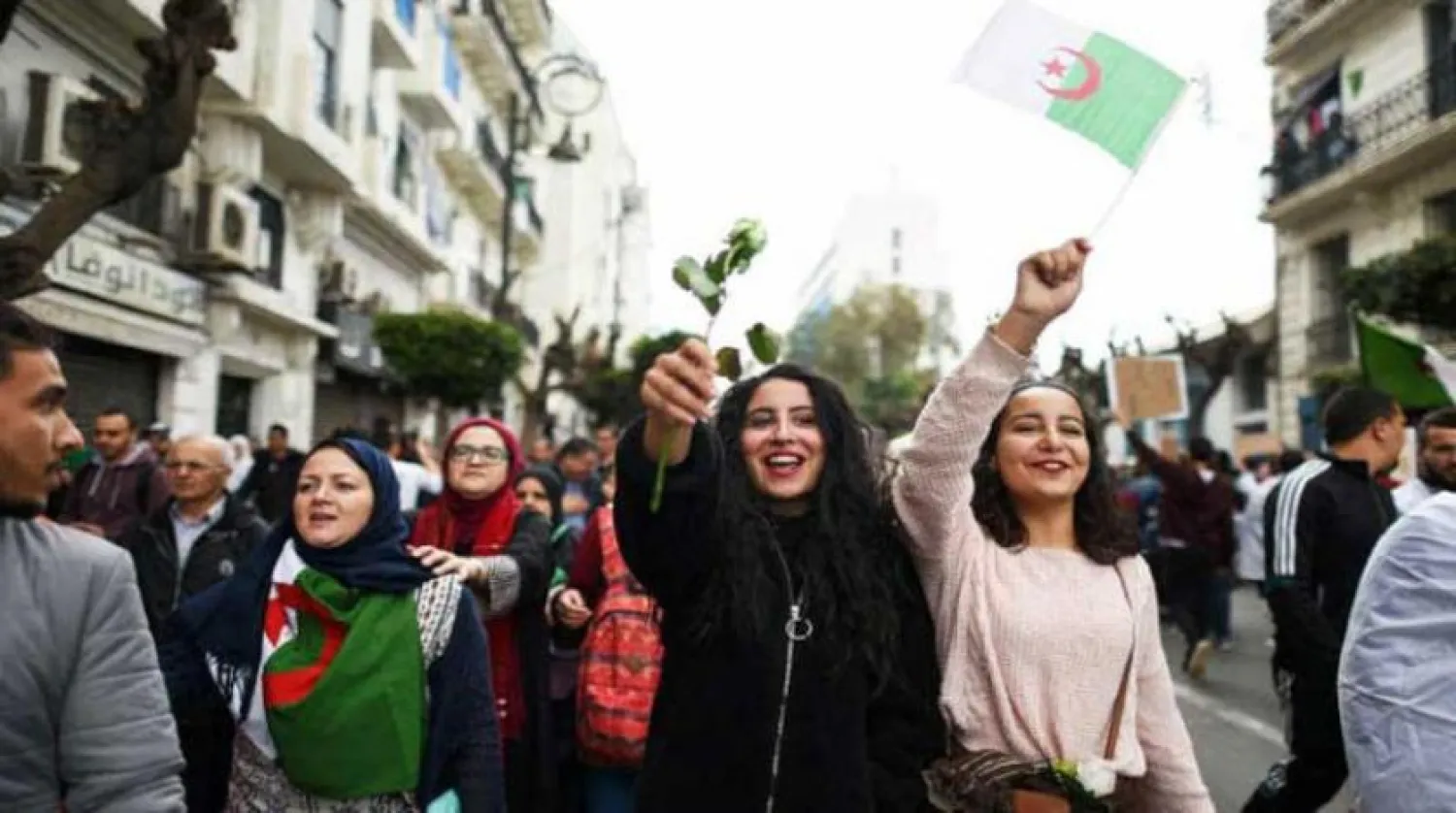

Algeria Seeks to Bolster Women’s Rights, Gains

Algeria Seeks to Bolster Women’s Rights, Gains
TT

Algeria Seeks to Bolster Women’s Rights, Gains

Algeria Seeks to Bolster Women’s Rights, Gains

The number of women occupying positions in the Algerian judiciary, education, health and industrial sectors is equal, if not higher, than the number of men.

The gap, however, is evident at parliament and local elected councils and among government staff and agencies, where men vastly outnumber women.

The National Union of Algerian Women has long demanded that this imbalance be addressed.

Minister of National Solidarity, Family and Women’s Affairs Kaoutar Krikou stressed during the 40th session of the Arab Women’s Committee in February that Algerian women have “gone beyond their traditional role and are now pioneers by assuming the positions that were stipulated in the recent constitutional amendment, which approved the principle of equality between women and men.”

“This reflects the state’s political will to bolster women’s rights and gains similar to their counterparts in the Arab world,” the Algerian News Agency quoted Kaoutar as saying.

According to government statistics in 2016, the number of working women in Algeria was almost two million, compared to only 1.2 million in 2005. Women make up 17.6 percent of the workforce, while the figure stood at 14.6 percent 11 years ago.

Achieving equality with men in the workforce, a goal declared by the government, is still a distant reality, lamented women’s rights organizations.

In the field of medicine, female doctors make up 59 percent of the staff working in public and private clinics, while women make up 72 percent of dentists and pharmacists in the country, according to statistics from 2015. Women also make up the majority of physicians at public clinics.

Despite these figures, women have a tougher time landing jobs than men, said government reports.

In the industrial sector, Algerian women record the highest figures across the Arab world, making up 55.8 percent of the workforce, according to El Massa daily.

In politics, the first Arab woman to run for president was Algerian. Head of the left-wing Workers’ Party Louisa Hanoune ran for president in 2009 and again in 2014.

At the recently dissolved parliament, women occupied 154 seats, or 30 percent of the legislature. This number could not have been possible without the adoption of an amended electoral law that forced parties to allocate 30 percent of their lists to female candidates.

This law was widely supported by women rights associations, while political parties and figures criticized it for prioritizing the quota over competency. In fact, several parties claimed that they encountered difficulties in finding female candidates in the mostly conservative interior and Sahara regions.



Explosion at Mosque in Syria’s Homs Kills Three, Says Local Official

A Syrian flag waves in Damascus. (Getty Images/AFP)
TT

Explosion at Mosque in Syria’s Homs Kills Three, Says Local Official

A Syrian flag waves in Damascus. (Getty Images/AFP)

Three people were ​killed and five injured when an explosion struck a mosque ‌the ⁠Syrian ​province ‌of Homs on Friday, a local official said.

Syrian state media said ⁠security forces had ‌imposed a ‍cordon around ‍the area ‍and were investigating.

Local officials told Reuters it ​may have been caused by ⁠a suicide bomber or explosives placed there.


Fuel Shortage Forces Gaza Hospital to Suspend Most Services

The sun sets behind a makeshift tent camp for displaced Palestinians set up in an area of al-Bureij camp, in the central Gaza Strip, Wednesday, Dec. 24, 2025. (AP)
TT

Fuel Shortage Forces Gaza Hospital to Suspend Most Services

The sun sets behind a makeshift tent camp for displaced Palestinians set up in an area of al-Bureij camp, in the central Gaza Strip, Wednesday, Dec. 24, 2025. (AP)

A major Gaza hospital has suspended several services because of a critical fuel shortage in the devastated Palestinian territory, which continues to face a severe humanitarian crisis, it said.

Devastated by more than two years of war, the Al-Awda Hospital in the central Gaza district of Nuseirat cares for around 60 in-patients and receives nearly 1,000 people seeking medical treatment each day.

"Most services have been temporarily stopped due to a shortage of the fuel needed for the generators," said Ahmed Mehanna, a senior official involved in managing the hospital.

"Only essential departments remain operational: the emergency unit, maternity ward and pediatrics."

To keep these services running, the hospital has been forced to rent a small generator, he added.

Under normal conditions, Al-Awda Hospital consumes between 1,000 and 1,200 liters of diesel per day. At present, however, it has only 800 liters available.

"We stress that this shutdown is temporary and linked to the availability of fuel," Mehanna said, warning that a prolonged fuel shortage "would pose a direct threat to the hospital's ability to deliver basic services".

He urged local and international organizations to intervene swiftly to ensure a steady supply of fuel.

Despite a fragile truce observed since October 10, the Gaza Strip remains engulfed in a severe humanitarian crisis.

While the ceasefire agreement stipulated the entry of 600 aid trucks per day into Gaza, only 100 to 300 carrying humanitarian assistance can currently enter, according to the United Nations and non-governmental organizations.

The remaining convoys largely transport commercial goods that remain inaccessible to most of Gaza's 2.2 million people.

- Health hard hit -

On a daily basis, the vast majority of Gaza's residents rely on aid from UN agencies and international NGOs for survival.

Gaza's health sector has been among the hardest hit by the war.

During the fighting, the Israeli miliary repeatedly struck hospitals and medical centers across Gaza, accusing Hamas of operating command centers there, an allegation the group denied.

International medical charity Doctors Without Borders now manages roughly one-third of Gaza's 2,300 hospital beds, while all five stabilization centers for children suffering from severe malnutrition are supported by international NGOs.

The war in Gaza was sparked on October 7, 2023, following an unprecedented Hamas attack on Israel that resulted in the deaths of 1,221 people, most of them civilians, according to an AFP tally based on official Israeli figures.

In Israel's ensuing military campaign in Gaza, at least 70,942 people - also mostly civilians - have been killed, according to the health ministry in the Hamas-run territory.


Israel Army Says Striking Hezbollah Targets in Lebanon

FILED - 27 November 2025, Lebanon, Mahmoudieh: Smoke billows after Israeli air raids on Hezbollah positions in the southern Lebanese village of Mahmoudieh. Photo: Stringer/dpa
TT

Israel Army Says Striking Hezbollah Targets in Lebanon

FILED - 27 November 2025, Lebanon, Mahmoudieh: Smoke billows after Israeli air raids on Hezbollah positions in the southern Lebanese village of Mahmoudieh. Photo: Stringer/dpa

The Israeli military announced a series of strikes on Hezbollah targets in Lebanon on Friday, including weapons depots and a training complex. 

"A number of weapons storage facilities and terrorist infrastructure sites were struck, which were used by Hezbollah to advance terror attacks against the state of Israel," a military statement said. 

Lebanon's National News Agency (NNA) reported a "series of airstrikes" by Israeli aircraft on mountainous areas in Nabatiyeh and Jezzine districts in the south, and the Hermel district in the east of the country. 

Despite a November 2024 ceasefire that was supposed to end more than a year of hostilities between Israel and the Iran-backed Hezbollah group, Israel has continued to strike in Lebanon and has maintained troops in five areas it deems strategic. 

More than 340 people have been killed by Israeli fire in Lebanon since the ceasefire, according to an AFP tally of Lebanese health ministry reports. 

The strikes on Friday come a day after similar Israeli attacks near the Syrian border and in southern Lebanon left three people dead. 

The Israeli military had reported on Thursday it had killed a member of arch-foe Iran's elite Quds Force in a strike in Lebanon. 

On Friday, the military said it had struck several military structures of Hezbollah, warning it would "remove any threat posed to the state of Israel". 

Under heavy US pressure and fears of expanded Israeli strikes, Lebanon has committed to disarming Hezbollah, starting in the south of the country near the frontier. 

Lebanon's army plans to complete the disarmament south of the Litani River -- about 30 kilometers (19 miles) from the border with Israel -- by year's end. 

Israel has questioned the Lebanese military's effectiveness and has accused Hezbollah of rearming, while the group itself has rejected calls to surrender its weapons.