


Facebook Launches Instagram Lite in 170 Lower Bandwidth Countries

Silhouettes of mobile users are seen next to a screen projection of the Instagram logo in this picture illustration taken March 28, 2018. REUTERS/Dado Ruvic/Illustration
TT

Facebook Launches Instagram Lite in 170 Lower Bandwidth Countries

Silhouettes of mobile users are seen next to a screen projection of the Instagram logo in this picture illustration taken March 28, 2018. REUTERS/Dado Ruvic/Illustration

Facebook said on Wednesday it was launching a "lite" version of Instagram in 170 countries that will enable people with poor internet to access the photo and video-sharing social networking service.

Instagram Lite will be available for Android-based phones and require less bandwidth than the traditional version.

The app itself requires just 2 megabytes (MB) - versus 30 MB for Instagram - and runs even on slower 2G networks, allowing customers in parts of India, Africa, Asia, and Latin America with older internet infrastructure to access the service.

"These are the markets where there is the greatest need," said Tzach Hadar, director of product management at Facebook in Tel Aviv, where the app was largely developed.

"It uses a lot less data so if you have a small data package you are not going to run out when you use the service. But the aim is for us to give the same breadth of experience you get on Instagram," he told Reuters.

Hadar, who heads Facebook's R&D in Israel, said 170 countries did not represent a full global launch, but "it's a step on the way."

He noted that other than TV and reels - for creating and sharing short video clips - Instagram Lite retained most key features of Instagram.

A lite version of Facebook itself has been available globally for five years.

In addition to the lite versions, Facebook in Tel Aviv also developed the Express WiFi service to bring internet access to some 20 countries in Africa, Asia, and South America.

Hadar said his team was now working on a digital wallet for Facebook. "You have close to 2 billion people that have no access or limited access to banks and financial services and there are tens of billions of dollars being spent just for fees for migrants wanting to send money back to their families," he said.

Another initiative, he said, was Facebook Shops for small businesses to sell products online.

Facebook's R&D center in Tel Aviv opened in 2013 after it bought Israeli mobile app-maker Onavo for an estimated $150-$200 million.
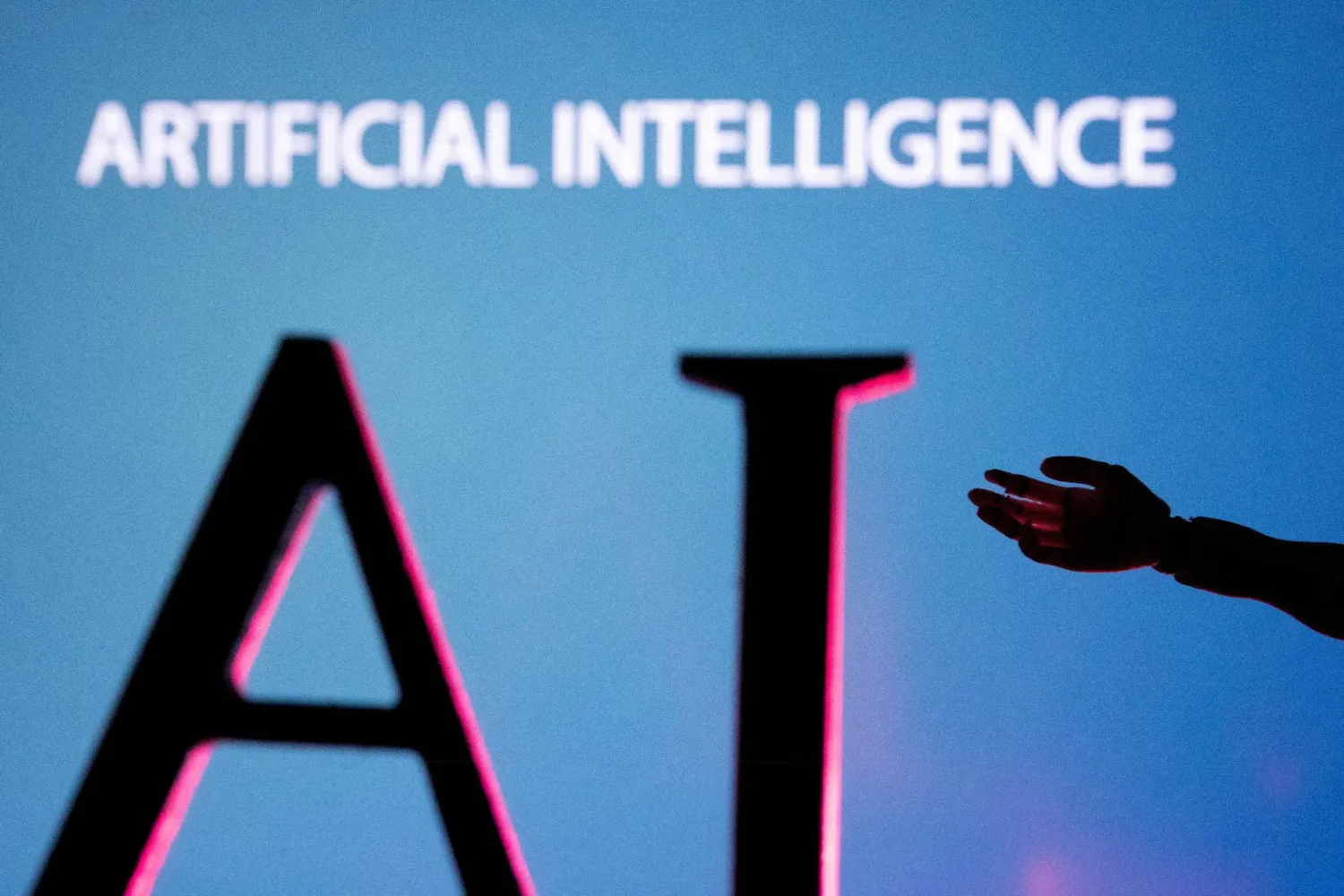



AI Can Outpace Cybersecurity Norms 'in Months', Says Spy Alliance

FILE PHOTO: AI (Artificial Intelligence) letters and robot hand miniature in this illustration taken, June 23, 2023. REUTERS/Dado Ruvic/Illustration/File Photo
TT

AI Can Outpace Cybersecurity Norms 'in Months', Says Spy Alliance

FILE PHOTO: AI (Artificial Intelligence) letters and robot hand miniature in this illustration taken, June 23, 2023. REUTERS/Dado Ruvic/Illustration/File Photo

The most advanced artificial intelligence models are improving quickly enough to outsmart prevailing cybersecurity know-how within months, the Five Eyes spy agency alliance has warned.

The risk posed by AI-enhanced hacking is in the spotlight, after US startup Anthropic said in April that its cutting-edge Mythos models had unprecedented abilities to find software vulnerabilities, reported AFP.

The security agencies of Britain, the United States, Australia, Canada and New Zealand urged governments and businesses to act swiftly to prepare themselves as AI evolves.

"The rapid pace of frontier AI development means cyber risk assumptions can become outdated in months, not years," said a joint statement dated Monday.

AI "lowers barriers for malicious actors and increases the speed and complexity of attacks", the Five Eyes advisory said.

"Breaches will occur. Preparedness helps you contain them quickly and prevent escalation into major operational and financial crises."

To improve cyber defenses, organizations should integrate AI tools into their security operations, update old systems and limit access to critical systems among other steps, they said.

Anthropic this month suspended access to Mythos 5 and a restricted version called Fable 5 to comply with a US national security order.

Just days after publicly launching Fable 5, the company said it had received a government directive banning all foreign nationals from accessing the two models.

The intervention is striking for a White House that has otherwise pushed to loosen AI oversight -- even moving to block states from writing their own rules.


Indian Startup Head Appointed as New WhatsApp Boss

The WhatsApp logo is seen in this illustration taken, August 22, 2022. (Reuters)
TT

Indian Startup Head Appointed as New WhatsApp Boss

The WhatsApp logo is seen in this illustration taken, August 22, 2022. (Reuters)

Meta has tapped Indian fintech founder Kunal Shah as the new head of WhatsApp, as the US tech giant seeks ways to monetize the messaging app's massive user base.

The announcement, made Monday night, was accompanied by news that Meta would also lead a $900 million funding round in Shah's consumer finance firm CRED.

"Kunal built CRED into one of India's most important technology companies," Meta chief Mark Zuckerberg said in a statement.

"He brings the kind of builder mentality and global perspective that will serve him well in running the world's biggest messaging app."

Shah, a serial entrepreneur and influential figure in India's fintech world, started CRED in 2018 after selling an earlier payments startup to Indian e-commerce giant Snapdeal for roughly $400 million.

He is also one of India's most prolific angel investors, according to data tracker Tracxn, with the local financial press often reporting how Shah agrees to seed funding pitches within minutes of hearing them.

But over the last few years, Shah has focused on building CRED -- which got its start by offering rewards to customers for timely credit card payments.

Since then, the company has aggressively expanded into offering wealth management, insurance and lending services to its 17 million users.

This experience is likely to help WhatsApp as it seeks new revenue streams that go beyond the core advertising business of Meta, which also runs Facebook and Instagram.

While India is WhatsApp's largest market -- with over half a billion users, according to 2021 government figures -- analysts say it has largely missed the chance to build an equally popular payments service.

In May, the messaging app offered businesses in India the ability to use artificial intelligence for services including responding to customers at all hours or booking appointments.

Shah acknowledged the scope for future growth, saying in a statement that the gap between "WhatsApp today and its full potential is massive".

India's startup ecosystem also celebrated Shah's appointment -- the latest example of an Indian-born executive becoming the leader of a Silicon Valley company.

Sajith Pai of Blume Ventures, an early stage Indian start-up backer said Shah was getting an "even bigger canvas to paint his bold brushstrokes in".

"Great news for everyone in the Indian startup ecosystem, and for India!"


Wikipedia Won’t Let AI Edit Articles, Co-founder Says

 The artificial intelligence AI acronym at the 10th edition of the VivaTech technology startups and innovation fair in Paris, France, June 18, 2026. (Reuters)
The artificial intelligence AI acronym at the 10th edition of the VivaTech technology startups and innovation fair in Paris, France, June 18, 2026. (Reuters)
TT

Wikipedia Won’t Let AI Edit Articles, Co-founder Says

 The artificial intelligence AI acronym at the 10th edition of the VivaTech technology startups and innovation fair in Paris, France, June 18, 2026. (Reuters)
The artificial intelligence AI acronym at the 10th edition of the VivaTech technology startups and innovation fair in Paris, France, June 18, 2026. (Reuters)

Wikipedia does not trust artificial intelligence enough to let it play a direct role in editing articles on its platform, co-founder Jimmy Wales told AFP on Monday.

The problem of AI "hallucinations" -- in which fabricated output is confidently presented -- has been reduced with newer AI models but remains "very, very bad", Wales said on the sidelines of a climate action week event in London.

He added, however, that AI agents could prove useful in alerting Wikipedia's community of millions of editors to certain niche news that would otherwise be missed.

"We would not let it edit directly because you can't really trust it enough," he said.

Artificial intelligence platforms, meanwhile, rely on Wikipedia's content to answer users' questions.

That has contributed to an overall growth in visitors to the site from AI bots, while human traffic has dropped eight percent.

Wales, who sits on the board of trustees at the Wikimedia Foundation, which operates Wikipedia, described the fall in human traffic as "meaningful" but "not a disaster," for the online encyclopedia, which ranks among the 10 most visited websites in the world.

The site, created in 2001, depends on donations from users so its business model does not directly rely on traffic.

Wales encouraged AI companies to "pay their fair share", because "hammering us with millions of requests costs real money," in the cost of running servers.

Wikipedia has already been "very successful" in signing agreements with several tech giants, the founder said.

"We're starting to block the ones who aren't behaving themselves, but we'll see how that goes."