
Palestinian Arab Party Becomes Surprise Kingmaker after Israel Vote

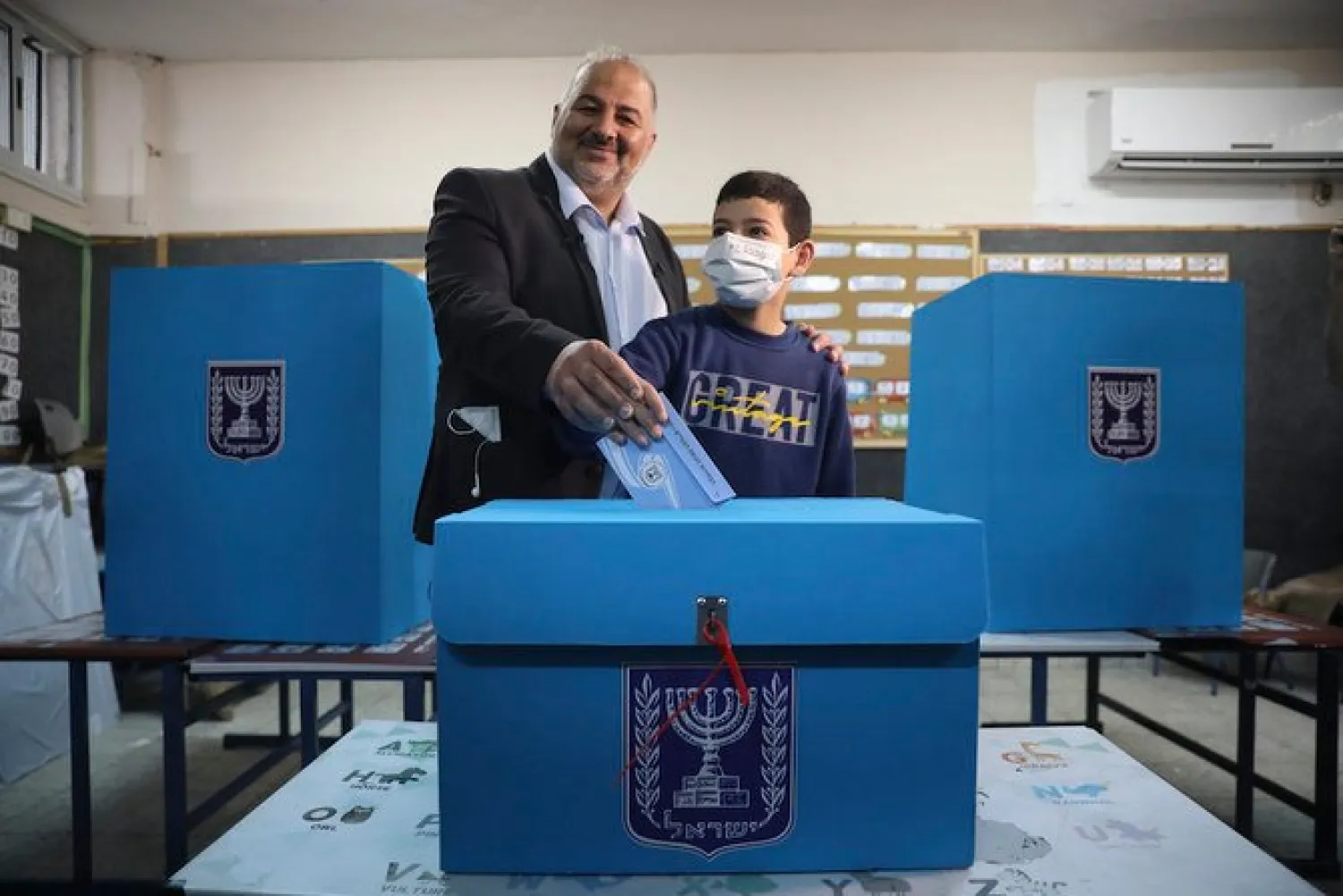
Mansour Abbas, leader of the United Arab List, also known by the Hebrew name Ra’am, votes in Israel’s parliamentary election at a polling station in Maghar, Israel, March 23, 2021. (AP Photo)
TT

Palestinian Arab Party Becomes Surprise Kingmaker after Israel Vote

Mansour Abbas, leader of the United Arab List, also known by the Hebrew name Ra’am, votes in Israel’s parliamentary election at a polling station in Maghar, Israel, March 23, 2021. (AP Photo)

Israel’s election brought a surprise when a conservative Palestinian Arab party crossed the threshold to enter parliament and its leader emerged Wednesday as a possible kingmaker.

Mansour Abbas and his Ra’am party — unlike other Arab political groups before it — have not ruled out joining an Israeli government.

“We are prepared to engage” with either Prime Minister Benjamin Netanyahu’s camp or his rivals, Abbas told Israeli radio while stressing that “I’m not in anyone’s pocket.”

On Wednesday the party was on track to win five seats in Israel’s 120-member Knesset, with roughly 90 percent of the vote counted.

Israel’s latest inconclusive election left no clear path for Netanyahu or his rivals to form a government, setting the stage for protracted coalition talks.

When Israel last voted a year ago, Ra’am had been part of the mainly Arab Joint List. But that alliance fractured earlier this year amid ideological divisions between Abbas and his former partners.

The conservative Abbas long had frictions with other Arab Israeli factions, including those with communist roots.

Weeks before Tuesday’s vote, Abbas indicated an openness to dealing with Netanyahu, even though the premier has demonized Arab-Israelis at various points through his political career.

But Abbas argued that Arab leaders have a responsibility to partner with whoever is in power to tackle a crime epidemic rocking Arab communities.

Analysis by state broadcaster Kan vote showed that the combined strength of the declared pro-Netanyahu parties was 52 seats while those seeking to end his long reign commanded 56, AFP reported.

For Netanyahu, that means securing a 61-seat majority could require an alliance with his estranged former protege, the religious nationalist Naftali Bennett, who is projected to control seven seats, as well as with Abbas.

Such an alliance would however be plagued by bitter divisions.

The pro-Netanyahu bloc following Tuesday’s vote also includes the far-right extremist Religious Zionism bloc whose members have spouted incendiary anti-Arab rhetoric.

The prospects for Ra’am and Religious Zionism to sit in a stable coalition under Netanyahu appear dim.

For the ideologically divided anti-Netanyahu camp, bringing Abbas on board could also prove complicated.

That bloc includes the staunchly secular centrist Yesh Atid party, led by Yair Lapid, religious right-wingers who defected from Netanyahu’s Likud, as well as Abbas’s rivals in the Joint List.

Amal Jamal, an analyst at Tel Aviv University, said Abbas “has no red lines” and could align with whichever camp best caters to his interests.

“He will flirt with all parties to try and achieve what he wants,” Jamal told AFP.


Palestinians Say Israeli Forces Kill Man in Jenin Refugee Camp

 Israeli soldiers keep watch during a weekly settlers' tour in Hebron, in the Israeli-occupied West Bank, May 23, 2026. (Reuters)
Israeli soldiers keep watch during a weekly settlers' tour in Hebron, in the Israeli-occupied West Bank, May 23, 2026. (Reuters)
TT

Palestinians Say Israeli Forces Kill Man in Jenin Refugee Camp

 Israeli soldiers keep watch during a weekly settlers' tour in Hebron, in the Israeli-occupied West Bank, May 23, 2026. (Reuters)
Israeli soldiers keep watch during a weekly settlers' tour in Hebron, in the Israeli-occupied West Bank, May 23, 2026. (Reuters)

Israeli forces killed a Palestinian man inside the Jenin refugee camp in the northern West Bank, the Palestinian health ministry said on Tuesday.

"A citizen... was killed by Israeli fire in the Jenin camp, and ambulance crews transported his body to Jenin Government Hospital," the Ramallah-based ministry said in a statement, without specifying when he was killed.

Contacted by AFP, Israel's military said it was "checking" reports of the man's killing.

The director of Jenin's Government Hospital, Wissam Baker, identified the victim as Nasser al-Saadi, noting that "he arrived dead at the hospital after being shot in the thigh".

"It appears he bled heavily after being injured before an ambulance was called to transport him to the hospital," Baker told AFP.

The Palestinian Red Crescent had earlier announced that Israeli forces handed over the body of a 30-year-old from inside the Jenin refugee camp, which is adjacent to the city of Jenin.

Israeli forces have occupied and barred access to the Jenin refugee camp since January 2025, when they launched a wide-ranging operation aimed at uprooting Palestinian armed groups from the West Bank's densely populated refugee camps.

The operation has caused the displacement of nearly 40,000 people from the camps, according to the UN agency for Palestinian refugees, UNRWA.

At least 1,073 Palestinians, including several armed fighters, have been killed by Israeli soldiers or settlers since the outbreak of the Gaza war following Hamas's attack on 7 October 2023, according to an AFP tally based on Palestinian Authority data.

On the other hand, official Israeli data shows at least 46 Israelis -- civilians and soldiers -- have been killed in Palestinian attacks or during Israeli military operations in the same period.


Israel Issues Expropriation Order for West Bank Religious Site

 Israeli soldiers keep watch during a weekly settlers' tour in Hebron, in the Israeli-occupied West Bank, May 23, 2026. (Reuters)
Israeli soldiers keep watch during a weekly settlers' tour in Hebron, in the Israeli-occupied West Bank, May 23, 2026. (Reuters)
TT

Israel Issues Expropriation Order for West Bank Religious Site

 Israeli soldiers keep watch during a weekly settlers' tour in Hebron, in the Israeli-occupied West Bank, May 23, 2026. (Reuters)
Israeli soldiers keep watch during a weekly settlers' tour in Hebron, in the Israeli-occupied West Bank, May 23, 2026. (Reuters)

Israel has issued an expropriation order for land in the occupied West Bank near the site of a Biblical prophet's grave north of Jerusalem, an Israeli NGO reported Tuesday.

The site, known as Nabi Samuel, is believed in Christian, Jewish, and Muslim tradition to include the grave of the Biblical figure of prophet Samuel, and includes a mosque owned by Palestinian religious authorities, the Waqf.

"This marks the first time that the (Israeli) Civil Administration has expropriated a holy site owned by the Muslim Waqf in the occupied West Bank," Israeli settlement watchdog Peace Now said in a statement.

According to the Israeli order, dated May 9 but published this week, the area for expropriation will include 109.79 dunams (roughly 11 hectares), including access roads, agricultural land, and a mosque.

The order says the decision was made "for the development and preservation of the archaeological site of the Tomb of the Prophet Samuel".

A source in COGAT, the Israel defense ministry body in charge of civilian matters in the Palestinian territories, said the decision was made "following the refusal of Waqf officials to cooperate with the procedures required for the renovation of the tomb compound".

The Palestinian Authority's Ministry of Waqf and Religious Affairs issued a "strong condemnation" of the expropriation order for Nabi Samuel.

"This confiscation is part of a policy aimed at suffocating the mosque and completely isolating it from its Palestinian surroundings, turning it into a Jewish archaeological site by force of arms," the ministry said in a statement.

Peace Now's Yonatan Mizrahi pointed out that Israeli authorities had already taken over administration of much of the land by converting it into an Israeli national park in the 1990s, decades after demolishing a Palestinian village on the site.

"There was no need to decide about the expropriation of the land," Mizrahi told AFP, while Peace Now denounced "the messianic agenda of the Israeli government".

Israel has occupied the West Bank since 1967.

In 2025, Israel expropriated an area in the center of the Tomb of the Patriarchs in the southern West Bank city of Hebron, arguing the order concerned an open area intended for roofing works and not a religious structure.


Remnants of Assad's Chemical Weapons Program Recovered, Syrian Official Says

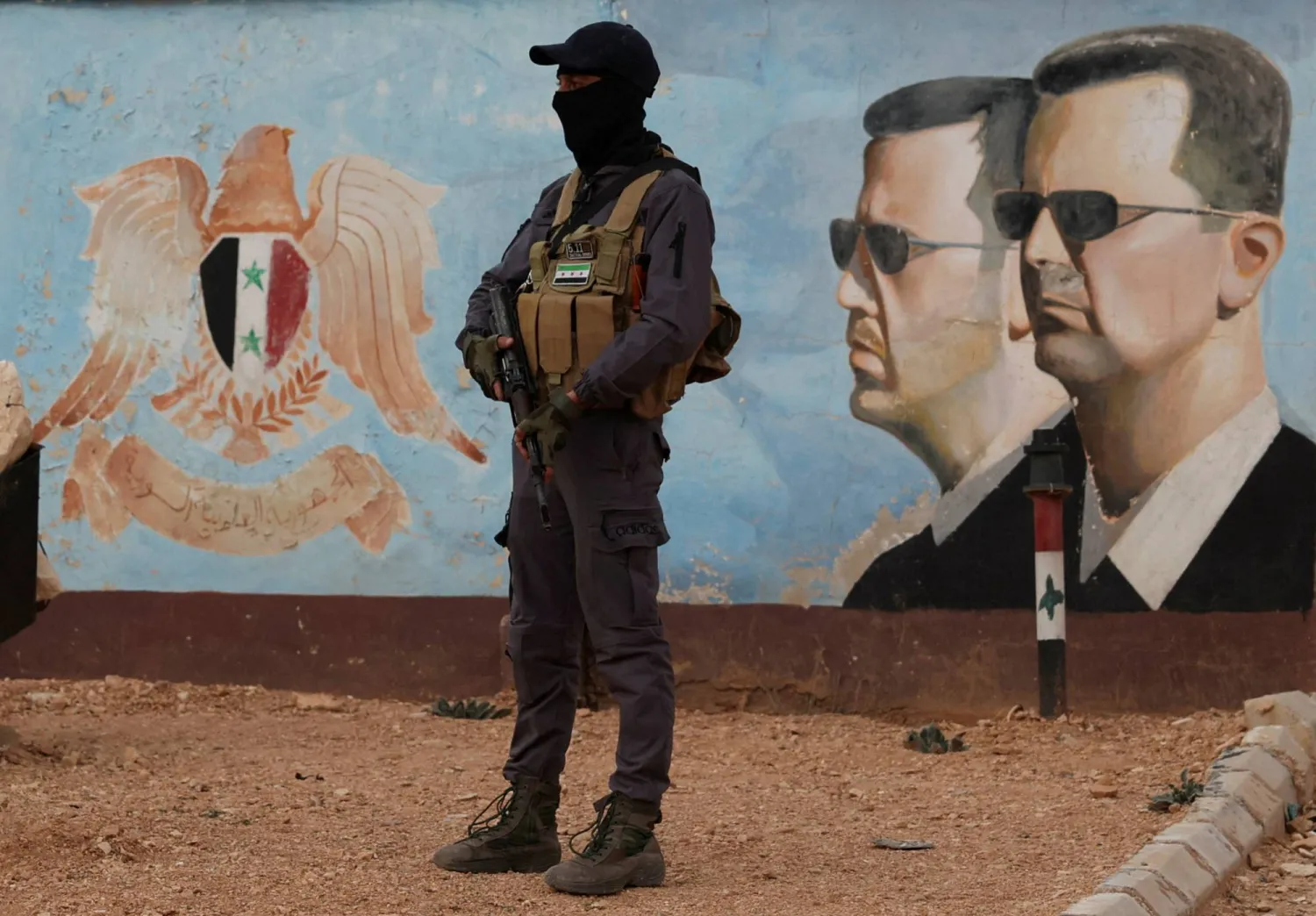
FILE PHOTO: A member of the former rebel group Hayat Tahrir al-Sham stands guard near an image of Syria's Bashar al-Assad at the fourth division headquarters in Damascus, Syria, January 23, 2025 REUTERS/Yamam Al Shaar/File Photo
TT

Remnants of Assad's Chemical Weapons Program Recovered, Syrian Official Says

FILE PHOTO: A member of the former rebel group Hayat Tahrir al-Sham stands guard near an image of Syria's Bashar al-Assad at the fourth division headquarters in Damascus, Syria, January 23, 2025 REUTERS/Yamam Al Shaar/File Photo

Syria's transitional leadership has located remnants of former Syrian president Bashar al-Assad's clandestine chemical weapons program, including raw materials and munitions similar to those used to carry out deadly gas attacks during the country's long-running civil war, a Syrian official told Reuters on Tuesday.

Syrian authorities have also taken into custody 18 suspects for alleged involvement in Assad's chemical weapons program, including high-level military, political and technical officials, said Mohamad Katoub, Syria's permanent representative to the Organization for the Prohibition of Chemical Weapons (OPCW) in The Hague, in an interview.