


Analysis: Hopes for Nuclear Thaw before Iran’s June Elections Diminish

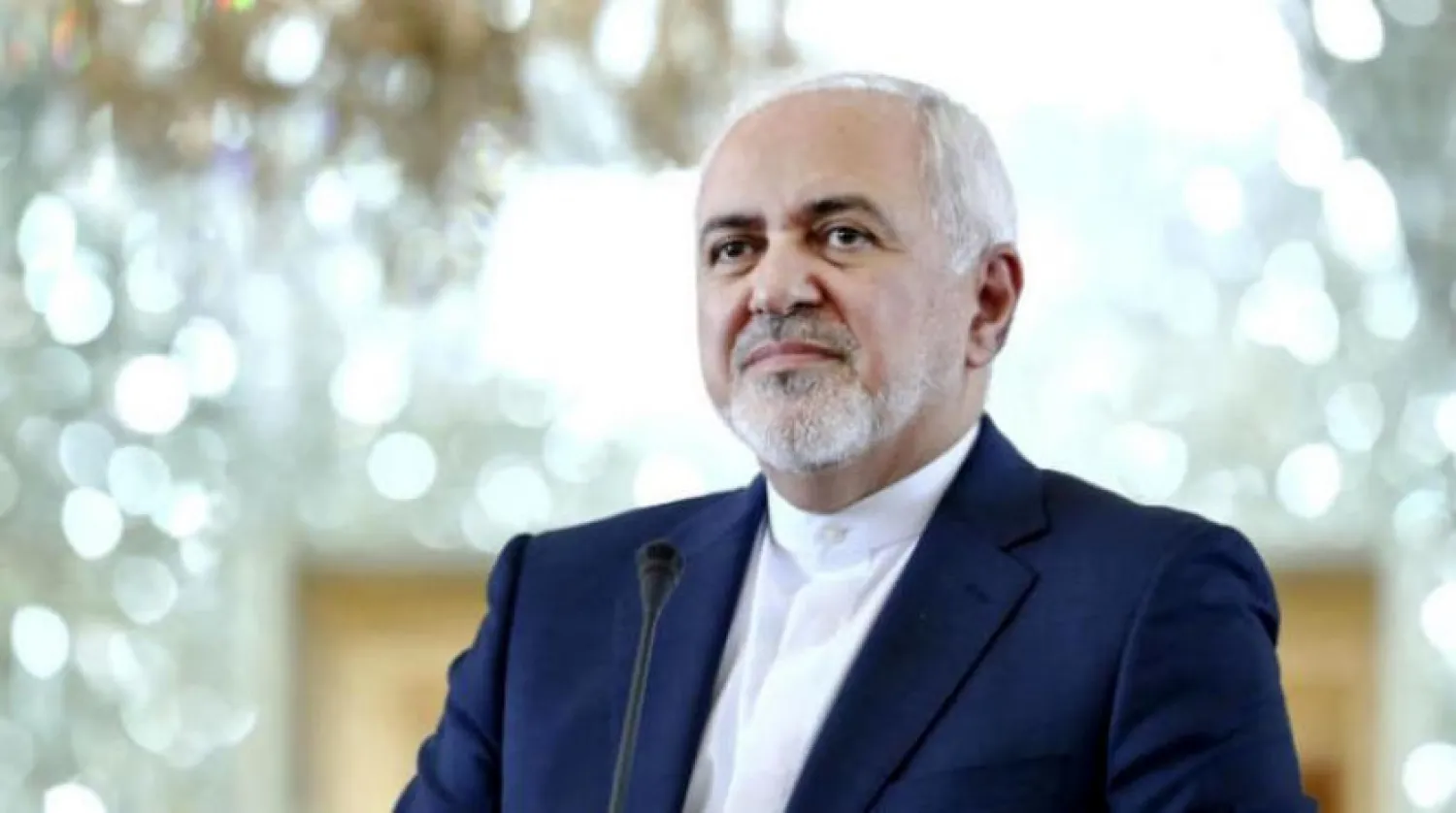
Foreign Minister Mohamad Javad Zarif. AP file photo
TT

Analysis: Hopes for Nuclear Thaw before Iran’s June Elections Diminish

Foreign Minister Mohamad Javad Zarif. AP file photo

The odds of Washington and Tehran making progress to revive the 2015 nuclear deal before Iran’s June elections have dwindled after Iran opted to take a tougher stance before returning to talks, diplomats and officials told Reuters.

US President Joe Biden’s administration has said it is ready to talk to Iran about both nations resuming compliance with the accord, which scrapped broad economic sanctions against Iran in return for curbs intended to prevent it from acquiring nuclear weapons - something Iran says it does not want.

But the parties cannot agree who should make the first move.

Tehran says Washington must lift sanctions that then-President Donald Trump, Biden’s predecessor, imposed after he withdrew from the deal in 2018, while Washington says Tehran must first resume compliance with the deal, which Iran has progressively violated since 2019.

Foreign Minister Mohamad Javad Zarif has said unless progress is made soon on restoring the deal, diplomacy would be halted for months by Iran’s presidential election scheduled for June 18.

Iran’s nuclear policy is ultimately determined by Supreme Leader Ali Khamenei, who is not on the ballot.

However, the privations suffered by voters could influence Iran’s approach by reducing turnout and bolstering those who believe the establishment must moderate its policy.

Two Western diplomats and two Iranian officials said Iran’s foreign ministry crafted a step-by-step proposal by which Tehran and Washington would come back into compliance with the deal.

The plan advanced internally in Iran in February hinged on a quid pro quo under which Tehran would stop enriching uranium to 20% when Washington acquiesced in the release of some of the $15 billion of Iranian funds frozen abroad, one of the Western sources said.

An Iranian official close to the nuclear talks said the initial proposal centered on unblocking funds in Japan, South Korea and Iraq and was initially approved by Khamenei and the Supreme National Security Council (SNSC).

It also called for Biden, who took office in January, to issue an executive order removing the economic sanctions imposed by Trump, an idea US and other officials view as a non-starter, the Western source said.

That proposal was rejected by Iranians pushing for a tougher stance partly because an order would not guarantee sanctions relief in practice, the source said.

A tougher subsequent plan for Iran to suspend 20% enrichment only for a month or two was also rejected, the source said.

A source close to Khamenei’s office said he, the SNSC and the head of Iran’s atomic agency had had several meetings to discuss what should be done.

The source said Khamenei initially agreed the plan before deciding at a meeting in early March that the signals from the US administration were insufficient. A tougher stance now prevailed demanding the lifting of US sanctions first.

“So far, Iran has not managed to come up with an agreed plan,” said one Western diplomat on condition of anonymity who believed diplomacy would stall until later this year.

In one of its key breaches, Iran has begun enriching uranium to 20%, well above the deal’s 3.67% limit but below the 90% purity that is regarded as weapons grade.

More recently US officials have suggested both sides might take “reciprocal” steps, but Iran has not embraced the idea.

In a speech on Sunday, Khamenei said Iranian officials should assume sanctions would not be lifted soon.

“The Americans must lift all sanctions. We will verify it and if sanctions are ... really cancelled, we will return to our obligations without any problems,” he said. “We have a lot of patience.”

A senior European diplomat said things were “stuck” and time was running out before the election but France, Britain and Germany - the European parties to the deal - were still working to make progress.

A European Union official put the chances of a pre-election breakthrough at 50-50. He also played down the importance of direct talks, saying indirect contacts could advance matters.

One of the Western diplomats said that his nation’s assessment was that Khamenei would not back down for now, though Iran could put forward a proposal before June, albeit one Washington and its European partners might not accept.

“Khamenei’s comments underscore our call that the US and Iran will not revive the nuclear agreement prior to the Iranian presidential elections,” said Eurasia Group analyst Henry Rome, saying a US-Iran meeting was possible but not probable before June.

A US official said his nation had not concluded Iran had given up on talks before the elections, though he saw the window closing in April as Iranian politicking picks up in May.

“Our posture and ... the posture of others, including Iran, is we are still going to explore what can be done in the coming weeks,” he said, saying the West had not yet concluded it was time to “shut the door, nothing is going to happen until the election.”



Trump Says US Strongly Considering NATO Exit

FILE PHOTO: US President Donald Trump signs documents at the White House in Washington, US, January 20, 2025.  REUTERS/Carlos Barria/File Photo
FILE PHOTO: US President Donald Trump signs documents at the White House in Washington, US, January 20, 2025. REUTERS/Carlos Barria/File Photo
TT

Trump Says US Strongly Considering NATO Exit

FILE PHOTO: US President Donald Trump signs documents at the White House in Washington, US, January 20, 2025.  REUTERS/Carlos Barria/File Photo
FILE PHOTO: US President Donald Trump signs documents at the White House in Washington, US, January 20, 2025. REUTERS/Carlos Barria/File Photo

President Donald Trump said he was strongly considering pulling the United States out of NATO after allies failed to back US military action against Iran, according to an interview with Britain's Daily ⁠Telegraph.

Trump described the ⁠alliance as a "paper tiger" and said removing the United States from the defense pact was ⁠now "beyond reconsideration," the newspaper reported. He said he had long held doubts about NATO's credibility.

"Oh yes, I would say [it’s] beyond reconsideration," Trump told the newspaper when asked about whether he would reconsider US ⁠membership ⁠of the alliance after the conflict.

"I was never swayed by NATO. I always knew they were a paper tiger, and (Russian President Vladimir) Putin knows that too, by the way."

US Defense Secretary Pete Hegseth said on Tuesday other countries needed to "be prepared to stand up" and help reopen the Strait of Hormuz, echoing criticism from Trump, who has singled out NATO members Britain and France.

Rubio told Fox News Washington would not overlook the lack of assistance from other NATO members. "After this conflict is concluded, we ⁠are going to have to reexamine ⁠that relationship," he said.


Iran FM Says Not Responded to US Plan, ‘No Negotiations’

09 September 2025, Egypt, Cairo: Iranian Foreign Minister Abbas Araghchi attends a joint press conference in Cairo. (dpa)
TT

Iran FM Says Not Responded to US Plan, ‘No Negotiations’

09 September 2025, Egypt, Cairo: Iranian Foreign Minister Abbas Araghchi attends a joint press conference in Cairo. (dpa)

Iran's Foreign Minister Abbas Araghchi said there were no negotiations with the United States and that Tehran had not responded to a reported 15-point proposal from Washington to end the war.

"We receive messages from the American side, some direct and some through our friends in the region, and whenever necessary we respond to these messages," Araghchi said in an interview with Al Jazeera aired on Wednesday and dubbed into Arabic from Persian.

"There are no grounds for negotiations," he said, adding however that some messages had been exchanged directly with US special envoy Steve Witkoff.

Iran has been at war with the United States and Israel since February 28, when strikes killed the country's supreme leader and triggered a conflict that has spread across the region.

Diplomatic efforts involving Türkiye, Egypt and Pakistan have recently been launched to try to end the war.

Last week, two senior Pakistani officials said Islamabad had conveyed to Iran a 15-point plan containing US proposals.

Iranian media had reported that Tehran offered a five-point counterproposal calling for an end to what it described as "aggression" and for guarantees that neither the United States nor Israel would resume hostilities.

Araghchi, however, said Tehran "has not offered anything in response" to the US plan and that reported Iranian responses were "merely guesses" from a media outlet.

The war broke out in the middle of negotiations between Iran and the United States over Tehran's nuclear program.

The conflict echoes a 12-day war in June last year, when Israel launched strikes days before a planned round of talks between Tehran and Washington. The United States later joined those attacks, targeting Iranian nuclear facilities.

Araghchi said there was "zero" trust in the United States and that Iran would not accept a ceasefire, instead calling for a "complete end to the war" and reparations.

Since the start of the conflict, now in its second month, Iran has allowed only a trickle of ships to pass through the strategic Strait of Hormuz, disrupting roughly 20 percent of global oil flows.

Iran says the strait is closed to what it describes as "enemy" shipping.

In recent days, Iranian officials have said the US may be plotting a ground attack with the arrival in the region of the USS Tripoli, an amphibious assault ship carrying around 3,500 Marines and sailors.

Araghchi warned that "we are waiting for them... they will incur heavy losses".


King Charles III to Make a State Visit to the US Despite Calls to Cancel Due to the Iran War

US President Donald Trump and Britain's King Charles inspect the Guard of Honor as they attend a welcome ceremony during Trump's state visit, at Windsor Castle, in Windsor, Britain, September 17, 2025. (Reuters)
TT

King Charles III to Make a State Visit to the US Despite Calls to Cancel Due to the Iran War

US President Donald Trump and Britain's King Charles inspect the Guard of Honor as they attend a welcome ceremony during Trump's state visit, at Windsor Castle, in Windsor, Britain, September 17, 2025. (Reuters)

King Charles III is going ahead with a state visit to the United States despite calls for the ceremonial event to be called off due to US President Donald Trump’s repeated criticism of the British government for failing to support the war in Iran.

Buckingham Palace said Tuesday that the king and Queen Camilla would travel to the US in late April to celebrate the 250th anniversary of American independence. Trump put the dates as April 27-30.

“I look forward to spending time with the King, whom I greatly respect,” Trump said on Truth Social. “It will be TERRIFIC!”

The visit follows Trump’s state visit to the UK in September, a glittering occasion that was seen as part of Britain’s effort to shore up the so-called special relationship between the two countries as the president’s America First policies threatened the established global order.

But that hasn’t stopped Trump from chiding the UK for refusing to allow US aircraft to use British bases for offensive operations against Iran. In a post on Truth Social, Trump said that countries who can’t get jet fuel because of restrictions around the Strait of Hormuz should “build up some delayed courage, go the Strait and just TAKE IT.”

He has repeatedly lashed out at Prime Minister Keir Starmer, saying at one point that he is “not Winston Churchill.”

That had led some members of Parliament to demand that Starmer call off the state visit to show Britain’s disapproval and avoid any embarrassment for the king during a time of tension between the two countries.

Ed Davey, leader of the opposition Liberal Democrats, on Tuesday said Starmer had shown “a staggering lack of backbone” by allowing the state visit to go ahead.

“To send the king on a state visit to the US after Trump dismissed our Royal Navy as toys is a humiliation and a sign of a government too weak to stand up to bullies,” Davey said. “What appalling thing does Trump have to do next to make the government see sense and cancel the state visit?”

The monarch hosts state visits at home and travels abroad at the request of the elected government, which uses the pomp and circumstance of such occasions to bolster relations with countries around the world. The decision to proceed with the long-discussed visit may be seen as an effort by Starmer’s government to ease the tensions caused by the war, or at least not enflame them.

Trump is known to be fond of the royal family and reveled in last year’s visit to Windsor Castle, where he was welcomed by a military band. The king hosted a banquet for him in a hall dripping with flowers and gold leaf.

The visit came about after Starmer hurried to Washington in February 2025, just five weeks after Trump began his second term, and hand-delivered the king’s invitation to the president.

It was the first time any world leader received the honor of a second state visit, and the first time the invitation was delivered in a personal letter from the king, which Trump proudly displayed for TV cameras.

“It’s a great, great honor,” Trump said at the time, noting that the letter included an invitation to Windsor Castle. “That’s really something.”

Now the king is heading to Washington for the return engagement.

Charles has visited the US 19 times, but this will be his first state visit to the country since becoming king. His mother, Queen Elizabeth II, made four state visits to the US.

The king also will travel to Bermuda in conjunction with the US trip, his first visit to the overseas territory as monarch.