


South Korea's LG Becomes First Major Smartphone Brand to Withdraw from Market

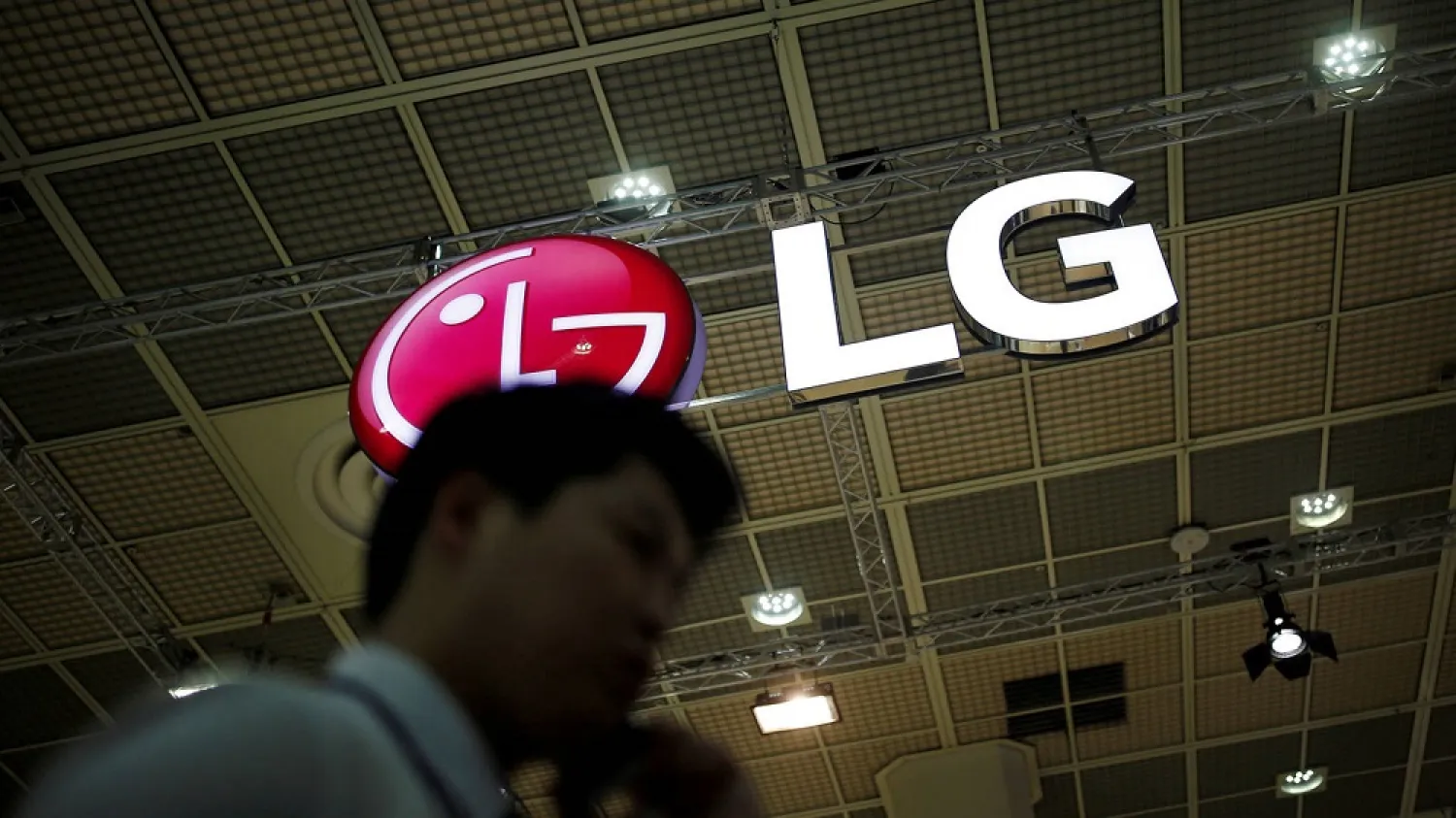
A man talking on his phone walks past the logo of LG Electronics during Korea Electronics Show 2016 in Seoul, South Korea, October 27, 2016. (Reuters)
TT

South Korea's LG Becomes First Major Smartphone Brand to Withdraw from Market

A man talking on his phone walks past the logo of LG Electronics during Korea Electronics Show 2016 in Seoul, South Korea, October 27, 2016. (Reuters)

South Korea’s LG Electronics Inc will wind down its loss-making mobile division after failing to find a buyer, a move that is set to make it the first major smartphone brand to completely withdraw from the market.

Its decision to pull out will leave its 10% share in North America, where it is the No. 3 brand, to be gobbled up by Samsung Electronics and Apple Inc with its domestic rival expected to have the edge.

“In the United States, LG has targeted mid-priced - if not ultra-low - models and that means Samsung, which has more mid-priced product lines than Apple, will be better able to attract LG users,” said Ko Eui-young, an analyst at Hi Investment & Securities.

LG’s smartphone division has logged nearly six years of losses totaling some $4.5 billion. Dropping out of the fiercely competitive sector would allow LG to focus on growth areas such as electric vehicle components, connected devices and smart homes, it said in a statement.

In better times, LG was early to market with a number of cell phone innovations including ultra-wide angle cameras and at its peak in 2013, it was the world’s third-largest smartphone manufacturer behind Samsung and Apple.

But later, its flagship models suffered from both software and hardware mishaps which combined with slower software updates saw the brand steadily slip in favor. Analysts have also criticized the company for lack of expertise in marketing compared to Chinese rivals.

While other well-known mobile brands such as Nokia, HTC and Blackberry have also fallen from lofty heights, they have yet to disappear completely.

LG’s current global share is only about 2%. It shipped 23 million phones last year which compares with 256 million for Samsung, according to research provider Counterpoint.

In addition to North America, it does have a sizeable presence in Latin America, where it ranks as the No. 5 brand.

While rival Chinese brands such as Oppo, Vivo and Xiaomi do not have much of a presence in the United States, in part due to frosty bilateral relations, their and Samsung’s low to mid-range product offerings are set to benefit from LG’s absence in Latin America, analysts said.

LG’s smartphone division, the smallest of its five divisions accounting for about 7% of revenue, is expected to be wound down by July 31.

In South Korea, the division’s employees will be moved to other LG Electronics businesses and affiliates, while elsewhere decisions on employment will be made at the local level.

Analysts said they were told in a conference call that LG plans to retain its 4G and 5G core technology patents as well as core R&D personnel, and will continue to develop communication technologies for 6G. It has yet to decide whether to license out such intellectual property in the future, they added.

LG will provide service support and software updates for customers of existing mobile products for a period of time which will vary by region, it added.

Talks to sell part of the business to Vietnam’s Vingroup fell through due to differences about terms, sources with knowledge of the matter have said.

LG Elec shares have risen about 7% since a January announcement that it was considering all options for the business.



Google Says to Build New Subsea Cables from India in AI Push

A logo of Google is on display at Bharat Mandapam, one of the venues for AI Impact Summit, in New Delhi, India, February 17, 2026. REUTERS/Bhawika Chhabra
TT

Google Says to Build New Subsea Cables from India in AI Push

A logo of Google is on display at Bharat Mandapam, one of the venues for AI Impact Summit, in New Delhi, India, February 17, 2026. REUTERS/Bhawika Chhabra

Google announced Wednesday it would build new subsea cables from India and other locations as part of its existing $15 billion investment in the South Asian nation, which is hosting a major artificial intelligence summit this week.

The US tech giant said it would build "three subsea paths connecting India to Singapore, South Africa, and Australia; and four strategic fiber-optic routes that bolster network resilience and capacity between the United States, India, and multiple locations across the Southern Hemisphere".


Mark Zuckerberg Set to Testify in Watershed Social Media Trial 

Meta's CEO Mark Zuckerberg testifies during the Senate Judiciary Committee hearing on online child sexual exploitation at the US Capitol in Washington, US, January 31, 2024. (Reuters)
TT

Mark Zuckerberg Set to Testify in Watershed Social Media Trial 

Meta's CEO Mark Zuckerberg testifies during the Senate Judiciary Committee hearing on online child sexual exploitation at the US Capitol in Washington, US, January 31, 2024. (Reuters)

Mark Zuckerberg will testify in an unprecedented social media trial that questions whether Meta's platforms deliberately addict and harm children.

Meta's CEO is expected to answer tough questions on Wednesday from attorneys representing a now 20-year-old woman identified by the initials KGM, who claims her early use of social media addicted her to the technology and exacerbated depression and suicidal thoughts. Meta Platforms and Google’s YouTube are the two remaining defendants in the case, which TikTok and Snap have settled.

Zuckerberg has testified in other trials and answered questions from Congress about youth safety on Meta's platforms, and he apologized to families at that hearing whose lives had been upended by tragedies they believed were because of social media.

This trial, though, marks the first time Zuckerberg will answer similar questions in front of a jury. and, again, bereaved parents are expected to be in the limited courtroom seats available to the public.

The case, along with two others, has been selected as a bellwether trial, meaning its outcome could impact how thousands of similar lawsuits against social media companies would play out.

A Meta spokesperson said the company strongly disagrees with the allegations in the lawsuit and said they are “confident the evidence will show our longstanding commitment to supporting young people.”

One of Meta's attorneys, Paul Schmidt, said in his opening statement that the company is not disputing that KGM experienced mental health struggles, but rather that Instagram played a substantial factor in those struggles.

He pointed to medical records that showed a turbulent home life, and both he and an attorney representing YouTube argue she turned to their platforms as a coping mechanism or a means of escaping her mental health struggles.

Zuckerberg's testimony comes a week after that of Adam Mosseri, the head of Meta's Instagram, who said in the courtroom that he disagrees with the idea that people can be clinically addicted to social media platforms.

Mosseri maintained that Instagram works hard to protect young people using the service, and said it's “not good for the company, over the long run, to make decisions that profit for us but are poor for people’s well-being."

Much of Mosseri's questioning from the plaintiff's lawyer, Mark Lanier, centered on cosmetic filters on Instagram that changed people’s appearance — a topic that Lanier is sure to revisit with Zuckerberg.

He is also expected to face questions about Instagram’s algorithm, the infinite nature of Meta’ feeds and other features the plaintiffs argue are designed to get users hooked.


US Tech Giant Nvidia Announces India Deals at AI Summit

FILED - 04 February 2026, Bavaria, Munich: The NVIDIA logo is seen during a press conference at the opening of Telekom and NVIDIA's AI factory "Industrial AI Cloud". Photo: Sven Hoppe/dpa
TT

US Tech Giant Nvidia Announces India Deals at AI Summit

FILED - 04 February 2026, Bavaria, Munich: The NVIDIA logo is seen during a press conference at the opening of Telekom and NVIDIA's AI factory "Industrial AI Cloud". Photo: Sven Hoppe/dpa

US artificial intelligence chip titan Nvidia unveiled tie-ups with Indian computing firms on Wednesday as tech companies rushed to announce deals and investments at a global AI conference in New Delhi.

This week's AI Impact Summit is the fourth annual gathering to discuss how to govern the fast-evolving technology -- and also an opportunity to "define India's leadership in the AI decade ahead", organizers say.

Mumbai cloud and data center provider L&T said it was teaming up with Nvidia, the world's most valuable company, to build what it touted as "India's largest gigawatt-scale AI factory".

"We are laying the foundation for world-class AI infrastructure that will power India's growth," said Nvidia boss Jensen Huang in a statement that did not put a figure on the investment.

L&T said it would use Nvidia's powerful processors, which can train and run generative AI tech, to provide data center capacity of up to 30 megawatts in Chennai and 40 megawatts in Mumbai.

Nvidia said it was also working with other Indian AI infrastructure players such as Yotta, which will deploy more than 20,000 top-end Nvidia Blackwell processors as part of a $2 billion investment.

Dozens of world leaders and ministerial delegations have come to India for the summit to discuss the opportunities and threats, from job losses to misinformation, that AI poses.

Last year India leapt to third place -- overtaking South Korea and Japan -- in an annual global ranking of AI competitiveness calculated by Stanford University researchers.

But despite plans for large-scale infrastructure and grand ambitions for innovation, experts say the country has a long way to go before it can rival the United States and China.

The conference has also brought a flurry of deals, with IT minister Ashwini Vaishnaw saying Tuesday that India expects more than $200 billion in investments over the next two years, including roughly $90 billion already committed.

Separately, India's Adani Group said Tuesday it plans to invest $100 billion by 2035 to develop "hyperscale AI-ready data centers", a boost to New Delhi's push to become a global AI hub.

Microsoft said it was investing $50 billion this decade to boost AI adoption in developing countries, while US artificial intelligence startup Anthropic and Indian IT giant Infosys said they would work together to build AI agents for the telecoms industry.

Nvidia's Huang is not attending the AI summit but other top US tech figures joining include OpenAI's Sam Altman, Google DeepMind's Demis Hassabis and Microsoft founder Bill Gates.

Indian Prime Minister Narendra Modi and other world leaders including French President Emmanuel Macron and Brazil's Luiz Inacio Lula da Silva are expected to deliver a statement at the end of the week about how they plan to address concerns raised by AI technology.

But experts say that the broad focus of the event and vague promises made at previous global AI summits in France, South Korea and Britain mean that concrete commitments are unlikely.

Nick Patience, practice lead for AI at tech research group Futurum, told AFP that nonbinding declarations could still "set the tone for what acceptable AI governance looks like".

But "the largest AI companies deploy capabilities at a pace that makes 18-month legislative cycles look glacial," Patience said.

"So it's a case of whether governments can converge fast enough to create meaningful guardrails before de facto standards are set by the companies themselves."