


Prince Philip vs. Philip of 'The Crown': Fact and Fiction

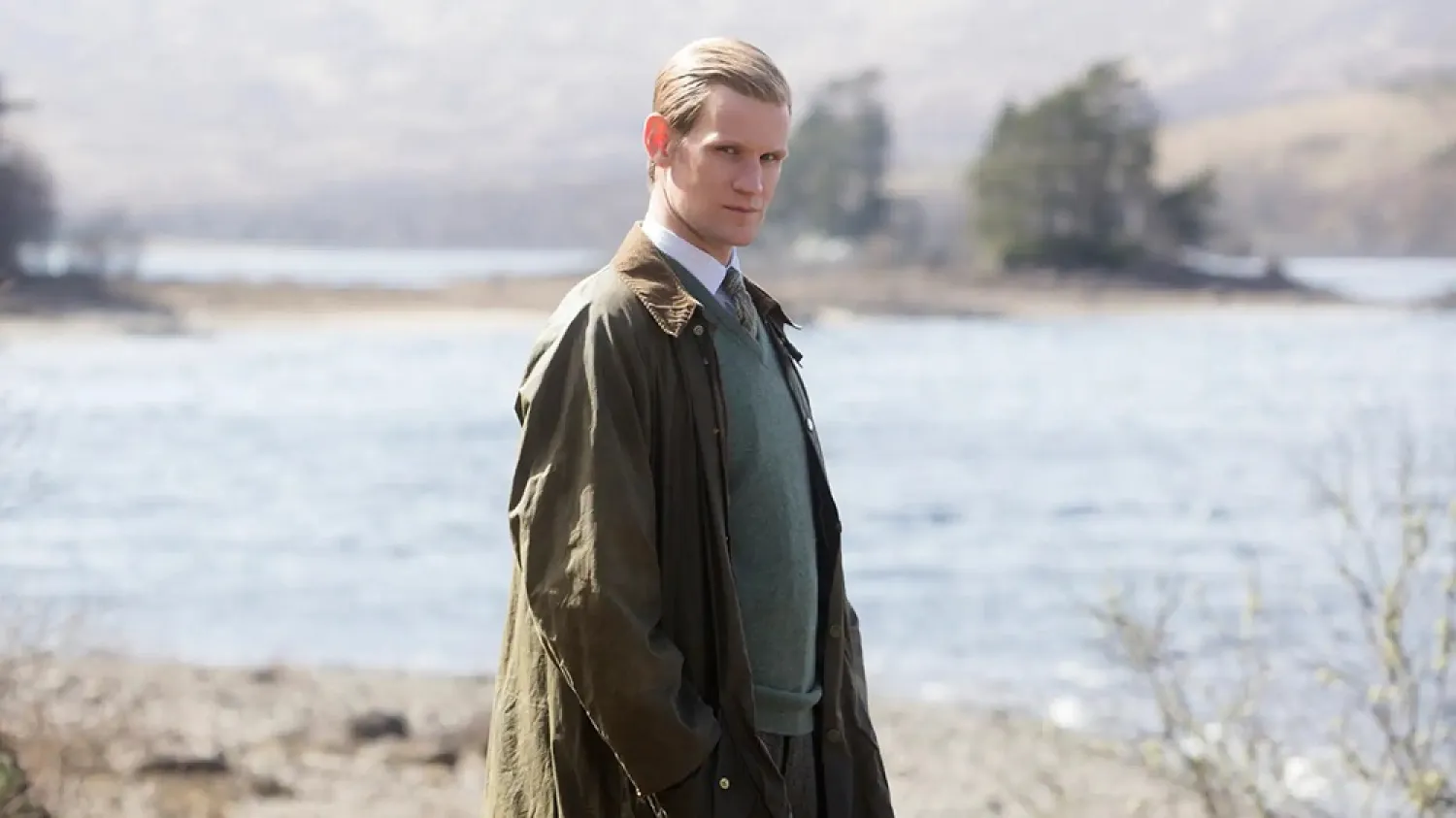
Matt Smith as Prince Philip in "The Crown". (Netflix)
TT

Prince Philip vs. Philip of 'The Crown': Fact and Fiction

Matt Smith as Prince Philip in "The Crown". (Netflix)

In “The Crown,” a dishy naval officer captures the heart of a future queen. But he chafes at playing royal second fiddle and crosses the boundaries of decorum and, maybe, fidelity. He eventually finds his way as a trusted partner and family patriarch.

How does the Netflix drama’s portrayal of Prince Philip, who died at age 99 on Friday, compare with the man himself and the life he lived with Britain’s Queen Elizabeth II?

Prince Philip dwelled in his wife's shadow, and the same goes for Philip in “The Crown,” as the title makes plain. But some episodes take a fuller measure of the man, or at least the character (played in succession by Matt Smith and Tobias Menzies, with Jonathan Pryce in the wings).

Peter Morgan, creator of the series that's in a lull before its fifth and penultimate season arrives in 2022, has said “The Crown” is the product of historical research and imagination, and includes scenes not to be taken as fact.

Barring a tell-all from the parties involved, for instance, we don't know if Philip was as rigid in his approach to parenting son Charles as he was sensitive with daughter Anne, as “The Crown” has it. Or what to make of the drama's dainty hints of marital infidelity by Philip.

The series thus far has brought Philip to middle age, covering only half of the real royal's nearly 100 years. Also absent from “The Crown” is Philip's unapologetic fondness for demeaning one-liners about women and people of color.

But there are aspects of the Greek-born prince's life that warrant comparison to the fictional version, whom “The Crown” depicts in a mostly flattering light: A bold and restless spirit, one bound to the end by duty and devotion to queen and country.

Domestic strife
“The Crown”: Reluctant to surrender traditional male privilege, Philip wants their children to carry his last name (Mountbatten), not hers (Windsor). The answer is no.

When the death of Elizabeth’s father, King George VI, brings her to the throne, Philip leaves military service for the role of consort. Quarrels with Elizabeth follow, including over his reluctance to kneel to her during her coronation.

They find a balance, with Philip a worthy half of an affectionate marriage.

In reality: When Philip lost his bid to use Mountbatten as the family name, according to Gyles Brandreth's “Philip and Elizabeth: Portrait of a Royal Marriage,” he complained, “I am nothing but a bloody amoeba," a man barred from giving his children his name.

Eight years later, it was decided the couple's descendants would use a hyphenated surname — as in Archie Harrison Mountbatten-Windsor, the son of Harry and Meghan.

Under protest or not, Philip knelt before the newly crowned queen in 1952 and pledged to become her “liege man of life and limb, and of earthly worship.”

On their 50th wedding anniversary, Elizabeth called him "my strength and stay.”

Man of action
“The Crown”: In 1969, Philip is immersed in TV coverage of the first moon landing and faults his life in comparison. After prosaic royal engagements at dental and textile facilities, the trained flier has the opportunity to take the controls of a private jet.

He pushes the plane toward the edge of space and, as the pilot protests that the trembling aircraft is at its limit, Philip responds: “Perhaps. But look, we've also lived. Just for a minute.”

Meeting with the US astronauts when they visit England as part of a victory lap, Philip tells them his position and marriage kept him from “the things I would've liked to, as a man, as an adventurer.”

In reality: During World War II, Philip saw action while serving on battleships and destroyers, was decorated and, at age 21, achieved the rank of first lieutenant in the Royal Navy.

While he carried out a full schedule of royal duties and headed hundreds of charities, he learned to fly in the 1950s and was an avid polo player and yachtsman, as well as painter and art collector. Still driving at 97, he flipped his Land Rover in a crash.

Man of faith
“The Crown”: Philip is asked to allow a spiritual retreat to be created on Windsor Castle's grounds for clergy in need of midlife inspiration. He ridicules the plan as “hot air” but agrees to it, and ends up finding solace in its version of a men's therapy group.

“‘How's your faith?’” he recalls his mother asking him with concern, then tells the gathering and its dean, “I'm here to admit to you I've lost it ... I come to say, ‘Help.'”

In reality: Robin Woods, the then-dean of Windsor, proposed the founding of St. George’s House in 1966 and Philip became its co-founder and an enthusiastic fundraiser, according to a companion book to “The Crown” by historian Robert Lacey. The center fosters discussion of contemporary issues, its website says.

Woods and Philip were lifelong friends, and the prince would critique his sermons at Windsor's St. George's Chapel. Philip's funeral will be held there April 17.

Christened in the Greek Orthodox Church — though a practicing Anglican, married to the supreme governor of the Church of England — Philip was a visitor to Mount Athos, a monastic community and religious sanctuary in Greece. Leaders of several faiths in Britain say he took a deep interest in spiritual matters.

His coat of arms bears the motto, “God is my help.”

On team Diana
“The Crown": When Diana Spencer is introduced at a family gathering at Balmoral Castle in Scotland, she and Philip bond over a day of stag hunting and he supports her marriage to Charles.

The relationship turns bitter, and Diana tells Philip she's considering splitting with Charles and the royal family she finds uncaring. Philip cautions her against the step and faults her perspective: Everyone is an outsider apart from the queen, the “one person, the only person, who matters,” he says.

In reality: In letters between Diana and Philip said to have been leaked, Philip is supportive of Diana and critical of his son's extramarital affair with now-wife Camilla.

But after Diana's candid TV interview and a revealing biography, Philip's tone allegedly turned sterner and he wrote that she must “fit in” or exit the family.



‘Godfather’ and ‘Apocalypse Now’ Actor Robert Duvall Dead at 95 

Actor Robert Duvall arrives at the 72nd Golden Globe Awards in Beverly Hills, California January 11, 2015. (Reuters)
TT

‘Godfather’ and ‘Apocalypse Now’ Actor Robert Duvall Dead at 95 

Actor Robert Duvall arrives at the 72nd Golden Globe Awards in Beverly Hills, California January 11, 2015. (Reuters)

Robert Duvall, who played the smooth mafia lawyer in "The Godfather" and stole the show with his depiction of a surfing-crazed colonel in "Apocalypse Now," has died at the age of 95, his wife said Monday.

His death Sunday was confirmed by his wife Luciana Duvall.

"Yesterday we said goodbye to my beloved husband, cherished friend, and one of the greatest actors of our time. Bob passed away peacefully at home," she wrote.

Blunt-talking, prolific and glitz-averse, Duvall won an Oscar for best actor and was nominated six other times. Over his six decades-long career, he shone in both lead and supporting roles, and eventually became a director. He kept acting in his 90s.

"To the world, he was an Academy Award-winning actor, a director, a storyteller. To me, he was simply everything," Luciana Duvall said. "His passion for his craft was matched only by his deep love for characters, a great meal, and holding court."

Duvall won his Academy Award in 1983 for playing a washed-up country singer in "Tender Mercies."

But his most memorable characters also included the soft-spoken, loyal mob consigliere Tom Hagen in the first two installments of "The Godfather" and the maniacal Lieutenant Colonel William Kilgore in Francis Ford Coppola's 1979 Vietnam War epic "Apocalypse Now."

"It was an honor to have worked with Robert Duvall," Oscar winner Al Pacino, who acted alongside Duvall in "The Godfather" films, said in a statement.

"He was a born actor as they say, his connection with it, his understanding and his phenomenal gift will always be remembered. I will miss him."

As Colonel Kilgore, Duvall earned an Oscar nomination and became a bona fide star after years playing lesser roles, in a performance where he utters what is now one of cinema's most famous lines.

"I love the smell of napalm in the morning," his war-loving character -- bare chested, cocky and sporting a big black cowboy hat -- muses as low-flying US warplanes bomb a beachfront tree line where he wants to go surfing.

That character was originally created to be even more over the top -- his name was at first supposed to be Colonel Carnage -- but Duvall had it toned down, demonstrating his meticulous approach to acting.

"I did my homework," Duvall told veteran talk show host Larry King in 2015. "I did my research."

Cinema giant Francis Ford Coppola -- who directed Duvall in "Apocalypse Now" and "The Godfather" -- called his loss "a blow."

"Such a great actor and such an essential part of American Zoetrope from its beginning," Coppola said in a statement on Instagram.

- A 'vast career' -

Duvall was sort of a late bloomer in Hollywood -- he was already 31 when he delivered his breakout performance as the mysterious recluse Boo Radley in the 1962 film adaptation of Harper Lee's novel "To Kill a Mockingbird."

He would go on to play myriad roles -- a bullying corporate executive in "Network" (1976), a Marine officer who treats his family like soldiers in "The Great Santini" (1979), and then his star turn in "Tender Mercies."

Duvall often said his favorite role, however, was one he played in a 1989 TV mini-series -- the grizzled, wise-cracking Texas Ranger-turned-cowboy Augustus McCrae in "Lonesome Dove," based on the novel by Larry McMurtry.

British actress Jane Seymour, who worked with Duvall on the 1995 film "The Stars Fell on Henrietta," took to Instagram to share a heartfelt tribute to the star.

"We were able to share in his love of barbecue and even a little tango," Seymour captioned a photo of herself with Duvall. "Those moments off camera were just as memorable as the work itself."

US actor Alec Baldwin made a short video tribute to Duvall, speaking about the star's "vast career."

"When he did 'To Kill A Mockingbird' he just destroyed you with his performance of Boo Radley, he used not a single word of dialogue, not a single word, and he just shatters you," Baldwin said.

Film critic Elaine Mancini once described Duvall as "the most technically proficient, the most versatile, and the most convincing actor on the screen in the United States."


Songwriter Billy Steinberg Dies at 75

Grammy-winning songwriter Billy Steinberg (L) was behind several top hits of the 1980s and 1990s including Madonna's 'Like A Virgin'. Paul A. Hebert / GETTY IMAGES NORTH AMERICA/AFP/File
TT

Songwriter Billy Steinberg Dies at 75

Grammy-winning songwriter Billy Steinberg (L) was behind several top hits of the 1980s and 1990s including Madonna's 'Like A Virgin'. Paul A. Hebert / GETTY IMAGES NORTH AMERICA/AFP/File

Award-winning US songwriter Billy Steinberg, who wrote several top hit songs including Madonna's "Like a Virgin," died Monday at age 75, according to media reports.

Steinberg wrote some of the biggest pop hits of the 1980s and 1990s and was behind songs performed by singers from Whitney Houston and Celine Dion to Madonna and Cyndi Lauper.

He died following a battle with cancer, his attorney told the Los Angeles Times and BBC News.

"Billy Steinberg's life was a testament to the enduring power of a well-written song -- and to the idea that honesty, when set to music, can outlive us all," his family said in a statement to the outlets.

Steinberg was born in 1950 and grew up in Palm Springs, California, where his family had a table grape business. He attended Bard College in New York and soon began his career in songwriting.

He helped write five number one singles on the Billboard Hot 100 list. Among those was "Like a Virgin," co-written with Tom Kelly, which spent six consecutive weeks at the top of the charts.

Steinberg won a Grammy Award in 1997 for his work on Celine Dion's "Falling Into You."

He was inducted into the Songwriters Hall of Fame in 2011.


'Train Dreams,' 'The Secret Agent' Nab Spirit Wins to Boost Oscars Campaigns

'Train Dreams' director Clint Bentley speaks to the audience after his film grabbed best feature at the Film Independent Spirit Awards, as it continues its best picture Oscars campaign. KEVIN WINTER / GETTY IMAGES NORTH AMERICA/AFP
TT

'Train Dreams,' 'The Secret Agent' Nab Spirit Wins to Boost Oscars Campaigns

'Train Dreams' director Clint Bentley speaks to the audience after his film grabbed best feature at the Film Independent Spirit Awards, as it continues its best picture Oscars campaign. KEVIN WINTER / GETTY IMAGES NORTH AMERICA/AFP

Period drama "Train Dreams" took home the Spirit Awards win for best feature Sunday, as both it and "The Secret Agent" gathered momentum ahead of the Academy Awards.

"The Secret Agent" notched best international film as its team hopes to win in the same category at the Oscars next month.

The annual Film Independent Spirit Awards ceremony only celebrates movies made for less than $30 million.

"Train Dreams," director Clint Bentley's adaptation of the Denis Johnson novella, follows a railroad worker and the transformation of the American northwest across the 20th century.

The film won three of its four categories, also grabbing wins for best director and best cinematography. The movie's lead, Joel Edgerton, however, did not take home best actor, which went to Rose Byrne for "If I Had Legs I'd Kick You."

"Train Dreams" producer Teddy Schwarzman told AFP the film "is a singular journey, but it hopefully helps bring people together to understand all that life entails: love, friendship, loss, grief, healing and hope."

"Train Dreams" will compete for best picture at the Oscars, among other honors.

Big win for Brazil

After "The Secret Agent" nabbed best international film, director Kleber Mendonca Filho hailed the win as one that hopefully "gives more visibility to Brazilian cinema."

The film follows a former academic pursued by hitmen amid the political turmoil of Brazil under military rule.

It prevailed Sunday over contenders including rave-themed road trip movie "Sirat," which will compete alongside "The Secret Agent" for best international feature film at the Oscars, capping Hollywood's awards season.

"The Secret Agent" will also be up for best picture, best actor and best casting.

Brazil's "I'm Still Here" won best international feature at the Oscars last year.

Other Spirit winners on Sunday included "Lurker," for best first screenplay and best first feature film.

"Sorry, Honey" nabbed best screenplay and "The Perfect Neighbor" scored best documentary.

The Academy Awards will be presented on March 15.