
Tunisia 'Sandy' Farms Resist Drought, Development

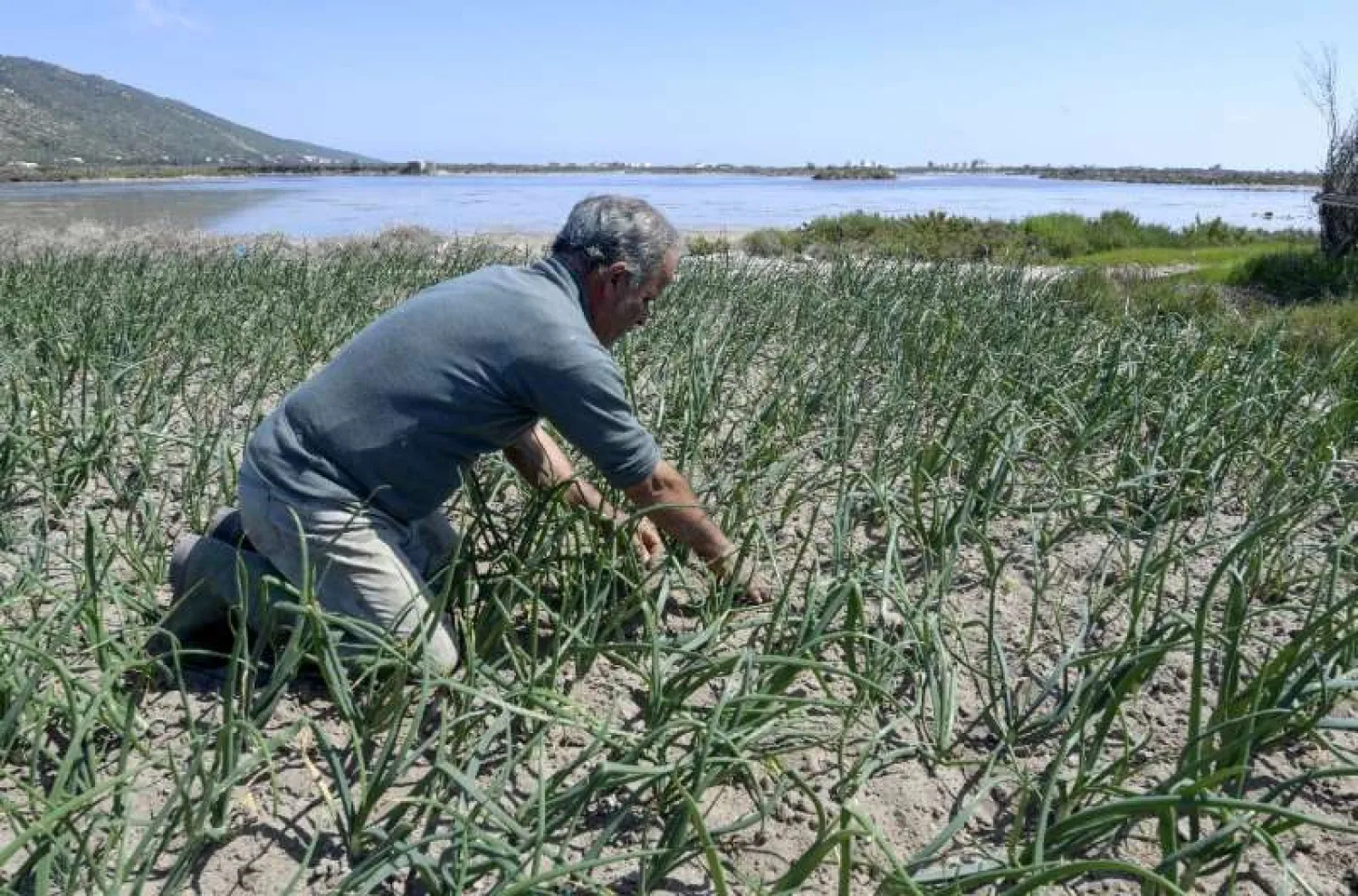
Known as 'ramli' farms, this delicate balance with nature is under threat as rainfall becomes less regular due to climate change - AFP
TT

Tunisia 'Sandy' Farms Resist Drought, Development

Known as 'ramli' farms, this delicate balance with nature is under threat as rainfall becomes less regular due to climate change - AFP

Farmers near a seaside lagoon in northern Tunisia are fighting to preserve a unique, traditional irrigation system that has sparked renewed interest as North Africa's water shortages intensify.

Retired schoolteacher Ali Garci wanders among tiny sandy plots, inspecting his potatoes, lettuces and onions.

"It's not land that we cultivate for the profit it brings, but for the art and the pleasure," says the 61-year-old, who works around a hectare (2.5 acres) inherited from his family.

Local farmers have used the "ramli" technique since the 17th century. Some found safety in Ghar El Melh, a small fishing town in Tunisia's north. But they had to battle a lack of cultivated land and water, AFP reported.

They learned to take advantage of the light, sandy soil, and the fact that underground freshwater, which is lighter than seawater, "floats" above the saltier groundwater below.

When rainwater from the hills reaches the sandy area around Ghar El Melh's lagoons, instead of mixing immediately with the brine below, it forms a thin layer of fresh groundwater.

Twice a day, the tides of the nearby Mediterranean raise the level of both, bringing precious freshwater in contact with the vegetables in the ramli plots.

"It's as if the sea is suckling its young," said Abdelkarim Gabarou, who has worked the traditional plots for more than 40 years.

The ramli farms -- ramli is Arabic for "sandy" -- cover around 200 hectares (500 acres) and support around 300 people.

They were listed last year in the UN Food and Agriculture Organization's (FAO) list of Globally Important Agricultural Heritage Systems.

The FAO said the ramli system was "unique not only in Tunisia but in the whole world".

Ramli produce is said to have a particular taste, and is in high demand both locally and in Tunis.

But farmers voice regret that their products lack formal certification, despite the FAO designation.

They must also contend with growing threats to their unique farming system, both from climate change and development.

As rainfall becomes less regular and sea levels rise, the ramli farmers' delicate dance with nature is becoming harder.

"We're totally dependent on rainwater," Garci said. "We try to preserve it in the most natural way possible."

For the system to work, the roots of the vegetables must reach freshwater but also, crucially, not the saltwater below.

That requires precisely the right amount of sand above: a layer exactly 40 centimetres (15-and-a-half inches) thick.

Raoudha Gafrej, an expert on water resources and climate change, says it would be near-impossible to reproduce the ramli system elsewhere.

"This ingenious system doesn't cover a huge area... but we have to preserve it, because the country needs every drop of water it can get," she said.

Unlike in other parts of Tunisia, these farms thrive all year round without artificial irrigation, allowing the farmers to produce up to 20 tonnes (22 tons) of crops per year.

Reeds protect the plots, just four metres wide, from wind and erosion, but shielding them from human activity is another matter.

This beautiful coastline, where a long strip of white sand separates the lagoon from the sea, is popular with holidaymakers.

"Lots of farmers are thinking of selling their land for good prices, to people who want to build houses overlooking the sea and the hills," said Garci.

Meanwhile, he says, very few young Tunisians want to become farmers.

But in a country where 80 percent of water goes to irrigation, any effort to make more efficient use of water is valuable.

On the Tunisian island of Djerba, where summer water outages are common, an NGO recently renovated 15 ancient reservoirs to collect rainwater for irrigation in the drier months.

Gafrej said such efforts were vital.

"We need to help this culture of water preservation to take root," she said.


Egypt Reveals Restored Colossal Statues of Pharaoh in Luxor

Visitors watch the two giant reassembled alabaster statues of Pharoah Amenhotep III, in the southern city of Luxor, Egypt, Sunday, Dec. 14, 2025. (AP Photo/Amr Nabil)
TT

Egypt Reveals Restored Colossal Statues of Pharaoh in Luxor

Visitors watch the two giant reassembled alabaster statues of Pharoah Amenhotep III, in the southern city of Luxor, Egypt, Sunday, Dec. 14, 2025. (AP Photo/Amr Nabil)

Egypt on Sunday revealed the revamp of two colossal statues of a prominent pharaoh in the southern city of Luxor, the latest in the government’s archaeological events that aim at drawing more tourists to the country.

The giant alabaster statues, known as the Colossi of Memnon, were reassembled in a renovation project that lasted about two decades. They represent Amenhotep III, who ruled ancient Egypt about 3,400 years ago.

“Today we are celebrating, actually, the finishing and the erecting of these two colossal statues,” Mohamed Ismail, secretary-general of the Supreme Council of Antiquities, told The Associated Press ahead of the ceremony.

Attempts to revive a prestigious temple Ismail said the colossi are of great significance to Luxor, a city known for its ancient temples and other antiquities.

They’re also an attempt to “revive how this funerary temple of king Amenhotep III looked like a long time ago,” Ismail said.

Amenhotep III, one of the most prominent pharaohs, ruled during the 500 years of the New Kingdom, which was the most prosperous time for ancient Egypt.

The pharaoh, whose mummy is showcased at a Cairo museum, ruled between 1390–1353 BC, a peaceful period known for its prosperity and great construction, including his mortuary temple, where the Colossi of Memnon are located, and another temple, Soleb, in Nubia.

The colossi were toppled by a strong earthquake in about 1200 BC that also destroyed Amenhotep III’s funerary temple, said Mohamed Ismail, secretary-general of the Supreme Council of Antiquities.

They were fragmented and partly quarried away, with their pedestals dispersed.

Some of their blocks were reused in the Karnak temple, but archaeologists brought them back to rebuild the colossi, according to the Antiquities Ministry.

In late 1990s, an Egyptian German mission, chaired by German Egyptologist Hourig Sourouzian, began working in the temple area, including the assembly and renovation of the colossi.

“This project has in mind ... to save the last remains of a once-prestigious temple,” she said.

The statues show Amenhotep III seated with hands resting on his thighs, with their faces looking eastward toward the Nile and the rising sun. They wear the nemes headdress surmounted by the double crowns and the pleated royal kilt, which symbolizes the pharaoh’s divine rule.

Two other small statues on the pharaoh’s feet depict his wife, Tiye.

The colossi — 14.5 meters (48 feet) and 13.6 meters (45 feet) respectively — preside over the entrance of the king’s temple on the western bank of the Nile.

The 35-hectare (86-acre) complex is believed to be the largest and richest temple in Egypt and is usually compared to the temple of Karnak, also in Luxor.

The colossi were hewn in Egyptian alabaster from the quarries of Hatnub, in Middle Egypt. They were fixed on large pedestals with inscriptions showing the name of the temple, as well as the quarry.

Unlike other monumental sculptures of ancient Egypt, the colossi were partly compiled with pieces sculpted separately, which were fixed into each statue’s main monolithic alabaster core, the ministry said.

Sunday’s unveiling in Luxor came just six weeks after the inauguration of the long-delayed Grand Egyptian Museum, the centerpiece of the government’s bid to boost the country’s tourism industry. The mega project is located near the famed Giza Pyramids and the Sphinx.

“This site is going to be a point of interest for years to come,” said Tourism and Antiquities Minister Sherif Fathy, who attended the unveiling ceremony. “There are always new things happening in Luxor.”

A record number of about 15.7 million tourists visited Egypt in 2024, contributing about 8% of the country’s GDP, according to official figures.

Fathy has said about 18 million tourists are expected to visit the country this year, with authorities hoping for 30 million visitors annually by 2032.


National Wildlife Center Launches 2nd Phase to Regulate Unlicensed Species in Saudi Arabia

National Wildlife Center Launches 2nd Phase to Regulate Unlicensed Species in Saudi Arabia
TT

National Wildlife Center Launches 2nd Phase to Regulate Unlicensed Species in Saudi Arabia

National Wildlife Center Launches 2nd Phase to Regulate Unlicensed Species in Saudi Arabia

The National Center for Wildlife (NCW) has launched the second phase of its initiative to regulate the status of unlicensed wildlife species in the Kingdom, representing one of the most prominent national efforts to control wildlife possession, document ownership, and ensure that all practices related to housing, breeding, and trading comply with the Environmental Law and its implementing regulations, according to SPA.

The regularization period extends until the end of February 2026 and targets those who keep or handle wildlife on a large scale, including private collections (farms) containing more than 10 species, facilities engaged in breeding and housing wildlife, and businesses involved in selling wildlife products or derivatives.

This phase follows the success of the first, which focused on regulating the status of falcons, and reinforces the Kingdom's role in curbing illegal practices that could harm natural environments or threaten the survival of wildlife species. The initiative reflects a growing national commitment to protecting biodiversity and developing a more regulated system for managing wildlife within the Kingdom.

The regulation aims to build an accurate database of wildlife, enhance monitoring, and improve housing standards in accordance with environmental and health considerations.

The NWC emphasizes that this step aligns with national efforts to protect wildlife, support ecosystem sustainability, and address the challenges of illegal wildlife trafficking. It calls on all owners and relevant facilities to take advantage of the grace period, review the regulations through the "Fitri" platform, and contribute to a safer and more balanced ecosystem


Islamabad Puts Drivers on Notice as Smog Crisis Worsens

This picture taken on December 9, 2025, shows buildings engulfed in dense smog due to severe air pollution in Islamabad. (Photo by Aamir QURESHI / AFP)
TT

Islamabad Puts Drivers on Notice as Smog Crisis Worsens

This picture taken on December 9, 2025, shows buildings engulfed in dense smog due to severe air pollution in Islamabad. (Photo by Aamir QURESHI / AFP)

Truck driver Muhammad Afzal was not expecting to be stopped by police, let alone fined, as he drove into Islamabad this week because of the thick diesel fumes emanating from his exhaust pipe.

"This is unfair," he said after being told to pay 1,000 rupees ($3.60), with the threat of having his truck impounded if he did not "fix" the problem.

"I was coming from Lahore after getting my vehicle repaired. They pressed the accelerator to make it release smoke. It's an injustice," he told AFP.

Checkpoints set up this month are part of a crackdown by authorities to combat the city's soaring smog levels, with winter months the worst due to atmospheric inversions that trap pollutants at ground level.

"We have already warned the owners of stern action, and we will stop their entry into the city if they don't comply with the orders," said Dr Zaigham Abbas of Pakistan's Environmental Protection Agency (EPA), as he surveyed the checkpoint at the southeast edge of the capital.

For Waleed Ahmed, a technician inspecting the vehicles at the site, "just like a human being, a vehicle has a life cycle. Those that cross it release smoke that is dangerous to human health".

While not yet at the extreme winter levels of Lahore or the megacity Karachi, where heavy industry and brick kilns spew tons of pollutants each year, Islamabad is steadily closing the gap.

So far in December it has already registered seven "very unhealthy" days for PM2.5 particulates of more than 150 micrograms per cubic meter, according to the Swiss-based monitoring firm IQAir.

Intraday PM2.5 levels in Islamabad often exceed those in Karachi and Lahore, and in 2024 the city's average PM2.5 reading for the year was 52.3 micrograms -- surpassing the 46.2 for Lahore.

Those annual readings are far beyond the safe level of five micrograms recommended by the World Health Organization.

Built from scratch as Pakistan's capital in the 1960s, the city was envisioned as an urban model for the rapidly growing nation, with wide avenues and ample green spaces abutting the Himalayan foothills.

But the expansive layout discourages walking and public transport remains limited, meaning cars -- mostly older models -- are essential for residents to get around.

"The capital region is choked overwhelmingly by its transport sector," which produces 53 percent of its toxic PM2.5 particles, the Pakistan Air Quality Initiative, a research group, said in a recent report.

"The haze over Islamabad... is not the smoke of industry, but the exhaust of a million private journeys -- a self-inflicted crisis," it said.

Announcing the crackdown on December 7, EPA chief Nazia Zaib Ali said over 300 fines were issued at checkpoints in the first week, with 80 vehicles impounded.

"We cannot allow non-compliant vehicles at any cost to poison the city's air and endanger public health," she said in a statement.

The city has also begun setting up stations where drivers can have their emissions inspected, with those passing receiving a green sticker on their windshield.

"We were worried for Lahore, but now it's Islamabad. And that's all because of vehicles emitting pollution," said Iftikhar Sarwar, 51, as he had his car checked on a busy road near an Islamabad park.

"I never needed medicine before but now I get allergies if I don't take a tablet in the morning. The same is happening with my family," he added.

Other residents say they worry the government's measures will not be enough to counter the worsening winter smog.

"This is not the Islamabad I came to 20 years ago," said Sulaman Ijaz, an anthropologist.

"I feel uneasy when I think about what I will say if my daughter asks for clean air -- that is her basic right."