


With Food and Fuel, Hezbollah Braces for the Worst In Lebanon Collapse

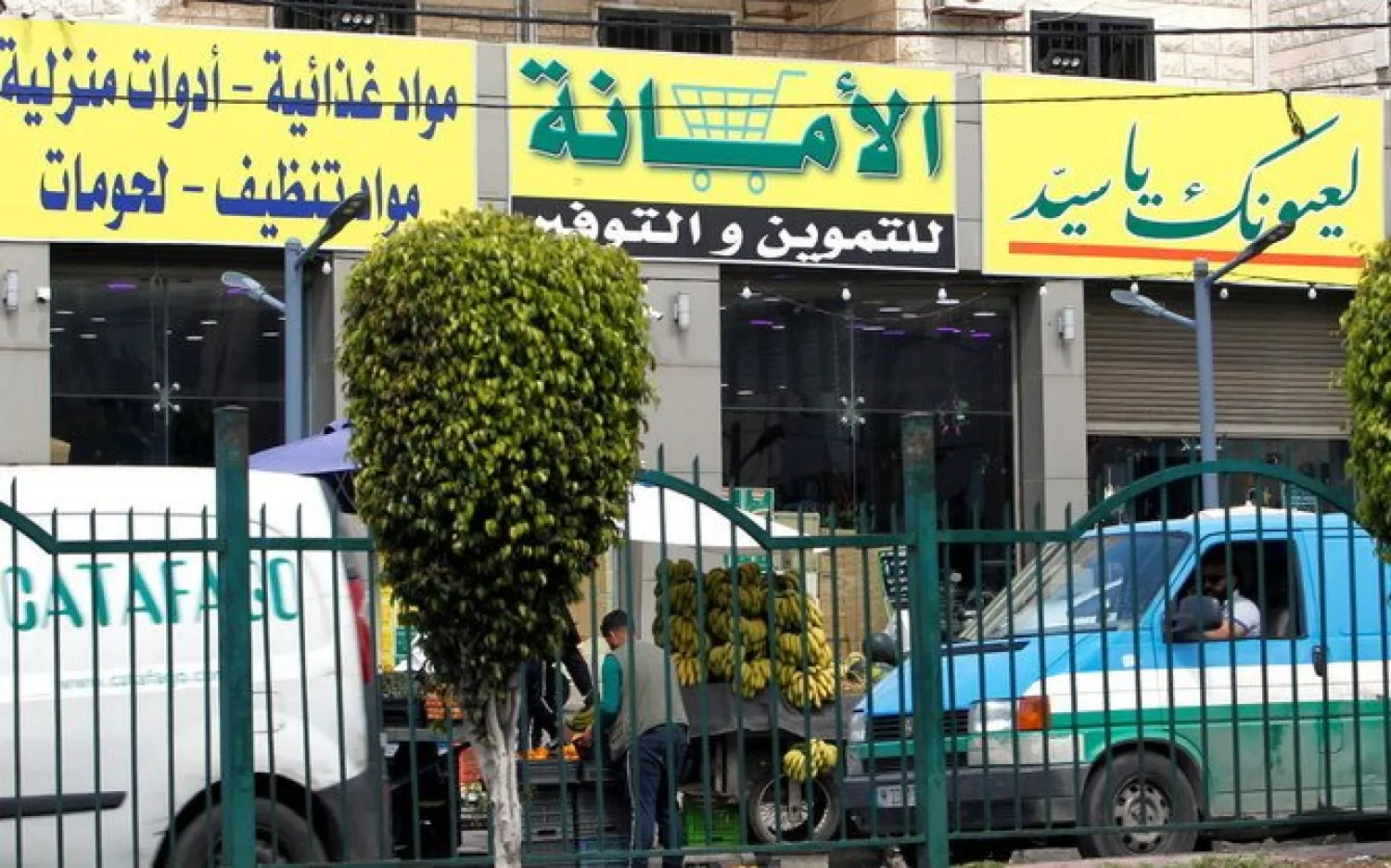
A view shows a market for groceries with a Hezbollah slogan on it, in Beirut suburbs. (REUTERS)
TT

With Food and Fuel, Hezbollah Braces for the Worst In Lebanon Collapse

A view shows a market for groceries with a Hezbollah slogan on it, in Beirut suburbs. (REUTERS)

Lebanon’s Hezbollah has made preparations for an all-out collapse of the fracturing state, issuing ration cards for food, importing medicine and readying storage for fuel from its patron Iran, three sources familiar with the plans told Reuters.

The moves, responding to a grave economic crisis, would mark an expansion of services provided by the armed movement to its support base, with a network that already boasts charities, a construction firm and a pension system.

The steps highlight rising fears of an implosion of the Lebanese state, in which authorities can no longer import food or fuel to keep the lights on.

They underline Hezbollah’s growing role in tackling the emergency with services that the government would otherwise provide.

The plan chimes with worries in Lebanon that people will have to rely on political factions for food and security, such as in militia days during the 1975-1990 civil war.

In response to a question about Hezbollah’s plans, Leila Hatoum, an adviser to the caretaker prime minister, said the country was “in no condition to refuse aid” regardless of politics.

The sources from the pro-Hezbollah camp, who declined to be named, said the plan for a potential worst-case scenario has gathered pace as an end to subsidies looms in the coming months, raising the specter of hunger and unrest.

Lebanon’s currency has crashed as the country runs out of dollars, with no state rescue in sight. Food prices have shot up 400%.

Fights in supermarkets are now commonplace, as are people rummaging through trash. A brawl over food packages this week killed one person and injured two others.

“The preparations have begun for the next stage...It is indeed an economic battle plan,” said one of the sources, a senior official.

Already, the new ration card, seen by Reuters, helps hundreds of people buy basic goods in the local currency — largely Iranian, Lebanese and Syrian cheaper items at a discount up to 40%, subsidized by the party, the sources said.

The card can be used at co-ops, some of them newly opened, in the southern Beirut suburbs and parts of southern Lebanon where Hezbollah holds sway.

An Iran-funded paramilitary force which critics once called “a state within a state,” Hezbollah has grown more entangled in Lebanese state affairs in recent years.

Washington, which deems Hezbollah a terrorist group, has ramped up sanctions to choke off its sources of funding, including what it estimates as hundreds of millions of dollars from Tehran yearly.

Some factions have issued aid baskets to their patronage communities, but the Iran-backed network remains outsized in comparison.

“They’re all doing it...But Hezbollah’s scope is much bigger and more powerful, with more resources to deal with the crisis,” said Joseph Daher, a researcher who wrote a book on Hezbollah’s political economy.

“This is more about limiting the catastrophe for its popular base. It means the dependency on Hezbollah particularly will increase.”

And while Hezbollah gives ration cards, the state, hollowed out by decades of graft and debt, has talked up the idea of such a card for poor Lebanese for nearly a year without acting.

Ministers have said the need for parliamentary approval has stalled the cabinet’s plan for cards.

Photos on social media of shelves stacked with canned goods, reportedly from one of Hezbollah’s co-ops, spread across Lebanon last week.

A second source said Hezbollah had filled up warehouses and launched the cards to extend services outside the party and plug gaps in the Lebanese market, where cheap alternatives are more common than pre-crisis.

He said the card offers a quota, based on the family size, for needs like sugar and flour.

The goods are backed by Hezbollah, imported by allied companies or brought in without customs fees through the border with Syria, where Hezbollah forces have a footing since joining the war to back Damascus alongside Iran.

The source added that Hezbollah had similar plans for medicine imports. Some pharmacists in the southern suburbs of Beirut said they had received training on new Iranian and Syrian brands that popped up on the shelves in recent months.

Two of the sources said the plan included stockpiling fuel from Iran, as Lebanon’s energy ministry warns of a possible total blackout. The senior official said Hezbollah was clearing storage space for fuel in next-door Syria.



Italy Arrests 7 Accused of Raising Millions for Hamas

Palestinian Hamas members secure the area as Egyptian workers accompanied by members of the International Committee of the Red Cross (ICRC) search for the remains of the last Israeli hostage in the Zeitoun neighborhood of Gaza City on December 8, 2025. (Photo by Omar AL-QATTAA / AFP)
TT

Italy Arrests 7 Accused of Raising Millions for Hamas

Palestinian Hamas members secure the area as Egyptian workers accompanied by members of the International Committee of the Red Cross (ICRC) search for the remains of the last Israeli hostage in the Zeitoun neighborhood of Gaza City on December 8, 2025. (Photo by Omar AL-QATTAA / AFP)

Italian police said Saturday that they have arrested seven people suspected of raising millions of euros for Palestinian group Hamas.

Police also issued international arrests for two others outside the country, said AFP.

Three associations, officially supporting Palestinian civilians but allegedly serving as a front for funding Hamas, are implicated in the investigation, said a police statement.

The nine individuals are accused of having financed approximately seven million euros ($8 million) to "associations based in Gaza, the Palestinian territories, or Israel, owned, controlled, or linked to Hamas."

While the official objective of the three associations was to collect donations "for humanitarian purposes for the Palestinian people," more than 71 percent was earmarked for the direct financing of Hamas" or entities affiliated with the movement, according to police.

Some of the money went to "family members implicated in terrorist attacks," the statement said.

Among those arrested was Mohammad Hannoun, president of the Palestinian Association in Italy, according to media reports.

Interior Minister Matteo Piantedosi posted on X that the operation "lifted the veil on behavior and activities which, pretending to be initiatives in favor of the Palestinian population, concealed support for and participation in terrorist organizations."


Türkiye Holds Military Funeral for Libyan Officers Killed in Plane Crash

The Libyan national flag flies at half-mast in Tripoli on December 24, 2025, after the head of Libya's armed forces and his four aides died in a plane crash in Türkiye. (AFP)
TT

Türkiye Holds Military Funeral for Libyan Officers Killed in Plane Crash

The Libyan national flag flies at half-mast in Tripoli on December 24, 2025, after the head of Libya's armed forces and his four aides died in a plane crash in Türkiye. (AFP)

Türkiye held a military funeral ceremony Saturday morning for five Libyan officers, including western Libya’s military chief, who died in a plane crash earlier this week.

The private jet with Gen. Muhammad Ali Ahmad al-Haddad, four other military officers and three crew members crashed on Tuesday after taking off from Ankara, Türkiye’s capital, killing everyone on board. Libyan officials said the cause of the crash was a technical malfunction on the plane.

Al-Hadad was the top military commander in western Libya and played a crucial role in the ongoing, UN-brokered efforts to unify Libya’s military.

The high-level Libyan delegation was on its way back to Tripoli, Libya’s capital, after holding defense talks in Ankara aimed at boosting military cooperation between the two countries.

Saturday's ceremony was held at 8:00 a.m. local time at the Murted Airfield base, near Ankara, and attended by the Turkish military chief and the defense minister. The five caskets, each wrapped in a Libyan national flag, were then loaded onto a plane to be returned to their home country.

Türkiye’s military chief, Selcuk Bayraktaroglu, was also on the plane headed to Libya, state-run news agency TRT reported.

The bodies recovered from the crash site were kept at the Ankara Forensic Medicine Institute for identification. Justice Minister Yilmaz Tunc told reporters their DNA was compared to family members who joined a 22-person delegation that arrived from Libya after the crash.

Tunc also said Germany was asked to help examine the jet's black boxes as an impartial third party.


Syrian Foreign Ministry: Talks with SDF Have Not Yielded Tangible Results

SDF fighters are seen at a military parade in Qamishli. (Reuters file)
TT

Syrian Foreign Ministry: Talks with SDF Have Not Yielded Tangible Results

SDF fighters are seen at a military parade in Qamishli. (Reuters file)

A source from the Syrian Foreign Ministry said on Friday that the talks with the Kurdish Syrian Democratic Forces (SDF) over their integration into state institutions “have not yielded tangible results.”

Discussions about merging the northeastern institutions into the state remain “hypothetical statements without execution,” it told Syria’s state news agency SANA.

Repeated assertions over Syria’s unity are being contradicted by the reality on the ground in the northeast, where the Kurds hold sway and where administrative, security and military institutions continue to be run separately from the state, it added.

The situation “consolidates the division” instead of addressing it, it warned.

It noted that despite the SDF’s continued highlighting of its dialogue with the Syrian state, these discussions have not led to tangible results.

It seems that the SDF is using this approach to absorb the political pressure on it, said the source. The truth is that there is little actual will to move from discussion to application of the March 10 agreement.

This raises doubts over the SDF’s commitment to the deal, it stressed.

Talk about rapprochement between the state and SDF remains meaningless if the agreement is not implemented on the ground within a specific timeframe, the source remarked.

Furthermore, the continued deployment of armed formations on the ground that are not affiliated with the Syrian army are evidence that progress is not being made.

The persistence of the situation undermines Syria’s sovereignty and hampers efforts to restore stability, it warned.