Turkish Soldier Killed, Six Injured in Northern Iraq Operations

 The Turkish army regularly conducts cross-border operations and air raids against PKK bases in northern Iraq [File: Reuters]
The Turkish army regularly conducts cross-border operations and air raids against PKK bases in northern Iraq [File: Reuters]
TT

Turkish Soldier Killed, Six Injured in Northern Iraq Operations

 The Turkish army regularly conducts cross-border operations and air raids against PKK bases in northern Iraq [File: Reuters]
The Turkish army regularly conducts cross-border operations and air raids against PKK bases in northern Iraq [File: Reuters]

Turkey’s Defense Ministry announced the death of one soldier and the injury of six others during the two military offensives launched on Friday against the Kurdistan Workers’ Party (PKK) targets in northern Iraq.

Turkish forces attacked the PKK in Avasin-Basyan and Metina areas near Duhok’s border with Turkey, in two operations dubbed “Claw-Lightning” and “Claw-Thunderbolt.”

Defense Minister Hulusi Akar said Turkish forces neutralized 31 PKK elements in the new ground-and-air offensives.

He carried out an inspection visit to the 3rd Infantry Division Command in Yuksekova district of Turkey’s southeastern Hakkari province, accompanied by Turkish Armed Forces (TSK) commanders.

“Our fight is against all terrorists,” Akar stressed, noting that Turkey will continue launching “anti-terror operations” until the last terrorist is neutralized.

“So far, a total of 1,132 terror targets have been hit with our land fire support vehicles. Our Air Force also achieved great success as a whole, hitting 120 targets in total.”

The armed forces are determined to protect 84 million Turkish citizens from the threats posed by all terrorist organizations, Akar noted.

He highlighted PKK’s presence in northern Iraq, stressing that its elements continue to create hideouts in anticipation of an attack by the Turkish armed forces.


Tunisia: Former Presidential Candidate Sentenced to 4 Years in Prison

Opposition politician Olfa Hamdi
TT

Tunisia: Former Presidential Candidate Sentenced to 4 Years in Prison

Opposition politician Olfa Hamdi

A Tunisian military court sentenced opposition politician Olfa Hamdi to four years in prison on charges of plotting against state security and inciting the military to disobey orders, her lawyer said on Wednesday.

The charges against the dual Tunisian and American national stemmed from social media posts and included inciting military personnel to disobey orders, lawyer Akram Moussa said.

Hamdi briefly served as head of national airline company Tunisair before her sacking in 2021, later running a consulting firm in the United States.

In Tunisia's 2024 presidential vote, Hamdi -- then 36 -- sought to run for the top role, but her candidacy was turned down as she did not meet the 40-year age limit for candidates.

A critic of President Kais Saied, Hamdi was already sentenced to two years in prison earlier this year after her arrest upon arrival at Tunis airport in February.

The latest sentence against her came from two additional convictions, with two years in prison for each, Moussa said.

A US State Department spokesman told AFP that Washington was "closely tracking the situation."

"The Trump Administration has no higher priority than the safety and security of American citizens," he said.

Hamdi heads the Third Republic party, which she founded in 2022, and has often criticized Saied and, at times, the country's military on social media.


Druze Source Denies Reports of Plans for Israeli Base in Rural Sweida

Tal Qulaib in Syria's Sweida province (File photo: SANA)
TT

Druze Source Denies Reports of Plans for Israeli Base in Rural Sweida

Tal Qulaib in Syria's Sweida province (File photo: SANA)

A Druze source in Syria's southern Sweida province who opposes the policies of Druze spiritual leader Sheikh Hikmat al-Hijri has dismissed reports of plans to establish an Israeli military base in the province's southeastern countryside.

The source also denied reports that the so-called National Guard was preparing to launch a major offensive against areas under Syrian government control and neighboring Daraa province, telling Asharq Al-Awsat that the claims were “media rumors with no basis on the ground.”

“The reality is different,” the source said.

“While platforms and media outlets affiliated with al-Hijri and his fighters were aggressively spreading these rumors, there were limited preparations to attack internal security positions, but the attack never materialized.”

The source said the reported plans were unlikely to move “beyond the media.”

Since early last week, media outlets affiliated with al-Hijri and the National Guard have reported preparations for a major offensive against government-held areas in rural Sweida, with some threatening to extend the assault into neighboring Daraa province.

The claims have been accompanied by reports of intensive, sustained Israeli helicopter activity over southern Syria, including Sweida, Daraa and Quneitra. Some accounts alleged that helicopters carrying military equipment for Sweida's armed groups had landed in the province's countryside.

Other reports went further, alleging that Sweida’s de facto authorities were in talks with the Israeli government to establish a military base on Tal Qulaib, a hill in the province’s southeast, and install surveillance equipment at its summit.

Amid the reports, one platforms said the National Guard leadership had issued a military circular ordering all sector commanders and field units to bar civilians from approaching or filming at designated strategic hills and locations, warning of legal and judicial action against violators.

The circular called for “strict surveillance and immediate enforcement” at Tal Maaz, Tal al-Fara, Tal Alia, Jabal al-Fina, Tal Qulaib, Tal Shaaf, Tal al-Majda, Tal Sahn and Tal Zawagh in eastern Sweida.

But the Druze military source challenged the claims, saying he was in daily contact with residents of al-Kafr, a town on the slopes of Tal Qulaib.

“Residents confirm that life in the town is entirely normal. There are no signs of a base being established,” he said.

Journalist Omar al-Hariri, a native of southern Syria, also denounced the wave of reports circulated by outlets affiliated with al-Hijri as “fake,” warning against sharing them in a post on X.

He said there was “no truth whatsoever” to claims that Israel was building a military base in Sweida.

He argued that Israel had no need for an air base in Sweida, which lies less than 100 kilometers from Israeli bases in Quneitra and the Golan Heights, putting al-Hijri’s fighters within minutes of Israeli air support.

As for reports of sustained Israeli helicopter flights over southern Syria, al-Hariri said such flights were nothing new. Helicopters had previously delivered weapons, communications equipment, logistical supplies and aid, as well as transported sick and wounded people, he said.

National Guard Turns Accusations on Damascus

National Guard spokesperson Major Talal Amer, however, accused Damascus of plotting an offensive of its own, saying the government sought to distract the public from administrative failures by drawing it into an external conflict.

“We are seeing reinforcements arriving and fortifications being built around the clock in occupied areas,” Amer told Asharq Al-Awsat in a written message.

“Meanwhile, the Damascus government is spreading rumors to divert attention and convince public opinion that it is repelling an attack,” he said.

“If the National Guard intended to launch an offensive to liberate its occupied villages, it would not announce it or leak the plans on social media.”

Amer also rejected calls by Sweida Governor Mustafa al-Bakour for dialogue with residents to resolve the crisis.

Former chief Syrian opposition negotiator and lawyer Mohammed Sabra cast further doubt on the National Guard's ability to mount an offensive, citing the militias' limited manpower, inadequate weapons and internal divisions.

“The militias in Sweida simply do not have the capacity to launch a military attack,” Sabra said.

He said they faced severe shortages of fighters and possessed little beyond small arms, rifles and some anti-armor munitions.

Internal rifts had compounded their weakness, he added, with some groups turning into gangs involved in robbery, looting, kidnapping and the intimidation of civilians.

Their grip on Sweida, Sabra argued, rested not on military strength but on regional power dynamics and ties to Israel.

He warned that Israel could seize on any military operation aimed at ending what he called an "abnormal situation" as a pretext for deeper intervention inside Syria.

Israeli Arms Buildup and Election Uncertainty

Sabra acknowledged that Israeli military and logistical support for Sweida's militias had increased, but questioned whether the buildup signaled an impending offensive against government-controlled areas in western Sweida.

The explanation, he suggested, may lie instead in Israel's own political uncertainty ahead of pivotal parliamentary elections.

If Benjamin Netanyahu lost and another politician was tasked with forming a government, Sabra said, Netanyahu's administration would enter a caretaker period, limiting its ability to create new military or security realities that could obstruct the incoming government's agenda.

The next government's security policy toward Syria remained unknown, he added.

An inconclusive election could prove equally restrictive.

If neither Netanyahu's bloc nor the opposition secured enough support to form a stable government, Israel could face a political crisis and another election, a process Sabra said could take three to four months.

The government's powers would also face certain restrictions during that period.

Against that backdrop, Sabra suggested that increased Israeli weapons shipments to Sweida's militias could be designed to prepare them for either outcome, ensuring they had enough arms and ammunition to last through months of political uncertainty.

He said Israeli weapons deliveries to the militias had risen markedly over the past week.


Lebanon's Justice Minister: Hezbollah Explosives Shipment a Violation of National Security

Lebanese Minister of Justice Adel Nassar (National News Agency)
TT

Lebanon's Justice Minister: Hezbollah Explosives Shipment a Violation of National Security

Lebanese Minister of Justice Adel Nassar (National News Agency)

Lebanon's Justice Minister Adel Nassar vowed to pursue an investigation into a shipment of Hezbollah explosives to the end, saying the probe was expanding as he pressed for the case to be referred to the Judicial Council on national security grounds.

"There are no limits to the investigation," Nassar told Asharq Al-Awsat, insisting that political pressure would not interfere with the judiciary's work.

Nassar said the scale of the case and the dangers posed by the explosives justified referring it to the Judicial Council, which handles cases involving state security.

He stressed that the proposed referral would proceed separately from the ongoing investigation, expressing full confidence in the Prosecutor General at the Court of Cassation Judge Ahmad Rami al-Hajj and Government Commissioner to the Military Court Judge Claude Ghanem.

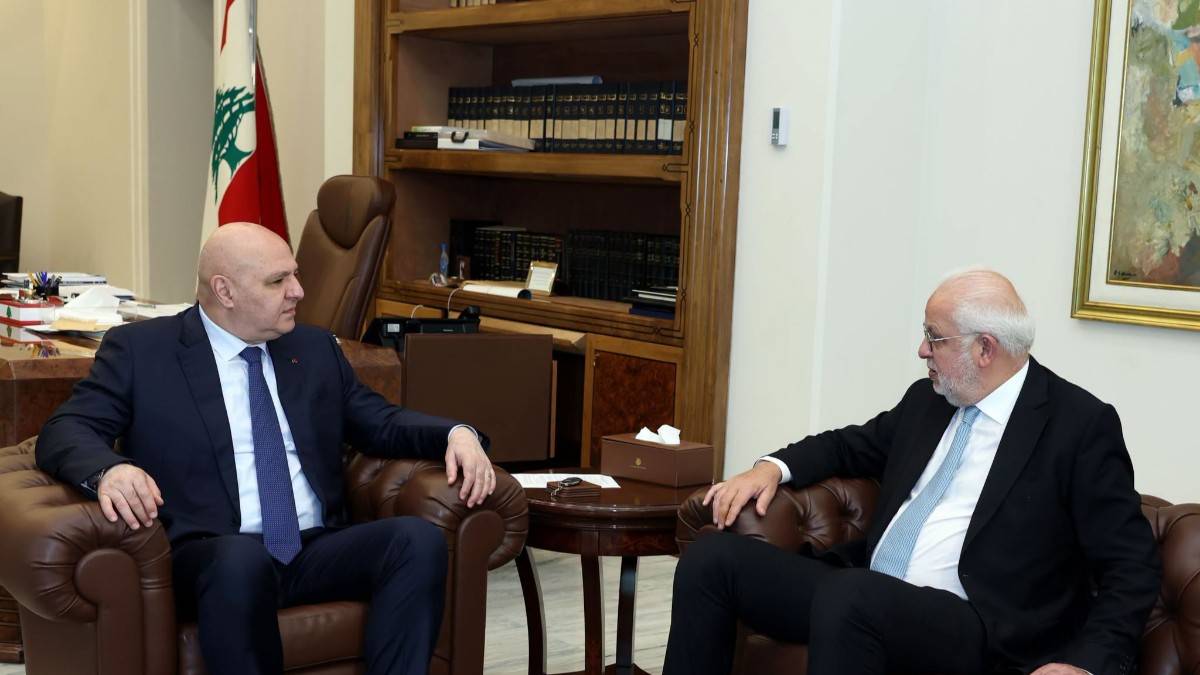
Lebanese President Joseph Aoun receives Justice Minister Adel Nassar at the Presidential Palace last week (Lebanese Presidency)

"The investigation is continuing and expanding," he said, citing commitments by President Joseph Aoun, Prime Minister Nawaf Salam and the Justice Ministry to ensure it proceeds without limits or political interference.

"This is fundamental to us," Nassar said. "We consider it a violation of national security, which falls within the Judicial Council's jurisdiction."

He insisted the proposed referral rested on legal, not political, grounds.

Nassar said he raised the issue at the previous cabinet meeting at the Grand Serail, winning support from ministers affiliated with the Lebanese Forces.

He subsequently filed a request with the cabinet's General Secretariat to place the referral on the agenda of Thursday's meeting at the presidential palace, chaired by Aoun.

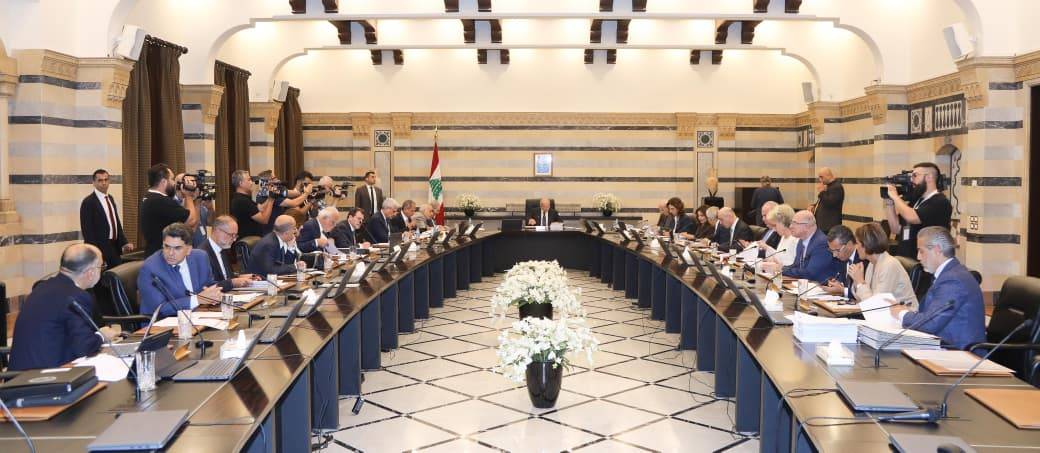
Prime Minister Nawaf Salam chairing a cabinet meeting (Lebanese Premiership)

The move would establish two parallel tracks: the ongoing judicial investigation and a separate judicial-administrative process requiring cabinet approval to transfer the case to the Judicial Council.

If approved, the military judiciary would relinquish jurisdiction and the case would automatically pass to the Judicial Council.

Nassar said the constitution governed cabinet deliberations and that the referral would not obstruct the investigation.

"We are open to discussion in the cabinet, in accordance with constitutional rules, until the government reaches its decision," he said.

Nassar warned that the shipment posed serious risks, both because of the dangers of transporting and storing large quantities of explosives and the uncertainty surrounding their intended use.

Moving such quantities threatened the areas they passed through and their destinations, he said, while storing them in a populated area endangered residents.

He also raised concerns that the explosives could be linked to a broader operation.

"There are suspicions about their intended use, whether for assassinations or bombings inside the country," he said, stressing that investigators had yet to establish their intended purpose.

A third possibility was their use in military operations, he added, citing Hezbollah's statements that the explosives were intended for fighting Israel.

Nassar said either domestic attacks or military operations could threaten national security.

"The cabinet has been clear in its decisions prohibiting military and armed activities outside the framework of the state," he said.

"Whether intended for use inside Lebanon or in military operations that could provide pretexts for Israeli wars against Lebanon, both constitute a threat to national and state security and a violation of applicable laws."

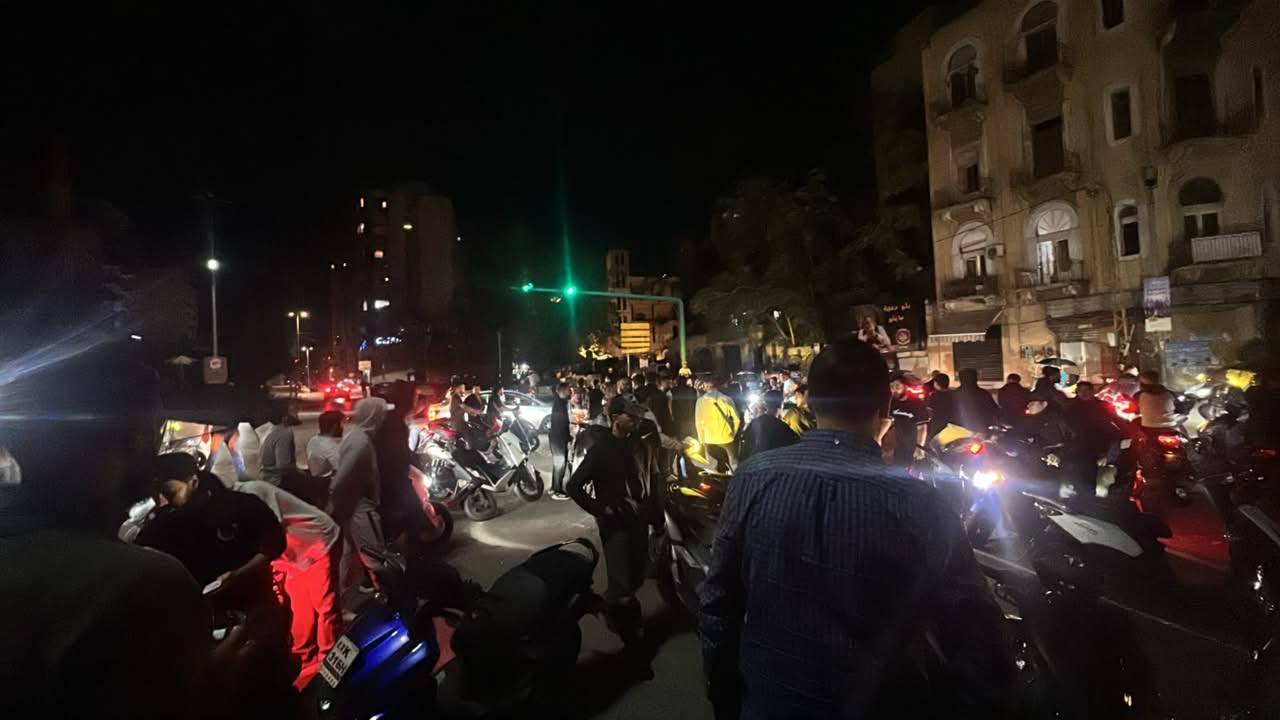
Hezbollah supporters on a motorcycle procession in the Bechara El Khoury area of Beirut on Friday evening, protesting the arrest of those involved in transporting explosives (Al-Markazia)

Figures close to Hezbollah have attacked the proposed referral, but Nassar rejected political confrontation, insisting the case must be handled on its legal merits.

Technically, he said, the investigation concerns the seizure, transportation and storage of explosives and determining their intended use — matters that provide legal grounds for referral to the Judicial Council.

He dismissed concerns that transferring the case could water down the investigation.

"The judiciary will pursue the investigation to the end in accordance with established procedures. We have complete confidence in the judges and the investigations," he said.

Political disputes, however intense, would not prevent investigators from expanding the probe or taking the steps necessary to address the dangers the explosives posed to society and security, he added.

Nassar also pledged to protect judges from political interference or pressure, regardless of its source or whether it was intended to influence their work positively or negatively.

"There is absolutely no political direction being given to the judiciary in this case or any other," he said.

Nassar defended the investigation and proposed referral despite Hezbollah's objections, including criticism voiced by its lawmakers last week after the explosives were seized.

He pointed to the government's policy statement, which identifies exclusive state control over weapons and the authority to decide on war and peace as conditions for building state institutions.

"The state is building itself," he said.

"What we are doing is a judicial process conducted in accordance with applicable laws. I do not interfere in the substance of investigations. My duty is to create the appropriate conditions for judges to pursue any case to the end."