


Keeping it Real: Appraisers Sift China Second-Hand Luxury Market for Fakes

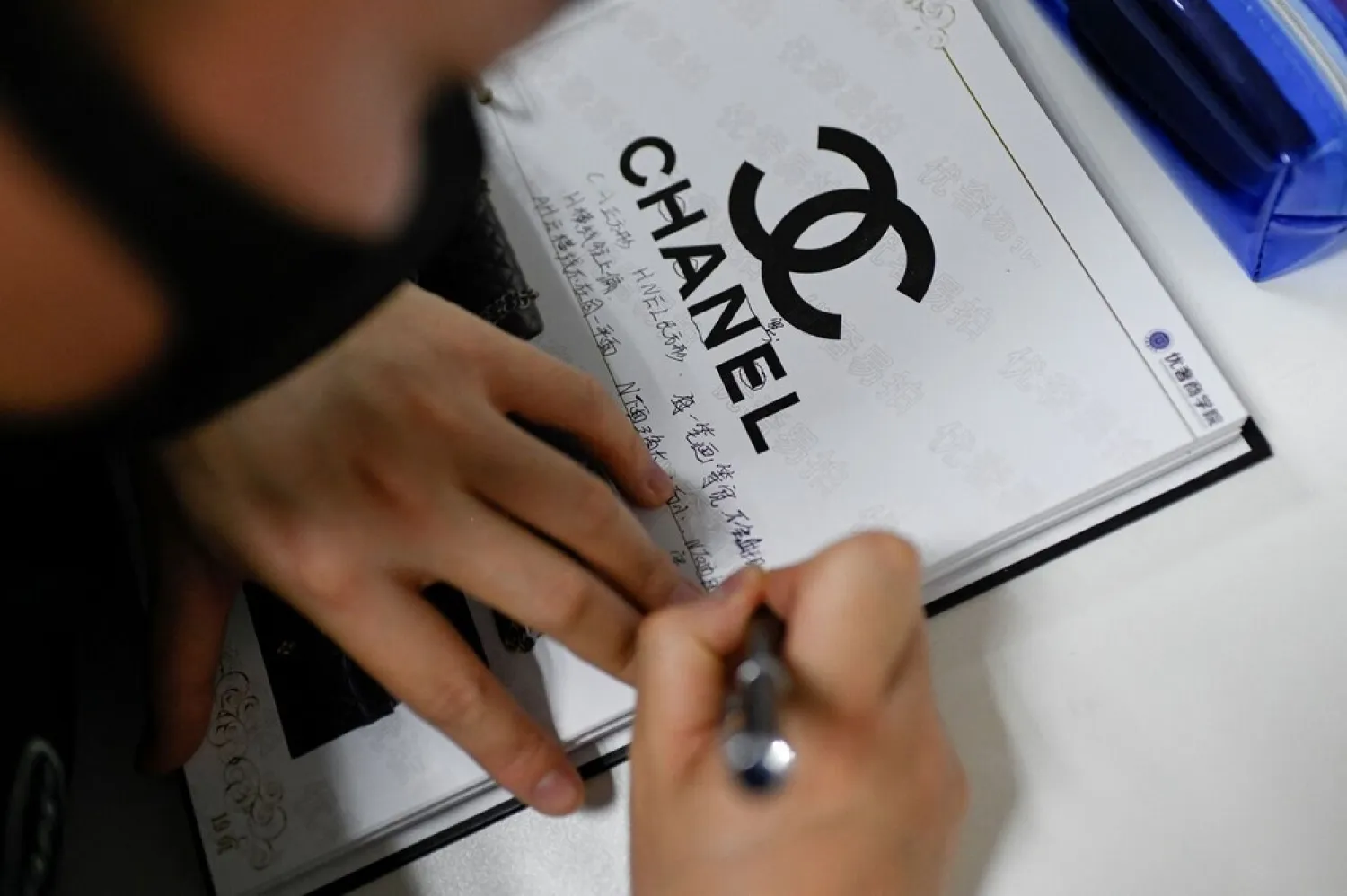
A trainee taking notes during a class at the Extraordinary Luxuries Business School in Beijing on March 24, 2021. (AFP)
TT

Keeping it Real: Appraisers Sift China Second-Hand Luxury Market for Fakes

A trainee taking notes during a class at the Extraordinary Luxuries Business School in Beijing on March 24, 2021. (AFP)

It's the world's biggest market for luxury goods -- and their counterfeits -- so an expert eye for distinguishing the original products from the bogus ones is a skill set in hot demand across China.

According to AFP, this person really exists and it's called the "luxury appraiser", an eagle-eyed differentiator of real from fake, trained to triage handbags, belts and garments for dodgy serial numbers, stitching and logos.

China's factories churn out huge quantities of luxury goods, much of which is destined for a domestic market worth about four trillion yuan ($620 billion), according to market researchers UIBE Luxury China.

Now the second-hand luxury market is also booming as those unwilling to part with thousands of dollars for a handbag seek out the prestige at a discount price.

But a vast shadow trade in counterfeits lies in wait for the bargain-hunters.

Many are fooled by "good imitations with little difference" from the originals, said Zhang Chen, founder of the Extraordinary Luxuries Business School, who tools his graduates with the gift of detecting fakes.

His seven-day course teaches students how to detect forgeries, value second-hand goods and learn the skills needed to appraise luxury products.

And while the fee is 15,800 yuan ($2,400), Zhang says it is a price worth paying as it provides a foothold in a second-hand luxury market that is only just taking off.

China's second-hand luxury market value reached 17.3 billion yuan in 2020, almost double the previous year, according to consultancy Forward Business Information.

"Chinese people buy one third of the world's luxury goods, but the circulation rate of three percent is far below the 25-30 percent in Western countries," he said, referring to the percentage that is later resold.

Zhan drills the rules of luxury into students who are hooked onto his every word. "The lining of a black Chanel handbag must be pink," he says.

Trainees check ID cards on handbags from the French luxury fashion chain under a special ultra-violet light.

"Two letters will light up, and that's the secret," said Zhang, who learned his own skill appraising luxury goods a decade ago in Japan. Knowing which letters in the Chanel logo use a rectangular rather than square font can "detect a third of the fakes on the market", he added.

His class is all affluent but from a variety of backgrounds, including the former editor of a fashion magazine from Shanghai and a bartender looking for a fresh start after his business was hit by the Covid-19 pandemic.

"I realized that second-hand luxury bags could be sold at a very good price," said 31-year-old stock market trader Xu Zhihao.

A Louis Vuitton Neverfull handbag bought two years ago can still be sold at 9,000 yuan on second-hand platforms, a 20 percent discount, while a small Chanel Gabrielle bag goes for about 60 to 70 percent of the counter price.

But the condition of the bags can have a heavy impact on value.

"Pay special attention to the scratches around the buckle," Zhang warns, identifying grazes from long nails.

And seasonality is essential, with red -- the color of good luck -- selling quickest over Chinese holidays. His school has even attracted former counterfeiters as students, he added, many wanting to build on existing skills but shift to less disreputable work.

In most cases it takes Zhang around 10 seconds to tell if a product is real, he says. Some clients send pictures of watches, trainers and clothes for an online diagnosis.

Verifying luxury products is set to become more high-tech with fashion houses introducing chips to trace pedigree.

Louis Vuitton announced in 2019 that it will launch a blockchain platform called AURA to record its goods. Microchips have been inserted in the sole of women's shoes made by Italian brand Salvatore Ferragamo, while Burberry has experimented with radio frequency identification technology (RFiD) in its goods.

But with the tech still in its infancy, Zhang is unconcerned about the threat to his analogue line of work.

"Any technology has the possibility of being cracked. The market for identifying luxury products will always exist, it's just that the methods will have to adapt," Zhang told AFP.



French Designer Threads a Path in London Fashion Week

This photo taken on February 6, 2026 shows French fashion designer Pauline Dujancourt posing for a photograph in her studio in south London. (Photo by Ben STANSALL / AFP)
TT

French Designer Threads a Path in London Fashion Week

This photo taken on February 6, 2026 shows French fashion designer Pauline Dujancourt posing for a photograph in her studio in south London. (Photo by Ben STANSALL / AFP)

Just days before her third runway show, French designer Pauline Dujancourt was riding a wave of excitement and nerves.

The 31-year-old admitted she had begun having strange, nightmarish dreams ahead of her big moment at London Fashion Week on Sunday.

The British capital will once again host its Autumn/Winter fashion week from Thursday to Monday, after New York's bonanza and before the catwalk carousel moves to Milan and Paris.

London, known for its raw creative energy and rising talents, is where Dujancourt launched her label in April 2022 after training at the renowned arts and design school Ecole Duperre in Paris, and fashion hub Central Saint Martins in London.

She and her team began work in November on her autumn-winter 2026/27 collection to be unveiled before some 450 guests -- journalists, buyers and VIP clients.

For designers, everything comes down to those few precious minutes on the catwalk. It's no wonder nervousness mixes with the creative buzz.

"I go through every emotion," Dujancourt told AFP with a smile. "Some days I'm super excited, full of ideas, and others I'm like: why did I pick this color, this fabric?"

The questions and worries snowball: "Will everyone be on time? Will there be last-minute hitches on the day?"

In recent weeks, she has been running her daily schedule with military precision.
Dujancourt works year-round with four assistant designers, but the team swells to around 50 people ahead of the show.

And she works with a community of knitters in Lima, Peru, with handknitting -- "something that my grandmother taught me as a child" -- being a hallmark of her garments.

"She was so skillful and so humble about it. And no one really realized how much work it takes and how much technique it takes," she said.

Known for her sensual, airy knitwear, Dujancourt was a finalist for the LVMH Prize, won Elle UK's young talent award, and is supported by the British Fashion Council.

Her clients span the globe from Japan to the United States, France and the UK, with regular requests for wedding dresses.

Her new collection pays tribute to women persecuted during historical witch hunts.

"I really want to celebrate the fact that there are so many women around the world who are working so humbly on domestic skills ... like sewing, hand knitting," she said.

Two weeks before the show, young seamstresses were crocheting floral motifs in mohair and Japanese metallic thread at a south London studio overlooking the Thames river and Big Ben.

Workers were hunched over their desks pouring over designs, with the looks still "in pieces".

Then comes the moment when everything is assembled. "It's the magical stage, when the clothes start to come alive," she said, her blue eyes lighting up her face framed by long dark hair.

Less than a week before the show, fittings begin with an in-house model, followed by the castings to find the right models.

On the eve of the show come final fittings, hair and make-up tests. And finally, on Sunday morning, the full rehearsal.

Show day always brings surprises. At Dujancourt's last catwalk in September, several models arrived extremely late, held up by another show.

"They turned up still wearing the other show's make-up. We had to dress them and redo everything ... I nearly died," she recalled.

What is her worst nightmare? A model tripping or garments ripping in front of the cameras.

"I once dreamt I'd forgotten to get dressed before coming out to greet the audience -- that would be a bit embarrassing," she joked.

Around 25 outfits will strut the catwalk on Sunday, a moment that "goes by in a flash".
Afterwards comes the crash.

"We barely see it happening ... because we are backstage in the madness and the chaos of it," she said.

But then it's finished "and there's a bit of baby blues afterwards," as she comes down off the adrenaline rush.

Dujancourt heads to Paris after London Fashion Week to meet buyers, before work begins again for her next show, in September.


Fashion Commission, Saudi Retail Academy to Develop National Talent 

Fashion Commission, Saudi Retail Academy to Develop National Talent 
TT

Fashion Commission, Saudi Retail Academy to Develop National Talent 

Fashion Commission, Saudi Retail Academy to Develop National Talent 

The Saudi Fashion Commission signed a memorandum of understanding (MoU) with the Saudi Retail Academy to develop national capabilities and boosting specialized skills in the fashion and retail sectors, reported the Saudi Press Agency on Monday.

The MoU aims to support local talent and the creation of sustainable employment opportunities in this vital industry. It stems from the two sides’ keenness to cooperate in the fields of training and professional development.

The agreement was signed on the sidelines of the graduation ceremony of the academy’s first cohort.

The Fashion Commission focuses on developing local talent, transferring global expertise, and advancing the fashion sector in the Kingdom, while the Saudi Retail Academy is a non-profit institute and a specialized entity in training and development in the retail field and in building professional competencies and skills related to retail and sales.

The MoU aims to establish a framework for cooperation to design and implement specialized training programs that boost the readiness of national cadres and qualify them according to the highest professional standards, with a focus on developing skills in sales, customer experience, and store management to meet labor market requirement and the needs of the growing fashion sector.

Fashion Commission chief executive Burak Cakmak said that developing human capital is a fundamental pillar for the long-term growth of the Kingdom’s fashion sector.

The partnership reflects the commitment to strengthening the capabilities that form the foundation of a competitive and sustainable industry through investment in specialized skills within retail and customer experience, enabling brands to grow and supporting the sector’s confident evolution, he added.

Saudi Retail Academy chief executive Hend Al-Dhaban stressed that the partnership embodies a shared vision to empower national talent and elevate professionalism in the retail sector.

The agreement will help channel training expertise to meet the specialized needs of the fashion sector and equip young men and women with the practical skills required to succeed in the labor market, thereby boosting service quality and supporting localization targets and economic growth, she explained.

This cooperation is part of the Fashion Commission’s ongoing efforts to develop the fashion value chain through building strategic partnerships with specialized training and education entities, expanding professional opportunities for national talent, and linking education and training outputs with labor-market needs.

Through their partnership, the commission and the academy will help in building an integrated ecosystem that connects education, vocational qualification, and employment, bolstering the competitiveness of the fashion and retail sectors and supporting the objectives of Saudi Vision 2030 in empowering national cadres, localizing jobs, and improving quality of life.


Saudi 100 Brands Debuts Landmark Fashion Presentation at Saudi Cup 2026

The experience introduced global audiences to Saudi Arabia’s dynamic and growing fashion ecosystem - SPA
TT

Saudi 100 Brands Debuts Landmark Fashion Presentation at Saudi Cup 2026

The experience introduced global audiences to Saudi Arabia’s dynamic and growing fashion ecosystem - SPA

The Fashion Commission launched its Saudi 100 Brands showcase at the Saudi Cup 2026, marking a historic milestone for the world-renowned equestrian event at King Abdulaziz Racecourse in Riyadh.
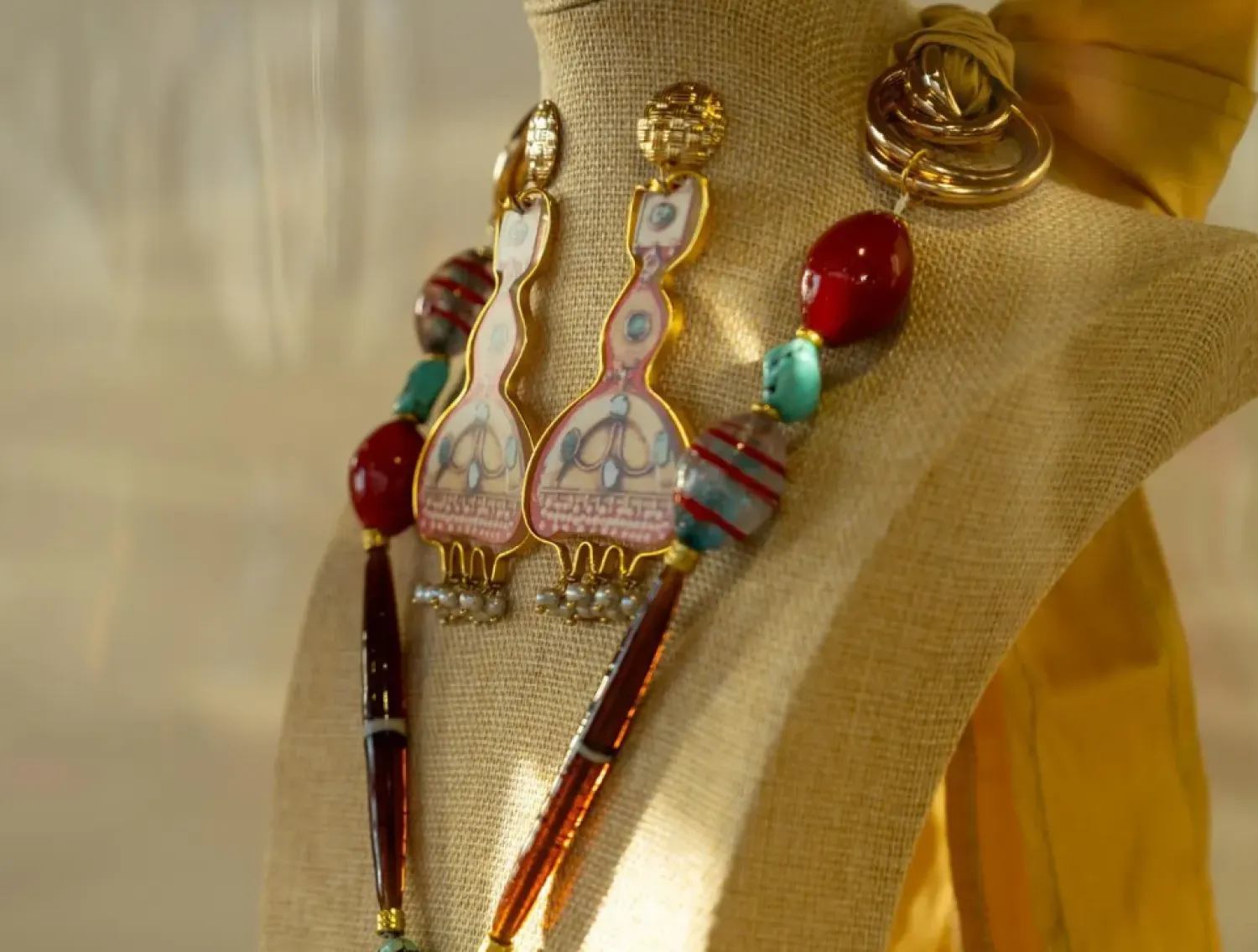
The collections celebrate Saudi heritage by blending traditional and contemporary design. Jewelry and accessory brands also exhibited throughout, providing Saudi designers with a platform to reach a broader global audience. These showcases emphasize the fusion of heritage and modern design, offering a new perspective on the Kingdom's creative identity.
The Saudi 100 Brands program, a flagship initiative of the Fashion Commission, supports emerging designers by providing tools, expertise, and platforms to grow their global presence. This collaboration with the Saudi Cup underscores the importance of celebrating cultural heritage while advancing design innovation.

Each piece in the exhibition incorporates heritage motifs, textiles, and storytelling, reimagined through innovative design to appeal to modern and international audiences.

The exhibition aims to celebrate national identity, highlight local creative talent, and present the evolving direction of Saudi fashion, SPA reported.

Visitors explored the intersection of craftsmanship and cultural expression, discovering how designers honor tradition while advancing fashion design.

The experience also introduced global audiences to Saudi Arabia’s dynamic and growing fashion ecosystem.

This participation reflects the Fashion Commission’s vision to develop a thriving fashion sector rooted in cultural heritage and global ambition. By combining cultural narratives with innovative design, the commission enables Saudi fashion to contribute to global creative industries, nurture talent, and position Saudi brands for sustained success.