Lebanon Rules out Preconditions as Sea Border Talks with Israel Resumehttps://english.aawsat.com/home/article/2954496/lebanon-rules-out-preconditions-sea-border-talks-israel-resume
Lebanon Rules out Preconditions as Sea Border Talks with Israel Resume
A UNIFIL Navy ship patrols in the Mediterranean Sea next to a base of the UN peacekeeping force, off the southern town of Naqoura, Lebanon, Tuesday, May 4, 2021. (AP Photo/Hussein Malla)
Lebanon Rules out Preconditions as Sea Border Talks with Israel Resume
A UNIFIL Navy ship patrols in the Mediterranean Sea next to a base of the UN peacekeeping force, off the southern town of Naqoura, Lebanon, Tuesday, May 4, 2021. (AP Photo/Hussein Malla)
Lebanese President Michel Aoun said on Tuesday there should be no preconditions for talks with Israel over their Mediterranean border dispute, key to Lebanon's hopes to find gas reserves amid its worst economic crisis since its 1975-1990 civil war.
Negotiations between the old foes were launched in October to try to resolve the dispute, which has held up exploration in the potentially gas-rich area, yet the talks have since stalled.
A statement by the Lebanese presidency issued after the resumption of talks on Tuesday said the US mediator had asked for negotiations to be on the basis of Israeli and Lebanese border lines already submitted and registered with the United Nations.
"This is against the Lebanese position," the statement said.
"President Aoun has given his instructions to the negotiating team that talks should not be tied to any preconditions and should rely on international law that will remain the basis for reaching a fair solution."
The earlier talks stalled after each side presented contrasting maps outlining proposed borders that actually increased the size of the disputed area.
Israel already pumps gas from huge offshore fields.
Lebanon, which has yet to find commercial gas reserves in its own waters, is desperate for cash from foreign donors.
Tuesday's statement did not make clear when the next session of the talks, which are taking place at a UN peacekeepers' base in Lebanon's Naqoura, will take place.
One official Lebanese source told Reuters the meetings would continue on Wednesday with Lebanon asking for them to be on the basis of an additional area, not the one registered originally at the United Nations.
Since the talks stalled, Lebanon's caretaker prime minister and ministers of defense and public works approved a draft decree which would expand Lebanon's claim, adding around 1,400 square km (540 square miles) to its exclusive economic zone.
At G7, Egypt’s Sisi Urges Israel to Halt Gaza Seizurehttps://english.aawsat.com/arab-world/5284913-g7-egypt%E2%80%99s-sisi-urges-israel-halt-gaza-seizure
President Donald Trump speaks with Egyptian President Abdel Fattah al-Sisi, center, and French President Emmanuel Macron, right, at a working lunch with leaders of G7 and the Middle East in Evian-les-Bains, France, Tuesday, June 16, 2026. (AP)
TT
TT
At G7, Egypt’s Sisi Urges Israel to Halt Gaza Seizure
President Donald Trump speaks with Egyptian President Abdel Fattah al-Sisi, center, and French President Emmanuel Macron, right, at a working lunch with leaders of G7 and the Middle East in Evian-les-Bains, France, Tuesday, June 16, 2026. (AP)
Egyptian President Abdel Fattah al-Sisi on Tuesday urged Israel to abandon its plan to take control of 70 percent of Gaza, as he attended the G7 summit in France.
Last month, Israeli Prime Minister Benjamin Netanyahu ordered the military to take control of more territory in the battered Gaza Strip, flouting the terms of a fragile ceasefire that took effect in October.
He said Israeli forces initially controlled about 50 percent of the enclave under the truce before advancing to around 60 percent and then directing a move towards 70 percent.
Under the ceasefire, Israeli forces were meant to pull back behind a so-called "yellow line," separating areas controlled by Palestinian group Hamas from those held by the Israeli army.
"Only 30 percent of the Strip is effectively left for the Palestinian people," Sisi said, at a G7 summit session on Middle East stability in the French resort of Evian.
This approach "must stop immediately", he added at the session which was also attended by G7 and EU leaders as well as the leaders of the United Arab Emirates and Qatar.
Sisi said there was "no alternative to reaching a just and lasting settlement to the Palestinian cause based on the two-state solution" and urged "the implementation of US President Donald Trump's plan for peace in the Gaza Strip".
Egypt, which shares a border with Gaza, has been a key mediator between Israel and Hamas since the group's October 7, 2023, attacks on Israel triggered the war in the enclave.
The first phase of the Gaza truce saw the release of the remaining hostages seized in the October 7 attacks, in exchange for Palestinians held by Israel.
The transition to the second phase, which was supposed to involve Hamas's disarmament and a gradual withdrawal of the Israeli army, has been stalled for months.
Gaza remains gripped by daily violence, with both the Israeli military and Hamas accusing one another of violating the truce.
Tension in Samarra Tests Iraq Govt's Plan to Impose State Monopoly over Armshttps://english.aawsat.com/arab-world/5284909-tension-samarra-tests-iraq-govts-plan-impose-state-monopoly-over-arms
A man walks past a portrait of the influential cleric Moqtada al-Sadr wearing the military uniform of Saraya al-Salam, in a street in Baghdad, during the provincial council elections in Iraq, on Dec. 18, 2023. (AFP)
TT
TT
Tension in Samarra Tests Iraq Govt's Plan to Impose State Monopoly over Arms
A man walks past a portrait of the influential cleric Moqtada al-Sadr wearing the military uniform of Saraya al-Salam, in a street in Baghdad, during the provincial council elections in Iraq, on Dec. 18, 2023. (AFP)
The Saraya al-Salam faction loyal to influential Iraqi cleric Moqtada al-Sadr said on Tuesday it firmly rejected serving under the command of the pro-Iran Popular Mobilization Forces, a dispute that could pose an early test for Prime Minister Ali al-Zaidi’s plan to bring arms under state control.
The rejection followed reports that a new security commander had been appointed in Samarra, where Sadr’s armed wing is based. The commander is rumored to be close to the Asaib Ahl al-Haq faction.
Asaib Ahl al-Haq, led by Qais al-Khazali, a leading member of the ruling Coordination Framework, has uneasy ties with the Sadrist movement and its leader, Sadr, for reasons observers describe as “political and ideological.”
A Sadrist official told Asharq Al-Awsat that Samarra was witnessing a “state of severe tension” because of “deliberate friction” by some commanders and parties in the PMF with Saraya fighters.
The official said the dispute erupted after PMF chief Falih al-Fayyadh dismissed Ali al-Aqili, the PMF operations commander in Samarra and a member of the Sadrist movement, and replaced him with another commander close to or affiliated with Asaib Ahl al-Haq.
The move angered Saraya fighters.
The official urged the prime minister, who is also commander-in-chief of the armed forces, to “intervene immediately to settle this matter,” saying Saraya was now under his command.
At the start of June, Zaidi issued an administrative order forming a higher committee to oversee Saraya al-Salam’s integration into government security forces and place it directly under the commander-in-chief.
The Joint Operations Command later said it had received the full lists and data for Saraya al-Salam formations, including personnel, weapons and equipment, to complete directives for integrating all Saraya al-Salam formations into security forces tied to the commander-in-chief.
Saraya al-Salam is part of the PMF through brigades 313, 314 and 315. It carries out security duties in several areas, most notably Samarra, where it has been based since June 2007, after the bombing of the Imam al-Askari shrine.
Sadr said on May 27 that he was integrating his armed wing, Saraya al-Salam, into the state and called on PMF factions to hand over their weapons.
Although formally part of the PMF, Saraya al-Salam has long operated semi-independently. It does not take orders from the PMF’s commanders and has poor relations with many factions.
Members of the Saraya al-Salam faction cheer during a ceremony marking the start of the process of handing over their weapons to Iraqi state forces in Samarra, north of Baghdad, Iraq, Thursday, June 4, 2026. (AP)
Test for weapons monopoly
The PMF has not commented on the tension. But Saraya al-Salam appealed to Sadr and Zaidi, stressing that it would not remain under PMF command.
In a statement on Tuesday, Saraya al-Salam pointed to its voluntary disarmament and integration into other security institutions, calling the move “a practical model” for placing weapons exclusively in the state’s hands.
It said the PMF’s recent dismissal of some commanders “contradicts the spirit of the integration process and the monopoly of weapons” through changes in commanders, sectors and responsibilities.
The faction said the appointment of the new security commander “conflicts with the provisions and procedures” of the integration committee formed by the government, calling it “an unjustified targeting” of Saraya personnel.
It stressed its categorical rejection of “working under the command of the Popular Mobilization Forces.”
Tribal sheikhs and clerics in Samarra warned on Saturday against replacing Saraya al-Salam with other factions. They called on the prime minister to visit the city personally and assess conditions on the ground.
They demanded that the security file be handed to the Interior Ministry if there was any intention to replace Saraya with other factions.
Observers see the standoff between Saraya al-Salam and the PMF as a challenge to the weapons control plan and to whether it is truly “serious and not merely symbolic.”
It is also a test of the prime minister’s readiness to use his powers to settle a dispute between armed groups that had already announced their integration into state institutions.
ISIS Claims Responsibility for Attack on Police Camp in Syria’s Raqqahttps://english.aawsat.com/arab-world/5284897-isis-claims-responsibility-attack-police-camp-syria%E2%80%99s-raqqa
Syrian security forces are seen in Hasakeh. (SANA file)
TT
TT
ISIS Claims Responsibility for Attack on Police Camp in Syria’s Raqqa
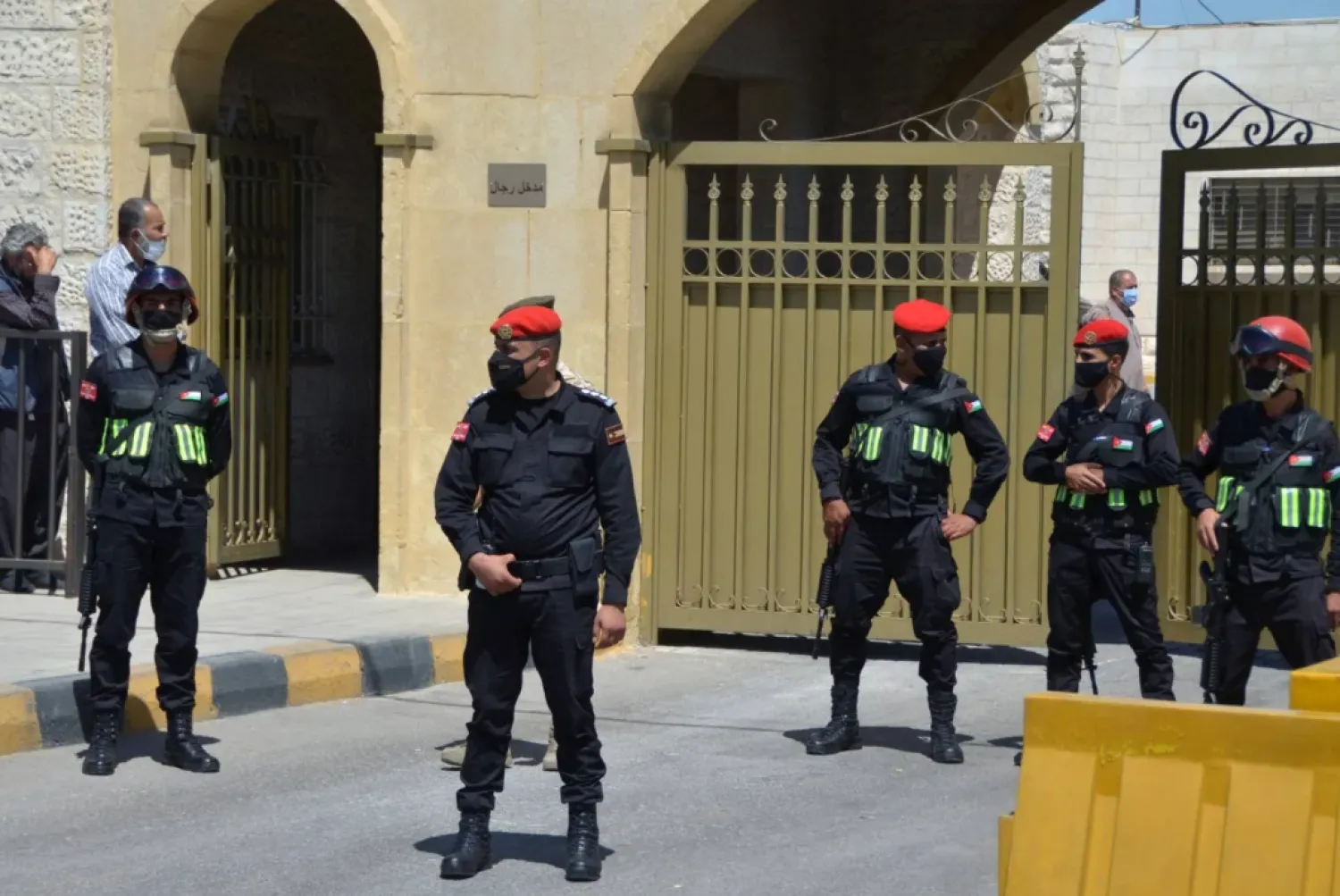
Syrian security forces are seen in Hasakeh. (SANA file)
The ISIS claimed responsibility on Tuesday for an attack on a Syrian interior ministry camp in the city of Raqqa that killed one member of the security personnel a day earlier.
Syria's Interior Ministry said on Monday that one of its security personnel had been killed as its forces thwarted an attack by two ISIS militants on a command headquarters of the country's internal security forces in Raqqa.
لم تشترك بعد
انشئ حساباً خاصاً بك لتحصل على أخبار مخصصة لك ولتتمتع بخاصية حفظ المقالات وتتلقى نشراتنا البريدية المتنوعة