


Algeria Wants to Terminate Contracts with Companies Affiliated with ‘Hostile Lobbies’

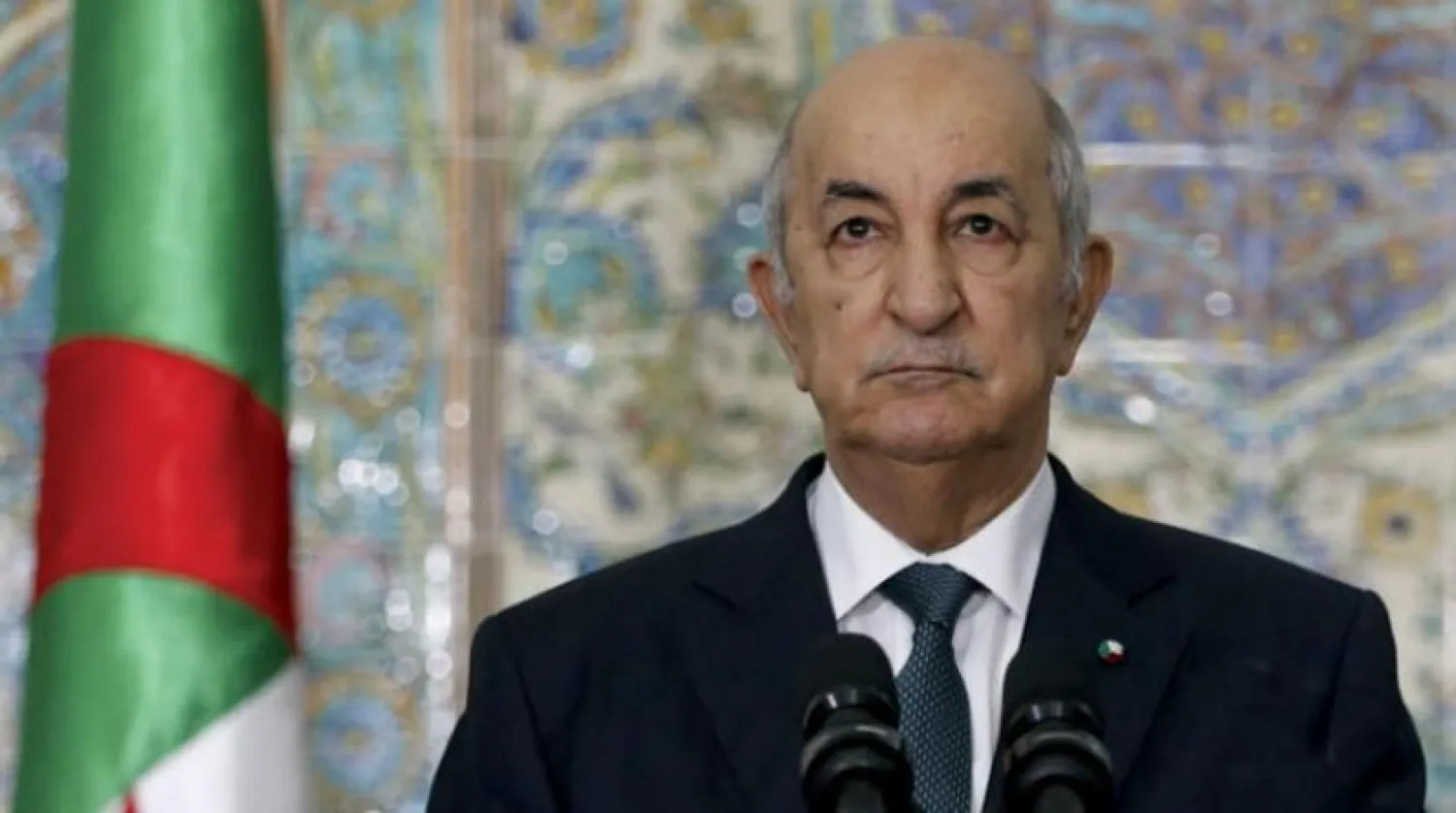
Algerian President Abdelmadjid Tebboune. (Reuters file photo)
TT

Algeria Wants to Terminate Contracts with Companies Affiliated with ‘Hostile Lobbies’

Algerian President Abdelmadjid Tebboune. (Reuters file photo)

The Algerian government is reviewing all contracts and deals between public sector companies and foreign partners concluded in recent years to determine whether they contradict the state's policies and interests.

The presidency canceled all economic and trade agreements with lobbies deemed “hostile to Algeria.”

A government source told Asharq Al-Awsat that the decision created a number of problems for several companies, especially as it might push some to end deals concluded with foreign companies and economic groups belonging to countries that have strained relations with Algeria.

The source warned that the termination of contracts will have a significant financial impact that will harm the battered economy.

President Abdelmadjid Tebboune informed Prime Minister Abdelaziz Djerad that he received many reports about the involvement of a number of public and private economic in contractual relations with foreign entities, regardless of the national economic and strategic interests.

The president blamed Insurance and Reinsurance Company (CAAR) and the Algerian Insurance Company (SAA) for signing deals with their Moroccan counterparts.

He also referred to the mobile operator, Djezzi, which granted its advertising to companies close to foreign lobbies that are “hostile” to Algeria. He did not elaborate.

Algerian-Moroccan relations have been almost severed since 1994 following their disagreement over the Sahara conflict.

The controversial contracts were concluded by the three companies during the era of former President Abdelaziz Bouteflika (1999-2019).

Tebboune’s “instructions”, leaked on Sunday, were issued on April 23 when the president asserted that the contracts were done without prior consultation, stressing that it inevitably “puts sensitive data at the disposal of foreign entities, which would harm vital national interests and security.”

The president instructed the companies to end their contracts with foreign companies and entities within 10 days in order to halt the depletion of hard currency, urging them to be more responsible and cautious in relations with foreign partners.

The president also instructed the Minister of Finance to prevent any profits of such contracts to be transferred abroad, adding that they must be terminated at once.

He warned that any breach of compliance with these instructions will be considered “treachery and collusion”.



Iraq’s Asaib Ahl Al-Haq Says It Will Start Handing Its Weapons to the State

Members of the Iraqi Popular Mobilization Forces parade of the Asaib Ahl al-Haq, participate in a Quds Day march in Baghdad, Iraq, Friday, July 1, 2016. (AP)
TT

Iraq’s Asaib Ahl Al-Haq Says It Will Start Handing Its Weapons to the State

Members of the Iraqi Popular Mobilization Forces parade of the Asaib Ahl al-Haq, participate in a Quds Day march in Baghdad, Iraq, Friday, July 1, 2016. (AP)

One of Iraq’s most powerful Iran-backed armed groups said Tuesday it would begin putting its weapons under government control, a major step in the new government’s effort to bring armed factions that have long operated on their own under state command.

Asaib Ahl al-Haq said it had formed a committee to oversee the move, including an inventory of its fighters, weapons and equipment, and to coordinate with the commander-in-chief of the armed forces. The group cast the decision as a response to calls by Iraq’s top Shiite religious authority and the Iran-aligned Coordination Framework, the largest bloc in parliament that dominates Iraqi politics.

The war in the Middle East has exposed the fragility of Iraq’s state institutions and their limited ability to restrain these groups. A parallel confrontation between Washington and the factions has deepened the crisis, with factions acting as an extension of Iran’s regional campaign and escalating attacks on US assets in Iraq before a tenuous ceasefire deal was reached in April.

The first significant move came a week ago, when the influential Shiite cleric Moqtada al-Sadr said his Saraya al-Salam faction would split from his political movement and integrate into state institutions.

Under pressure from Washington, Prime Minister Ali al-Zaidi has been working to assert state authority over weapons.

Zaidi, a 40-year-old banker sworn in last month has made a state monopoly on arms a centerpiece of his program. The Trump administration has warned against any government influenced by Iran-linked factions and tied defense cooperation and funding to efforts to curb them.

Many Iran-backed factions are funded through the Iraqi state budget and embedded within the security apparatus, although not under the government's control. This has drawn criticism from the United States and other countries that have borne the brunt of their attacks and say Baghdad has failed to take a tougher stance.

Several armed factions aligned with Iraq’s Coordination Framework have taken a different stance on efforts to bring weapons under state control. Two important groups, Kataib Hezbollah and Harakat al-Nujaba, have rejected disarmament, tying the issue to Iraq’s sovereignty and the presence of foreign troops.

Kataib Hezbollah welcomed moves by other factions to place weapons under state authority but said its own armed activity will continue as part of what it describes as “resistance work." In a recent statement attributed to its Abu Mujahid al-Assaf, the group said it would offer coordination with the Popular Mobilization Forces rather than surrendering arms.

The PMF, a state-backed umbrella of armed groups, was formed in 2014 to fight the ISIS group. Many of its groups still keep their own command and ties to Iran.


Lebanon’s Berri to Guarantee Hezbollah Respect for ‘Global’ Truce with Israel, Says Adviser

 Rescue workers use excavators, as they search for victims under the rubble of a building that was hit Monday in an Israeli airstrike in the southern port city of Tyre, Lebanon, Tuesday, June 2, 2026. (AP)
Rescue workers use excavators, as they search for victims under the rubble of a building that was hit Monday in an Israeli airstrike in the southern port city of Tyre, Lebanon, Tuesday, June 2, 2026. (AP)
TT

Lebanon’s Berri to Guarantee Hezbollah Respect for ‘Global’ Truce with Israel, Says Adviser

 Rescue workers use excavators, as they search for victims under the rubble of a building that was hit Monday in an Israeli airstrike in the southern port city of Tyre, Lebanon, Tuesday, June 2, 2026. (AP)
Rescue workers use excavators, as they search for victims under the rubble of a building that was hit Monday in an Israeli airstrike in the southern port city of Tyre, Lebanon, Tuesday, June 2, 2026. (AP)

Lebanese parliament Speaker Nabih Berri, a key Hezbollah ally, will guarantee the Iran-backed group's adherence to a "global ceasefire" with Israel, his adviser told AFP on Tuesday.

Berri, who heads the Hezbollah-allied Amal party, has long acted as an intermediary between the group and the United States, which considers Hezbollah a "terrorist" organization.

US President Donald Trump said late Monday that Israeli Prime Minister Benjamin Netanyahu had agreed to call off a military raid on Beirut while Hezbollah agreed "all shooting will stop".

Despite the announcement Israeli drone strikes on southern Lebanon on Tuesday killed eight people, including a father and his son and daughter.

Adviser Ali Hamdan told AFP that "speaker Berri's main demand is a global ceasefire. If a global ceasefire deal is reached, he will guarantee Hezbollah's respect for it."

Hamdan said a "global ceasefire means a halt to Israeli strikes by air, land or sea, and that it will not carry out detonations or demolitions" in the south, where Israel is accused of razing entire villages.

Trump had said that "through highly placed Representatives, I had a very good call with Hezbollah, and they agreed that all shooting will stop -- That Israel will not attack them, and they will not attack Israel."

Netanyahu said late Monday that he had told Trump "that if Hezbollah does not cease attacking our towns and our citizens, Israel will strike terrorist targets in Beirut".

Hezbollah has not released a statement on the announcement.

Lebanon's embassy in the United States said on Monday that Hezbollah had accepted a US proposal on a "mutual cessation of attacks".

"Under the proposed arrangement, Israeli strikes on Dahieh would cease in exchange for Hezbollah refraining from launching attacks against Israel, with the ceasefire framework to be expanded to encompass all Lebanese territory," the embassy statement released by the Lebanese presidency added, referring to Beirut's southern suburbs.

Iran has insisted that a ceasefire in Lebanon remains a key condition for any deal with the United States to end the Middle East war.

Iran's parliament speaker Mohammad Bagher Ghalibaf, who is also the country's chief negotiator, said on Monday night that he and Berri had spoken by phone.

Ghalibaf told his Lebanese counterpart that "if the Israeli aggression on Lebanon continues, we will not just stop the negotiation process, but we will be in a direct confrontation with the enemy", he said on X, referring to Israel.

Iran's Tasnim news agency reported on Monday that Tehran was no longer engaging in talks with Washington because of Israel's offensive on Lebanon, although there was no official confirmation of this.


Israeli Fire Kills Three People in Gaza, Medics Say

Palestinians inspect a vehicle hit by an Israeli airstrike in Deir al-Balah, in the central Gaza Strip, Tuesday, June 2, 2026. (AP)
TT

Israeli Fire Kills Three People in Gaza, Medics Say

Palestinians inspect a vehicle hit by an Israeli airstrike in Deir al-Balah, in the central Gaza Strip, Tuesday, June 2, 2026. (AP)

Israeli ‌fire killed at least three Palestinians in separate incidents across the Gaza Strip on Tuesday, Gaza health officials said.

Medics said at least one person was killed and four were wounded when an Israeli airstrike hit a vehicle east of Deir al-Balah in the central Gaza Strip. The blast left ‌the vehicle ‌a mangled skeleton.

Another strike earlier ‌in ⁠the day killed ⁠one person and wounded another in the nearby Zawayda town, they added, while Israeli gunfire killed one man in northwest Khan Younis, south of the enclave.

The Israeli military did not immediately ⁠comment on either of the ‌incidents.

An October ceasefire, ‌brokered by US President Donald Trump, has ‌failed to halt Israeli attacks in ‌Gaza.

Israel and Hamas are deadlocked in indirect talks over implementing the second phase of the deal, which includes the group's disarmament ‌and Israeli army withdrawals.

The ceasefire left Israel in control ⁠of ⁠more than half of Gaza, with Hamas controlling a sliver of coastal territory.

Some 930 Palestinians have been killed in Israeli strikes since the truce came into effect, according to figures from Gaza health officials that do not distinguish between combatants and civilians.

Four Israeli soldiers have been killed by fighters during the same period, the country's military has said.