

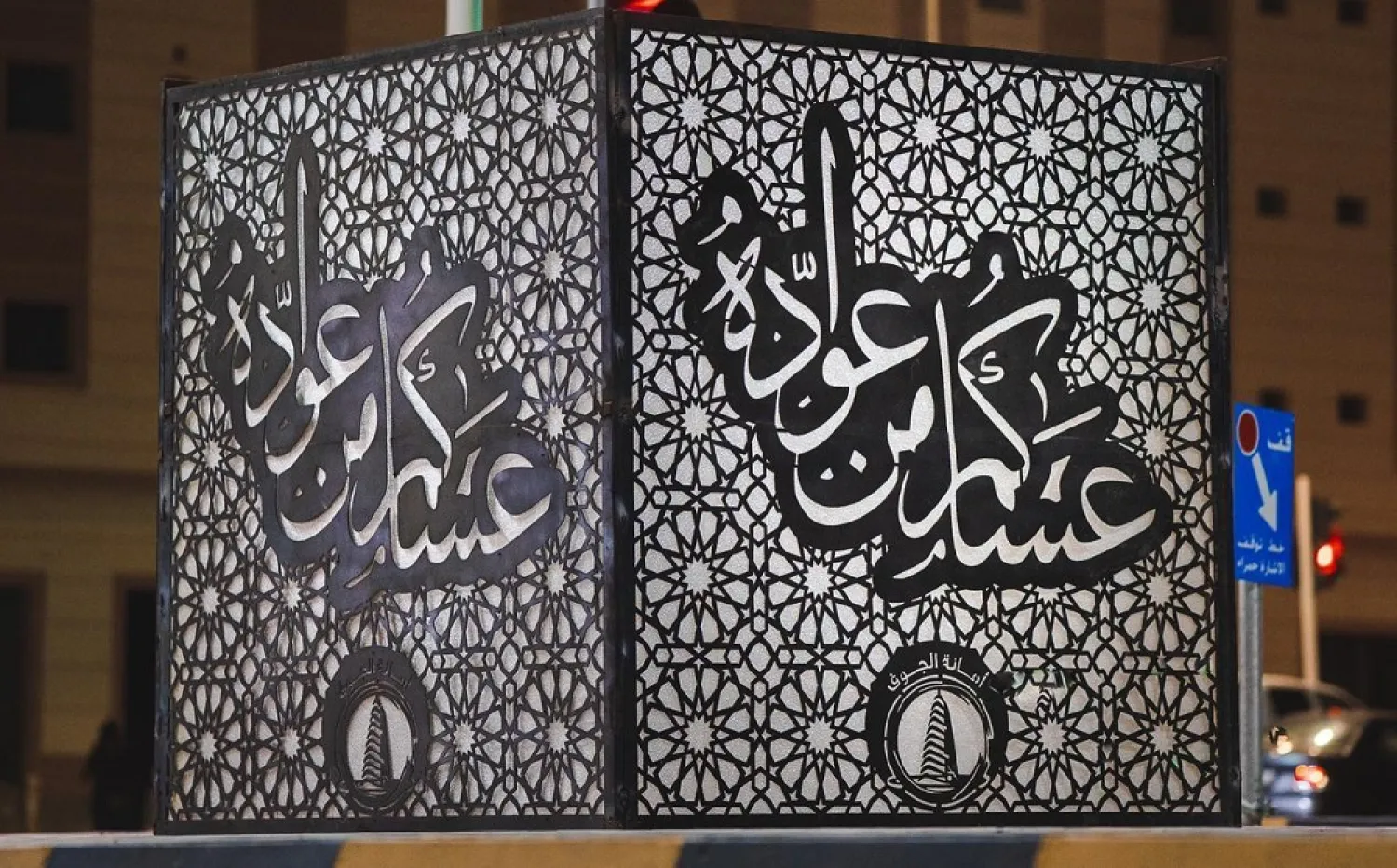

Gulf Countries Welcome Eid al-Fitr by Easing Covid Restrictions

Street Eid decorations in Saudi Arabia. (SPA)
TT

Gulf Countries Welcome Eid al-Fitr by Easing Covid Restrictions

Street Eid decorations in Saudi Arabia. (SPA)

As the Covid-19 pandemic continues for the second year, some Gulf countries have relaxed their precautionary measures, while others tightened control to prevent gatherings on the Eid al-Fitr holiday and limit the spread of the virus. Saudi Arabia declared Thursday as the first day of Eid.

Saudi Arabia
Saudi Arabia has decided to hold Eid prayers in all regions of the Kingdom and announced the lifting of travel restrictions and the complete re-opening of the land, sea and air ports, starting Monday, May 17.

Under the new measures, citizens who have received two doses or a single dose of the coronavirus vaccine at least two weeks prior will be allowed to travel. Those who have recovered from the virus in the last six months are also permitted to take international flights, as are those under the age of 18.

Travelers must provide proof of their vaccine or previous coronavirus infection using the government’s Tawakkalna app. Travelers returning from abroad must also commit to home quarantine for seven days and take a COVID-19 test at the end of that week.

Oman
The Sultanate of Oman has decided to impose a total curfew from 7pm till 4am, as of May 8, which was the 26th day of Ramadan, until May 15.

It also banned all commercial activities throughout the day except for food stores, gas stations, health institutions and pharmacies, while home delivery services for all goods are permitted during the aforementioned period. The Supreme Committee had also decided not to hold Eid prayers and traditional Eid markets and to prevent gatherings of all kinds in various locations, including beaches and public parks, during the holiday.

Kuwait
More than two months after the implementation of the partial lockdown in Kuwait, the country announced it was relaxing the measures starting from the first day of Eid. It also decided to suspend flights with Nepal, Pakistan, Sri Lanka and Bangladesh, except for cargo flights.

UAE
The National Emergency Crisis and Disaster Management Authority in the UAE announced five precautionary measures during Eid. They include avoiding family visits and gatherings, wearing masks and adhering to social distancing while sitting with the elderly and those with chronic diseases, in addition to refraining from exchanging gifts and food and replacing gift vouchers with electronic alternatives.

Qatar
Qatar decided to gradually lift the Covid-19 restrictions that were imposed in March in four stages, the first of which starts on May 28. The first phase will allow a maximum of five people who have received the vaccine to gather in a closed place. Mosques will reopen for daily prayers with some restrictions.

Bahrain
Starting from the first day of Eid, Bahrain will allow indoor dining for citizens, residents and visitors who were vaccinated and recovered from Covid-19, provided that evidence of their vaccination is available on the BeAware application or any other official application approved by the Gulf Cooperation Council countries.

Moreover, vaccinated GCC visitors arriving in Bahrain will be exempted from PCR tests, and will no longer be required to undergo precautionary quarantine.



How Saudi Arabia’s Responsible Approach Contained Developments in Southern Yemen

A government soldier mans a machine gun mounted on a pick-up truck in the Arabian Sea port city of Mukalla, Yemen January 4, 2026. (Reuters)
TT

How Saudi Arabia’s Responsible Approach Contained Developments in Southern Yemen

A government soldier mans a machine gun mounted on a pick-up truck in the Arabian Sea port city of Mukalla, Yemen January 4, 2026. (Reuters)

Saudi Arabia has shown a high degree of containment and a calm approach in dealing with the latest developments in southern Yemen after forces of the Southern Transitional Council seized control of the provinces of Hadhramaut and al-Mahra without any coordination with the legitimate government or the Arab coalition backing legitimacy, analysts said.

Abdulaziz Sager, chairman of the Gulf Research Center, said the meetings in Riyadh by Saudi Defense Minister Prince Khalid bin Salman of figures from Yemen’s political movement, including Presidential Leadership Council member Tariq Saleh and PLC Vice President Abdul Rahman Al-Mahrami, also known as Abou Zaraa, was a clear example of the prudent policy pursued by the Kingdom in managing Yemen’s complex affairs.

Sager told Asharq Al-Awsat that Saudi Arabia, since its founding by the late King Abdulaziz, has relied on a policy of containment, wisdom in engagement and measured rhetoric.

From this perspective came the defense minister’s meeting with the various Yemeni officials, foremost among them members of the PLC who had declared positions at odds with the Yemeni legitimacy backed by the Arab coalition.

Sager added that when they returned to the right path and responded to the Saudi call, Prince Khalid and the Saudi leadership moved to contain them, reflecting an inherent trait of Saudi governance and the ethical values that frame the core characteristics of Saudi policy.

The Kingdom attaches great importance to Yemen not only as a neighbor but because of the many shared ties and strong social links, including the convergence of customs and traditions between the two peoples, he stressed.

On December 3, the Southern Transitional Council dispatched military columns toward the eastern provinces, taking control of several institutions, most notably the headquarters of the First Military Region in Seiyun and the presidential palace, and deploying in Mukalla and al-Mahra without significant clashes.

Saudi Arabia swiftly sent Maj. Gen. Mohammed Ubaid Al Qahtani at the head of a delegation to calm the situation and de-escalate tensions, calling for the STC forces to return to Aden and their original provinces, and for the legitimate government’s Nation Shield forces to be deployed in their place.

On December 27, Prince Khalid bin Salman also sent a message titled “To Our People in Yemen,” outlining the fairness of the southern cause and urging that the safe southern provinces not be dragged into futile conflicts.

He called for awareness of the major challenges Yemen faces and for denying spoilers the opportunity to advance their goals in Yemen and the region.

Sager said Saudi Arabia has no enemies within Yemen’s political makeup and understands the positions of all sides, enabling it to play the role of guarantor and mediator for any political settlement to the Yemeni conflict.

He stressed that Riyadh views the situation in Yemen as a core component of its regional national security. The Yemen file, he added, has two dimensions the Kingdom cannot ignore, protecting its national security and ensuring Yemen’s stability and prosperity.

In recent days, Nation Shield forces loyal to the legitimate government, backed by coalition air support, have reasserted control over Hadhramaut and al-Mahra, with STC forces retreating to their home provinces after limited clashes.

According to Sager, the Saudi move to engage constructively with the southern Yemen issue, openness on the file and acceptance of differing views among rival parties are part of a process to guarantee long-term stability in Yemen.

Seeking acceptable solutions and formulas to contain southern demands, while preserving the state entity as much as possible, is part of Saudi Arabia’s strategy to close the door to negative external interference in Yemen’s stability, which threatens Yemen and Saudi national security interests, Sager remarked.

Political analyst Khaled Al-Habbas said Saudi Arabia’s position on Yemen has been clear from the outset, prioritizing Yemen’s security and stability across all its components.

This was the same approach Riyadh adopted toward developments in southern Yemen, given that Yemen is a strategic sphere for the Kingdom and events there directly affect Saudi national security, he explained.

The Kingdom is committed to supporting security and stability and to maintaining equal distance from all national components that put the public interest ahead of narrow interests or external agendas, he went on to say.

According to Al-Habbas, Riyadh’s expected hosting of a southern dialogue conference, with the participation of various relevant southern forces including the Southern Transitional Council, is clear evidence of its responsible and inclusive approach.

The fate of the southern issue should be decided by Yemenis themselves through dialogue and diplomacy, not by imposing a fait accompli or through a military coup, he stressed.


Saudi Govt Following Efforts to Consolidate Security, Stability in Yemen

Custodian of the Two Holy Mosques King Salman bin Abdulaziz chairs the cabinet meeting in Riyadh. (SPA)
TT

Saudi Govt Following Efforts to Consolidate Security, Stability in Yemen

Custodian of the Two Holy Mosques King Salman bin Abdulaziz chairs the cabinet meeting in Riyadh. (SPA)

The Saudi government said on Tuesday it was following the developments in the region and efforts the Kingdom was exerting to consolidate security and stability in Yemen.

Custodian of the Two Holy Mosques King Salman bin Abdulaziz chaired the cabinet meeting that was held in Riyadh.

The cabinet noted the Kingdom’s efforts to provide the conditions to hold dialogue between all Yemeni parties. It reiterated its welcome of Presidential Leadership Council (PLC) Chairman Dr. Rashad al-Alimi's request to hold a comprehensive conference on southern Yemen in Riyadh.

The conference aims to reach just solutions for the southern issue that meets the aspirations of the southerners.

The cabinet was briefed on the telephone calls received by Prince Mohammed bin Salman bin Abdulaziz Al Saud, Crown Prince and Prime Minister, from Türkiye's President Recep Tayyip Erdogan, Syria's President Ahmed al-Sharaa, Qatar’s Emir Sheikh Tamim bin Hamad Al Thani, and Pakistan’s Prime Minister Muhammad Shahbaz Sharif. The discussions addressed relations between the Kingdom and these countries, as well as regional and international developments.

The cabinet discussed the Kingdom’s ongoing efforts to address the humanitarian situation in Gaza by intensifying air, sea, and land aid bridges to support the Palestinian people.

These efforts are carried out under the directives of the Custodian of the Two Holy Mosques and the Crown Prince and reflect the Kingdom’s longstanding role in providing humanitarian assistance and its unwavering support for the Palestinian cause.

On the domestic affairs, the cabinet underlined the Kingdom’s commitment to strengthening its position in advanced technologies and building an integrated digital ecosystem that boosts the competitiveness of the national economy and attracts investment, in line with the objectives of Saudi Vision 2030 to establish a sustainable, data- and artificial intelligence-driven economy.

The cabinet commended the launch in Riyadh of the world’s largest government data center project, “Hexagon,” which is considered a significant strategic milestone that reinforces the Kingdom’s position as a global hub in this field, ensures data sovereignty and security, and enables innovation and the growth of the digital economy.


Saudi Crown Prince, Syrian President Discuss Cooperation and Regional Developments

The Saudi Crown Prince meets with the Syrian President. SPA file phto
TT

Saudi Crown Prince, Syrian President Discuss Cooperation and Regional Developments

The Saudi Crown Prince meets with the Syrian President. SPA file phto

Prince Mohammed bin Salman bin Abdulaziz Al Saud, Saudi Crown Prince and Prime Minister, received on Tuesday a phone call from Syrian President Ahmed al-Sharaa.

They discussed opportunities to enhance cooperation across various fields and reviewed regional developments, along with a range of topics of common interest.