
Algerian Protesters Face Crunch Point as Police Prepare Crackdown

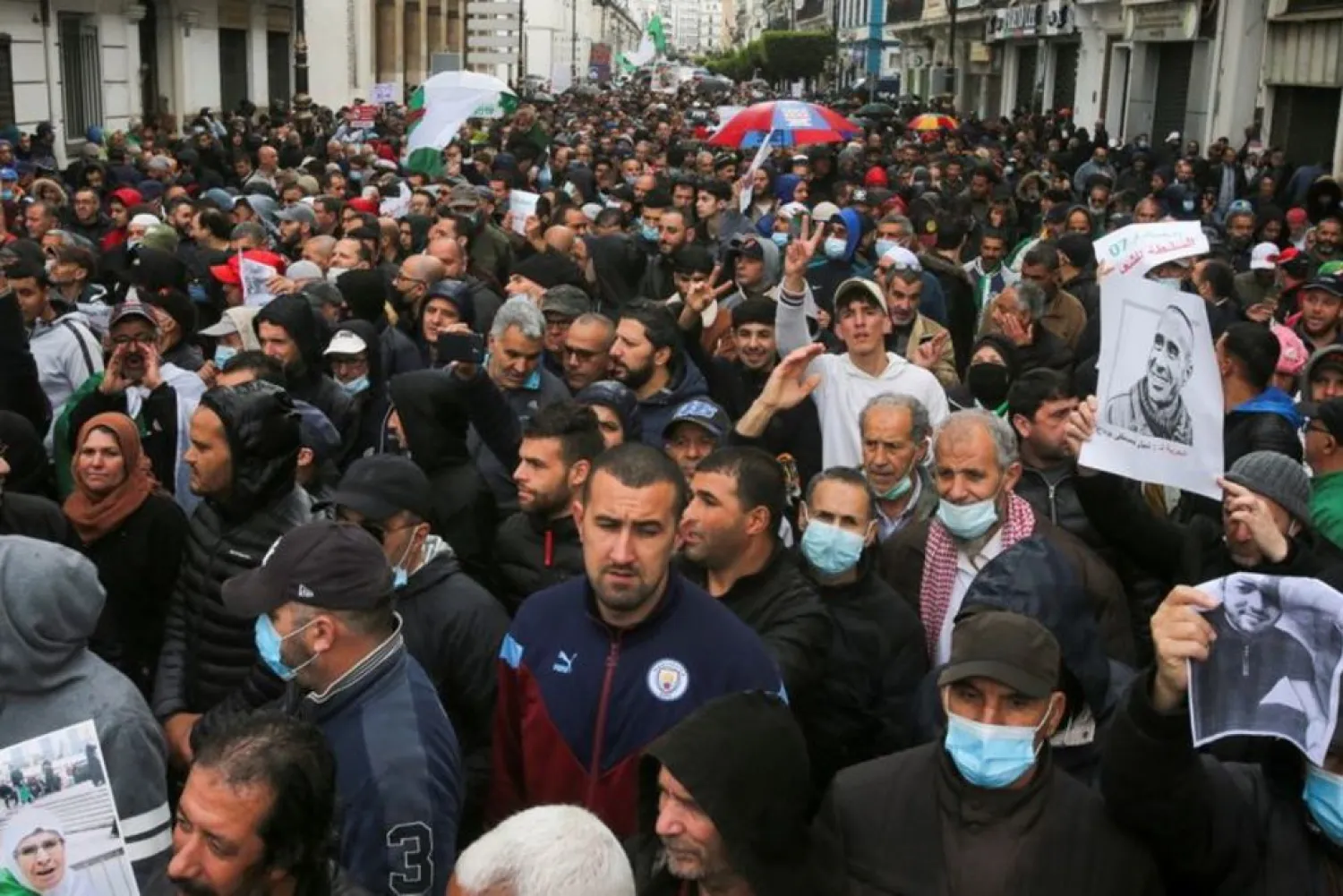
Demonstrators march during a protest demanding political change, in Algiers, Algeria April 16, 2021. (Reuters)
TT

Algerian Protesters Face Crunch Point as Police Prepare Crackdown

Demonstrators march during a protest demanding political change, in Algiers, Algeria April 16, 2021. (Reuters)

Algeria's protest movement, which shook the country by ousting its veteran president in 2019, faces a critical test for its survival on Friday, with police poised to confront any who take to the streets.

The movement, known as Hirak, is leaderless and unorganized, but after a year-long hiatus due to the COVID-19 pandemic it revived in February, bringing out demonstrators every Friday since then to demand wholesale political change.

Though the protests are now much smaller than at their peak, many of the thousands who still regularly march each week appear ready to brave a harsher government approach.

"We will not stop marching. We will remain peaceful," said a well-known Hirak figure, Samir Belarbi, adding he did not trust the authorities to make necessary changes except under pressure.

Protesters want the entire elite that has ruled since independence in 1962 to be replaced, an end to corruption and the army's withdrawal from politics.

Since Hirak began two years ago, then flooding the capital with hundreds of thousands of protesters, the ruling authorities have attempted to sidestep its biggest demands while letting street rallies continue.

That policy now seems to be at an end, with the Interior Ministry saying this month protests would require an official permit naming the organizers as well as a start and end time.

"Life needs to go back to normal," said an official Algerian source when asked by Reuters if security forces would prevent any further protests, without elaborating.

'They must go'
Last Friday, the only Friday since the Interior Ministry proclamation, came during the Muslim Eid al-Fitr holiday, so only a very small number of protesters gathered in central Algiers - and were quickly dispersed.

It means this coming Friday may represent a first real test of whether the security forces are prepared to stamp out a major protest and whether the demonstrators are able to keep their movement on the streets.

Though the Algerian authorities - popularly known as the "pouvoir" - had tolerated protests, publicly praising Hirak as a movement of national renewal, they also cracked down with arrests, prompting criticism from international rights groups.

During last Friday's small protests, police escalated their response, detaining dozens of activists as well as journalists, though most were later released.

"The past Friday's brutal repression showed the nature of a regime that refuses deep political changes," said Belarbi, who was detained for several months earlier in the protests.

The crackdown comes ahead of parliament elections in June. The vote will be the third since the start of the protests - and like the others will be boycotted by Hirak supporters.

In December 2019 Abdelmadjid Tebboune was elected president in a vote that officially had 40% turnout. In November a referendum approving changes to the constitution that he proposed as a conciliatory gesture to Hirak had turnout of only 25%.

"It is no longer time for marching but for working and putting Algeria's economy back on track," said the official, adding that the collapse in oil revenue and impact of the pandemic meant Algeria had no space to focus on anything else.

That government response has angered protesters. "It is a dialogue of the deaf between Hirak and the pouvoir," said Mezouan Said, an activist. "We want them to leave and they just tell us to vote. They have to go. They must go," he said.


A Decade of Chaos: Britain Prepares for Seventh Prime Minister

 British Prime Minister Keir Starmer speaks as he announces the timeline for his resignation, outside 10 Downing Street, in London, Britain, June 22, 2026. (Reuters)
British Prime Minister Keir Starmer speaks as he announces the timeline for his resignation, outside 10 Downing Street, in London, Britain, June 22, 2026. (Reuters)
TT

A Decade of Chaos: Britain Prepares for Seventh Prime Minister

 British Prime Minister Keir Starmer speaks as he announces the timeline for his resignation, outside 10 Downing Street, in London, Britain, June 22, 2026. (Reuters)
British Prime Minister Keir Starmer speaks as he announces the timeline for his resignation, outside 10 Downing Street, in London, Britain, June 22, 2026. (Reuters)

British Prime Minister Keir Starmer said he would quit on Monday, paving the way for ‌the country to have its seventh leader in 10 years. The chaos dates back to the Brexit referendum, 10 years ago to the day on Tuesday.

In the years since the vote, Britain has tried to forge its own path but struggled to boost its low-growth economy, hamstrung by high debts and a growing welfare bill, at a time of growing geopolitical volatility.

JUNE 2016: UK VOTES FOR BREXIT, PM CAMERON QUITS

Britons cause a global shock by voting 52%-48% to leave the European Union, ending a more than 40-year union and plunging the country into its biggest political crisis since World War Two. Conservative Prime Minister David Cameron resigns and the party chooses Theresa May to succeed him.

JUNE 2017: SNAP ELECTION GAMBLE BACKFIRES

Riding high in opinion polls and seeking a bigger majority in parliament to push Brexit legislation through, May calls a snap election. The Conservatives lose their majority and form a government by striking a deal with Northern Ireland's pro-UK Democratic Unionist Party.

MAY 2019: BREXIT PARALYSIS, MAY RESIGNS, JOHNSON TAKES OVER

May quits after failing to break a parliamentary deadlock over how Britain should leave the EU. Boris Johnson, one of the main faces of the pro-Brexit campaign, wins the internal Conservative Party contest to ‌succeed her.

DECEMBER 2019: JOHNSON ‌LEADS CONSERVATIVES TO SWEEPING WIN

With parliament paralyzed over Brexit, Johnson calls a snap election. Campaigning under ‌the ⁠slogan "Get Brexit Done" ⁠he steers the Conservatives to their biggest election win since Margaret Thatcher's landslide victory in 1987.

JANUARY 2020: BREXIT GETS DONE

Johnson uses his mandate to drive a Brexit deal through parliament and Brussels, and Britain exits the EU on January 31, 2020, becoming the first state to withdraw from the bloc.

JULY 2022: JOHNSON OUSTED Johnson leads Britain during the COVID-19 pandemic - at one point being hospitalized himself with the disease - but a long list of scandals and missteps proves too much and he steps down after a ministerial revolt.

SEPTEMBER 2022: TRUSS' CHAOTIC PREMIERSHIP

Liz Truss beats Rishi Sunak in a contest to succeed Johnson. Her "mini-budget" containing unfunded tax cuts spooks financial markets, pushing up borrowing costs sharply and further tarnishing Britain's reputation for political and fiscal stability. She lasts only 44 days before ⁠announcing her resignation.

OCTOBER 2022: SUNAK BECOMES PRIME MINISTER

Sunak takes over as Britain's third prime minister in as many ‌months, pledging to restore stability to government. He makes five key pledges focused on the ‌economy, stopping illegal immigration and improving the health system. In February 2023, Sunak strikes a deal with the EU on trade rules for Northern Ireland, improving ties with ‌the bloc.

MAY 2024: SUNAK CALLS ELECTION

Trailing the Labour Party by around 20 points in the polls, Sunak calls an election for July ‌4.

JULY 2024: STARMER BECOMES PRIME MINISTER "We said we would end the chaos and we will," Keir Starmer, leader of the Labour Party, told supporters on July 5, 2024, after winning a landslide election but with the smallest share of the electoral vote of any majority government in modern history.

AUGUST 2024: STARMER WARNS 'THINGS WILL GET WORSE'

Starmer warns over the state of the public finances, saying the Labour Party has inherited "an economic black hole" and tells voters "things will get worse before they get ‌better".

OCTOBER 2024: LABOUR'S FIRST BUDGET

Finance minister Rachel Reeves announces tax rises worth £40 billion ($52.76 billion) a year, primarily by raising employers' social security contributions, bringing the tax burden to its highest level on record in ⁠peacetime and prompting an outcry from ⁠businesses.

FEBRUARY 2025: NIGEL FARAGE'S REFORM UK PARTY SURGES

Right-wing anti-immigration party Reform UK overtakes Labour in a national opinion poll for the first time. Reform UK, led by Brexit campaigner Nigel Farage, has topped polls ever since.

JUNE 2025: REBELLION FORCES STARMER U-TURN ON WELFARE

Starmer is forced to reverse plans to cut Britain's welfare bill after his own lawmakers threatened to defeat the government.

SEPTEMBER-APRIL 2025: MANDELSON SCANDAL

Pressure on Starmer ramps up over his appointment of Peter Mandelson as Britain's ambassador to Washington. Mandelson was later sacked over his ties to the late sex offender Jeffrey Epstein, as questions emerge over Starmer's judgment and the vetting process involved.

MAY 2026: LOCAL ELECTION DISASTER

The Labour Party suffers heavy losses in English local elections and votes for the Scottish and Welsh assemblies, deepening questions over Starmer's ability to govern, with Reform UK the main beneficiary.

MAY 2026: WES STREETING RESIGNS AS HEALTH MINISTER

Health Minister Wes Streeting quits saying he had lost confidence in Starmer's leadership and calls for a leadership contest, in which he said he would hope to compete.

JUNE 2026: DEFENCE MINISTER JOHN HEALEY QUITS

British Defense Minister John Healey quits over a months-long dispute over defense spending, accusing Starmer of failing to commit the money needed to keep the country safe from mounting threats.

JUNE 2026: ANDY BURNHAM SHOWS HE CAN BEAT REFORM UK

Greater Manchester Mayor Andy Burnham wins an election in the north of England, trouncing Reform UK in the process, and allowing him to return to Westminster, removing a key obstacle to any leadership challenge against Starmer.


Israeli Strikes Leave Lebanon’s Ancient Coastal City of Tyre Shaken

Roman-era columns stand at an archaeological site, which was lightly damaged in an Israeli strike nearby, in the southern port city of Tyre, Lebanon, Thursday, June 18, 2026. (AP)
TT

Israeli Strikes Leave Lebanon’s Ancient Coastal City of Tyre Shaken

Roman-era columns stand at an archaeological site, which was lightly damaged in an Israeli strike nearby, in the southern port city of Tyre, Lebanon, Thursday, June 18, 2026. (AP)

The dust has barely settled in Tyre after weeks of Israeli airstrikes on the ancient city along Lebanon 's Mediterranean coast.

Despite the relative calm, life remains largely at a standstill.

A new ceasefire between Israel and the Iranian-backed Hezbollah group is in effect. But previous ceasefires have broken down. Uncertainty and fear linger, even as the US and Iran meet for talks in Switzerland that Lebanese residents hope will bring calm to their troubled country.

Over 4,000 people in Lebanon have been killed in Israeli strikes since the latest Israel-Hezbollah war began in March, two days after the Iran war began, when Hezbollah fired at Israel. The group has also clashed with Israeli troops making their deepest incursion into southern Lebanon in over a quarter century.

Large swaths of southern Lebanon have been left in ruins, including Tyre.

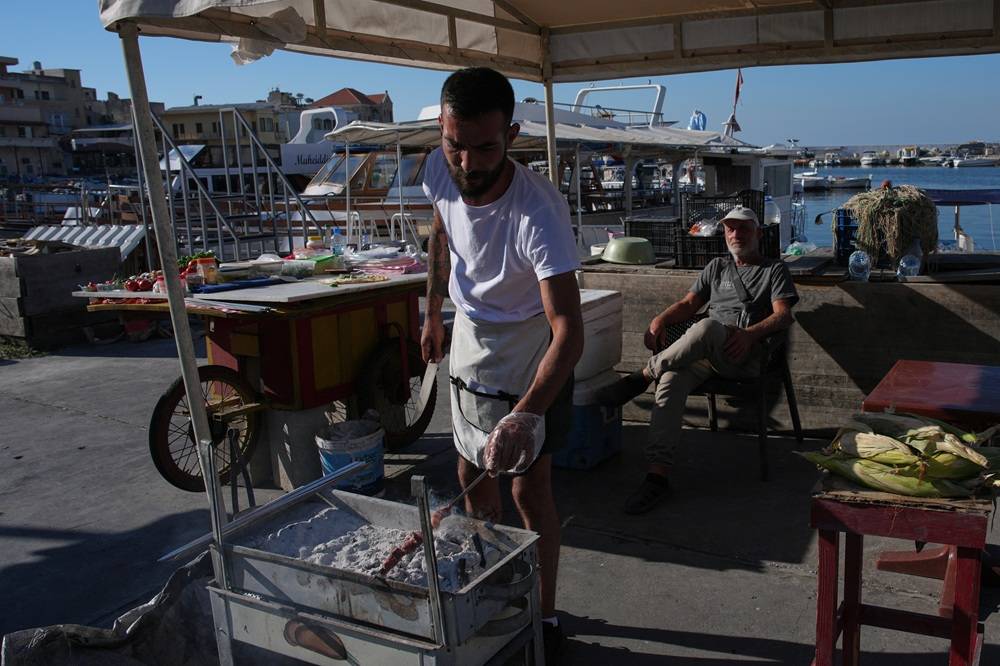
Ali Bazzi, 31, who has been living aboard a small boat in the southern port city of Tyre, Lebanon, after being displaced from his home in the village of Toura during the war between Israel and Hezbollah, prepares sandwiches at the waterfront food cart where he works, Saturday, June 20, 2026. (AP)

‘Where is this truce?’

During the summer, Lebanon’s fourth largest city is usually filled with tourists lounging on its beaches, walking through its Roman ruins, eating freshly caught seafood at picturesque restaurants or taking boat tours.

Now, tables at the few restaurants that haven’t closed are empty. Parking lots that are usually packed with beachgoers' vehicles are filled with displaced people living in tents. Fishermen and mariners say they can’t sail far from port for fear of being targeted.

“Every day they tell us there’s a truce or ceasefire. Where is this truce? We can’t see it,” said Ali Bazzi, 31, who lives alone on a tour boat that belongs to family friends. His home in Toura, several kilometers away, was destroyed by an Israeli strike.

Like many who have fled to Tyre from surrounding areas, he doesn’t dare return until he sees long-term calm.

For months, Bazzi has been sleeping on a mattress on the deck, and selling sandwiches at a small stand a few steps away to earn money.

Israel in early June warned the entirety of Tyre to leave before it launched intense airstrikes across the city, saying it was targeting Hezbollah.

But Bazzi stayed. He recalled the emptied, ghostly city and the cries of women and children as Israeli strikes began. And he said he woke one night to the sound of a drone hovering over the port and worried it had come for him.

Even as the new ceasefire appeared to be largely holding, Tyre residents still pause anxiously when they hear Israeli jets overhead.

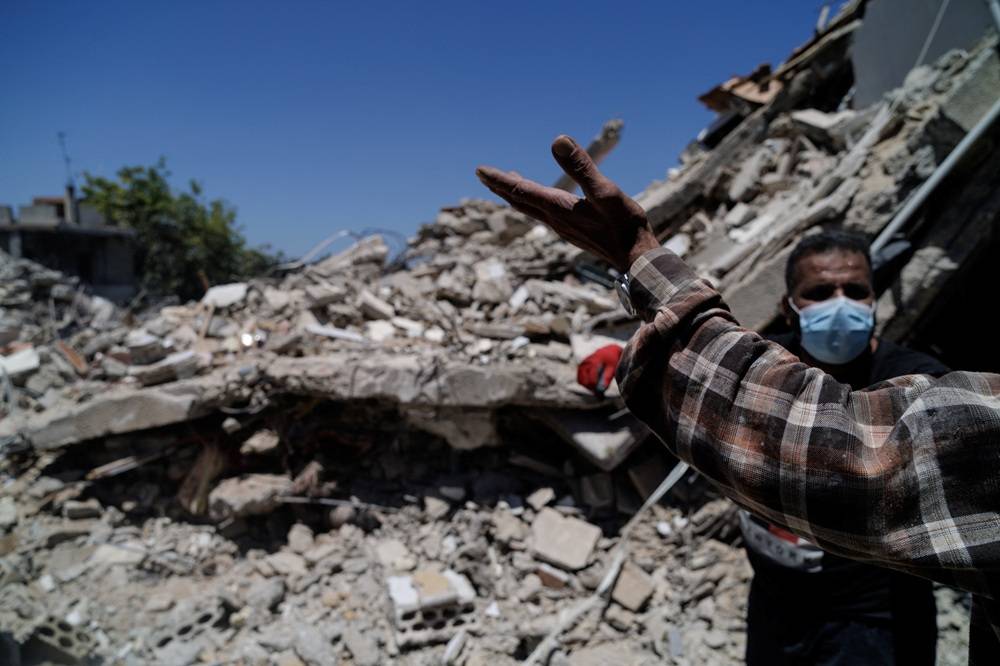
A rescuer reacts at the site of an Israeli air strike on a house in Barish, in Tyre district, Lebanon June 20, 2026. (Reuters)

Ancient heritage and environment were threatened

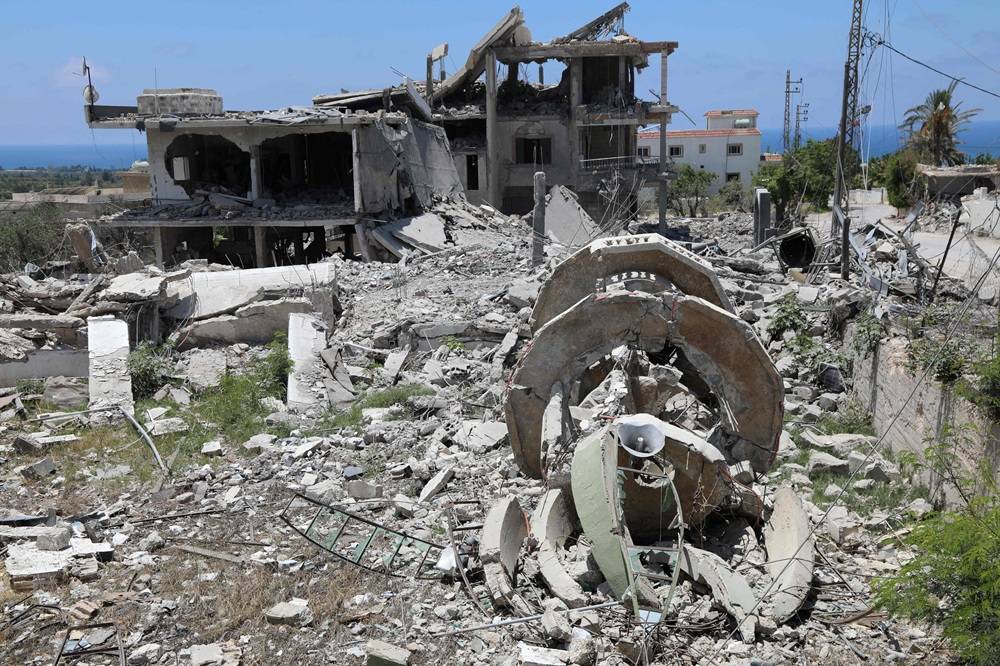
It seems at least one building has been reduced to rubble on every street. Others remain standing with several floors blown off.

Pictures of those killed, including paramedics, families, and Hezbollah fighters, are posted as memorials on the ruins of buildings and dashboards of parked cars.

The city's iconic heritage sites are not unscathed.

Several buildings next to the remains of a 2nd century citadel were struck. Debris knocked the crowns off some Roman columns and damaged stones on the Roman road that have existed for thousands of years. Employees hope the damage to the UNESCO World Heritage site can be repaired.

“We’re waiting for a committee to come and inspect it,” said Adnan Istanbuli, an employee at the Lebanese Directorate General of Antiquities. “The city of Tyre is 5,000 years old, and what happened to it is huge."

Just south of the city, the shoreline in Mansouri, a well-known wildlife preserve for sea turtles and other animals, is now inaccessible after Israeli strikes.

Mona Khalil, a well-known environmentalist who lived along that shore, died Friday from her wounds, weeks after a strike hit her home.

A picture taken on June 19, 2026 shows the site of an Israeli attack that destroyed houses and carpentry shops in the village of Al-Qlailah in the Tyre district in southern Lebanon. (AFP)

Hospital workers say they no longer feel safe

One of Tyre’s largest hospitals is repairing some of its units that were destroyed when an Israeli airstrike struck a building across the street.

Doctors at the Jabal Amel Hospital have lived through multiple wars over the past few decades but said this one is different. In the past, they felt relatively safe as long as they were in the hospital. This time, the Israeli strikes occurred nearby and without warning.

Doors and windows were blown off. Staff rushed to treat wounded patients and colleagues. Thick smoke filled the hospital.

“We used to be scared, but we’re a lot more scared now,” said intensive care unit nurse Khadeeja Yousef, whose unit overlooks the hospital parking lot, now reduced to rubble and charred cars.

Cardiologist Mohammad Nassar's private clinic across the street was hit. Now he rummages through the debris, looking for hundreds of books he had collected for over three decades.

“I don’t care about any heart monitoring machines or anything else, but the books are dear to my heart,” he said.

People in Tyre are constantly reminded that prospects for long-term stability are unclear as negotiations continue between Israel and Lebanon in Washington, with Hezbollah playing no role and resisting efforts to disarm it.

Large swaths of land just south of the city are under Israeli control, stretching to the United Nations-mandated Blue Line that separates the countries. In recent days, smoke from distant Israeli artillery fire was visible from Tyre's shoreline.

And on a distant hilltop, an Israeli flag could be seen.


Key Points From the First Round of Iran-US Talks

US Vice President JD Vance looks on next to US President Donald Trump's son-in-law Jared Kushner, as Iran's Foreign Minister Abbas Araghchi shakes hands with Pakistan's Prime Minister Shehbaz Sharif, prior to a quadrilateral meeting between the United States, Iran, Pakistan and Qatar at the Burgenstock luxury hotel complex overlooking Lake Lucerne, Switzerland, on June 21, 2026, as part of high-level talks aimed at advancing a deal to end the Middle East conflict. (Photo by Nathan Howard / POOL / AFP)
TT

Key Points From the First Round of Iran-US Talks

US Vice President JD Vance looks on next to US President Donald Trump's son-in-law Jared Kushner, as Iran's Foreign Minister Abbas Araghchi shakes hands with Pakistan's Prime Minister Shehbaz Sharif, prior to a quadrilateral meeting between the United States, Iran, Pakistan and Qatar at the Burgenstock luxury hotel complex overlooking Lake Lucerne, Switzerland, on June 21, 2026, as part of high-level talks aimed at advancing a deal to end the Middle East conflict. (Photo by Nathan Howard / POOL / AFP)

Iran and the United States wrapped up the first round of talks to end the Middle East war at the Burgenstock resort in Switzerland on Monday, with technical talks to continue.

Iran's Foreign Minister Abbas Araghchi hailed the "major progress" achieved with the help of mediators Pakistan and Qatar, while the United States government has yet to issue a statement, reported AFP.

Here are the main points from the joint Qatar-Pakistan statement at the conclusion of first-round talks:

- Roadmap to final deal agreed -

The High-Level Committee set up by Tehran and Washington to oversee the talks has "agreed upon a roadmap towards reaching a final deal within 60 days, laying the foundation for the immediate commencement of further technical talks", according to the statement.

"Technical talks will continue for the remainder of the week at the Burgenstock resort on all issues."

- Lebanon 'de-confliction cell' -

The United States and Iran "agreed on the creation of a de-confliction cell, between the parties, the Lebanese Republic and facilitated by the Mediators, to ensure the adherence of the termination of military operations in Lebanon", the joint statement read.

Lebanon was dragged into the Middle East war in early March when the Iran-backed Hezbollah fired rockets at Israel in retaliation for the killing of Iran's supreme leader in US-Israeli strikes.

Fighting in Lebanon in recent days has threatened to derail the peace deal.

Iran's Araghchi wrote in an X post on Monday that the Lebanon de-confliction cell will be the "1st real test".

- Hormuz 'communication line' -

Tehran and Washington have set up a "communication line" to "avoid incidents and miscommunication with the aim of safe passage for commercial vessels through the Strait of Hormuz", according to the statement.

The communication line is applicable for the 60-day period outlined in the memorandum of understanding signed earlier by both sides, in which Iran vowed "best efforts" to ensure safe passage of commercial ships.

Iran said Saturday it was closing the Strait of Hormuz again over Israeli attacks in Lebanon.

- Some assets unfrozen -

Araghchi wrote on Monday on X "oil and petrochem exports are waived, blockade lifted, some frozen assets released, and major reconstruction & development plan launched for Iran".

The Pakistan-Qatar joint statement does not mention any unfreezing of Iranian assets.

In the memorandum of understanding, the United States undertakes to "terminate all types of sanctions against" Iran, and to "make fully available for use the frozen or restricted funds and assets" of Iran.

The White House did not immediately respond to AFP's request for comment on Araghchi's statement.

- Pakistan, Qatar in key roles -

Pakistan and Qatar have gained international prominence as mediators in the Iran-US deal, with the two nations issuing a joint statement to mark the conclusion of the first round of talks.

"The mediating parties will continue to do their utmost to ensure that the negotiations continue to be conducted in a constructive atmosphere with the aim of reaching a final deal," the statement said.

Araghchi in his X post gave credit to "tireless Pakistani and Qatari mediation".