
Fragile Ceasefire Takes Hold in Gaza

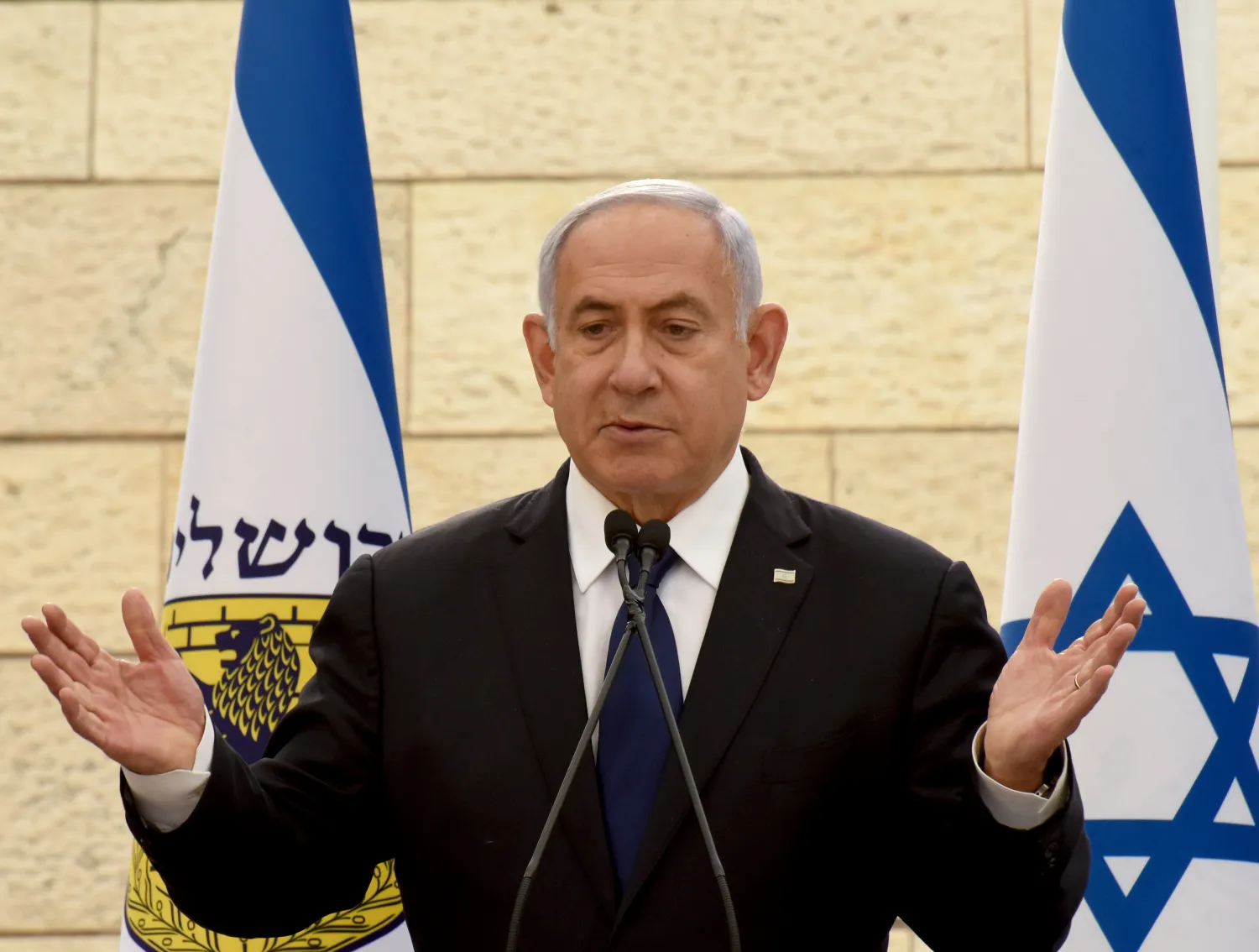
Israeli Prime Minister Benjamin Netanyahu speaks at a ceremony for fallen soldiers of Israel's wars at the Yad Lebanim House on the eve of Memorial Day, in Jerusalem, April 13, 2021. Reuters
TT

Fragile Ceasefire Takes Hold in Gaza

Israeli Prime Minister Benjamin Netanyahu speaks at a ceremony for fallen soldiers of Israel's wars at the Yad Lebanim House on the eve of Memorial Day, in Jerusalem, April 13, 2021. Reuters

Israeli police fired stun grenades towards Palestinians who threw rocks and Molotov cocktails at officers outside Jerusalem’s flashpoint Al-Aqsa Mosque on Friday, just hours after Israel and Hamas reached a ceasefire in Gaza.

Egypt, which mediated the pre-dawn end to the worst hostilities between Israelis and Palestinians in years, discussed measures to avoid a resumption of the militant rocket attacks from Gaza on Israel and Israeli strikes on the enclave.

The Gaza violence was set off on May 10 in part by Israeli police raids on the Al-Aqsa mosque compound and clashes with Palestinians during the Muslim holy month of Ramadan. Thousands gathered there again for this Friday’s prayers, with many staying on to demonstrate in support of Gaza.

Israeli police fired stun grenades towards demonstrators, who threw rocks and petrol bombs at officers, and Palestinian medics said some 20 Palestinians were wounded.

The confrontations died down within about an hour, with Israeli police pulling back to the compound’s gates.

In Gaza, five more bodies were pulled from the rubble in the densely populated Palestinian enclave, taking the death toll to 243, including 66 children, with more than 1,900 wounded.

The Israeli military said an Israeli soldier had been killed as well as 12 civilians; hundreds have been treated for injuries after rocket salvoes that caused panic and sent people as far away as Tel Aviv rushing into shelters.

Palestinians who had huddled in fear of Israeli shelling poured into Gaza’s streets, embracing one another in celebration in front of bombed-out buildings. Mosque loudspeakers feted "the victory of the resistance" and cars drove around flying Palestinian flags and honking horns.

Egypt said it would send two delegations to monitor the truce, which began at 2 am (2300 GMT), as the warring parties said they were ready to retaliate for any violations.

‘We returned and found nothing’
Civilians on both sides of the front line were skeptical.

"What is truce? What does it mean?" said Samira Abdallah Naseer, a mother of 11 children sitting near the wreckage of a building near Beit Hanoun in the north of the Gaza Strip.

"We returned to our houses, and we found no place to sit, no water, no electricity, no mattresses, nothing," she said. read more

In a cafe in the Israeli port city of Ashdod, north of Gaza, student Dan Kiri, 25, said Israel should continue attacking Hamas until it collapsed.

"It’s only a matter of time until the next operation in Gaza," he said.

Israeli Prime Minister Benjamin Netanyahu said the operation had damaged the ability of Hamas, the group which runs Gaza, to launch missiles at Israel.

Netanyahu said the Israeli military had attacked and destroyed Hamas’s extensive tunnel network in Gaza, its rocket factories, weapons laboratories and storage facilities, and killed more than 200 militants, including 25 senior figures.

"Hamas can’t hide anymore. That’s a great achievement for Israel," he said in a televised address. "We eliminated an important part of Hamas’s and ‘Islamic Jihad’s’ command echelon. And whoever was not killed knows today that our long arm can reach him anywhere, above ground or underground."

Hamas chief Ismail Haniyeh cast the fighting as successful resistance to a militarily and economically stronger foe, and said it would recoup lost military capabilities.

"We will rebuild what the occupation (Israel) destroyed and restore our capabilities, and we will not abandon our obligations and duties to the families of martyrs, the wounded and those whose homes were destroyed," he said.

‘A morning of freedom’
Haniyeh expressed gratitude to Egyptian, Qatari and UN mediators for their support, and thanked "the Iran, which has not given up on providing the resistance with money, weapons and technology".

Iran on Friday displayed an Iranian-built combat drone that it said had a range of 2,000 km (1,250 miles), naming it "Gaza".

Ezzat el-Reshiq, a senior member of the Hamas political bureau, told Reuters in Doha the movement’s demands included protection for Al-Aqsa and for Palestinians threatened with eviction from their homes in East Jerusalem.

Saleh Diab, who was among those threatened with eviction, said it was "a morning of freedom, a morning of victory". He said he hoped to remain in his home but feared what Israel would do next.

Amid growing global alarm, US President Joe Biden had urged Netanyahu to seek de-escalation, while Egypt, Qatar and the United Nations sought to mediate.

The truce appeared to be part of a two-stage deal, with Cairo sending security delegations to Tel Aviv and the Palestinian territories to agree on measures to maintain stability.

After days of Israeli air strikes, Gaza officials said 16,800 homes had been damaged, and residents were getting only three or four hours of power compared with 12 hours before the fighting.

Palestinian officials put the cost of reconstruction in the tens of millions of dollars, while economists said the fighting could curb Israel’s economic recovery from the COVID-19 pandemic.

Biden said on Thursday that aid would be sent quickly to Gaza. It would be coordinated with the Palestinian Authority - run by Hamas’ rival, President Mahmoud Abbas, backed by the West and based in the Israeli-occupied West Bank - "in a manner that does not permit Hamas to simply restock its military arsenal".

Hamas is deemed a terrorist group in the West and by Israel, which it refuses to recognize.


Shells of Unknown Origin Land Near Military Airport in Damascus, Syrian State TV Says

Smoke billows following an Israeli strike on Damascus over the summer. (Reuters file)
TT

Shells of Unknown Origin Land Near Military Airport in Damascus, Syrian State TV Says

Smoke billows following an Israeli strike on Damascus over the summer. (Reuters file)

Shells of unknown origin fell in the vicinity of Syria's Mezzah military airport in the capital Damascus on Tuesday, the state-run Al Ekhbariya TV reported.

Syria's state news agency earlier reported the sound of an explosion in the vicinity of Damascus and said the matter was under investigation.

The airbase sits at the gateway to parts of southern Syria.


Israeli Army Takes Journalists into a Tunnel in a Gaza City It Seized and Largely Flattened

Mattresses and a plastic chair lie on the floor inside a tunnel in Rafah, Gaza Strip, Monday, Dec. 8, 2025. (AP)
TT

Israeli Army Takes Journalists into a Tunnel in a Gaza City It Seized and Largely Flattened

Mattresses and a plastic chair lie on the floor inside a tunnel in Rafah, Gaza Strip, Monday, Dec. 8, 2025. (AP)

One by one, the soldiers squeezed through a narrow entrance to a tunnel in southern Gaza. Inside a dark hallway, some bowed their heads to avoid hitting the low ceiling, while watching their step as they walked over or around jagged concrete, crushed plastic bottles and tattered mattresses.

On Monday, Israel's military took journalists into Rafah — the city at Gaza's southernmost point that troops seized last year and largely flattened — as the two-month-old Israel-Hamas ceasefire reaches a critical point. Israel has banned international journalists from entering Gaza since the war began more than two years ago, except for rare, brief visits supervised by the military, such as this one.

Soldiers escorted journalists inside a tunnel, which they said was one of Hamas' most significant and complex underground routes, connecting cities in the embattled territory and used by top Hamas commanders. Israel said Hamas had kept the body of a hostage in the underground passage: Hadar Goldin, a 23-year-old soldier who was killed in Gaza more than a decade ago and whose remains had been held there.

Hamas returned Goldin's body last month as part of a US-brokered ceasefire in the war triggered by the fighters' Oct. 7, 2023, attack on southern Israel in which 1,200 people were killed and hundreds taken hostage. Israel’s retaliatory offensive has killed more than 70,000 Palestinians, according to Gaza’s Health Ministry, which operates under the Hamas-run government. The ministry does not differentiate between civilians and combatants, but says roughly half the dead have been women and children.

Israel and Hamas are on the cusp of finishing the first phase of the truce, which mandated the return of all hostages, living and dead, in exchange for Palestinians held by Israel. The body of just one more hostage remains to be returned.

Mediators warn the second phase will be far more challenging since it includes thornier issues, such as disarming Hamas and Israel’s withdrawal from the strip. Israel currently controls more than half of Gaza.

Israeli Prime Minister Benjamin Netanyahu is set to travel to Washington this month to discuss those next steps with US President Donald Trump.

Buildings lie in ruins amidst the rubble in Rafah in the southern Gaza Strip, December 8, 2025. (Reuters)

Piles of rubble line Rafah's roads

Last year, Israel launched a major operation in Rafah, where many Palestinians had sought refuge from offensives elsewhere. Heavy fighting left much of the city in ruins and displaced nearly one million Palestinians. This year, when the military largely had control of the city, it systematically demolished most of the buildings that remained standing, according to satellite photos.

Troops also took control of and shut the vital Rafah crossing, Gaza’s only gateway to the outside world that was not controlled by Israel.

Israel said Rafah was Hamas’ last major stronghold and key to dismantling the group’s military capabilities, a major war aim.

On the drive around Rafah on Monday, towers of mangled concrete, wires and twisted metal lined the roads, with few buildings still standing and none unscathed. Remnants of people's lives were scattered the ground: a foam mattress, towels and a book explaining the Quran.

Last week, Israel said it was ready to reopen the Rafah crossing but only for people to leave the strip. Egypt and many Palestinians fear that once people leave, they won't be allowed to return. They say Israel is obligated to open the crossing in both directions.

Israel has said that entry into Gaza would not be permitted until Israel receives all hostages remaining in the strip.

Israeli soldiers gather next to the entrance of a tunnel where the army says the body of soldier Hadar Goldin was held in Rafah, Gaza Strip, Monday, Dec. 8, 2025. (AP)

Inside the tunnel

The tunnel that journalists were escorted through runs beneath what was once a densely populated residential neighborhood, under a United Nations compound and mosques. Today, Rafah is a ghost town. Underground, journalists picked their way around dangling cables and uneven concrete slabs covered in sand.

The army says the tunnel is more than 7 kilometers (4 miles) long and up to 25 meters (82 feet) deep and was used for storing weapons as well as long-term stays. It said top Hamas commanders were there during the war, including Mohammed Sinwar, who was believed to have run Hamas’ armed wing and was the younger brother of Yahya Sinwar, the Hamas leader who helped mastermind the Oct. 7 attack. Israel has said it has killed both of them.

“What we see right here is a perfect example of what Hamas did with all the money and the equipment that was brought into Gaza throughout the years," said Lt. Col. Nadav Shoshani. "Hamas took it and built an incredible city underground for the purposes of terror and holding bodies of hostages.”

Israel has long accused Hamas of siphoning off money for military purposes. While Hamas says the Palestinians are an occupied people and have a right to resist, the group also has a civilian arm and ran a government that provided services such as health care, a police force and education.

The army hasn’t decided what to do with the tunnel. It could seal it with concrete, explode it or hold it for intelligence purposes among other options.

Since the ceasefire began, three soldiers have been killed in clashes with about 200 Hamas fighters that Israeli and Egyptian officials say remain underground in Israeli-held territory.

Hamas has said communication with its remaining units in Rafah has been cut off for months and that it was not responsible for any incidents occurring in those areas.

Both Israel and Hamas have accused each other of repeated violations of the deal during the first phase. Israel has accused Hamas of dragging out the hostage returns, while Palestinian health officials say over 370 Palestinians have been killed in continued Israeli strikes since the ceasefire took effect.


Israel to Reopen Jordan Border Crossing for Passage of Aid and Goods

Allenby Bridge Crossing between West Bank and Jordan is closed, in the Israeli-occupied West Bank, September 24, 2025. REUTERS/Ammar Awad/File Photo
TT

Israel to Reopen Jordan Border Crossing for Passage of Aid and Goods

Allenby Bridge Crossing between West Bank and Jordan is closed, in the Israeli-occupied West Bank, September 24, 2025. REUTERS/Ammar Awad/File Photo

Israel is set to reopen the Allenby Crossing with Jordan to the passage of goods and aid on Wednesday, an Israeli security official said on Tuesday.

The border crossing has been closed to aid and goods since September, when a driver bringing humanitarian aid to Gaza opened fire and killed two Israeli military personnel before being killed by security forces, Reuters reported.

The security official said the crossing would have tightened screening for Jordanian drivers and truck cargo, and that a dedicated security force had been assigned to the crossing.

The Allenby Bridge is a key route for trade between Jordan and Israel and the only gateway for more than 3 million Palestinians in the Israeli-occupied West Bank to reach Jordan and the wider world.

The crossing reopened to passenger traffic shortly after the attack, but had remained closed to aid trucks. The UN says the crossing is a major route for bringing food, tents and other goods into Gaza.