


Gaza Violence and Unrest at Home Raise Specter of New Israel Election

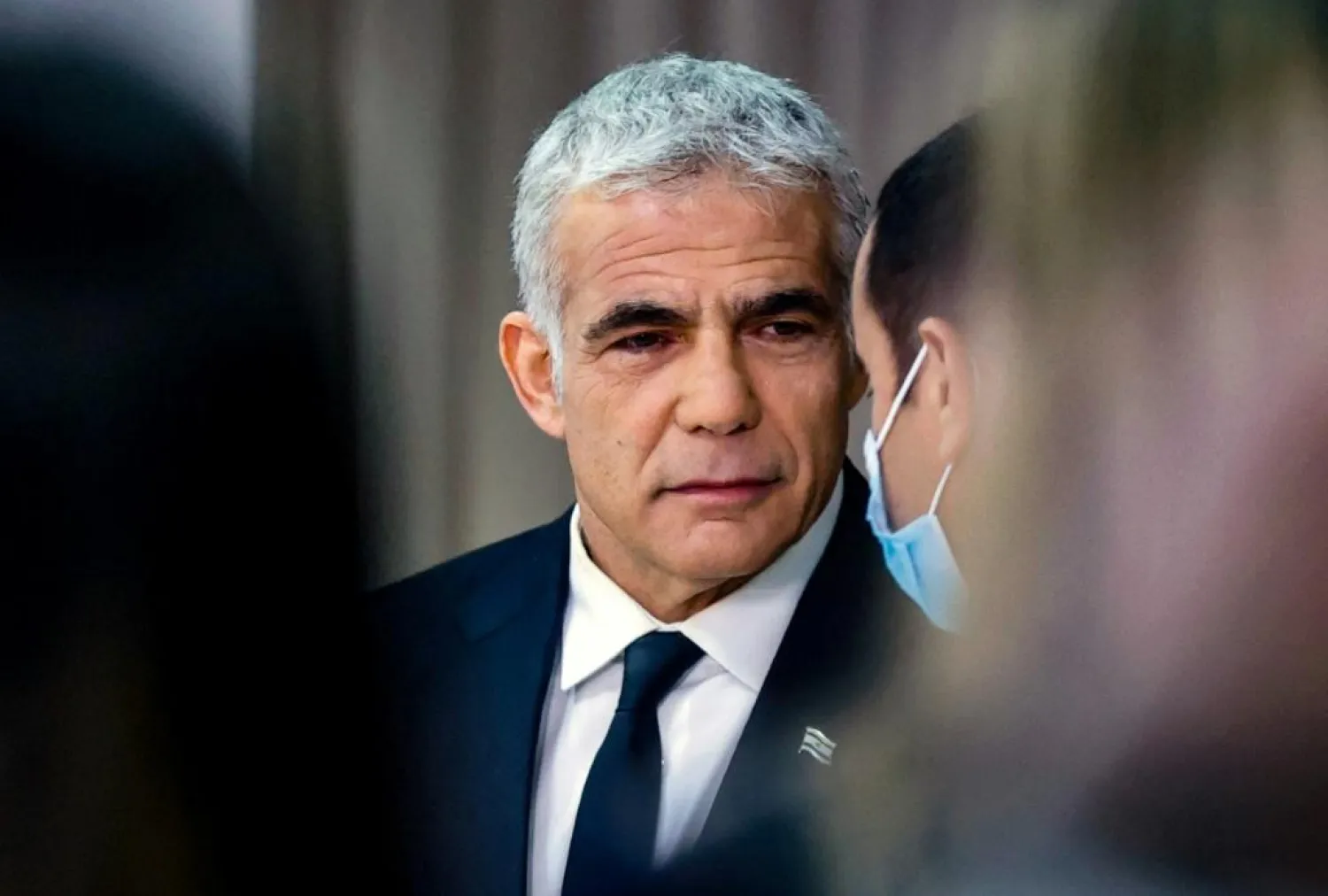
Israel's centrist opposition leader Yair Lapid has until June 3 to form a government - AFP
TT

Gaza Violence and Unrest at Home Raise Specter of New Israel Election

Israel's centrist opposition leader Yair Lapid has until June 3 to form a government - AFP

Israel's battle with Gaza militants and unprecedented inter-communal violence at home have further complicated efforts to form a government, raising the specter of yet another general election, experts say.

That could be a political boon to Prime Minister Benjamin Netanyahu, whose best hope of extending his record 12 straight years in office could hang on a fifth Israeli election since April 2019.

But the ideologically divided anti-Netanyahu camp still has a narrow window to reach a deal that would oust the hawkish premier: centrist opposition leader Yair Lapid's 28-day mandate to form a government expires on June 3.

"Most analysts regard a fifth election as the most probable outcome," said Toby Greene, a political scientist at Bar Ilan University.

"But we have 10 days left, and that's a very long time in Israeli politics."

A Lapid-Bennett deal would have required at least some support from pro-Palestinian and non-Zionist Arab lawmakers, which was already uncomfortable political terrain both for them and for Bennett, a Jewish nationalist.

The chances of such a deal took a severe blow earlier this month as Gaza militants launched rockets into Israel and Arab rioters torched synagogues in multiple mixed communities inside Israel.

That forced Bennett to "reconsider his choice to form a government together with Arab-supported parties," said Yohanan Plesner, president of the Israel Democracy Institute think-tank.

Before conflict flared with armed Palestinian groups Hamas and Islamic Jihad on May 10, Netanyahu's political future looked precarious.

On trial for bribery, fraud and breach of trust, the premier had failed in a March 23 vote to secure enough seats with his allies to build a majority in Israel's 120-seat parliament.

His mandate to form a government expired on May 4, handing Lapid a chance to try.

But Yonatan Freeman, a political scientist at the Hebrew University of Jerusalem, said it was in Israel's "political DNA to support the incumbent" when conflict flares.

As Israel ramped up its air strikes in Gaza in response to Palestinian rocket attacks, Netanyahu made joint appearances with his bitter political enemy, Defense Minister Benny Gantz.

Crisis leadership, experts say, may have helped Netanyahu reinforce an image that has helped him endure in politics for decades: the security-focused statesman who defends Israel against external threats.

The crisis also "caused a fissure among the opposing camp," Plesner said.

Lapid's best, and possibly only, hope of forming a government involved a prospective deal with Naftali Bennett, leader of the right-wing religious Yamina party.

Bennett and Lapid are ideological opponents, but both have prioritized averting a fifth election and ending the divisive Netanyahu era.

A deal would have seen Bennett serving as prime minister in a rotation, a move that could harm his standings among some rightwing supporters.

But at the same time, it would constitute a "huge opportunity for Bennett to present himself as prime ministerial material" as part of his efforts to become Netanyahu's successor, Greene said.

And without Bennett, centrist former television anchor Lapid has little space to make a deal to unite the splintered anti-Netanyahu camp.

After the Gaza crisis, "it's unlikely, but not impossible," Plesner said.

He added that Netanyahu, "as Israel's most seasoned politician," may be now able to coax rivals into his camp.

He listed Gantz and Gideon Saar, a right-winger who defected from Netanyahu's Likud last year, as possible candidates.

But with all blocs struggling to build a coalition, "the most likely outcome at this point is that Israel is headed to a fifth election," Plesner said.

After Israel agreed a mutual ceasefire with Hamas and Islamic Jihad and the inter-communal violence eased, Lapid's Yesh Atid party said coalition talks would resume Monday.

It said Bennett's Yamina would not attend.

Yet Freeman of the Hebrew University said the crisis could actually drive momentum towards a unity government.

The inter-communal violence saw both Arab and Jewish rioters attack religious sites, among other targets.

Freeman told AFP the Arab violence in solidarity with Gaza raised profound concern across Israel's security establishment: if the Hamas conflict were to flare again, so could the internal strife.

He suggested that the imperative to offer Arab lawmakers a role in the government as a gesture of unity could create incentive for political compromise in the days ahead.

Whether Netanyahu or another leader is capable of crafting a broad, inter-communal coalition remains highly uncertain.

But, Freeman said, "people are looking for ways to mitigate against this violence happening again. Bringing more Arab politicians into the fold could be a way of doing that".


Venezuela: Amnesty Law Excludes those who Promoted Military Action

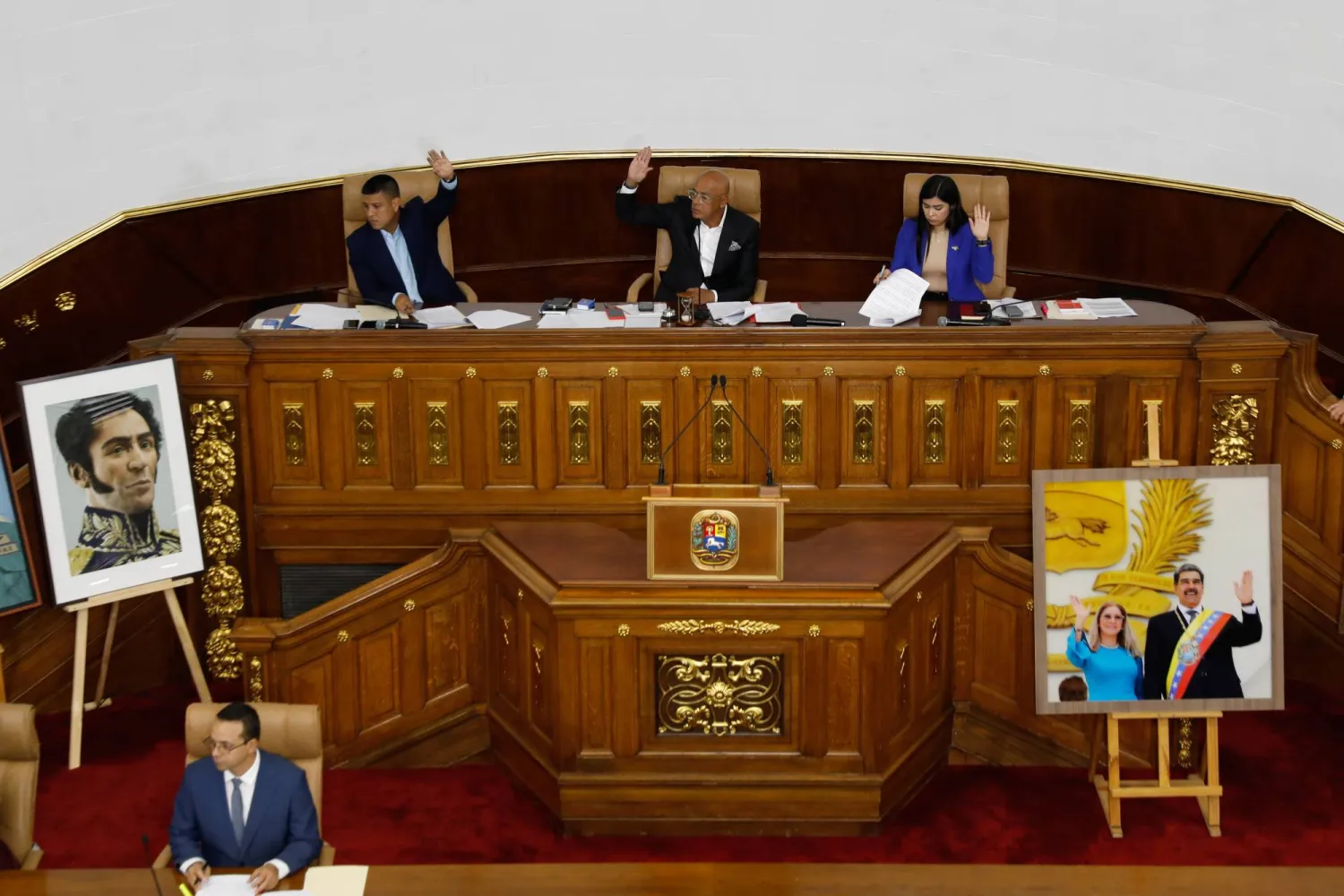
National Assembly President Jorge Rodriguez, center, presides over a session debating an amnesty bill in Caracas, Venezuela, Thursday, Feb. 19, 2026. (AP Photo/Crisitian Hernandez)
TT

Venezuela: Amnesty Law Excludes those who Promoted Military Action

National Assembly President Jorge Rodriguez, center, presides over a session debating an amnesty bill in Caracas, Venezuela, Thursday, Feb. 19, 2026. (AP Photo/Crisitian Hernandez)

Venezuela's parliament unanimously approved an amnesty law on Thursday that could free political prisoners, almost two months after President Nicolas Maduro was captured by US forces.

“The law on democratic coexistence has been approved. It has been forwarded to acting president Delcy Rodriguez for announcement,” said National Assembly President, Jorge Rodriguez, before parliament.

Acting president Delcy Rodriguez signed the legislation after it was handed to her by Jorge Rodrigez, her brother.

The passage of the law led to the end of a hunger strike by relatives of political prisoners.

Ten women have participated in a hunger strike outside the Zona 7 police facility in the capital Caracas last Saturday, setting up camps outside the prison and demanding the release of their relatives, according to AFP.

Because they experienced health problems, nine of them stopped the protest on Wednesday evening. Only one woman continued until Thursday, ending “136 hours,” or more than five days, of strike.

But the amnesty law excludes those who have been prosecuted or convicted of promoting military action against the country – which could include opposition leaders like Nobel Peace Prize winner Maria Corina Machado, who has been accused by the ruling party of calling for international intervention like the one that ousted Maduro.

Article 9 of the bill lists those excluded from amnesty as “persons who are being prosecuted or may be convicted for promoting, instigating, soliciting, invoking, favoring, facilitating, financing or participating in armed actions or the use of force against the people, sovereignty, and territorial integrity” of Venezuela “by foreign states, corporations or individuals.”


Türkiye’s Approval of Peace Roadmap is Important Step, PKK Source Says

A Turkish parliamentary commission’s approval of a report setting out a roadmap for legal reforms alongside the disbandment of the Kurdistan Workers Party (PKK) group is an important step and the beginning of a fundamental change in Turkish policy, a PKK source said Thursday. (AFP/File)
TT

Türkiye’s Approval of Peace Roadmap is Important Step, PKK Source Says

A Turkish parliamentary commission’s approval of a report setting out a roadmap for legal reforms alongside the disbandment of the Kurdistan Workers Party (PKK) group is an important step and the beginning of a fundamental change in Turkish policy, a PKK source said Thursday. (AFP/File)

A Turkish parliamentary commission's approval of a report setting out a roadmap for legal reforms alongside the disbandment of the Kurdistan Workers Party (PKK) group is an important step and the beginning of a fundamental change in Turkish policy, a PKK source told Reuters on Thursday.

The commission voted overwhelmingly on Wednesday to approve the report, advancing a peace process designed to end decades of conflict.

"The vote is considered an achievement and an important ‌step toward consolidating democracy ‌in Türkiye," said the PKK source.

The PKK - designated a ‌terrorist ⁠organization by Türkiye, ⁠the United States and the European Union - halted attacks last year and said in May it had decided to disband and end its armed struggle.

The parliamentary vote shifts the peace process to the legislative theatre, as President Tayyip Erdogan, Türkiye’s leader of more than two decades, bids to end a conflict focused in mainly Kurdish southeast Türkiye.

The insurgency began in 1984 and has killed more than 40,000 people, sowing deep discord at home and ⁠spreading violence across borders into Iraq and Syria.

IMPORTANT ISSUES OUTSTANDING

The PKK ‌source said there were foundations for resolving ‌the Kurdish issue, but there was a lack of clarity on the issue in the report.

"There also ‌remain other important issues, such as initiating constitutional amendments, especially in aspects related to ‌the Kurdish language as well as amendments to the anti-terrorism law," the source said.

Another issue was legislation concerning the return of PKK militants to Türkiye and their integration into society, the source said.

A key element of Wednesday's report recommended strengthening mechanisms to ensure compliance with decisions by the ‌European Court of Human Rights (ECHR) and the Constitutional Court.

Among key ECHR decisions related to Türkiye are rulings that the rights of ⁠jailed former pro-Kurdish ⁠party leader Selahattin Demirtas had been violated and that he should be released immediately.

Ankara's final appeal against that was rejected in November.

SIGN OF INTENT

Demirtas' lawyer Mahsuni Karaman told Reuters the report's comments on the ECHR were important as a sign of intent.

"We hope this will be reflected in judicial practice—that is our wish and expectation,” Karaman said.

Demirtas was detained in November 2016 on terrorism-related charges, which he denies. In May 2024, a court convicted him in connection with deadly 2014 protests and sentenced him to more than 40 years in prison.

Turkish nationalist leader Devlet Bahceli, a key Erdogan ally whose call in 2024 triggered the current PKK peace process, said in November that it "would be beneficial" to release Demirtas from prison.

The opposition pro-Kurdish DEM Party — the successor party of Demirtas' HDP — remains parliament's third-largest bloc and has cooperated closely with the parliamentary commission.


US Renews Threat to Leave IEA

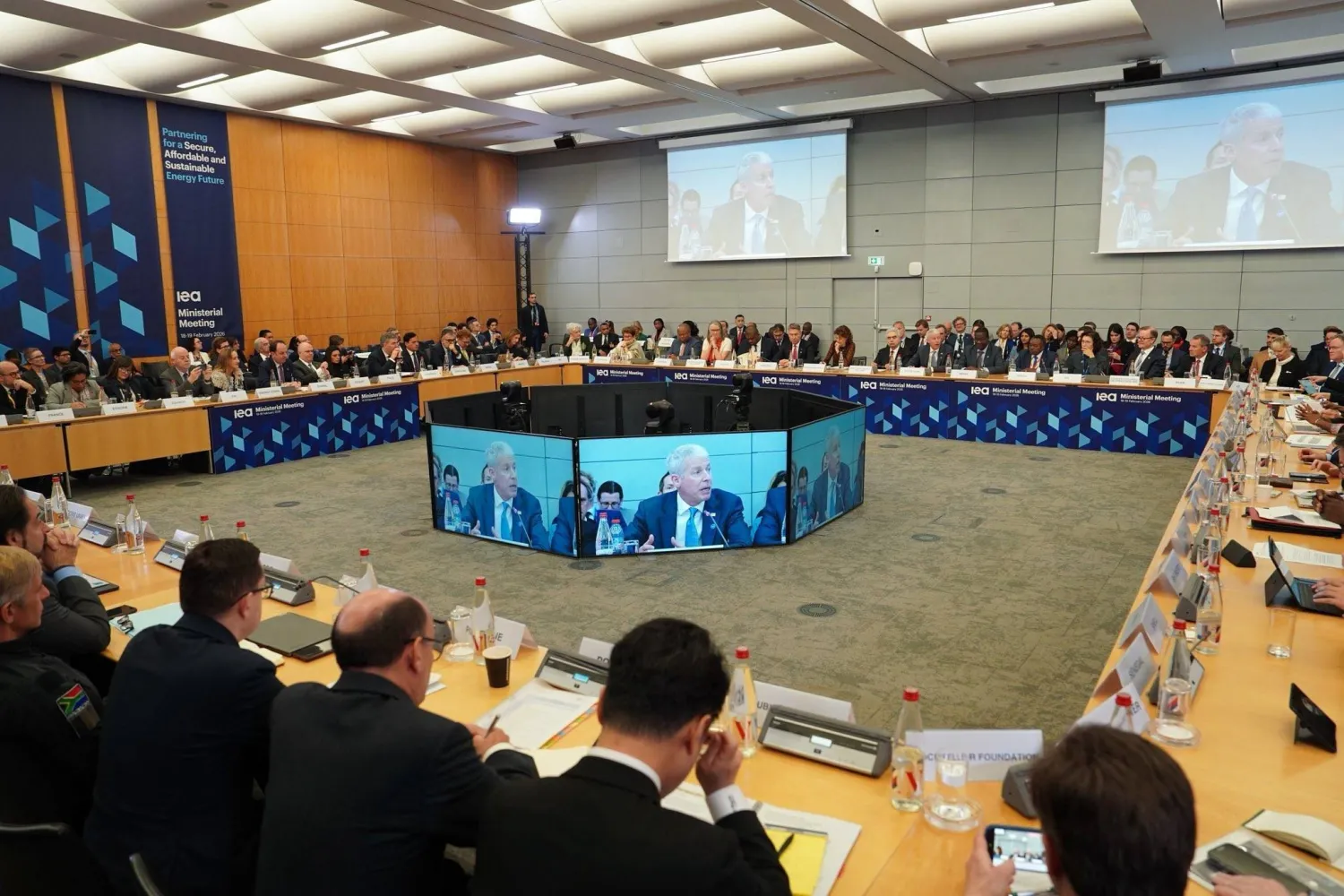
US Energy Secretary Chris Wright speaks at an IEA ministerial meeting in Paris (X)
TT

US Renews Threat to Leave IEA

US Energy Secretary Chris Wright speaks at an IEA ministerial meeting in Paris (X)

US Energy Secretary Chris Wright renewed his threat Thursday to pull out of the International Energy Agency, saying Washington would press the organization to abandon a net-zero agenda “in the next year or so.”

Speaking on the last day of an IEA ministerial meeting in Paris, Wright said the 52-year-old agency should return to its founding mission of ensuring energy security.

“The US will use all the pressure we have to get the IEA to eventually, in the next year or so, move away from this agenda,” Wright said in a news conference.

“But if the IEA is not able to bring itself back to focusing on the mission of energy honesty, energy access and energy security, then sadly we would become an ex-member of the IEA,” he added.

Meaning of Wright’s Warning

A US exit means a deep cut to IEA’s budget undermining the agency’s global influence.

Washington is not just a member of the agency but its largest funder. It alone contributes to 25% of the IEA core budget (equivalent to between $25 and $30 million annually) and therefore its exit would “dry up” a quarter of the agency’s financial resources.

Also, Washington is the world's largest oil and gas producer, meaning the US exit will affect the agency's reports and their credibility in markets.

The IEA was created to coordinate responses to major disruptions of supplies after the 1973 oil crisis. But in recent years, it became the main advocate of green transition policies, which the US considers as “politicized.”

The IEA produces monthly reports on oil demand and supply as well as annual world energy outlooks that include data on the growth of solar and wind energy, among other analyses.

Wright praised IEA Executive Director Fatih Birol for reinserting in November 2025’s annual outlook a Current Policies Scenario in which oil and gas demand would grow in the next decades. That scenario had been dropped for the past five years.

But the report still included a scenario where the world reaches net zero emissions by mid-century.

Birol’s current four-year term ends in 2027, but Wright demurred when asked who he would like to head the IEA, which has over 30 member nations.

“We remain today undecided or neutral on who the leadership is. We care about the mission much more than the individual leaders,” the US energy chief said.

If Birol can make the agency “get out the politics and get out the anti-energy part of it, that's great by us,” said Wright, who first warned last year that the US could leave the IEA if it did not reform.

For his part, Birol insisted that the Paris-based agency was “data-driven.” He said, “We are a non-political organization.”

The IEA was created “to focus on energy security,” Wright said on Wednesday at a ministerial meeting of the agency in Paris.

“That mission is beyond critical and I'm here to plead to all the members (of the IEA) that we need to keep the focus of the IEA on this absolutely life-changing, world-changing mission of energy security,” he said.

The Energy Secretary said he wanted to get support from “all the nations in this noble organization to work with us, to push the IEA to drop the climate. That's political stuff.”

His comments come just a day after he publicly threatened to quit the organization unless it abandoned its focus on the energy transition— a call that several countries rejected, including the UK, Austria and France.