


Princess Diana's Wedding Dress Steals Show at Exhibition for Royal Family's Designers

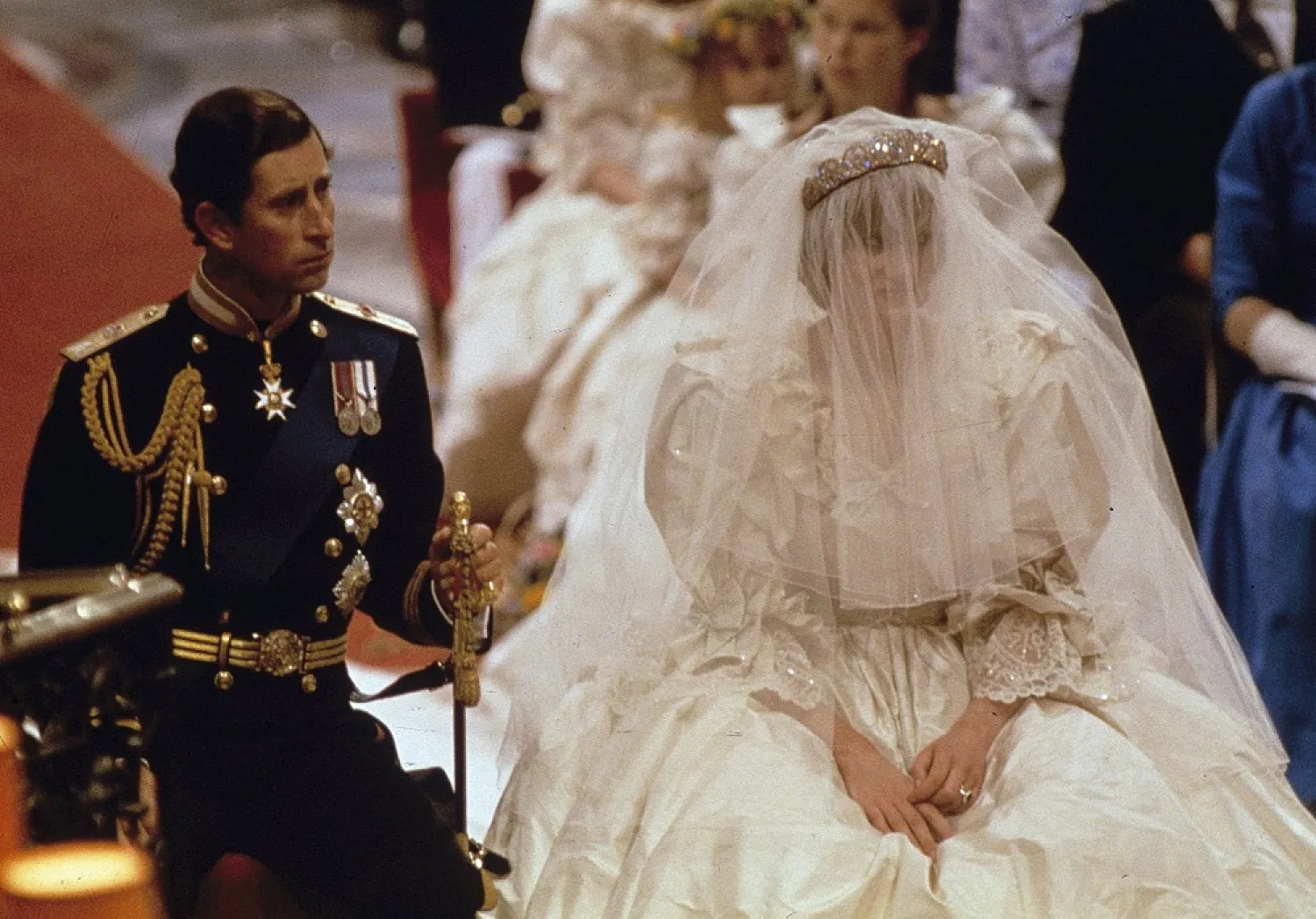
Britain’s Prince Charles and Lady Diana Spencer are shown on their wedding day at St. Paul’s Cathedral in London in July 1981. (AP)
TT

Princess Diana's Wedding Dress Steals Show at Exhibition for Royal Family's Designers

Britain’s Prince Charles and Lady Diana Spencer are shown on their wedding day at St. Paul’s Cathedral in London in July 1981. (AP)

An exhibition held in London has gathered the Royal Family's favorite designers to display some of their best works, from Princess Diana's creamy wedding dress, to some of the Queen's most memorable outfits.

The exhibition launched Thursday, at Kensington Palace with Diana's dress adorned with classic lace, pearls, and thousands of sequins, displayed behind a vitrine specially designed to fit its 7.6 meters veil, the longest ever worn in a royal wedding.

When they received a phone call from Diana, David and Elizabeth Emanuel, who were in their early fame at the time, realized that "it was one of these moments that changes one's life forever," says Elizabeth in a video screened during the event.

Many remember how the princess' veil was creased when she stepped down from the carriage in front of St. Paul's Chapel, in 1981. Fortunately, both designers were there to fix the problem.

"This proves that we can be ready for everything, but something must always happen on the big day," said Matthew Storey, exhibition curator, recalling that "the dress was huge, while the carriage was small."

The show gives an insight on the efforts made to create this dress, through pictures of the tailors who made it, and the keys of the closet in which it was kept all night.

Elizabeth Emanuel recalled how reporters were looking in their studio's garbage bins for any hint on the design. Therefore, they decided to throw unused fabric to misinform the curious reporters.

The show focuses on emphasizing the evolution of Diana's style and her modern fashion spirit that made her wear more elegant pieces. Although she gave her designers a lot of freedom while making her dress, some documents from the archive show that she interfered sometimes, giving comments on the drawing to request a special color for instance, or wish for some alterations.

In video footage, designer David, who was a close to the princess, revealed that she was "so shy" when they first met, but she became "so involved in choosing what she wants later." He also noted that "she was always aware of the garment people await to see. She loved breaking the rules, and she always wore gloves and hats in contrast to the Royal protocol."

The Crown television series has recently recreated some of the outfits worn by Diana, who would have turned 60 on July 1.

The exhibition also highlights the long connection between Designer Norman Hartnell and Queen Elizabeth II. Norman started to design her outfits in the 1930s.

Hartnell's biography writer Michael Pick said in a video that during the World War II, the Queen used to wear elegant garments when visiting bombarded Londoners. Hartnell also designed the Queen's wedding dress, and the dress she wore for her crowning ceremony. The exhibition displays the appreciation letter she wrote to thank him.

But the most exciting dress in the exhibition belongs to Princess Margret. It has a low bodice adorned with gold embroidery inspired from the Georgian age. This dress was designed for a costume party, in 1964, by stage designer Oliver Messel.

He was closely related to the princess, who honored him after his death by displaying his archive at Kensington Palace.

A Nonprofit in France Is Fighting Fast-Fashion Waste, One Sneaker at a Time

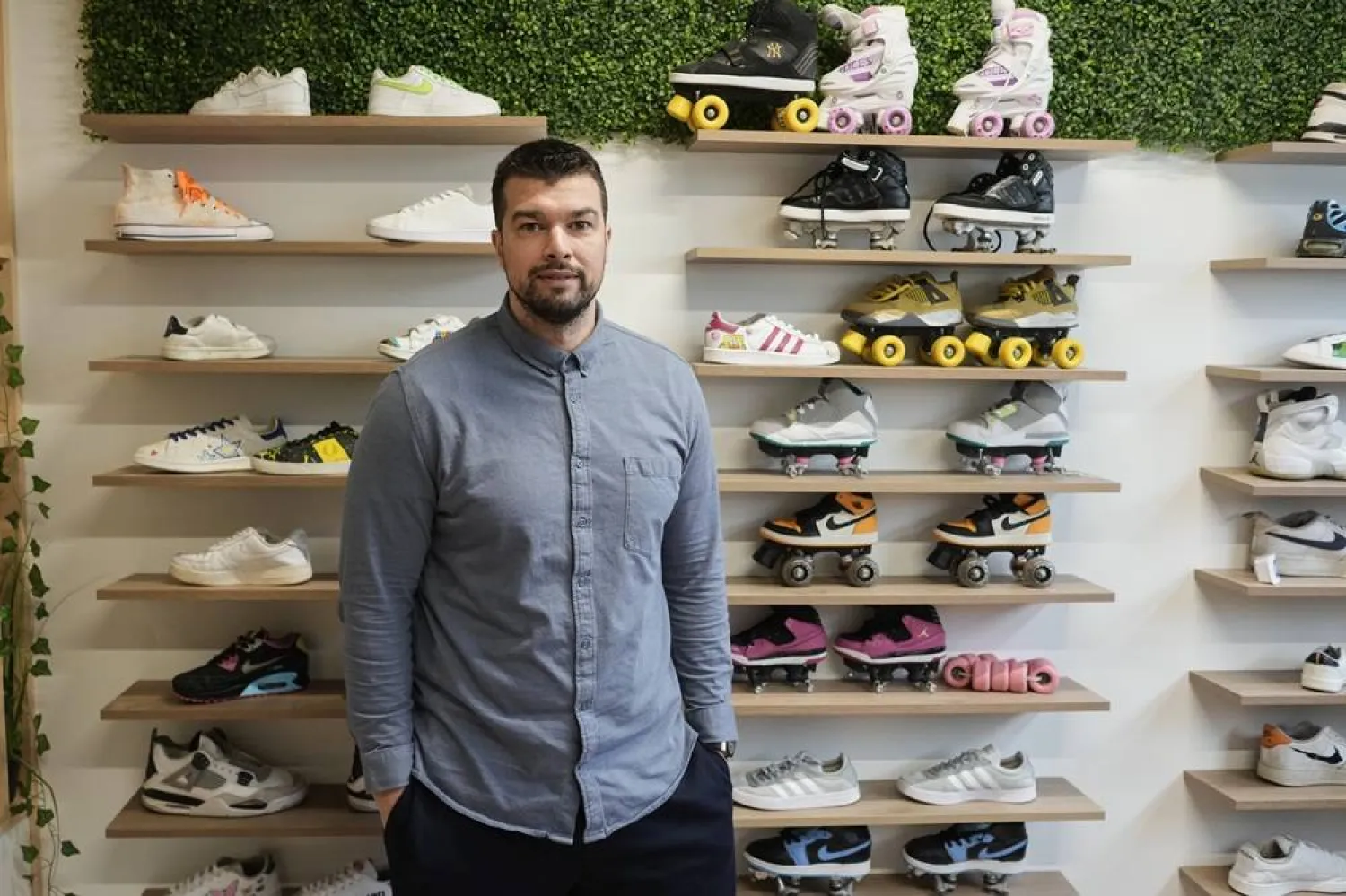
 Mohamed Boukhatem, co-founder and director of SneakCoeurZ, a nonprofit organization giving used footwear a second life, poses in Champs-sur-Marne, east of Paris, Wednesday, March 25, 2026. (AP)
Mohamed Boukhatem, co-founder and director of SneakCoeurZ, a nonprofit organization giving used footwear a second life, poses in Champs-sur-Marne, east of Paris, Wednesday, March 25, 2026. (AP)
TT

A Nonprofit in France Is Fighting Fast-Fashion Waste, One Sneaker at a Time

 Mohamed Boukhatem, co-founder and director of SneakCoeurZ, a nonprofit organization giving used footwear a second life, poses in Champs-sur-Marne, east of Paris, Wednesday, March 25, 2026. (AP)
Mohamed Boukhatem, co-founder and director of SneakCoeurZ, a nonprofit organization giving used footwear a second life, poses in Champs-sur-Marne, east of Paris, Wednesday, March 25, 2026. (AP)

Hundreds of used sneakers arrive each week at a workshop east of Paris, where workers inspect them and ask a simple question: Can a shoe be saved?

The nonprofit SneakCœurZ is in the business of sorting the shoes to check which ones can be resold or redistributed, and which have to be rejected. It says it collected 30,000 pairs of used sneakers last year and resold 2,000 pairs, and wants to scale up that process.

“Today, there is no project of this scale in the sneaker sector,” said Mohamed Boukhatem, the organization's director general and co-founder. “We are the only ones able to industrialize both the processes and the collection of sneakers for reuse.”

The group's work underscores a growing waste problem in France, where the capital Paris is long one of the world’s fashion and luxury hubs.

The stakes are huge: the textile industry is among the world’s most polluting, and the fashion and textiles sector accounts for up to 8% of global greenhouse gas emissions, according to the United Nations. The European Parliament has said textiles were the third-largest source of water degradation and land use in the European Union in 2020.

Refashion, the French government-approved eco-organization for clothing, household linen and footwear, says 259 million pairs of shoes were sold in France in 2024.

It says only about a third of used textiles and footwear are separately collected, with much of the rest left in cupboards or thrown away with household waste.

At its workshop in Champs-sur-Marne, workers for SneakCœurZ inspect the used shoes and check which can be salvaged.

“The structural elements of the shoe are what determine whether we can refurbish it or not,” workshop manager Paul Defawes Abadie said.

“A damaged Velcro strap isn’t a deal breaker. A lace isn’t a deal breaker. Dirt is never a deal breaker,” he said. “What really matters is the wear of the structural materials, especially the outsole.”

Pairs that make the cut are cleaned from the sole upward, disinfected inside and, in some cases, whitened under UV light before being put back into circulation.

The nonprofit says it redistributed more than 7,000 pairs to people in need and helped create 19 jobs.

“Over the next three years, the goal is to triple or even quadruple these volumes and move to an industrial scale,” Boukhatem said.

France has tried to respond to the issue of fast-fashion waste with law, as well as rhetoric.

Its 2020 anti-waste law requires unsold nonfood goods to be reused, donated or recycled instead of destroyed.

Authorities introduced a state-backed repair bonus for clothing and shoes in November 2023. Separately, lawmakers are still working on a bill aimed at reducing the textile industry’s environmental impact.

The bill passed the National Assembly in March 2024 and the Senate in June 2025, and the government said in February that it was still aiming for a joint parliamentary committee this spring.


H&M's Q1 Profit Grows More Than Expected, Sees March Sales Up 1%

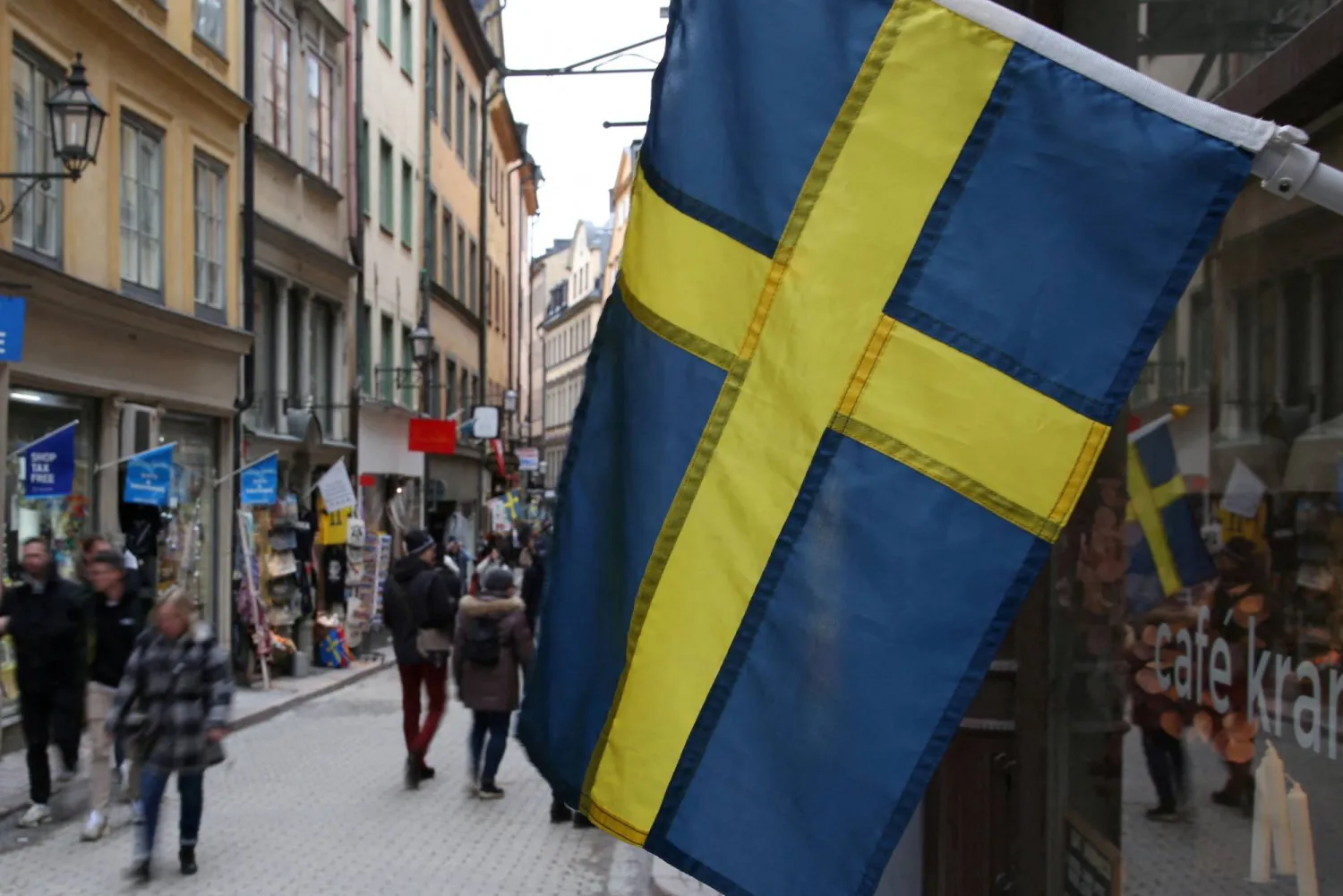
FILE PHOTO: A Swedish flag hangs outside a business on a street of the old city of Stockholm, Sweden, February 24, 2024. REUTERS/Tom Little/File Photo
TT

H&M's Q1 Profit Grows More Than Expected, Sees March Sales Up 1%

FILE PHOTO: A Swedish flag hangs outside a business on a street of the old city of Stockholm, Sweden, February 24, 2024. REUTERS/Tom Little/File Photo

Swedish fashion retailer H&M reported on Thursday a slightly bigger rise than expected in December-February operating profit, and predicted March sales would be up 1% in local currencies.

"Towards the end of the quarter our well-received spring collections contributed to a positive sales trend, which also continued into March," CEO Daniel Erver said in a statement.

Operating profit in H&M's fiscal first quarter, ⁠which includes the key ⁠Christmas shopping period, rose for a third consecutive quarter to 1.51 billion crowns ($162 million) from a year-earlier 1.20 billion and a mean forecast in an LSEG poll of analysts of 1.39 billion, on an organic sales decrease of 1%.

The rival ⁠to Inditex in January flagged that local-currency sales in the first two months of the quarter were down 2%.

According to Reuters, H&M said it is closely monitoring developments in the Middle East and the implications for global trade.

"With good flexibility in the supply chain and a low proportion of air freight, there are opportunities to adapt the flow of goods to changed conditions," it said. "Middle Eastern markets account for a ⁠small portion ⁠of the company’s total sales and the markets are operated through franchise partners."

On February 28, the United States and Israel launched coordinated strikes against Iran. Iran has in response launched strikes against Israel, US bases and Gulf states.

It has attacked vessels and infrastructure throughout the Gulf region and effectively closed the Strait of Hormuz, hitting global supply chains and causing soaring energy costs, raising concern over war-driven inflation and potential impact on consumer demand.


Next Says UK Sales Have Held Up Since Iran War Started

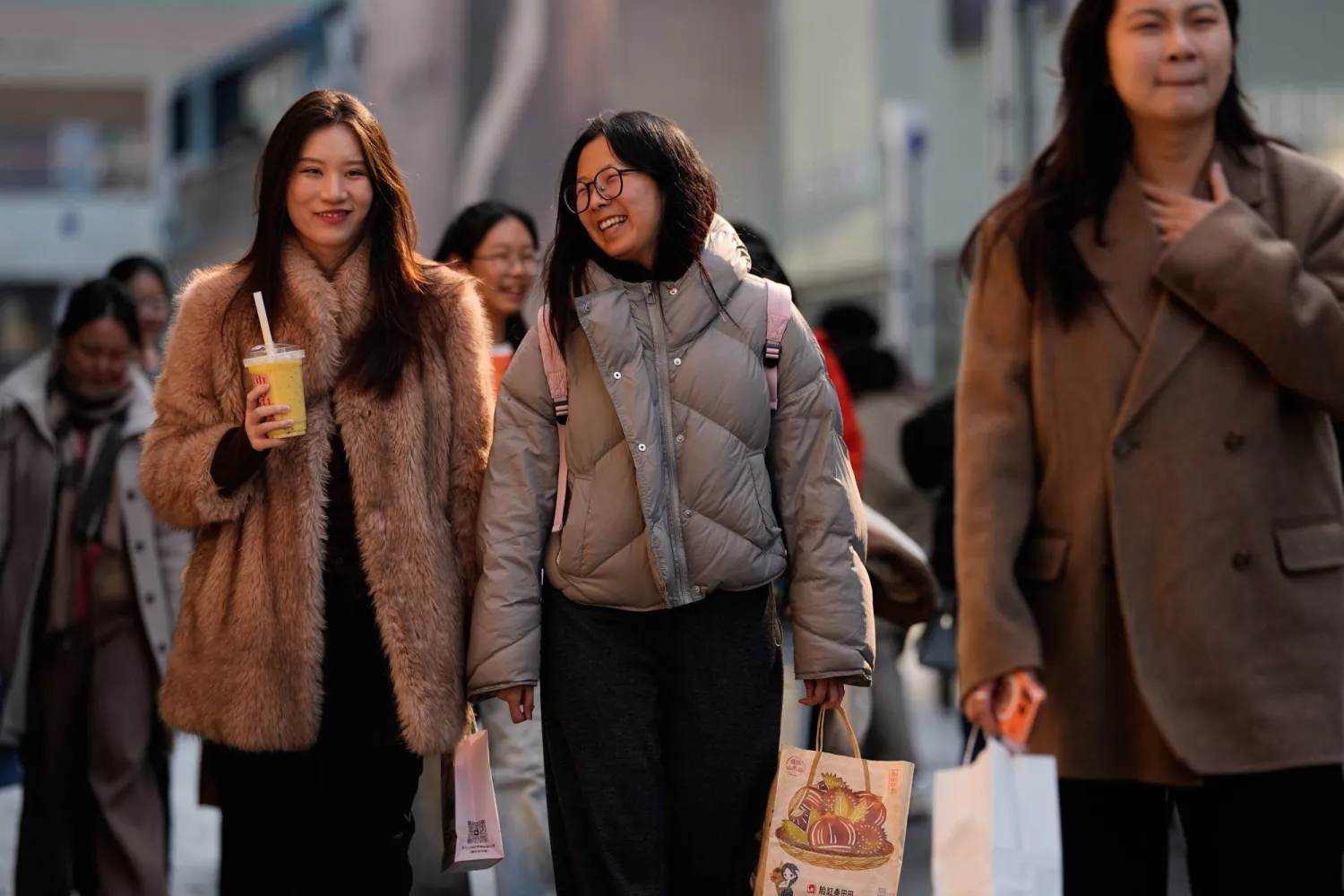
Women tour a popular outdoor shopping mall in Beijing, China, Sunday, March 8, 2026. (AP Photo/Andy Wong)
TT

Next Says UK Sales Have Held Up Since Iran War Started

Women tour a popular outdoor shopping mall in Beijing, China, Sunday, March 8, 2026. (AP Photo/Andy Wong)

British clothing retailer Next has not seen a noticeable drop off in UK sales since the US-Israeli war on Iran started at the end of February, its boss said on Thursday.

"Eight weeks, ⁠including the war ⁠weeks, have been good in the UK," CEO Simon Wolfson told Reuters after Next published full-year ⁠results.

He said sales in the Middle East, which account for about 6% of the group's annual turnover, fell "dramatically" in the first few days of the war and demand remains "suppressed.”

Wolfson said if ⁠Next ⁠did have to raise prices around June or July to make up for higher costs caused by the war, the increases would only be 1% to 2%.