


Saudi Story Collection Explores Transformation of Houses, Places, Humans

Saudi Story Collection Explores Transformation of Houses, Places, Humans
TT

Saudi Story Collection Explores Transformation of Houses, Places, Humans

Saudi Story Collection Explores Transformation of Houses, Places, Humans

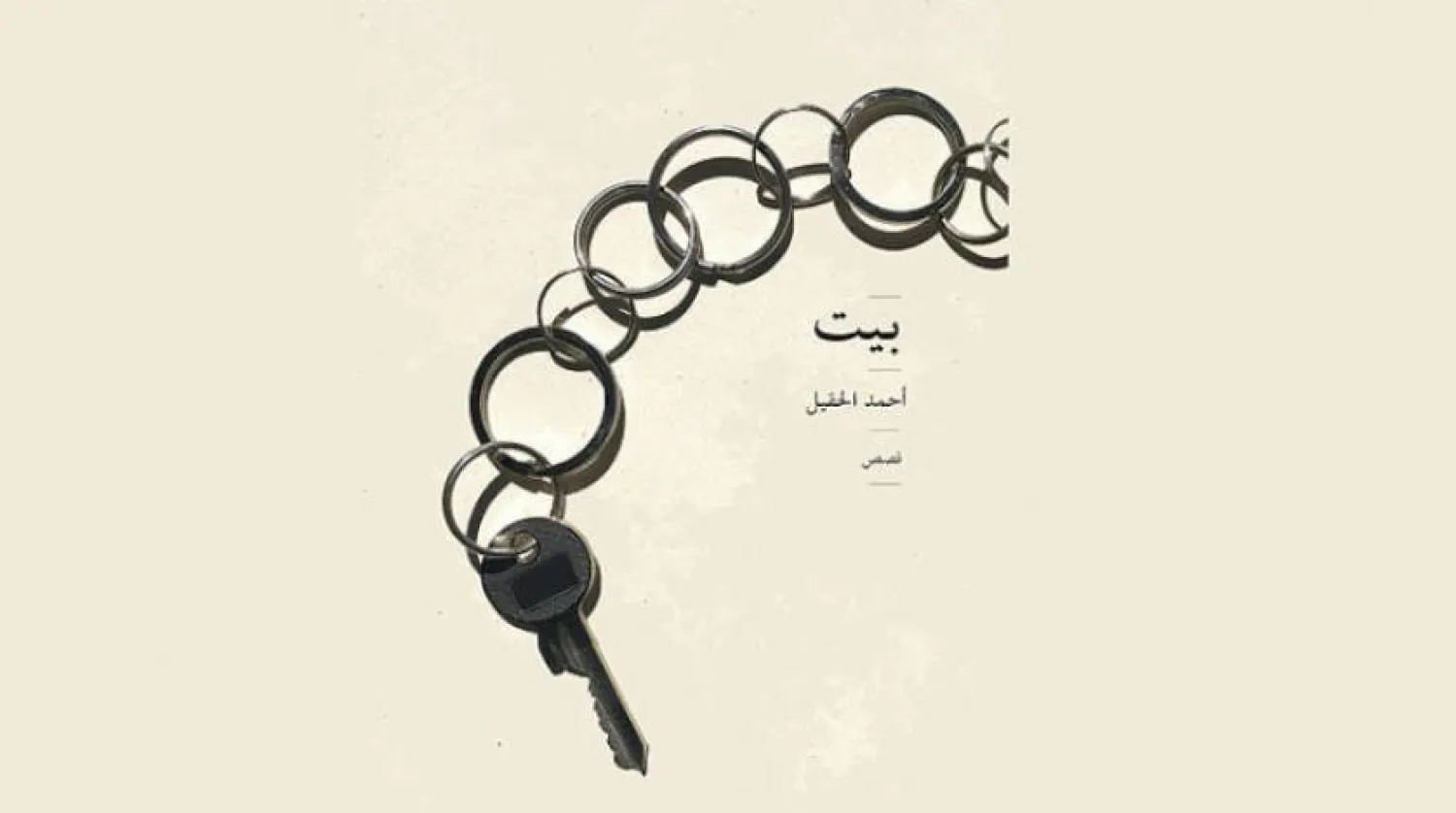
Saudi novelist and story writer Ahmed al-Hokail released a new story collection entitled "Home," published by Riwayat Imprint affiliated with Sharjah-based Kalimat Group. The collection includes many stories that took place in the 1970s and 1980s, featuring many details from that period such as the shape of streets and the interests of people who lived back then.

The author created the picture of a whole era using car brands, urban expansion, and the emergence of new neighborhoods. He also shed light on the consequences of moving to a new house, like losing familial ties, neighbors, and childhood memories in the past decades, during which people never closed their doors or set boundaries with other families.

In a text titled "Ibn Battuta Leaves," the novelist tells the story of a little boy who remembers his neighbors leaving to a new house in 1986; the story's main character blend events from two different periods: the first when he was an 11-year-old boy, and the other after he became a husband and a father.

He recalls moments filled with nostalgia for a time where he was more innocent. With his visual memory, the man reconstructs the past of his neighbors on the last day in their old house, how their faces disappeared, and his ties with them were gone forever. Other stories revolve around the simple relations that dominated the society before the oil boom, and how moving from old neighborhoods to urban communities always represented a new shift for individuals and families.

From the perspective of an 11-year-old boy, half of the regret expressed in the stories comes from losing the simplicity and missing the happiness of visiting neighbors' houses like he used to do in his childhood. In other words, the "modern house" has become, according to al-Hokail's texts, the synonym of missing neighbors, and the end of a time where people sat together around one table. In his texts, the writer was keen to recall smells, and activate senses, while the visual part remains dominant.

In his collection, al-Hokail seeks to highlight what others don't see in the transformation of houses, and the change of their owners. The second story, also named "House," revolves around a living room, the events it hosted, furniture, marriages, friends gatherings in the absence of their wives, night adventures, ruined recipes, and everything that could happen to a person and become a major part of his life.

In some of its pages, the collection features texts with unfamiliar plots based on philosophic views. The third story, for instance, discusses death with a touch of fantasy and explores various deaths that humans might experience, according to reincarnation myths. But, in this text, deaths were real and not just mythological hypotheses.

The stories of Ahmed al-Hokail in this collection, like in the last text "From the Margin: Letter from after Death," and three others with similar ideas, feature a forest full of lives, in diversified narrative subjects with historic if not legendary roots. Here, the reader might find it hard to understand why there are texts that are not related to the main idea of the book. However, the used language gives the stories a sort of consistency and reflects remarkable patience in forging the scenes and aesthetic energy that manages to fill the reader's hunger.



Saudi Arabia: Ship of Tolerance Initiative Promotes Cultural Dialogue in Jeddah

The Royal Institute of Traditional Arts (Wrth) will offer traditional craft workshops throughout Ramadan. SPA
TT

Saudi Arabia: Ship of Tolerance Initiative Promotes Cultural Dialogue in Jeddah

The Royal Institute of Traditional Arts (Wrth) will offer traditional craft workshops throughout Ramadan. SPA

The Saudi Ministry of Culture, in collaboration with the "Lenobadir" volunteer and community partnership program and the Athr Foundation, has launched the Ship of Tolerance initiative in Historic Jeddah during Ramadan.

The initiative aims to enhance shared human values through arts, and promote tolerance and coexistence among children and families. It provides an educational and cultural experience aligned with the area’s unique character as a UNESCO World Heritage site.

As part of this global art project, children will create artworks that represent acceptance and dialogue.

The Royal Institute of Traditional Arts (Wrth) will offer traditional craft workshops throughout Ramadan, linking the initiative's values with local heritage and enriching visitors' connection to the region's identity.

This effort supports cultural programs with educational and social dimensions in Historic Jeddah, activating local sites for experiences that combine art, crafts, and community participation. It aligns with the National Strategy for Culture under Saudi Vision 2030, focusing on heritage preservation and expanding culture's impact on daily life.


Oscar Contender ‘Hamnet’ Boosts Tourism at Shakespeare Heritage Sites 

A view of Shakespeare’s Birthplace, William Shakespeare's childhood home, in Stratford-upon-Avon, Britain, February 9, 2026. (Reuters)
TT

Oscar Contender ‘Hamnet’ Boosts Tourism at Shakespeare Heritage Sites 

A view of Shakespeare’s Birthplace, William Shakespeare's childhood home, in Stratford-upon-Avon, Britain, February 9, 2026. (Reuters)

On a cloudy winter's day, visitors stream into what was once William Shakespeare's childhood home in Stratford-upon-Avon and the nearby Anne Hathaway's cottage, family residence of the bard's wife.

Hathaway's cottage is one of the settings for the BAFTA and Oscar best film contender "Hamnet", and the movie's success is drawing a new wave of tourists to Shakespeare sites in the town in central England.

Shakespeare's Birthplace is the house the young William once lived in and where his father worked as a glove maker, while Hathaway's cottage is where he would have visited his future wife early in their relationship.

Typically, around 250,000 visitors, from the UK, Europe, the United States, China and elsewhere, walk through the locations each year, according to the Shakespeare Birthplace Trust. ‌The charity looks after ‌Shakespeare heritage sites, which also include Shakespeare's New Place, the site of ‌the ⁠Stratford home where the ⁠bard died in 1616.

Visitors are flocking in this year thanks to "Hamnet", the film based on Maggie O'Farrell's 2020 novel, which gives a fictional account of the relationship between Shakespeare and Hathaway, also known as Agnes, and the death of their 11-year-old son Hamnet in 1596.

"Visitor numbers have increased by about 15 to 20% across all sites since the film was released back in January. I think that will only continue as we go throughout the year," Richard Patterson, chief operating officer for the Shakespeare Birthplace Trust, said.

"They particularly want ⁠to look (at) Anne Hathaway's cottage and the specifics around how the family ‌engaged in the spaces and the landscape in and around ‌the cottage... you can see why he would have been inspired."

NEW ACCESS TO SHAKESPEARE

"Hamnet" has 11 nominations at ‌Sunday's British BAFTA awards, including best film and leading actress for Jessie Buckley, who plays Agnes. It ‌also has eight Oscar nominations, with Buckley seen as the frontrunner to win best actress.

"Hamnet" is set in Stratford-upon-Avon and London although it was not filmed in Stratford.

It sees Paul Mescal's young Shakespeare fall for Agnes while teaching Latin to pay off his father's debts. The drama, seen mainly through Agnes' eyes, focuses on their ‌life together and grief over Hamnet's death, leading Shakespeare to write "Hamlet".

"Shakespeare... is notoriously enigmatic. He writes about humanity, about feeling, about emotion, about conflict, ⁠but where do we understand ⁠who he is in that story?" said Charlotte Scott, a professor of Shakespeare studies and interim director of collections, learning and research at the Shakespeare Birthplace Trust.

"And that's driven people creative and otherwise for hundreds and hundreds of years. Where is Shakespeare's heart? And this is what the film I think has so beautifully opened up."

Little is known about how the couple met. Shakespeare was 18 and Hathaway 26 when they married in 1582. Daughter Susanna arrived in 1583 and twins Judith and Hamnet in 1585.

The film acknowledges the names Hamnet and Hamlet were interchangeable back then. While grief is a dominant theme, audiences also see Shakespeare in love and as a father.

"A lot of people will see this film not necessarily having... had any kind of relationship with Shakespeare," Scott said.

"So people will come to this film, I hope, and find a new way of accessing Shakespeare that is about creativity, that is about understanding storytelling as a constant process of regeneration, but also crucially, looking at it from that kind of emotive angle."


Culture Ministry Continues Preparations in Historic Jeddah to Welcome Visitors during Ramadan 

Historic Jeddah has emerged as a leading cultural tourism destination during Ramadan. (SPA)
TT

Culture Ministry Continues Preparations in Historic Jeddah to Welcome Visitors during Ramadan 

Historic Jeddah has emerged as a leading cultural tourism destination during Ramadan. (SPA)

The Saudi Ministry of Culture is continuing its efforts to revitalize Historic Jeddah in preparation for welcoming visitors during the holy month of Ramadan, offering cultural programs, events, and heritage experiences that reflect the authenticity of the past.

The district has emerged as a leading cultural tourism destination at this time of year as part of the “The Heart of Ramadan” campaign launched by the Saudi Tourism Authority.

Visitors are provided the opportunity to explore the district’s attractions, including archaeological sites located within the geographical boundaries of the UNESCO World Heritage-listed area, which represent a central component of the Kingdom’s urban and cultural heritage.

The area also features museums that serve as gateways to understanding the city’s rich heritage and cultural development, in addition to traditional markets that narrate historical stories through locally made products and Ramadan specialties that reflect authentic traditions.

These initiatives are part of the ministry’s ongoing efforts to revitalize Historic Jeddah in line with the objectives of Saudi Vision 2030 and aiming to transform it into a vibrant hub for arts, culture, and the creative economy, while preserving its tangible and intangible heritage.