

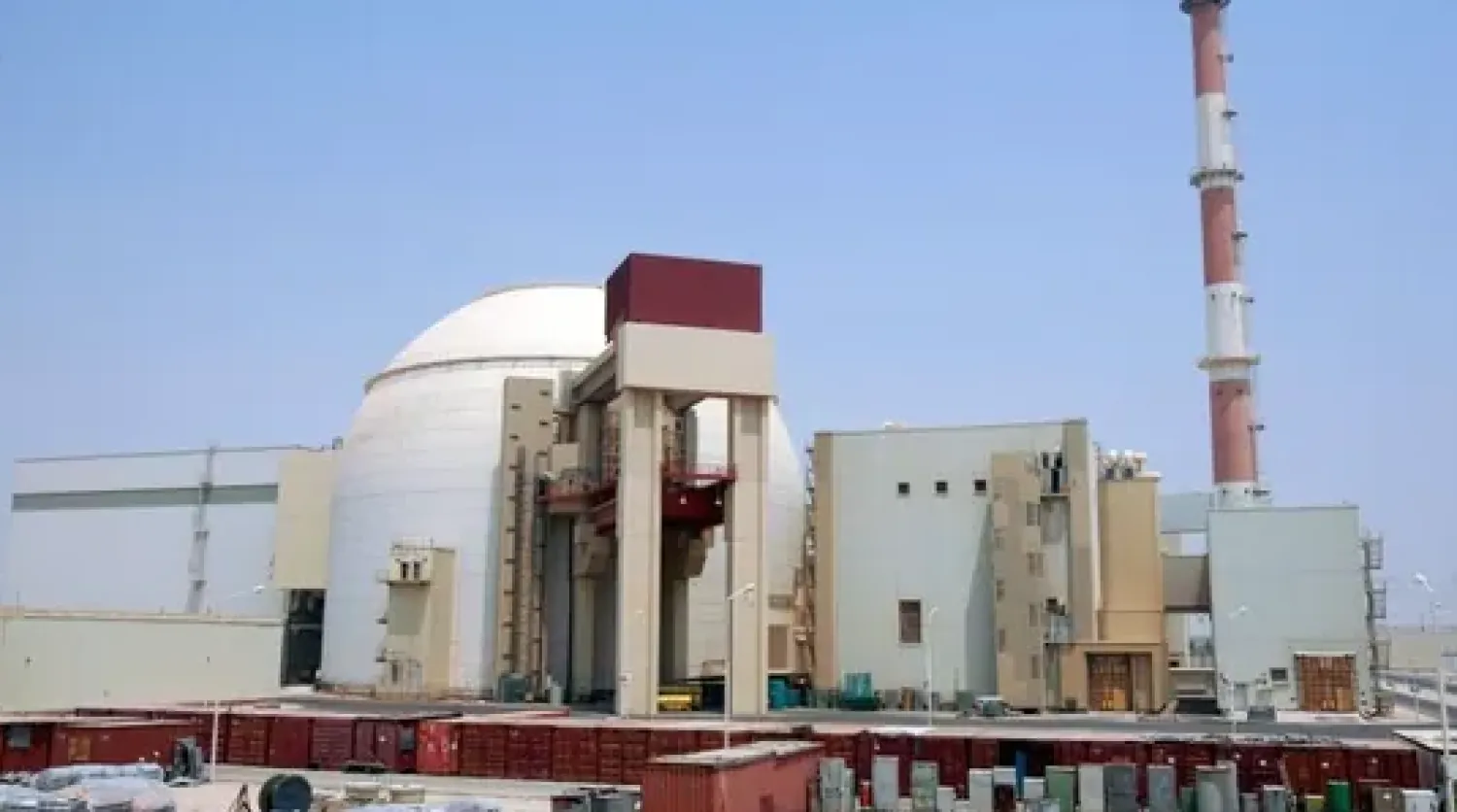

Iranian Media: 'Sabotage Attack' on Nuclear Building Foiled

A general view of the Bushehr main nuclear reactor, 1,200 km south of Tehran.(Reuters)
TT

Iranian Media: 'Sabotage Attack' on Nuclear Building Foiled

A general view of the Bushehr main nuclear reactor, 1,200 km south of Tehran.(Reuters)

An Iranian news site close to security services said that authorities have thwarted a "sabotage attack" on the country's civilian nuclear program, without providing further information.

Nournews, a website believed to be close to Iran’s Supreme National Security Council, reported Wednesday that the attack was foiled “before causing any damage to the building."

It said the case was “under investigation."

When asked for comment, an Iranian official referred to the Nournews report, according to The Associated Press. The official spoke on condition of anonymity as they did not have authorization to discuss the matter with the media. There was no immediate information about how the attempted attack was carried out.

Iran's semi-official ISNA news agency said the building was located near Karaj city, some 40 kilometers (25 miles) west the capital of Tehran. Iran’s Atomic Energy Organization describes the Karaj city facility as a center founded in 1974 that deals with the improvement of the “quality of soil, water, agricultural and livestock production using nuclear technology.”

The website of state-owned IRAN newspaper published the same report without offering the location or other details. Iranian state TV carried the report on its news ticker.

The report comes after a series of suspected sabotage attacks targeting Iran’s nuclear program in recent months. In April, Iran’s underground Natanz nuclear facility experienced a mysterious blackout that damaged some of its centrifuges.

Iran described the blackout as an act of “nuclear terrorism,” raising regional tensions as world powers and Tehran negotiated a return to its tattered 2015 nuclear deal with world powers.

Israel is widely believed to have carried out the sabotage that caused the outage, though it has not claimed it.

Last year, Natanz suffered a mysterious explosion at its advanced centrifuge assembly plant that authorities later described as sabotage. Iran now is rebuilding that facility deep inside a nearby mountain. Iran also blamed Israel for the November killing of a scientist who began the country’s military nuclear program decades earlier.

Tensions in the region have escalated amid the collapse of the deal that granted Iran sanctions relief in exchange for curbs on its nuclear program. In 2018, then-President Donald Trump pulled the US unilaterally out of the nuclear deal, setting off a series of incidents that threatened the wider Mideast.



Kremlin Says Putin and Trump Agreed During Weekend Call to Talk Again in ‘Near Future’

 Russian President Vladimir Putin listens to Dmity Milyaev, Governor of Tula region of Russia at the Kremlin in Moscow, Monday, July 6, 2026. (Gavriil Grigorov/Sputnik, Kremlin Pool Photo via AP)
Russian President Vladimir Putin listens to Dmity Milyaev, Governor of Tula region of Russia at the Kremlin in Moscow, Monday, July 6, 2026. (Gavriil Grigorov/Sputnik, Kremlin Pool Photo via AP)
TT

Kremlin Says Putin and Trump Agreed During Weekend Call to Talk Again in ‘Near Future’

 Russian President Vladimir Putin listens to Dmity Milyaev, Governor of Tula region of Russia at the Kremlin in Moscow, Monday, July 6, 2026. (Gavriil Grigorov/Sputnik, Kremlin Pool Photo via AP)
Russian President Vladimir Putin listens to Dmity Milyaev, Governor of Tula region of Russia at the Kremlin in Moscow, Monday, July 6, 2026. (Gavriil Grigorov/Sputnik, Kremlin Pool Photo via AP)

The Kremlin said on Monday that Russian President Vladimir Putin and US President Donald Trump had agreed in a weekend call that they would talk again "in the near future," suggesting they are likely to talk this week during or after the NATO summit.

Trump is planning to meet Ukrainian President ‌Volodymyr Zelenskiy on ‌Wednesday in Türkiye where ‌he ⁠will be attending ⁠the NATO summit, a senior US official said on Sunday. The idea, the official said, was to make a renewed push to end the war in Ukraine.

The same official said Trump would likely ⁠follow up with Putin after talking ‌to Zelenskiy. ‌

Asked on Monday if Trump would phone Putin after ‌meeting Zelenskiy, Kremlin spokesman Dmitry Peskov ‌told reporters: "Yes, indeed, both President Putin and President Trump have agreed that their contacts will continue in the near future."

Peskov said Trump ‌had held a pretty consistent position on the conflict in Ukraine.

"You ⁠know, ⁠President Trump, the US president, has a fairly consistent stance, and all these fabrications about him supposedly changing his views like a weather vane are, of course, untrue," said Peskov.

"He is consistent and confident in his understanding of what is happening, but, most importantly, he (Trump) is open to listening to the information that is conveyed to him by Putin."


Netanyahu Urges US Not to Sell F-35 Fighter Jets to Türkiye

Israel's Prime Minister Benjamin Netanyahu gives a news conference in Jerusalem on June 15, 2026. (AFP)
TT

Netanyahu Urges US Not to Sell F-35 Fighter Jets to Türkiye

Israel's Prime Minister Benjamin Netanyahu gives a news conference in Jerusalem on June 15, 2026. (AFP)

Israeli Prime Minister Benjamin Netanyahu on Monday urged the United States not to sell its F-35 fighter jets or components to Türkiye, arguing it would "upset the power balance" in the region.

US President Donald Trump travels later Monday to Ankara for a NATO summit, and his visit could be seen by the Turks as an opportunity to secure acquisition of dozens of jet engines and potential readmission to the F-35 fighter jet program.

The Israeli prime minister however warned that it would be a mistake for Washington to reward Turkish President Recep Tayyip Erdogan, whom Netanyahu said "calls openly for the annihilation of Israel," with advanced military technology.

"I don't think they should be given F-35s or the engines for their fighter jets, because that'll upset the power balance in the Middle East, which is ultimately guaranteed by Israeli air superiority and also by, I think, by America's posture in the Middle East," Netanyahu told Fox News morning show "Fox & Friends."

Last month, Trump promised to make Erdogan "very happy" when asked about Türkiye looking to secure F110 jet engines and regaining access to the F-35 program.

Analysts say Türkiye wants to secure the new engines for use in its flagship KAAN stealth fighter project, as Ankara seeks to join the exclusive club of nations producing fifth-generation combat aircraft, notably the United States, China and Russia.

In 2017 however, Türkiye acquired a Russian S-400 missile defense system, a move that infuriated Washington, which expelled Türkiye from the F-35 program in 2019.

Netanyahu also reiterated that he remains a close ally to Trump, despite hiccups in their relationship in recent weeks over the Iran war.

"We are the best of allies," the Israeli leader said. "My relationship with the president is fine."


French Government Survives No-Confidence Vote Over Heatwave Handling

French Prime Minister Sebastien Lecornu speaks during a parliamentary session on a motion of censure against the government presented by Les Ecologistes (The Ecologists party) at the National Assembly in Paris, France, 06 July 2026. (EPA)
TT

French Government Survives No-Confidence Vote Over Heatwave Handling

French Prime Minister Sebastien Lecornu speaks during a parliamentary session on a motion of censure against the government presented by Les Ecologistes (The Ecologists party) at the National Assembly in Paris, France, 06 July 2026. (EPA)

The French government survived a vote of no-confidence in parliament on Monday over its handling of a severe heatwave in late June.

Backers of the motion said the government failed to do enough to blunt the effects of last month's ‌heatwave in a country ‌where 2,025 excess deaths ‌have ⁠been recorded so ⁠far. French health authorities warned the number would likely rise.

The motion, filed by France's Green Party, which needed 289 votes to pass, was backed by only 132 members of ⁠parliament.

"No one is fooled. This ‌motion will ‌not protect an isolated elderly person. It will ‌not cool down a hospital room. It ‌will not modernize a water supply network. On the contrary, it will add a political crisis to climate, healthcare and international ‌crises that the government already must deal with," French Prime Minister ⁠Sebastien ⁠Lecornu told lawmakers ahead of the vote.

The vote took place as firefighters battled a wildfire in southwestern France that has forced the evacuation of 10,000 people.

Early summer heatwaves in France and across western Europe have made the scorched land particularly vulnerable to wildfires this year, and temperatures are set to rise again.