




The United States affirmed its dissatisfaction with the Houthis intransigence and their lack of commitment to the initiatives seeking a ceasefire, calling for the implementation of a nationwide ceasefire and the initiation of inclusive political talks to establish peace and end the crisis.
During a press briefing, State Department spokesperson Ned Price announced that Washington was beyond fed up with Houthi attacks, stressing: “We are horrified by the repeated attacks on Marib.”
“We strongly condemn the Houthi missile attack on a residential neighborhood in Marib on June 29th. It took civilian lives, including the life of a child. “
Price stressed that the US believes it is a long past time to end the conflict in Yemen and to provide immediate relief to the Yemeni people, noting that “Houthis’ offensive in Marib is exacerbating the humanitarian crisis faced by the people of Yemen.”
It is by many accounts home to the world’s “worst humanitarian catastrophe,” warned Price, indicating that the Houthis continue the “brutal offensive” while there is a serious proposal before them.
“A proposal that would meet their long-held and stated demands for a plan with practical steps to facilitate the flow of goods into and within Yemen, implement a nationwide ceasefire, and initiate inclusive political talks – that is what separates the Houthis from other Yemenis who are actively working towards peace, who strike us as being serious about peace.”
The official expressed US concerns over the loss of life and the fact that this offensive continues to set back the process for a durable political solution to this long-running conflict.
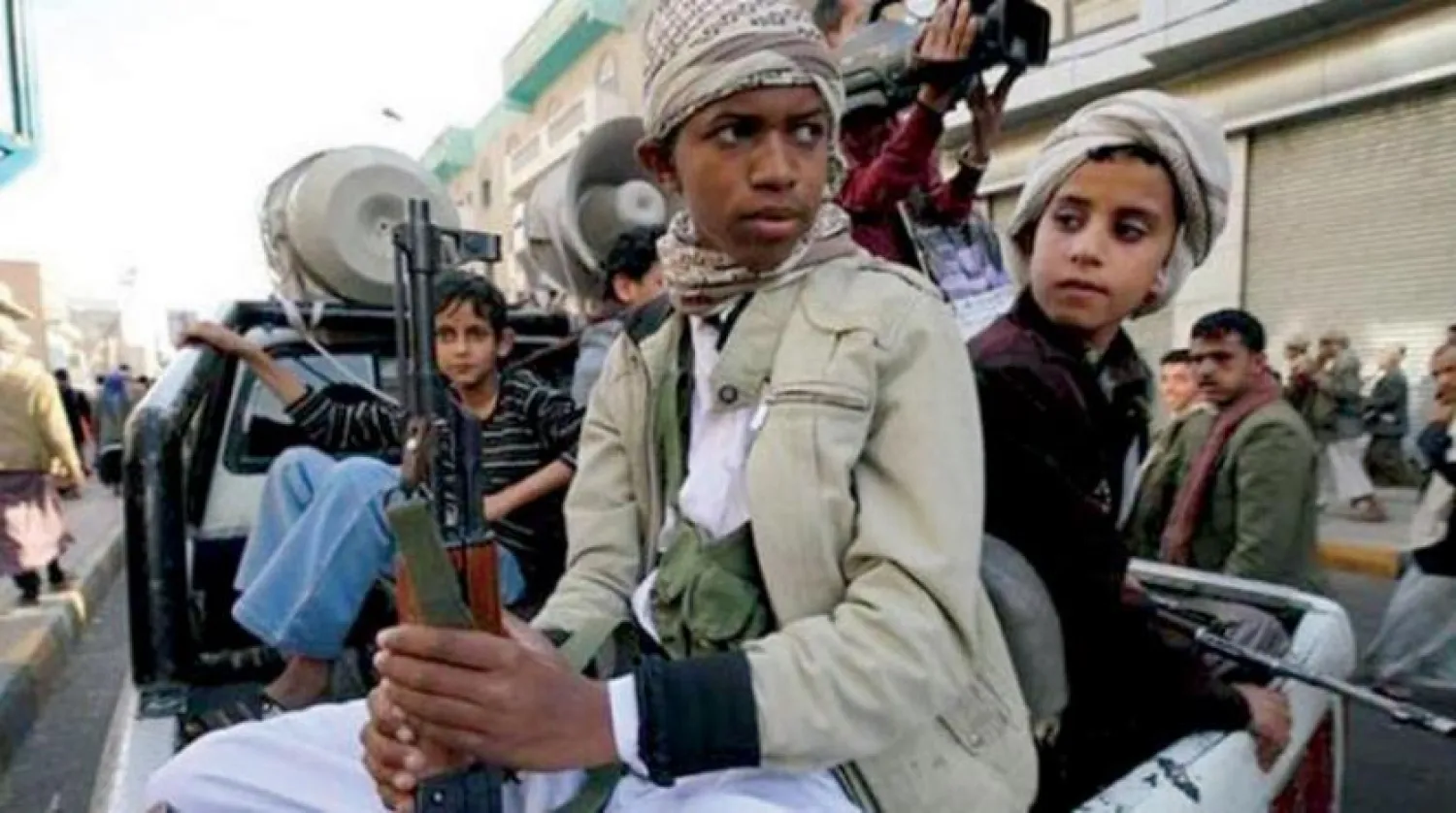
Meanwhile, the US Office to Monitor and Combat Trafficking in Persons condemned in its 2021 report the recruitment, training, and mobilization of African children and migrants as participants in the ongoing conflict.
“Human traffickers exploit domestic and foreign victims in Yemen, and traffickers exploit victims from Yemen who reside abroad. The ongoing conflict, lack of rule of law, economic degradation, pervasive corruption, and fractional territorial control have disrupted some trafficking patterns and exacerbated others.”
The report stated that “migrant workers from the Horn of Africa who remained or arrived in the country during the reporting period may have endured intensified violence.”
During the reporting period, pandemic-related movement restrictions and border closures led to a very low rate of migrant arrivals in Yemen; a total of 37,535 people arrived in 2020, mostly from Ethiopia and Somalia, as in previous years.
However, as Yemen is generally a transit point for migrants traveling to the Gulf for economic opportunity, restrictions, border closures, and bans on international flights stranded thousands of migrants for several months in dire living conditions and with minimal access to assistance and support, according to the report.
“With limited options for survival and decreased support from local communities in Yemen, migrants were forced to look elsewhere to meet basic needs, which traffickers exploit."
Moreover, during the reporting period, there was an increase in reports of migrants subjected to sex trafficking, forced labor, physical and sexual abuse, and abduction for ransom.
The report quoted an international organization stating that since May 2020, 7,652 migrants made their way from Yemen to Djibouti, traveling on smuggling boats or by foot, although the number could be higher as some arrivals may have not been officially captured due to arrivals at coastal locations.
The Government of Djibouti, in coordination with an international organization and the Ethiopian Embassy in Djibouti, reported facilitating the voluntary return of 537 migrants in 2020, the large majority of whom were Ethiopian.
Since the escalation of the armed conflict in March 2015, human rights organizations reported all parties to the conflict continued their unlawful recruitment and use of child soldiers.
“However, verification of such cases remained challenging during the reporting period due to intensified security threats against the monitors and communities of interest, in addition to more restrictive humanitarian access.”
Civil society organizations and media outlets assessed in the previous reporting period that trafficking of Yemeni children gradually increased since the civil war commenced, and children were disproportionately affected by its protracted escalation.
The report stated that Yemen remains a Special Case for the sixth consecutive year.
The civil conflict and humanitarian crisis continued during the reporting period, while the COVID-19 pandemic exacerbated the crisis and further hampered both government and NGO functioning.
It noted that information on human trafficking in the country has been increasingly difficult to obtain since March 2015, when much of the Republic of Yemen Government (ROYG) took refuge in Riyadh following the takeover of Sanaa by Iranian-backed Houthi rebels and lost control of significant portions of the country.
“Although a ROYG and Southern Transitional Council (STC) power-sharing agreement returned the ROYG to its temporary capital of Aden in December 2020, it remained unable to adequately combat trafficking or collect data on trafficking during the reporting period.”
NGOs reported vulnerable populations were at an increased risk of human trafficking due to the protracted armed conflict, civil unrest, and lawlessness, and worsening economic conditions, said the report.
It added that international organizations and NGOs remaining in the country focused primarily on providing humanitarian assistance to the local population and lacked adequate resources and capacity to gather reliable data on human trafficking.
“The vast majority of Yemenis required all types of assistance and basic social services, as the national infrastructure had collapsed.”
As reported over the past five years, human traffickers exploit domestic and foreign victims in Yemen, and traffickers exploit victims from Yemen who reside abroad.


