


For War-Scarred Iraq, Climate Crisis the Next Great Threat

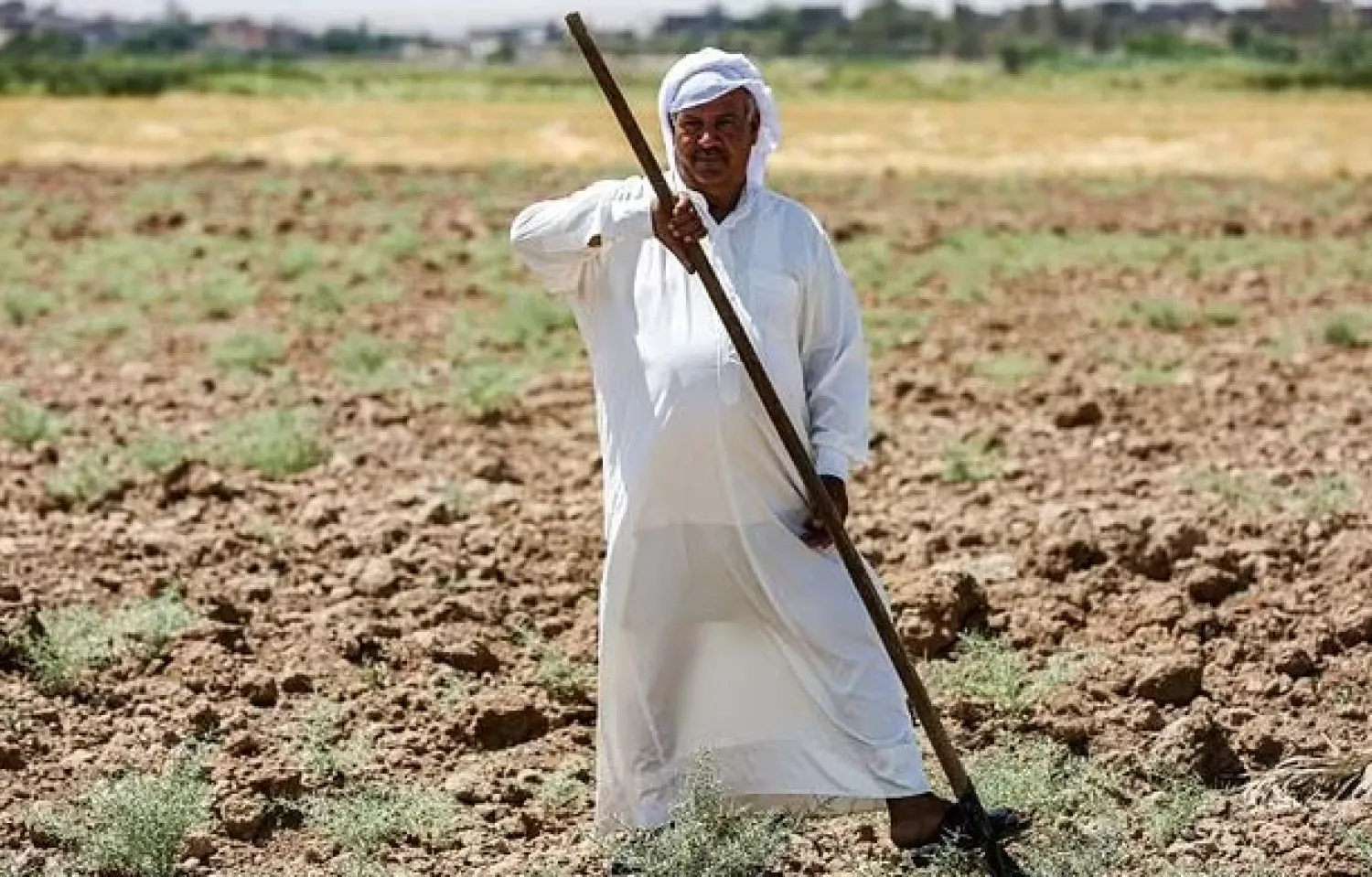
An Iraqi farmer in a parched field in the Khanaqin area, north of Diyala, in eastern Iraq - AFP
TT

For War-Scarred Iraq, Climate Crisis the Next Great Threat

An Iraqi farmer in a parched field in the Khanaqin area, north of Diyala, in eastern Iraq - AFP

As Iraq bakes in the blistering summer heat, its hardscrabble farmers and livestock herders are battling severe water shortages that are killing their animals, fields and way of life.

The oil-rich country, scarred by wars and insurgencies over the past four decades, is also one of the world's most vulnerable to climate change and struggles with a host of other environmental challenges.

Upstream dams in Turkey and Iran have diminished the Tigris and Euphrates rivers, which are also heavily polluted with sewage, waste and agricultural runoff as they flow southeast through Iraq, AFP reported.

Drought has hit the Mesopotamian marshes, said to be the site of the biblical Garden of Eden, where water buffalos and their owners once found respite from summer heat above 50 degrees Celsius (122 degrees Fahrenheit).

"Everything we plant dies: the palm trees and the alfalfa which normally tolerates salt water," said Rafiq Taufiq, a farmer in the southern riverside city of Basra.

The saline water encroaching ever further upstream has already destroyed thousands of hectares of farmland.

This year, the trend has worsened again, said Alaa al-Badran, an agricultural engineer in Basra province.

"For the first time the salt entered as early as April, the start of the farming season," he said.

- 'Risk of displacement' -

The problems are exacerbated as decades of military conflict, neglect and corruption have destroyed irrigation systems and water treatment plants.

According to the United Nations, only 3.5 percent of Iraq's farmlands are watered with irrigation systems.

Rivers are meanwhile often polluted with viruses and bacteria, oil spills and industrial chemicals.

In Basra, where freshwater canals are clogged with garbage, more than 100,000 people were hospitalized in 2018 after drinking water polluted with sewage and toxic waste.

The heat and the water shortages have been a blow to Iraq's agricultural sector, which accounts for five percent of the economy and 20 percent of jobs, but provides only half of the food needs of Iraq, which relies heavily on cheap imports.

In a nation of 40 million people, "seven million Iraqis have already been affected by the drought and the risks of displacement that it entails," President Barham Saleh wrote recently.

In Chibayish, in Iraq's marshlands, buffalo herder Ali Jasseb said he now has to travel great distances to keep the animals producing milk, his family's only income.

"Every two or three months, we have to travel to find water," he told AFP. "Because if the buffaloes drink salty water, they get poisoned, they stop producing milk and sometimes they die."

Raad Hmeid, another buffalo herder, pointed to the sun-cracked ground below his feet.

"Until 10 days ago this was mud, there was water and even greenery," he told AFP.

- Years of drought -

In Iraq's east, cereal farmer Abderrazzaq Qader, 45, said he had seen no rain "for four years" on his 38 hectare (94 acre) farm in Khanaqin near the Iranian border.

The years of drought, he said, had led many local farmers to abandon the land to take jobs as laborers.

In total, "69 percent of agricultural land is threatened with desertification, meaning it is being rendered unfit for cultivation," Sarmad Kamel, a state forestry official working on the issue, told AFP.

Iraq's agricultural lands are shrinking further as farmers are selling their unprofitable plots to developers, said economist Ahmed Saddam.

"On the one hand, there is more and more demand for housing, while on the other hand cultivating land no longer creates sufficient income," he said.

Rather than continue their back-breaking work for little pay, many farmers near Basra have sold their plots, often for "between 25,000 and 70,000 euros ... huge figures for farmers," he says.

At this rate, "every year, 10 percent of agricultural land disappears to become residential areas", he added.

This accelerates a rural exodus into towns and big cities, piling huge pressure on the economic, social and environmental fabric of life in Iraq.

There is little respite in sight, warned Saleh in a recent statement that said "climate projections for Iraq foresee a rise of about two degrees celsius, and a drop in rainfall of nine percent by 2050".

Another worrying projection says that, by mid-century, Iraq's population will have doubled to 80 million.



Excitement and Joy at Ljubljana Zoo after Birth of 3 Siberian Tiger Cubs

A visitor watches the Siberian tiger cubs with their mother on a screen at the zoo in Ljubljana. AP
TT

Excitement and Joy at Ljubljana Zoo after Birth of 3 Siberian Tiger Cubs

A visitor watches the Siberian tiger cubs with their mother on a screen at the zoo in Ljubljana. AP

A zoo in Slovenia's capital Ljubljana has presented its newest residents: three Siberian tiger cubs who were born there under two weeks ago.

The Siberian tiger is one of the world’s most endangered big cat species, with experts estimating that about 500 remain in the wild. Their survival is threatened primarily by habitat loss and poaching.

Zoo workers said the cubs were born to mother Arisa and father Ussuri, which arrived in Ljubljana in 2004, after careful planning and much hoping, The Associated Press reported.

“We were not really expecting, but hoping, working on it because we have a good breeding pair,” she said. Though the couple were introduced to each other at the right time “we weren't completely sure,” she added.

“So we were also a bit surprised and of course very happy,” Strus said.

Breeding wild animal species in enclosed spaces is known to be hard and often does not succeed.

The cubs, born on May 27, are highly vulnerable and need to be isolated from others except their mother, but zoo staff and visitors have been able see them on a screen streaming live video footage.

Visitors could be seen smiling as they watched the mother with her babies on the screen. Barbara Gallaido, from San Francisco, said the sight was “really fabulous.”

“I’ve seen tigers in the wild in India, but not like this, not with cubs,” she said. “It was really great.”

Arisa is a first-time mother at the age of 4, Strus said. She appears to be doing very well so far.

“She is constantly licking them (cubs,) breastfeeding them and they are resting together,” she said. “So far so good. But ... we still need to wait and see what will happen.”

According to Strus, tiger cubs open their eyes and begin hearing about two weeks after birth. She said the mother is expected to bring them out of the den for the first time when they are one month old.


New Study Finds That We Can Multitask

New research challenges the long-held belief that the human brain isn’t set up to be able to multitask. (Getty Images)
TT

New Study Finds That We Can Multitask

New research challenges the long-held belief that the human brain isn’t set up to be able to multitask. (Getty Images)

Researchers have long said that the human brain is not set up to multitask — but new research is challenging that understanding.

Experts previously explained that when we believe we’re multitasking, we’re actually just quickly switching between tasks. That’s because the area of the brain that manages thinking, the prefrontal cortex, can only really handle one thing at a time, according to The Independent.

But another region of the brain involved in memory lends a helping hand over time, new research has shown. When people needed to perform image sorting tests over the course of weeks, the tests initially activated the prefrontal cortex and later activated the temporal cortex.

Over time, the brain is remodeled, Maximilian Riesenhuber, a professor of neuroscience at Georgetown University School of Medicine, explained in a statement. The prefrontal cortex passes responsibility to the temporal cortex and is free for “whatever else you want to do, increasing your capacity.”

“What we show is that the circuitry actually changes so the brain can do two things at once,” he said. “This really is true multitasking.”

The researchers wanted to understand why people need to focus when learning a task for the first time and can also do other things simultaneously when they become experienced. For example, long-time drivers are able to listen to music and engage in conversations.

Men and women in the small study were trained to sort morphed images of cars into two categories using an image-sorting app, completing more than 30,000 trials over the course of 5-10 weeks.

The researchers scanned their brains before and after they completed the trials, revealing the change.

“Previous studies have shown that parts of the temporal cortex can be activated by particular object categories in experienced observers – birds, cars, even Pokémon – but a limitation of all of those studies is that they only looked after people became experts,” Patrick Cox, an assistant professor of psychology at Lehigh University, said.

He added: “The strength of this study is that it is longitudinal: We measure before and after training, so we can see that extensive training essentially put a category-selective area in the temporal lobe that was not there before.”

It’s unclear why right now. However, multitasking has been linked to experiencing stress and other mental health impacts, Brown University Health points out. That’s part of why experts say it could actually hinder productivity.

“This is unlocking a whole new set of questions,” he said. “What is the source of that variability? We don’t know yet.”


Parisians Will Get a New Chance of Seine Swimming

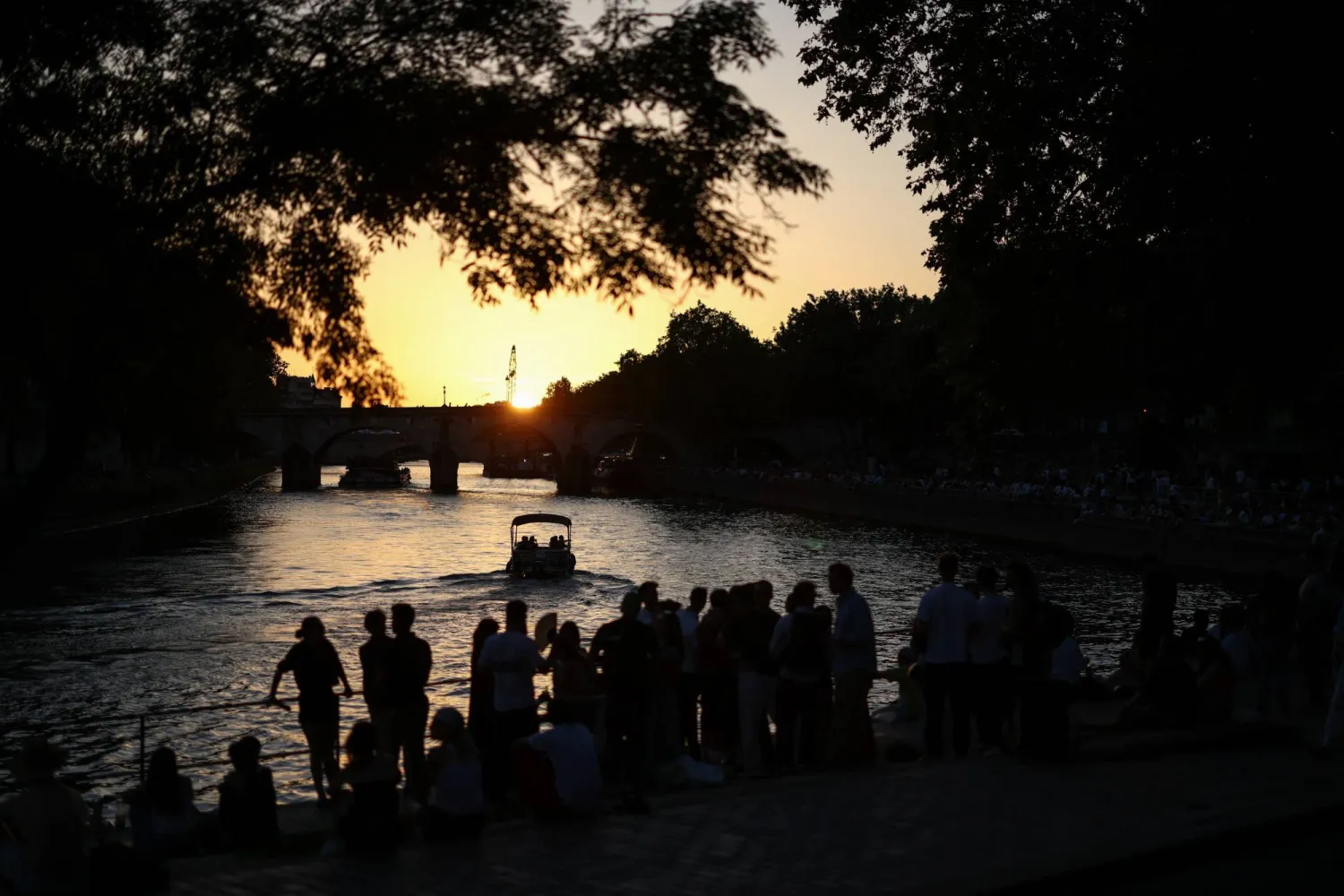
People gather on the banks of the Seine River as the sun sets amid a severe heat wave in Paris, France, May 26, 2026. (Reuters)
TT

Parisians Will Get a New Chance of Seine Swimming

People gather on the banks of the Seine River as the sun sets amid a severe heat wave in Paris, France, May 26, 2026. (Reuters)

Swimmers will for the second year be able to cool off at designated points along the Seine River in Paris this summer, authorities said Friday, as well as along the Marne River in the suburbs.

In Paris, the swimming season was to open at three official bathing sites on July 4, the mayor's office said.

The Seine reopened to swimmers last summer for the first time in a century, after Paris poured more than a billion euros ($1.15 billion) into a years-long effort to making the waters clean enough to use in the 2024 Olympics.

Sites this year will again include the Bras de Grenelle near the Eiffel Tower, the Bras Marie -- a short walk from Notre-Dame -- and Bercy, on the eastern side.

Some 100,000 people last year queued to jump in, the city said, despite a slow start to the season with rain disrupting the water quality.

Some 50,000 swimmers jumped into the Marne River in the eastern suburbs last year.

The bathing spots in Joinville-le-Pont, Champigny-sur-Marne, Saint-Maur-des-Fosses and Maison-Alfort would again welcome swimmers. A fifth spot would be added this year at Neuilly-sur-Marne northeast of Paris.

French authorities warned against swimming in parts of the rivers without lifeguards.