


Haiti Police Say Former Supreme Court Judge Suspect in President's Killing

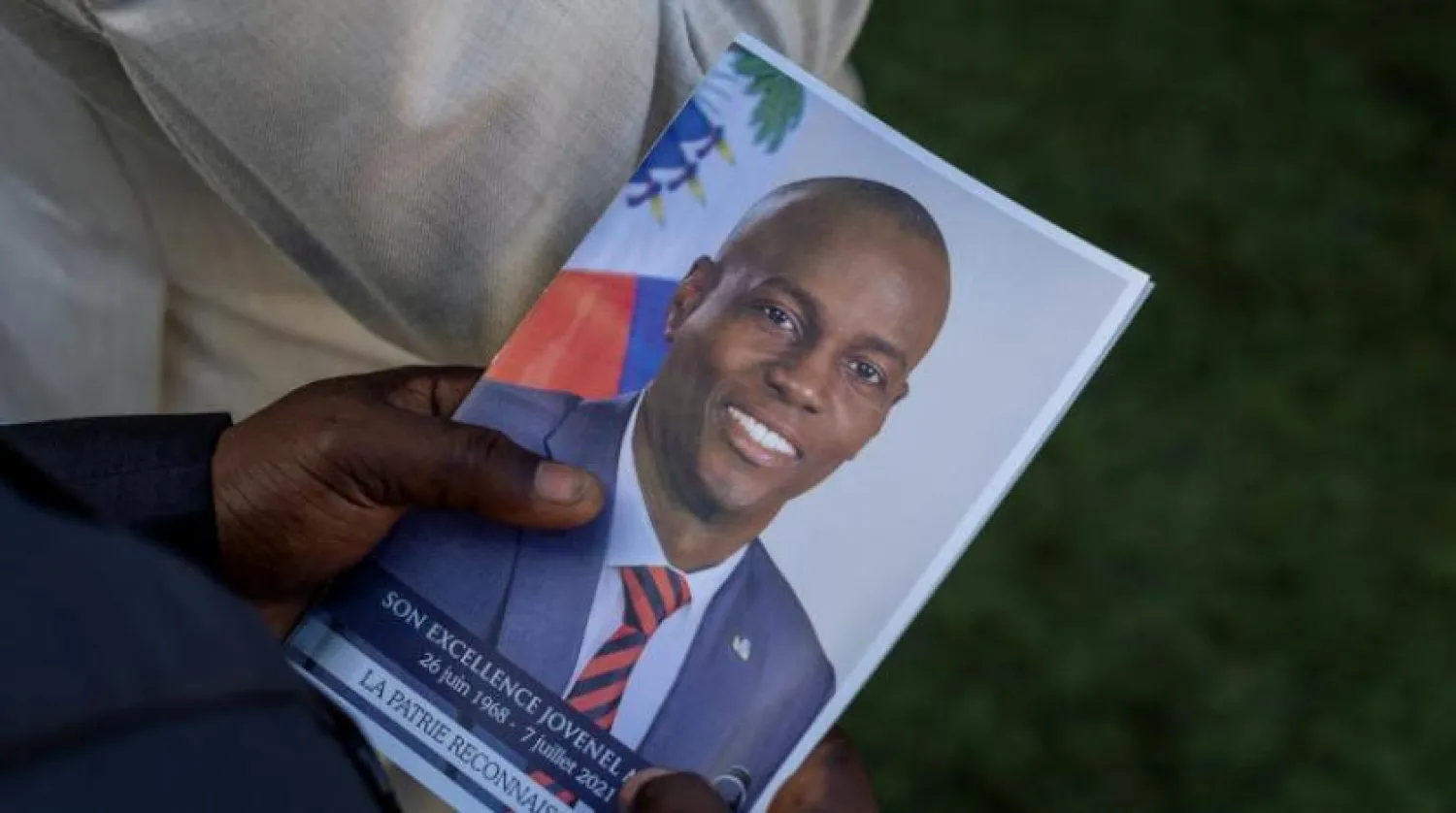
A person holds a photo of late Haitian President Jovenel Moise, who was shot dead earlier this month, during his funeral at his family home in Cap-Haitien, Haiti, July 23, 2021. REUTERS/Ricardo Arduengo
TT

Haiti Police Say Former Supreme Court Judge Suspect in President's Killing

A person holds a photo of late Haitian President Jovenel Moise, who was shot dead earlier this month, during his funeral at his family home in Cap-Haitien, Haiti, July 23, 2021. REUTERS/Ricardo Arduengo

Haitian police on Friday outlined fresh accusations against a former Supreme Court judge over her links to the assassination of President Jovenel Moise earlier this month, saying she had met with some Colombian mercenaries accused of killing him.

The assassination of Moise has plunged the Western hemisphere's poorest nation deeper into chaos, and launched an international manhunt for mercenaries and the murder masterminds across the Americas.

Haitian police had earlier this week issued an arrest warrant for Wendelle Coq-Thelot, a former Supreme Court judge who was ousted with two other judges earlier in February when Moise alleged a coup was being planned against him.

Coq-Thelot's whereabouts are unknown and she could not be reached for comment.

Colombian mercenaries and Haitian-Americans arrested in the wake of Moise's murder said they had met Coq-Thelot, according to Inspector General Marie Michelle Verrier, the spokesperson for the National Police of Haiti.

"Several of them have indicated that they have been to Mrs.

Coq’s home twice," Verrier told reporters. "These people gave to (police) details of documents signed during the meetings at Mrs.Coq's home."

Police have raided Coq-Thelot's main home as well as other residences in the countryside, Verrier said. A wanted poster for Coq Wandelle has also been launched.

Many questions remain over who was behind the assassination this month and how the killers gained access to the president's home. Haitian officials blamed a squad of mostly Colombian mercenaries, three of whom were killed by police.

A top Moise security official was arrested on suspicion of involvement on Tuesday.

Earlier in the day, Colombia called on Haiti to guarantee the legal and medical rights of 18 Colombians detained on the Caribbean island for alleged participation in Moise's assassination.


Bomb Threat Against Australia PM Linked to Banned Chinese Dance Group

FILE PHOTO: The Lodge, the official Canberra residence of the Australian Prime Minster, stands in Canberra, Australia, January 25, 2016. MICK TSIKAS/AAP/via REUTERS/File Photo
TT

Bomb Threat Against Australia PM Linked to Banned Chinese Dance Group

FILE PHOTO: The Lodge, the official Canberra residence of the Australian Prime Minster, stands in Canberra, Australia, January 25, 2016. MICK TSIKAS/AAP/via REUTERS/File Photo

Australian Prime Minister Anthony Albanese said on Wednesday he did not take his security for granted, after he was evacuated from his residence for several hours following a bomb threat sent to a Chinese dance group.

Albanese was evacuated from his residence in Canberra late on Tuesday following the threat, and returned a few hours later after nothing suspicious was found. According to Reuters, police said ‌there was no ‌ongoing risk.

The bomb scare was ‌among ⁠several emails threatening Albanese sent ⁠to a representative of Shen Yun, a classical Chinese dance troupe banned in China that is due to perform in Australia this month, a spokesperson for the group said in a statement.

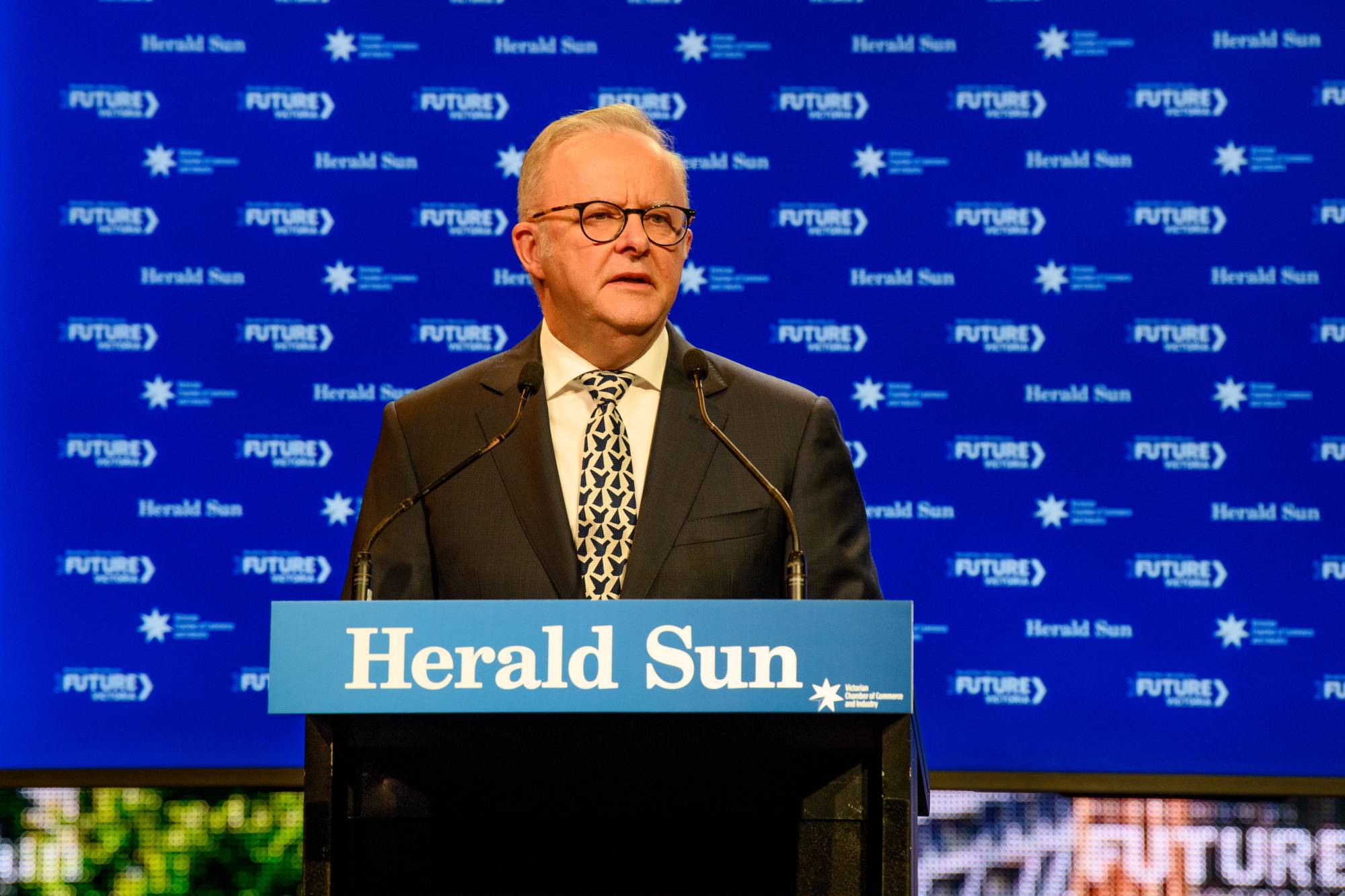
25 February 2026, Australia, Melbourne: Australian Prime Minister Anthony Albanese speaks during the Future Victoria Summit in Melbourne. Photo: Michael Currie/AAP/dpa

The email sent to the group's local organizers and originally written in ⁠Chinese, claimed that explosives had been placed ‌around Albanese's residence, and ‌would detonate if the group performed in the country.

"If you insist ‌on proceeding with the performance, then the prime ‌minister's residence will be reduced to a blood-soaked ruin," read one of the emails, seen by Reuters and dated Sunday.

The group reported the threats to Australian national security and ‌law enforcement authorities, the spokesperson said.

"We appreciate the steps taken to ensure public ⁠safety and to ⁠protect elected officials, including the prime minister."

Police declined to comment on the source of the threat.

"I think it's just a reminder, take every opportunity to tell people, turn the heat down for goodness sake," Albanese said at an event in Melbourne on Wednesday.

"We can't take these things for granted."

Earlier on Wednesday, Albanese posted a photo on Instagram of his dog standing by a door at The Lodge, his official residence in Canberra, with a caption thanking police for their work.


Iran Rejects US Claims on Missile Program as ‘Big Lies’ 

Iranians walk through Tehran's Grand Bazaar on February 24, 2026. (AFP)
TT

Iran Rejects US Claims on Missile Program as ‘Big Lies’ 

Iranians walk through Tehran's Grand Bazaar on February 24, 2026. (AFP)

Iran's foreign ministry on Wednesday dismissed US claims about its missile program as "big lies", after President Donald Trump claimed Tehran was developing missiles that can strike the United States.

"Whatever they're alleging in regards to Iran's nuclear program, Iran's ballistic missiles, and the number of casualties during January's unrest, is simply the repetition of 'big lies'," ministry spokesman Esmaeil Baqaei said on X.

Baqaei did not specify exactly which claims he was responding to, but hours earlier Trump had said Iran was seeking missiles that could reach American soil.

In an interview with Al Jazeera in February, Iran's Foreign Minister Abbas Araghchi said Tehran lacked the capability to target the US but would attack American bases in the Middle East if Washington launched a strike.

During his State of the Union speech, Trump also reiterated that Iran would never be allowed to build a nuclear weapon, saying that Tehran's leaders were "at this moment again pursuing their sinister nuclear ambitions".

Iran has repeatedly denied it is seeking a nuclear weapon, but insists it has the right to use nuclear technology for peaceful purposes.

The US president also claimed that Iranian authorities killed 32,000 people during a wave of protests that started in December and peaked on January 8 and 9.

Iranian officials acknowledge more than 3,000 deaths, but say the violence was caused by "terrorist acts" fueled by the United States and Israel.

The US-based Human Rights Activists News Agency (HRANA) has recorded more than 7,000 deaths, while warning the full toll is likely far higher.


Japan Demands Swift Release of National Detained in Iran 

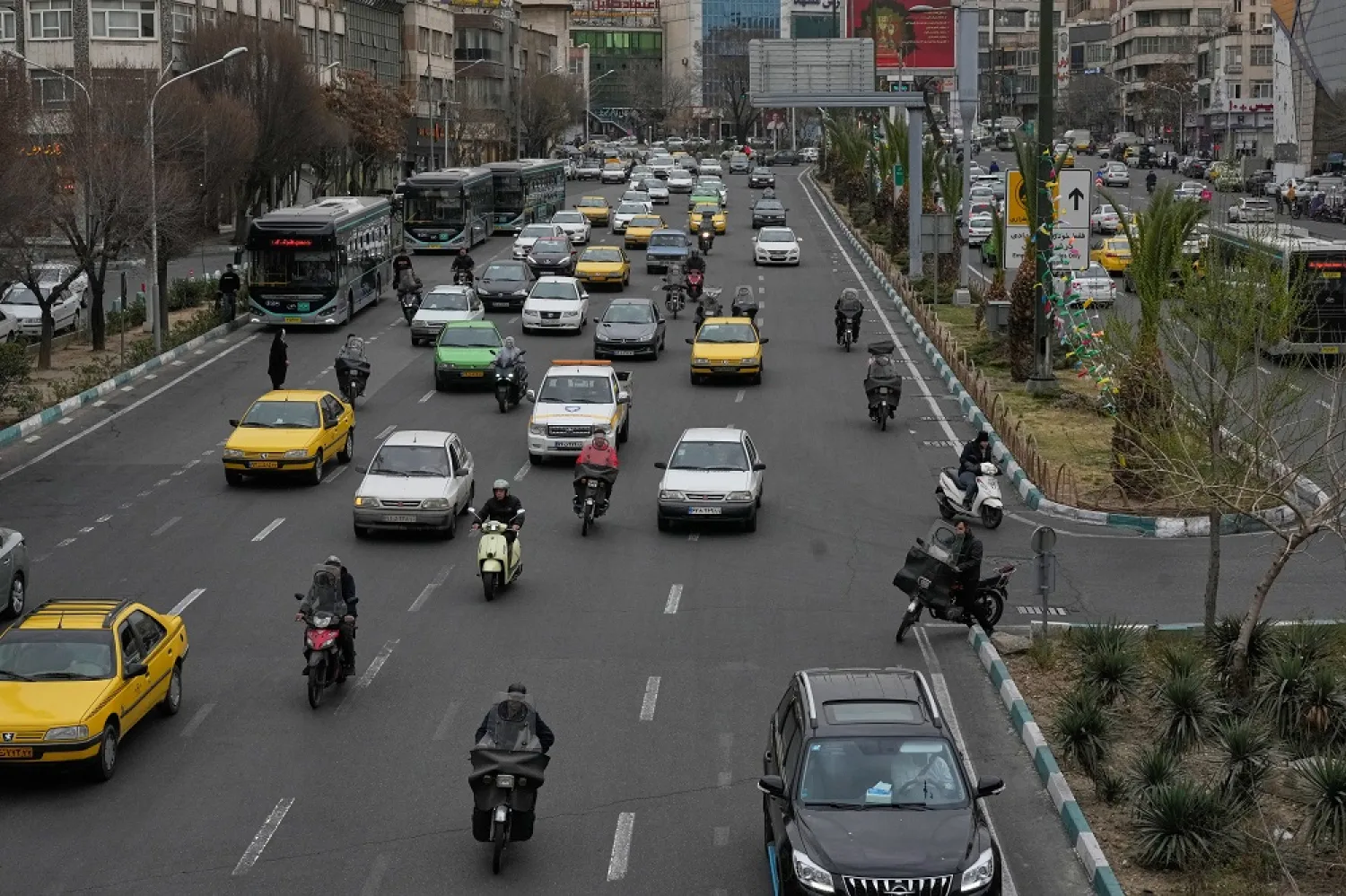
 Vehicles drive in downtown Tehran, Iran, Tuesday, Feb. 24, 2026. (AP)
Vehicles drive in downtown Tehran, Iran, Tuesday, Feb. 24, 2026. (AP)
TT

Japan Demands Swift Release of National Detained in Iran 

 Vehicles drive in downtown Tehran, Iran, Tuesday, Feb. 24, 2026. (AP)
Vehicles drive in downtown Tehran, Iran, Tuesday, Feb. 24, 2026. (AP)

The Japanese government demanded the swift release of one of its citizens detained in Iran for over a month on Wednesday, without providing further details of the case. 

The person was detained on January 20 and the government ‌has been in ‌touch with the family ‌and ⁠the Iranian authorities, Deputy ⁠Chief Cabinet Secretary Masanao Ozaki told reporters. He declined to identify the person or give any other details of the incident. 

Radio Free Europe earlier reported that Shinnosuke Kawashima, ⁠the Tehran bureau chief ‌of Japan's ‌public broadcaster, NHK, had been arrested by ‌Iran and transferred to a Tehran ‌prison. 

NHK declined to confirm that an employee of theirs had been detained. 

"As NHK, we always act with the ‌safety of our staff as the top priority. There is ⁠nothing ⁠we can answer at this stage," a spokesperson said. 

The NHK World website identifies Kawashima as an international affairs correspondent who worked as the broadcaster's bureau chief in Jakarta, Indonesia from 2017. 

A LinkedIn account using his name said he joined NHK in 2005.
