

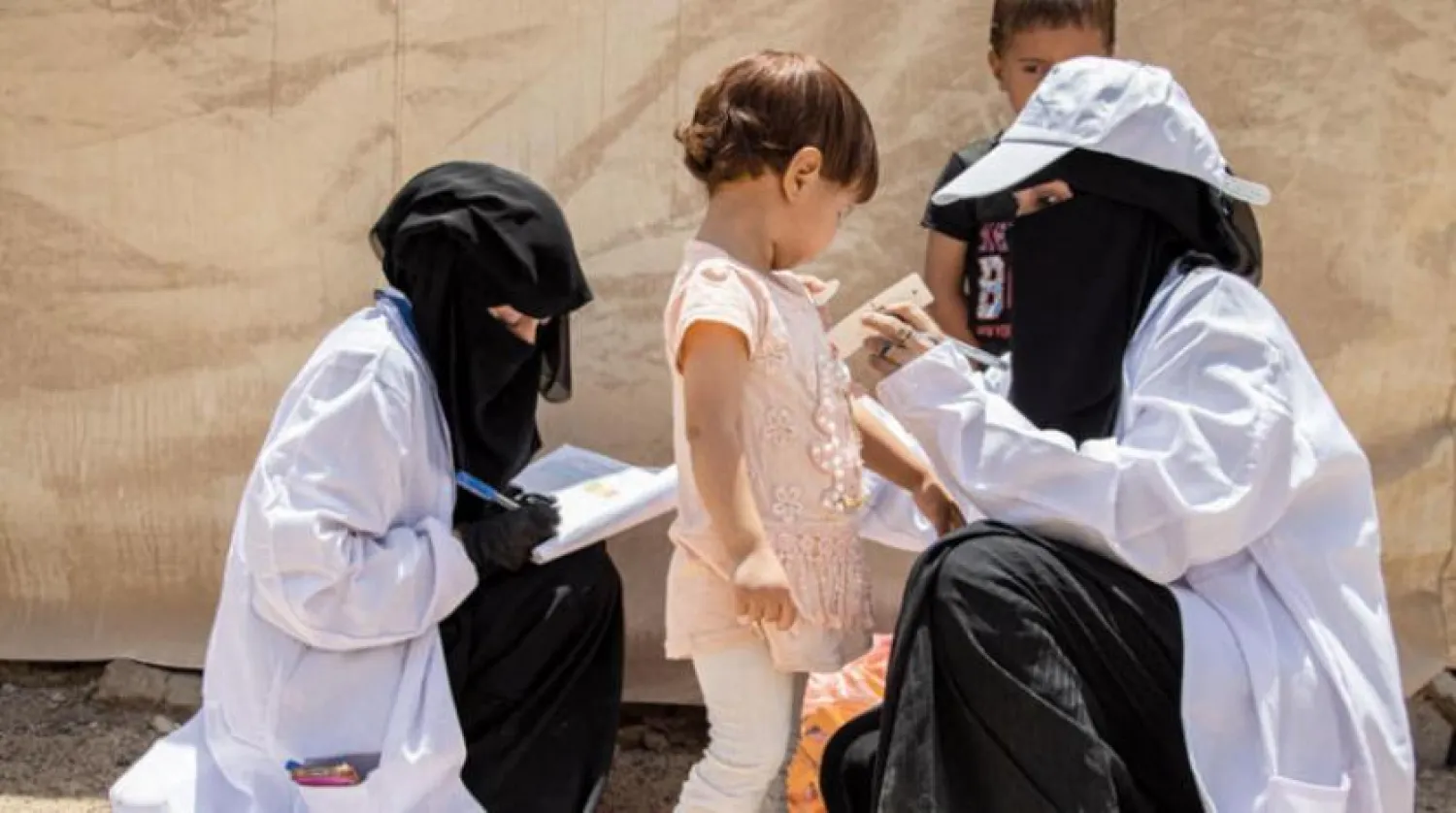

UNICEF to Reduce Activities in Yemen as of September

UNICEF announced that it will be forced to reduce its humanitarian activities in Yemen next month due to a lack of funds. (UNICEF)
TT

UNICEF to Reduce Activities in Yemen as of September

UNICEF announced that it will be forced to reduce its humanitarian activities in Yemen next month due to a lack of funds. (UNICEF)

UNICEF announced that it will be forced to reduce its humanitarian activities in Yemen next month due to a lack of funds.

In a report released last Friday on Yemen’s humanitarian situation from January to June 2021, UNICEF warned that this shortfall heightened the risk of COVID-19 as well as other waterborne diseases, including cholera.

“Approximately 20.1 million people need health assistance. Women and children continue to be disproportionately affected, with 4.8 million women and 10.2 million children in need of assistance to access health services during the reporting period,” the UN agency said.

UNICEF said as of June 2021, three million people, including 1.58 million children, are internally displaced. Over 138,000 additional people have become migrants, and 137,000 people are seeking asylum abroad.

The agency said it continued its lifesaving multi-sectorial integrated Nutrition programming to address close to 400,000 children suffering from severe acute malnutrition (SAM) and 2.25 million children at risk of acute malnutrition.

“A total of 2,378,616 children under 5 years were screened for malnutrition through multiple interventions in 2021. Out of these, 109,700 children with SAM were admitted for treatment without complications in Outpatient Treatment Programs (OTPs), with an 88 per cent cure rate,” UNICEF reported, adding that 8,488 children with SAM and complications were admitted to therapeutic feeding centers (TFCs).

According to the report, the rate of displacement in the first half of 2021 notably worsened, as more than 20,000 families (140,000 individuals) were newly displaced or left their location of displacement towards a safer destination.

The highest numbers of displacements were linked to tensions resulting from conflict that were observed in 49 active frontlines across Marib, Hajjah, Taiz, Hodeidah, Al Jawf, Lahj and Dhale.

“UNICEF faces a funding gap of 49 percent. Lack of funding for emergency WASH interventions continues to undermine our integrated response,” the report said, adding that UNICEF will be forced to reduce its provision of fuel to water pumping stations in September 2021 if funding is not urgently mobilized.

It also noted that the lack of funding for emergency interventions will lead to a lack of personal protective equipment (PPE) for thousands of health care providers and will affect COVID-19 screenings for hundreds of thousands of Yemenis.

UNICEF warned that cold chain interruption will lead to the expiry of millions of doses of over ten types of lifesaving vaccines, including Polio, Measles, and COVID-19.



Saudi Arabia: Ship of Tolerance Initiative Promotes Cultural Dialogue in Jeddah

The Royal Institute of Traditional Arts (Wrth) will offer traditional craft workshops throughout Ramadan. SPA
TT

Saudi Arabia: Ship of Tolerance Initiative Promotes Cultural Dialogue in Jeddah

The Royal Institute of Traditional Arts (Wrth) will offer traditional craft workshops throughout Ramadan. SPA

The Saudi Ministry of Culture, in collaboration with the "Lenobadir" volunteer and community partnership program and the Athr Foundation, has launched the Ship of Tolerance initiative in Historic Jeddah during Ramadan.

The initiative aims to enhance shared human values through arts, and promote tolerance and coexistence among children and families. It provides an educational and cultural experience aligned with the area’s unique character as a UNESCO World Heritage site.

As part of this global art project, children will create artworks that represent acceptance and dialogue.

The Royal Institute of Traditional Arts (Wrth) will offer traditional craft workshops throughout Ramadan, linking the initiative's values with local heritage and enriching visitors' connection to the region's identity.

This effort supports cultural programs with educational and social dimensions in Historic Jeddah, activating local sites for experiences that combine art, crafts, and community participation. It aligns with the National Strategy for Culture under Saudi Vision 2030, focusing on heritage preservation and expanding culture's impact on daily life.


Coffee Regions Hit by Extra Days of Extreme Heat, Say Scientists 

17 April 2012, North Rhine-Westphalia, Vluyn: A general view of Arabica Coffee beans. (dpa)
TT

Coffee Regions Hit by Extra Days of Extreme Heat, Say Scientists 

17 April 2012, North Rhine-Westphalia, Vluyn: A general view of Arabica Coffee beans. (dpa)

The world's main coffee-growing regions are roasting under additional days of climate change-driven heat every year, threatening harvests and contributing to higher prices, researchers said Wednesday.

An analysis found that there were 47 extra days of harmful heat per year on average in 25 countries representing nearly all global coffee production between 2021 and 2025, according to independent research group Climate Central.

Brazil, Vietnam, Colombia, Ethiopia and Indonesia -- which supply 75 percent of the world's coffee -- experienced on average 57 additional days of temperatures exceeding the threshold of 30C.

"Climate change is coming for our coffee. Nearly every major coffee-producing country is now experiencing more days of extreme heat that can harm coffee plants, reduce yields, and affect quality," said Kristina Dahl, Climate Central's vice president for science.

"In time, these impacts may ripple outward from farms to consumers, right into the quality and cost of your daily brew," Dahl said in a statement.

US tariffs on imports from Brazil, which supplies a third of coffee consumed in the United States, contributed to higher prices this past year, Climate Central said.

But extreme weather in the world's coffee-growing regions is "at least partly to blame" for the recent surge in prices, it added.

Coffee cultivation needs optimal temperatures and rainfall to thrive.

Temperatures above 30C are "extremely harmful" to arabica coffee plants and "suboptimal" for the robusta variety, Climate Central said. Those two plant species produce the majority of the global coffee supply.

For its analysis, Climate Central estimated how many days each year would have stayed below 30C in a world without carbon pollution but instead exceeded that level in reality -- revealing the number of hot days added by climate change.

The last three years have been the hottest on record, according to climate monitors.


Dog Gives Olympics Organizers Paws for Thought

A dog wanders on the ski trail during the women's team cross country free sprint qualification event of the Milano Cortina 2026 Winter Olympic Games at Tesero Cross-Country Skiing Stadium in Lago di Tesero (Val di Fiemme), on February 18, 2026. (Photo by Anne-Christine POUJOULAT / AFP)
TT

Dog Gives Olympics Organizers Paws for Thought

A dog wanders on the ski trail during the women's team cross country free sprint qualification event of the Milano Cortina 2026 Winter Olympic Games at Tesero Cross-Country Skiing Stadium in Lago di Tesero (Val di Fiemme), on February 18, 2026. (Photo by Anne-Christine POUJOULAT / AFP)

A dog decided he would bid for an unlikely Olympic medal on Wednesday as he joined the women's cross country team free sprint in the Milan-Cortina Games.

The dog ran onto the piste in Tesero in northern Italy and gamely, even without skis, ran behind two of the competitors, Greece's Konstantina Charalampidou and Tena Hadzic of Croatia.

He crossed the finishing line, his moment of glory curtailed as he was collared by the organizers and led away -- his owner no doubt will have a bone to pick with him when they are reunited.