
Crypto Fashion: Why People Pay Real Money for Virtual Clothes

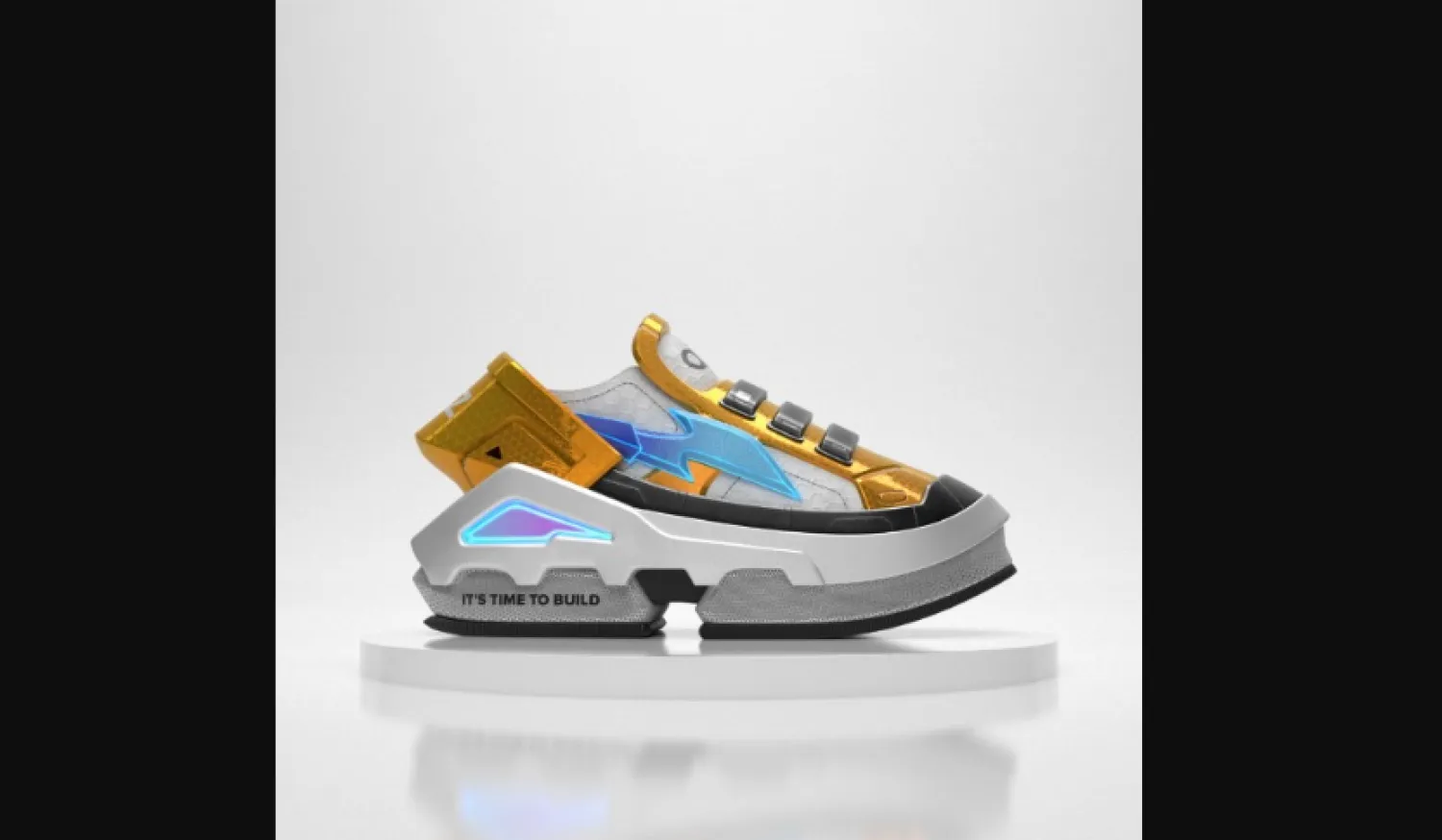
A virtual sneaker made by digital fashion company RTFKT in collaboration with the fund A16z is seen in this render obtained by Reuters on August 10, 2021. RTFKT INC/Handout via REUTERS
TT

Crypto Fashion: Why People Pay Real Money for Virtual Clothes

A virtual sneaker made by digital fashion company RTFKT in collaboration with the fund A16z is seen in this render obtained by Reuters on August 10, 2021. RTFKT INC/Handout via REUTERS

People care what their avatars are wearing.

When the virtual world Decentraland said in June users could make and sell their own clothing for avatars to wear on the site, Hiroto Kai stayed up all night designing Japanese-inspired garments.

Selling kimonos for around $140 each, he said he made $15,000-$20,000 in just three weeks.

While the idea of spending real money on clothing that does not physically exist is baffling to many, virtual possessions generate real sales in the "metaverse" - online environments where people can congregate, walk around, meet friends and play games.

Digital artist and Japan-enthusiast Kai's real name is Noah. He's a 23-year-old living in New Hampshire.

After making as much in those three weeks as he'd earn in a year at his music store job, he quit to become a full-time designer.

"It just took off," Kai said.

"It was a new way to express yourself and it's walking art, that's what's so cool about it... When you have a piece of clothing, you can go to a party in it, you can dance in it, you can show off and it's a status symbol."

In Decentraland, clothing for avatars – known as "wearables" – can be bought and sold on the blockchain in the form of a crypto asset called a non-fungible token (NFT).

Kai's kimonos include exquisite crushed blue velvet pieces with golden dragon trim.

NFTs exploded in popularity earlier this year, as speculators and crypto enthusiasts flocked to buy the new type of asset, which represents ownership of online-only items such as digital art, trading cards and land in online worlds.

The niche crypto assets are also capturing the attention of some of the world's biggest fashion companies, keen to associate themselves with a new generation of gamers - although most of their forays so far are for marketing.

LVMH-owned Louis Vuitton (LVMH.PA) launched a metaverse game where players can collect NFTs, and Burberry (BRBY.L) has created branded NFT accessories for Blankos Block Party, a game owned by Mythical Games. Gucci (PRTP.PA) has sold non-NFT clothing for avatars within the game Roblox .

"Your avatar represents you," said Imani McEwan, a Miami-based fashion model and NFT enthusiast. "Basically what you're wearing is what makes you who you are."

McEwan reckons he has spent $15,000 to $16,000 on 70 NFT wearable items since January, using profit from cryptocurrency investments. His first purchase was a bitcoin-themed sweater and he recently bought a black beret designed by his friend.

The overall size of the NFT wearables market is difficult to establish. In Decentraland alone wearable sales volume totalled $750,000 in the first half of 2021, up from $267,000 in the same period last year, according to NonFungible.com, a website which tracks the NFT market.

Some proponents say wearables and shopping in virtual shops could be the future of retail.

"Instead of scrolling through a feed and shopping online, you can have a more immersive brand experience by exploring a virtual space - whether you are shopping for your online avatar or buying physical products that can be shipped to your door," said Julia Schwartz, director of Republic Realm, a $10 million virtual real estate investment vehicle which has built a shopping mall in Decentraland.

For NFT enthusiasts, online fashion does not replace physical purchases.

But Paula Sello and Alissa Aulbekova, co-founders of the digital fashion start-up Auroboros, say it could be an environmentally-friendly alternative to fast fashion.

Customers can send Auroboros an image of themselves and have clothing digitally added for 60 pounds ($83) to 1,000 pounds.

Sello argued that the virtual garment concept could limit the waste of consumers buying clothes to wear on social media, citing a 2018 Barclaycard study which found 9% of British shoppers have bought clothes for social media photos, then returned them.

"We need to have the shift now in fashion. The industry simply cannot continue," said Sello.

Virtual sneaker company RTFKT sells limited edition NFTs representing sneakers which can be "worn" in some virtual worlds or on social media via a Snapchat filter.

"It really took off when COVID started and loads of people went more online," said Steven Vasilev, RTFKT’s co-founder and CEO.

The company has posted $7 million of sales, with limited edition sneakers selling in auctions for $10,000-$60,000, he said. While the majority of customers are in their 20s and 30s, some are as young as 15.

RTFKT's NFTs can also be used as a token to get a free physical version of the shoe, but one in 20 customers do not redeem that token.

"I didn't do the redemption stuff because I couldn’t be bothered," said Jim McNelis, a Dallas-based NFT buyer who founded NFT company, nft42.

"I try to avoid the physical stuff as much as possible."


Prada to Launch $930 ‘Made in India’ Sandals after Backlash

FILE PHOTO: Customers shop for 'Kolhapuri' sandals, an Indian ethnic footwear, at a store in New Delhi, India, June 27, 2025. REUTERS/Adnan Abidi/File Photo
TT

Prada to Launch $930 ‘Made in India’ Sandals after Backlash

FILE PHOTO: Customers shop for 'Kolhapuri' sandals, an Indian ethnic footwear, at a store in New Delhi, India, June 27, 2025. REUTERS/Adnan Abidi/File Photo

Prada will make a limited-edition collection of sandals in India inspired by the country's traditional footwear, selling each pair at around 800 euros ($930), Prada senior executive Lorenzo Bertelli told Reuters, turning a backlash over cultural appropriation into a collaboration with Indian artisans.

The Italian luxury group plans to make 2,000 pairs of the sandals in the regions of Maharashtra and Karnataka under a deal with two state-backed bodies, blending local Indian craftsmanship with Italian technology and know-how.

"We'll mix the original manufacturer's standard capabilities with our manufacturing techniques", Bertelli, who is chief marketing officer and head of corporate social responsibility, told Reuters in an interview.

The collection will go on sale in February 2026 across 40 Prada stores worldwide and online, the company said. Prada faced criticism six months ago after showing sandals resembling 12th-century Indian footwear, known as Kolhapuri chappals, at a Milan show.

Photos went viral, prompting outrage from Indian artisans and politicians. Prada later admitted its design drew from ancient Indian styles and began talks with artisan groups for collaboration.

It has now signed an agreement with Sant Rohidas Leather Industries and Charmakar Development Corporation (LIDCOM) and Dr Babu Jagjivan Ram Leather Industries Development Corporation (LIDKAR), which promote India’s leather heritage.

"We want to be a multiplier of awareness for these chappals," said Bertelli, who is the eldest son of Prada founders Miuccia Prada and Patrizio Bertelli.

A three-year partnership, whose details are still being finalized, will be set up to train local artisans. The initiative will include training programs in India and opportunities to spend short periods at Prada’s Academy in Italy.

Chappals originated in Maharashtra and Karnataka and are handcrafted by people from marginalized communities. Artisans hope the collaboration will raise incomes, attract younger generations to the trade and preserve heritage threatened by cheap imitations and declining demand.

"Once Prada endorses this craft as a luxury product, definitely the domino effect will work and result in increasing demand for the craft," said Prerna Deshbhratar, LIDCOM managing director.

Bertelli said the project and training program would cost "several million euros", adding that artisans would be fairly remunerated.


Trial of Chinese Crime Gangs in Italian Fashion Stalls amid Sabotage Fears

Italian Guardia di Finanza (Tax Police) carry out a search at a textile firm during an investigation, in the Tuscan city of Prato, Italy, in this handout photo obtained by Reuters. Guardia di Finanza Press Office/Handout via REUTERS
TT

Trial of Chinese Crime Gangs in Italian Fashion Stalls amid Sabotage Fears

Italian Guardia di Finanza (Tax Police) carry out a search at a textile firm during an investigation, in the Tuscan city of Prato, Italy, in this handout photo obtained by Reuters. Guardia di Finanza Press Office/Handout via REUTERS

A landmark trial in Italy of Chinese crime gangs has suffered so many mishaps - from the disappearance of documents to the resignation of interpreters - that a senior prosecutor suspects it's being sabotaged to protect the criminals' grip on Europe's fashion industry.

The case, launched after two Chinese men were hacked to death with machetes in 2010, is aimed at dismantling an illicit network accused of controlling the logistics of the continent's multi-billion-euro garments sector from the city of Prato in Tuscany.

Instead, it has become a cautionary tale about the obstacles Italy's justice system faces when confronting international organized crime without the tools it has used effectively to fight home-grown mafia groups, prosecutors say.

Reuters spoke to two of Italy's most senior anti-mafia investigators, and more than half a dozen textile workers, union representatives and defense lawyers, to gain a rare glimpse into the challenges of tackling alleged Chinese organized crime.

"The suspicion is that there is interference from the Chinese community and Chinese authorities in this matter," said Luca Tescaroli, a veteran of Italy's war against the mafia who is now Prato's chief prosecutor and leading the charge against Chinese crime gangs.

The Chinese embassy in Rome did not reply to emails requesting comment on Tescaroli's remarks. China's foreign, public security and justice ministries did not immediately reply to Reuters' requests for comment for this story.

When the latest court interpreter failed to show up to a hearing at the end of September, a quick check revealed she had returned to China and her transcripts were "incomprehensible and unusable", Tescaroli said.

The translator was the second to walk off the job and no other Chinese interpreter in Tuscany has agreed to take over. Tescaroli has opened an investigation into the possibility that someone is looking to sink the trial.

The violence prosecutors hoped to curb has only intensified as the trial flounders, with the battle for control of coat hanger production and fast-fashion freight spawning a string of bomb and arson attacks in Italy, France and Spain.

There have been at least 16 attacks, including cases of the destruction of property, since April 2024, according to a Reuters tally of official reports.

The Prato prosecutor and his colleagues are pressing the judges in the so-called China Truck trial to define the Chinese gangs legally as mafia groups – a designation that would unlock sweeping powers, asset seizures and stiffer sentence.

However, in Italy that label is difficult to secure, even more so if the organizations are rooted abroad, making them harder to penetrate than home-grown crime groups such as Sicily's Cosa Nostra.

Wedged in the hills northwest of Florence, Prato is billed as Europe's largest textile manufacturing hub, hosting more than 7,000 textile and garment companies that register some 2.3 billion euros ($2.68 billion) in official annual exports. Over 4,400 of firms are Chinese owned, local authorities say.

Almost a quarter of its residents are foreigners, the largest ratio in Italy, but the percentage is likely much higher as many newcomers are illegal immigrants without work permits.

Prato's streets are lined with Chinese-owned workshops, warehouses, and businesses that have transformed the city into a global fast-fashion production center, and a flashpoint for violence linked to criminal networks.

The China Truck investigation closed in 2018 with prosecutors alleging that the 58 suspects had formed "a criminal association equipped with very significant financial means ... with support and resources abroad".

Seven years on, not a single defendant or witness has been called to testify.

Meanwhile, the alleged mastermind Zhang Naizhong, described by investigators as a "boss of bosses", slipped back to China in 2018 after he was released from pre-trail custody and prosecutors doubt he will ever return to Italy.

His Italian lawyer Melissa Stefanacci declined to comment on any aspect of the case. Zhang and the other suspects have pleaded not guilty.

The case emerged from what Francesco Nannucci, then head of Prato's police Flying Squad, described to Reuters as a war between two rival gangs, one made up of Chinese originally from Zhejiang and the other of Chinese originally from Fujian, for control of territory in Europe.

Despite keen police interest and multiple investigations in Prato, the gang violence has escalated in the past two years.

In July 2024, a Chinese businessman based in Prato was stabbed multiple times by a group of six men, including a former soldier, who had flown in from China "to protect, through violence, the business interests of the monopolistic group in the coat-hanger sector," prosecutors said in a statement.

All six were arrested and sentenced to 7.5 years in jail for attempted murder.

In April of this year, Zhang Dayong, Zhang's alleged right-hand man who was also charged in the China Truck case, was shot dead in Rome alongside his girlfriend. No-one has been arrested for those killings.

Tescaroli said emerging companies often with the prefix "Xin" - meaning "new" in Chinese - were trying to undercut established players, selling hangers at about 6 cents each compared to the previous market rate of about 27 cents.

"Since the volumes are vast, a few cents of margin on each piece guarantee gigantic profits," he said.

Chinese businesses in the textile district have long operated within what investigators call the "Prato system", marked by corruption and irregular practices, including labor and safety abuses as well as tax and customs fraud. These companies can appear and disappear overnight, engaging in a cat-and-mouse game with authorities to dodge taxes and avoid having to give workers proper contracts, according to Arturo Gambassi, a representative from the Sudd Cobas union, which defends workers' rights in the textile sector.

"In all the firms where we have initiated labor disputes, we saw that their business name had changed in the previous two years," he told Reuters. Police say fabrics are often smuggled in from China to avoid customs duties, while profits are sent back through illicit money-transfer channels, with up to 4 million euros shipped out of Rome's Fiumicino airport each week, according to prosecutors and police.

To maintain their competitive edge, the industry depends on cheap, round-the-clock labor, largely from China and Pakistan, with workers facing a backlash if they seek legal contracts.

On November 17, more than 15 Chinese citizens assaulted a union demonstration in Prato. Plain clothes police who were observing the protest were also attacked, with two officers needing hospital treatment, a police statement said.

Italian prosecutors succeeded in dismantling major Italian mob networks, notably Cosa Nostra, in part thanks to legislation introduced specifically to tackle the mafia.

The official mafia designation carries stiffer sentences and lets courts infer membership from conduct, a key advantage when prosecutors must overcome silence and intimidation.

Tescaroli is trying to get the courts to brand the Chinese gangs as mafia groups, but Barbara Sargenti, Italy's national anti-mafia prosecutor, questioned whether this would happen.

To establish that there is a Chinese mafia, Italy needs to map these organizations either from inside sources or with help from judicial and police authorities in China.

Sargenti said cooperation with China was proving "very difficult" and, so far, only one Chinese citizen had turned state witness within Italy, in a drug-related case.

Sargenti said China's police and judicial authorities had been in touch with Italy's justice ministry in recent months, saying it was willing to send officers collaborate with the Italians but there had been no follow up.

"Investigations are, let's say, very complicated," she said. Without the mafia designation or Chinese cooperation, Tescaroli's case in the China Truck trial relies on the fragile scaffolding of Italian procedure, and the willingness of translators to show up.

After the Tuscan interpreters made themselves unavailable, two new translators were appointed on November 17 - Chinese citizens from the northern port city of Genoa, outside Tuscany.

But court officials aren't claiming victory, yet, with the new translators saying they could not guarantee they would understand the dialects captured in phone taps that form crucial evidence in the case. The next hearing is scheduled for May 15.


Saudi Fashion Commission Concludes 'Building a Fashion Brand' Program in Partnership with Fondazione Sozzani

 The program concluded with an official ceremony at the Future Creative Residence, where participants received certificates of completion - SPA
The program concluded with an official ceremony at the Future Creative Residence, where participants received certificates of completion - SPA
TT

Saudi Fashion Commission Concludes 'Building a Fashion Brand' Program in Partnership with Fondazione Sozzani

 The program concluded with an official ceremony at the Future Creative Residence, where participants received certificates of completion - SPA
The program concluded with an official ceremony at the Future Creative Residence, where participants received certificates of completion - SPA

Saudi Arabia's Fashion Commission successfully concluded its five-day intensive program titled “Building a Fashion Brand,” held at the Future Creative Residence (FCR) in Riyadh.

According to a press release issued by the commission today, the program aimed to empower ambitious Saudi talents and equip beginner designers with essential knowledge, strategic tools, and practical guidance to support the development and launch of their own fashion brands. It was delivered in partnership with Fondazione Sozzani, an international institution dedicated to preserving culture and creativity and promoting sustainable fashion.

The program highlighted the intersection between fashion, visual culture, and sustainability. Participants engaged in a rich week of lectures, workshops, one-on-one sessions, and brand development activities led by international experts, SPA reported.

The program was supervised by Creative Director of Fondazione Sozzani Sara Sozzani Maino, one of the world's most prominent advocates of responsible fashion known for her work with Vogue Italia and Vogue Talents, alongside Riccardo Terzo, stylist, editor, and creative director of DUST China, who has extensive experience in talent scouting and the history of fashion imagery.

The two experts presented an integrated curriculum covering brand identity, storytelling, visual language, portfolio development, responsible fashion practices, and the evolving landscape of global fashion culture.

Participants were offered a continuous creative journey, exploring the foundations of defining personal and brand identity, developing integrated visual and written narratives, understanding contemporary fashion imagery and communication methods, and building a design approach rooted in sustainability, responsibility, and professional ethics.

They also enhanced their ability to develop strategies through research and moodboards, explore collaboration opportunities, and build integrated creative ecosystems, in addition to benefiting from individual mentoring sessions focused on refining vision, strategy, and identity.
The release added that their perspectives were further broadened through documentary screenings, open discussions, and analytical studies of global brands such as Jacquemus, Wales Bonner, and the Fashion Revolution movement, contributing to strengthened awareness of contemporary international trends.

On the final day, participants presented their developed brand concepts before a panel of experts, showcasing identity statements, visual visions, and strategic foundations for each brand. The program concluded with an official ceremony at the Future Creative Residence, where participants received certificates of completion.

The “Building a Fashion Brand” program reflects the Fashion Commission’s commitment to empowering the new generation of Saudi designers, enhancing global creative exchange, and building a sustainable fashion ecosystem that meets future needs within the Kingdom.

Through its strategic partnerships with leading international institutions such as Fondazione Sozzani, the commission continues to develop specialized programs that support emerging talents and elevate the fashion scene in Saudi Arabia.

In this context, the Sozzani Foundation is preparing to launch another program under the supervision of the Fashion Commission titled “Content Creation in Fashion,” scheduled for December 15, 2025, in Milan. A group of Saudi designers has been selected to participate, including one designer nominated from the previous program to ensure continuity of learning and deepening of acquired skills.