


Paralympic Disability Categories under Fire over Fairness

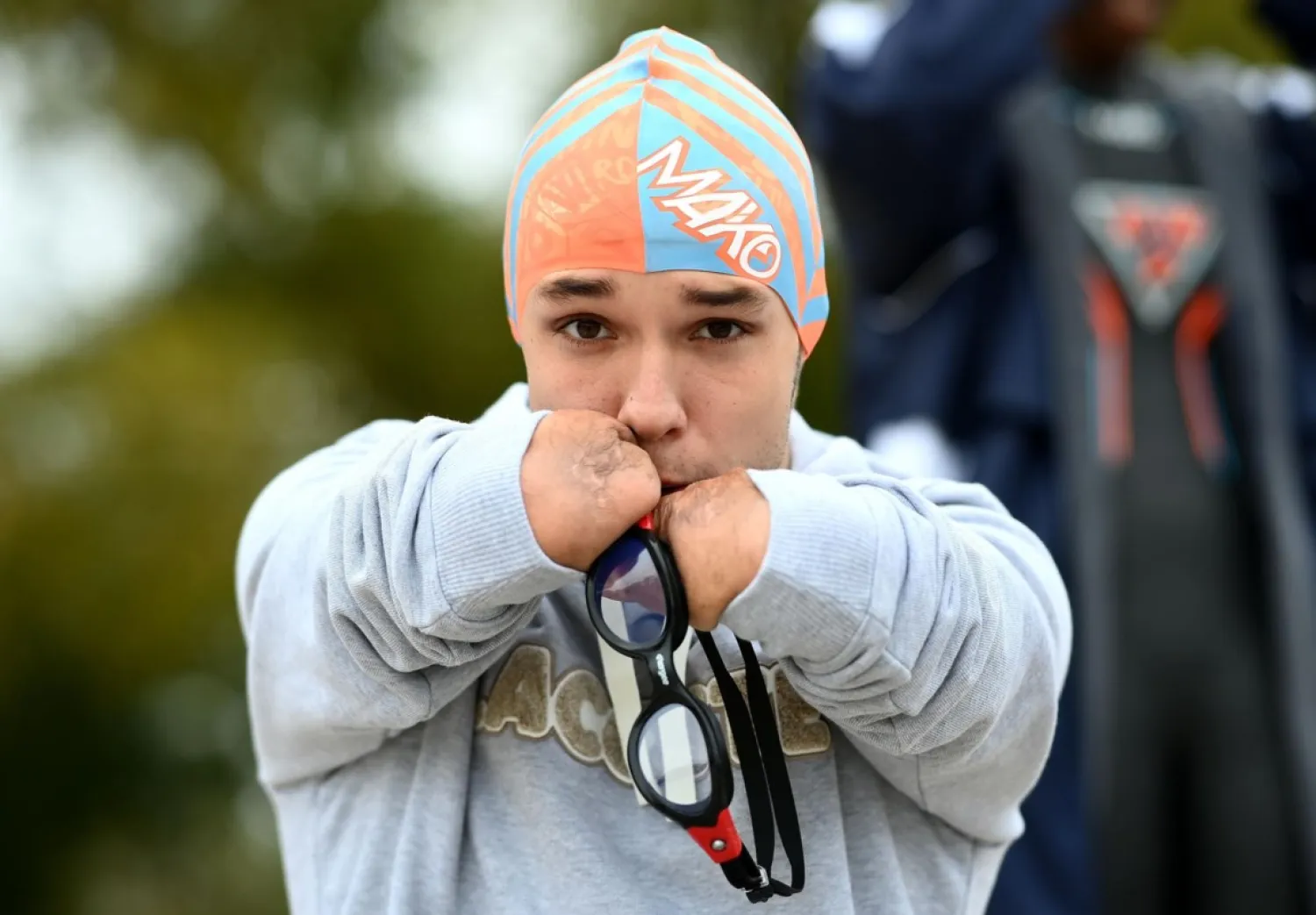
French swimmer Theo Curin is sitting out the Tokyo Paralympics over his unhappiness with the classification system. FRANCK FIFE AFP/File
TT

Paralympic Disability Categories under Fire over Fairness

French swimmer Theo Curin is sitting out the Tokyo Paralympics over his unhappiness with the classification system. FRANCK FIFE AFP/File

They're supposed to be about making parasports fair, but the category system central to disabled sports and the Paralympics, which classifies athletes according to their impairment, is increasingly under fire.

French swimmer Theo Curin, whose lower legs and hands were amputated after a bout of meningitis as a child, is sitting out the Tokyo Games over his unhappiness with the system and how athletes are assessed.

"Overnight, two people who swim with both their hands appeared in my S5 category. You don't have to be very smart to understand that having two hands in swimming helps a lot," the 21-year-old said.

"There are a lot of flagrant inequalities that annoy me and are really ridiculous," he said.

Ten types of impairment are accepted at the Paralympics, broadly covering physical, visual, and intellectual disabilities, reported AFP.

But within each impairment category there are a vast range of abilities, so athletes are further divided by class in a system designed to ensure people compete against others with approximately the same capabilities.

In swimming, for example, each class has a prefix -- S for freestyle, butterfly and backstroke, SB for breaststroke, and SM for individual medley -- followed by a number.

Physical impairments cover numbers 1-10, with the number lower the more severe the impairment. Vision impairments go from 11-13, while 14 indicates intellectual impairment.

The system is complicated and time-consuming, and some athletes feel it is failing.

Curin was supposed to be in the pool at Tokyo's Aquatic Centre this year, as one of France's top para-athletes, with nearly 150,000 Instagram followers.

He made his Paralympic debut in Rio, aged 16, and just missed out on a spot on the podium.

But instead of chasing a medal in Japan, he's making a film and preparing to swim across South America's Lake Titicaca.

"I decided to put aside Paralympic swimming so long as these problems with classification continue," he told AFP.

"They've left me a bit disgusted with the Paralympic movement," the three-time World Championship medalist said.

- 'Incentive to cheat' -

Curin is not the only one who feels the system is flawed, with particularly fierce debate surrounding classification in the pool.

US swimming star Jessica Long, who won her 14th Paralympic gold on Saturday, has said "the incentive to cheat is huge" given the increasing fame and financial rewards enjoyed by successful para-athletes.

"I can't watch this sport that I love continue to get destroyed like this," she told Sports Illustrated last year.

The International Paralympic Committee defends the system, asserting that "sporting excellence determines which athlete or team is ultimately victorious".

"Disappointingly, what we have witnessed in recent years is a small number of athletes... struggling to come to terms with increased competition," it said.

"Rather than embrace the improved competitive nature of their Para sport, they have instead questioned the classification of their competitors, despite the fact that international classifiers have found their rivals to be in the correct class."

But critics of the system point to what they say is the arbitrary and unscientific nature of the assessments involved.

The exams are "done by eye and based on the feeling of the observers", French swimmer Claire Supiot told FranceInfo.

She was reclassified earlier this year from S8 to S9, making "the road to the podium significantly harder".

There are also allegations of athletes trying to game the system, trying to be placed in a more severely impaired class to gain an advantage.

In 2017, a former classifier told the Guardian newspaper on condition of anonymity about athletes taking hot or cold showers, rolling in the snow or bandaging their limbs to appear to have more limited ability during exams.

Curin went through two rounds of exams, the first of which -- a medical examination -- produced a provisional classification at the lower end of S4.

But after a second round in which he was observed in the water, he was given a final class of S5.

That, he said, penalises him unfairly, "because I know how to properly work with my disability".



Sonmez Becomes Fan Favorite in Melbourne After Coming to Aid of Ball Girl

 Zeynep Sonmez of Türkiye and umpire Chase Urban help a ball kid who fainted, from the court during her first round match against Ekaterina Alexandrova of Russia at the Australian Open tennis championship in Melbourne, Australia, Sunday, Jan. 18, 2026. (AP)
Zeynep Sonmez of Türkiye and umpire Chase Urban help a ball kid who fainted, from the court during her first round match against Ekaterina Alexandrova of Russia at the Australian Open tennis championship in Melbourne, Australia, Sunday, Jan. 18, 2026. (AP)
TT

Sonmez Becomes Fan Favorite in Melbourne After Coming to Aid of Ball Girl

 Zeynep Sonmez of Türkiye and umpire Chase Urban help a ball kid who fainted, from the court during her first round match against Ekaterina Alexandrova of Russia at the Australian Open tennis championship in Melbourne, Australia, Sunday, Jan. 18, 2026. (AP)
Zeynep Sonmez of Türkiye and umpire Chase Urban help a ball kid who fainted, from the court during her first round match against Ekaterina Alexandrova of Russia at the Australian Open tennis championship in Melbourne, Australia, Sunday, Jan. 18, 2026. (AP)

Zeynep Sonmez earned a place in fans' hearts as well as the second round at the Australian Open on Sunday when the Turkish qualifier rushed to the aid of a ball girl who had fainted in the punishing Melbourne heat.

The world number 112 was locked in battle with ‌11th seed ‌Ekaterina Alexandrova and waiting ‌to ⁠receive serve ‌in the second set when the girl, who was positioned beside the chair umpire, suddenly wobbled and fell on her back.

The girl picked herself up but stumbled again moments later, prompting ⁠23-year-old Sonmez to stop play and run towards ‌her.

With the crowd applauding, ‍Sonmez put the ‍girl's arm over her shoulder and ‍guided her to a seat so medical staff could provide treatment.

Sonmez went on to lose the set but she was able to secure a 7-5 4-6 6-4 win and become the ⁠first woman from Türkiye to reach the second round of the Melbourne Park Grand Slam.

Her victory comes on the back of a 2025 season in which she reached the third round at Wimbledon, marking the best Grand Slam result in the professional era for a Turkish woman.

She also reached the ‌second round of the US Open.


Fans Frustrated by Long Queues, Ticket Sales Halt on Day One of Australian Open

 Sebastian Korda of the US serves compatriot Michael Zheng during their first round match at the Australian Open tennis championship in Melbourne, Australia, Sunday, Jan. 18, 2026. (AP)
Sebastian Korda of the US serves compatriot Michael Zheng during their first round match at the Australian Open tennis championship in Melbourne, Australia, Sunday, Jan. 18, 2026. (AP)
TT

Fans Frustrated by Long Queues, Ticket Sales Halt on Day One of Australian Open

 Sebastian Korda of the US serves compatriot Michael Zheng during their first round match at the Australian Open tennis championship in Melbourne, Australia, Sunday, Jan. 18, 2026. (AP)
Sebastian Korda of the US serves compatriot Michael Zheng during their first round match at the Australian Open tennis championship in Melbourne, Australia, Sunday, Jan. 18, 2026. (AP)

Australian Open organizers came under fire on the Grand Slam's opening day on Sunday as frustrated fans sweated in long queues to the gates of Melbourne Park and complained of confusion over the suspension of ticket sales.

With heightened security at the event in the wake of the Bondi Beach shooting in Sydney last month, hundreds of spectators gathered outside the venue in hot weather before tournament officials paused sales of the cheaper "ground pass" tickets within the first hour of play due to intense demand.

Ground passes, which ‌cost A$65 ($43) ‌for adults during day sessions, allow largely unfettered ‌access ⁠to the minor ‌courts and are hugely popular at the year's first Grand Slam.

Tournament director Craig Tiley confirmed in the morning that only the more expensive tickets to the main showcourts were available, but fans were oblivious as they queued for extended periods outside the venue.

Josh Main, a visitor from the Netherlands, said the experience was a letdown during a family trip that coincided with the Grand Slam.

“We went to look for ⁠tickets but there was a big line, so I thought, are we in the right line?” he ‌told Reuters. “They told us there are no tickets ‍left, so we can’t get in.

"They ‍did say there were tickets left for Rod Laver (Arena) but we’re not going ‍to sit there today and it’s expensive ... I think they said it was 300 bucks or something."

Local fans also voiced disappointment, with Melbourne resident Elton Yu surprised to find ground passes unavailable.

“Never expected to not have any tickets for the ground pass which I always do,” he told Reuters.

Susan Walsh, another Melbourne resident, said she and her group had already purchased arena tickets but hoped ⁠to enter earlier.

“We tried to buy a ground pass and they just told us it was only tickets that were $229 per person,” she said. “Didn’t want to spend that much money ... So, a bit disappointed.”

Tiley said the sales halt was just for the Sunday day session and that there were ground passes available for the evening.

“We’ve had to pause them because obviously we want people to come on site and have a great time,” he told reporters.

“There’s still the 'After 5' (o'clock) ground passes available, which is $49, come on-site for that.”

Governing body Tennis Australia (TA) said fans were encouraged to book in advance and that crowd numbers were constantly monitored at Melbourne ‌Park.

“Tickets will become available as capacity allows,” a spokeswoman said in a statement to Reuters.


Hosts Morocco Ready for Battle with Mane’s Senegal in AFCON Final

Morocco's defender #02 Achraf Hakimi celebrates after the Africa Cup of Nations (CAN) semi-final football match between Nigeria and Morocco at the Prince Moulay Abdellah stadium in Rabat on January 14, 2026. (AFP)
TT

Hosts Morocco Ready for Battle with Mane’s Senegal in AFCON Final

Morocco's defender #02 Achraf Hakimi celebrates after the Africa Cup of Nations (CAN) semi-final football match between Nigeria and Morocco at the Prince Moulay Abdellah stadium in Rabat on January 14, 2026. (AFP)

The Africa Cup of Nations reaches its climax on Sunday with a final showdown between the continent's two leading footballing powerhouses as hosts Morocco look to win the title for the first time in 50 years when they take on Sadio Mane's Senegal.

The match kicks off at 1900 GMT at the Prince Moulay Abdellah Stadium in Rabat, where almost all of the crowd of 69,000 will be backing a Morocco side captained by African player of the year Achraf Hakimi.

The first AFCON ever to start in one year and end in another could be the second in a row to be won by the host nation, with the Atlas Lions aiming to follow in the footsteps of Ivory Coast, crowned champions in front of their own fans in Abidjan in 2024.

Walid Regragui's Morocco have established themselves in recent years as Africa's pre-eminent national team, becoming the first from the continent to reach a World Cup semi-final, in 2022, and climbing to 11th place in the world rankings, just above Italy.

However, they have long been AFCON underachievers, with their only title to date coming in 1976. This will be their first final since 2004, when they lost to Tunisia with Regragui part of the team.

Senegal, meanwhile, are appearing in their third final in four editions and are targeting a second title to follow their 2022 triumph, when Mane scored the decisive penalty in a shoot-out win over Egypt in Yaounde.

"We dreamt of being here and now we have done it," Regragui told reporters in the Moroccan capital on Saturday.

He has been under suffocating pressure to deliver the title for the football-mad nation, and would perhaps not have kept his job through to the approaching World Cup in North America had he not at least taken the team this far.

"I hope this is just the beginning and not our last AFCON final," he added.

"Big football nations want to be up there on a regular basis. Tomorrow (Sunday) we want to try to make history."

He added: "Senegal will need to be really strong to beat us at home, although they are capable."

Morocco's success over the last four weeks has been based around the attacking inspiration of Real Madrid winger Brahim Diaz, the tournament's top scorer with five goals, as well as a defense which has conceded only once -- and that a penalty in a group-stage draw with Mali.

Being at home brings extra pressure, but can also be a huge advantage, and Senegal have complained about the conditions in which they were welcomed to Rabat ahead of the game.

The Lions of Teranga were based in the northern port city of Tangiers for the duration of the tournament before arriving in Rabat by train on Friday.

Senegal's star player Mane, a two-time winner of the African player of the year prize, said after netting the winner in the semi-final against Egypt that Sunday's game would be his last ever AFCON appearance.

Remarkably, Senegal coach Pape Thiaw insisted on the eve of the game that the former Liverpool forward may have no choice but to rethink that decision.

"I think he made his decision in the heat of the moment and the country does not agree, and I as coach of the national team do not agree," said Thiaw.

"We would like to keep him for as long as possible," added the coach, who is without center-back and captain Kalidou Koulibaly due to suspension.