


Saudi Crown Prince Launches Human Capability Development Program

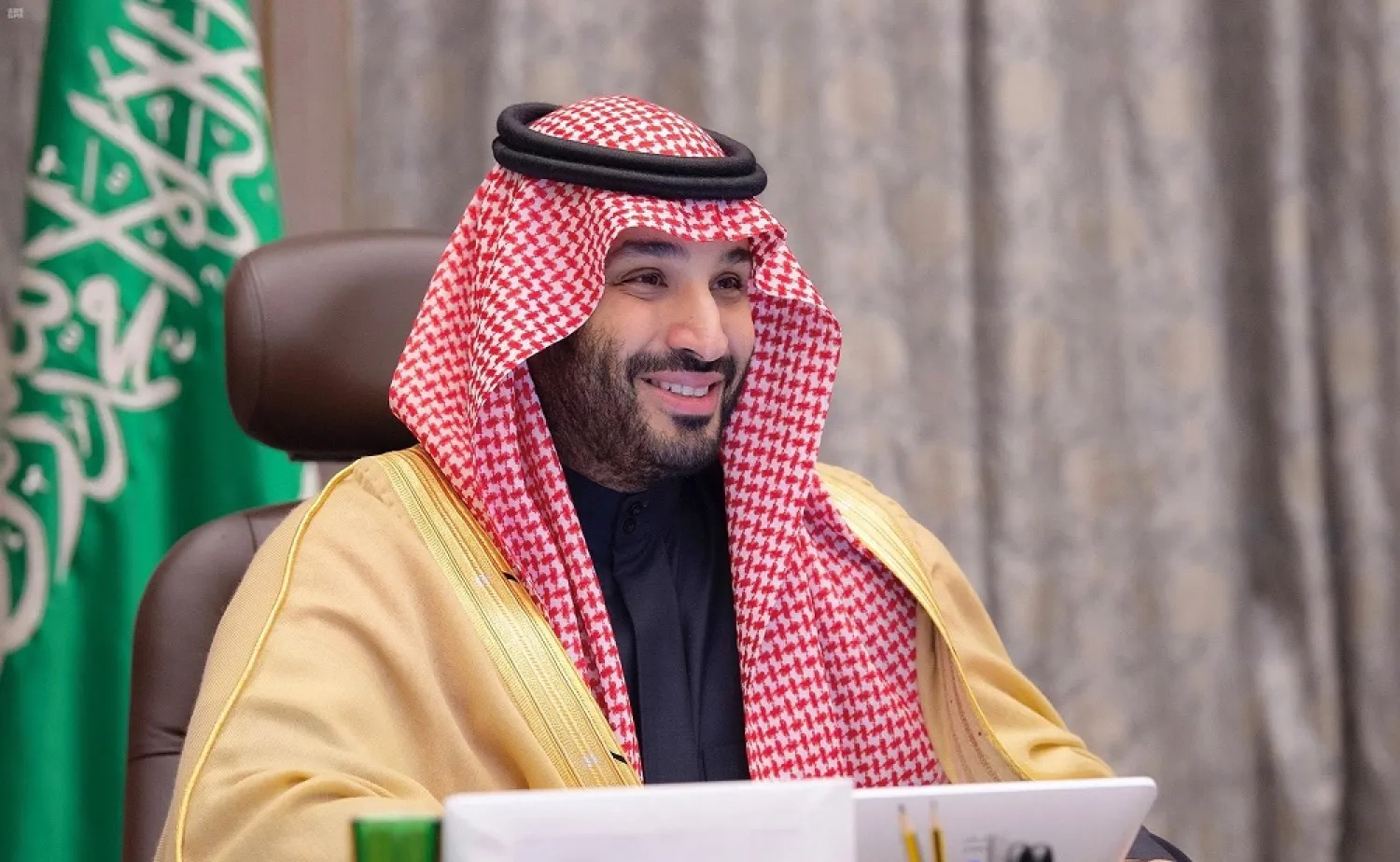
Saudi Crown Prince Mohammed bin Salman bin Abdulaziz, Deputy Prime Minister and Chairman of the Human Capability Development Program Committee. (SPA)
TT

Saudi Crown Prince Launches Human Capability Development Program

Saudi Crown Prince Mohammed bin Salman bin Abdulaziz, Deputy Prime Minister and Chairman of the Human Capability Development Program Committee. (SPA)

Saudi Crown Prince Mohammed bin Salman bin Abdulaziz, Deputy Prime Minister and Chairman of the Human Capability Development Program Committee, launched on Wednesday the Human Capability Development Program (HCDP), one of the realization programs to achieve the Kingdom’s Vision 2030.

The program represents a national strategy to strengthen citizen’s capabilities locally and globally by seizing promising opportunities resulting from accelerated and renewed changes around the world.

“The Human Capability Development Program represents a national strategy to enhance the competitiveness of national human capabilities locally and globally to be ready for the current and future labor market with capabilities and ambitions that compete with the world, and that is through: instilling and promoting values, developing basic and future skills, and developing knowledge,” said Crown Prince Mohammed.

“Because of my confidence in every citizen’s capabilities, this program has been developed to meet the needs and aspirations of all segments of society, beginning from childhood passing through universities, colleges, technical and vocational institutes, and reaching the labor market, with the goal of preparing citizens for the future, as this contributes to building a solid economy based on skills and knowledge and with human capital at its core,” he added.

“The program includes 89 initiatives aimed at achieving 16 strategic objectives of Saudi Vision 2030. The program’s strategy is built on three pillars: develop a resilient and strong educational base, prepare for the future labor market locally and globally, and provide lifelong learning opportunities.”

The program’s initiatives include promoting the expansion of kindergartens, which will help develop a resilient and strong educational foundation for all children. The career guidance and counseling initiative will provide citizens with the capabilities and skills necessary to plan their career objectives. It also includes a number of initiatives that target upskilling and reskilling citizens to increase employability rate and enable entrepreneurs and innovators for the future labor market locally and globally.

The Human Capability Development Program focuses on preparing national human capabilities, developing an ecosystem from early childhood education to lifelong learning, aligning educational outcomes with the needs of the labor market, and localizing high-skilled jobs through the reskilling and training of citizens. In addition, it will develop a more active partnership with the private and non-profit sectors. The program aims to achieve several goals, including increasing kindergarten enrollment from 23% to 90% and placing two Saudi universities among the top 100 universities in the world by 2030, thereby strengthening the Kingdom’s global ranking.

The HCDP’s strategy reflects the drive of the government of the Custodian of the Two Holy Mosques to prepare Saudi citizens through various strategic pillars. These include developing a passion for knowledge and pride in values, a commitment to succeed in work and entrepreneurship, and to compete locally and globally. It will constantly develop skills and unleash capabilities.

Through its initiatives, the program will enhance the skills necessary to compete in the 21st century. These will include creative thinking, data analysis and technical skills. It will also enhance emotional and social skills. The program seeks to enhance national capabilities competitiveness to grasp the opportunities of the Fourth Industrial Revolution.

The HCDP initiatives will provide vast opportunities that will pave the way for future globally competitive generations. It will also instill the values of moderation and tolerance, determination and perseverance, discipline and mastery, and it will boost work culture, which will lead to a global citizenship and enhance national human capabilities global competitiveness.



Muslim World League Affirms Support for Saudi Measures to Preserve Sovereignty

Muslim World League Affirms Support for Saudi Measures to Preserve Sovereignty
TT

Muslim World League Affirms Support for Saudi Measures to Preserve Sovereignty

Muslim World League Affirms Support for Saudi Measures to Preserve Sovereignty

The Muslim World League (MWL) has affirmed its full support for the supplementary statement issued by the Kingdom of Saudi Arabia regarding recent escalatory actions by the Southern Transitional Council in the Hadramout and Al-Mahara governorates.

The league also expressed its support for the statement from the Coalition to Restore Legitimacy in Yemen concerning the unauthorized movement of ships carrying weapons and heavy vehicles from the Port of Fujairah to the Port of Mukalla, SPA reported.

These shipments were reportedly transported without the necessary official permits from the coalition’s Joint Forces Command. The MWL emphasized its unwavering solidarity with the Kingdom and its support for all measures taken to safeguard its national security.

In an official statement released by the General Secretariat, MWL Secretary-General and Organization of Muslim Scholars Chairman Sheikh Dr. Mohammed bin Abdulkarim Al-Issa commended the decisive and wise content of the Saudi statement.

Speaking on behalf of the league’s global assemblies and councils, Al-Issa noted that these measures are vital to ensuring peace, security, and the unity of the Yemeni people under their internationally recognized leadership.

Al-Issa highlighted that the priority remains preserving stability in Yemen and the broader region. He noted that outstanding issues, including the Southern cause, must be resolved through dialogue within established legal and legitimate frameworks.

Furthermore, he warned that supporting illegitimate practices only deepens internal divisions and serves those who do not have Yemen’s best interests at heart. He cautioned that any further steps deviating from the legitimate path would only ignite sedition, the heavy cost of which would be borne by the Yemeni people.

Concluding the statement, Al-Issa called upon all Yemeni parties to prioritize wisdom and the national interest. He urged them to unite under their legitimate leadership to preserve the country's sovereignty, independence, and territorial integrity, paving the way for a secure and prosperous future for Yemen.


President of Yemeni Presidential Leadership Council Nullifies Joint Defense Agreement with UAE

Dr. Rashad Al-Alimi during his interview with Asharq Al-Awsat (Yemeni Presidency)
TT

President of Yemeni Presidential Leadership Council Nullifies Joint Defense Agreement with UAE

Dr. Rashad Al-Alimi during his interview with Asharq Al-Awsat (Yemeni Presidency)

President of the Presidential Leadership Council of the Republic of Yemen Dr. Rashad Mohammed Al-Alimi issued a presidential decree on Tuesday nullifying the joint defense agreement with the United Arab Emirates, based on the Constitution of the Republic of Yemen, the Gulf Cooperation Council Initiative and its implementation mechanism, the decision on the transfer of power, the formation of the Presidential Leadership Council, and the powers granted to it under the constitution, according to the Yemen News Agency (Saba).

Article Two of the decree mandates that all UAE forces and personnel withdraw from Yemeni territory within 24 hours, according to SPA.

Article Three instructs the Homeland Shield forces to assume control of all military camps in Hadramout and Al-Mahara governorates.


Yemeni Government Commends Saudi Historic Stance and Its Leadership of the Coalition to Restore Legitimacy

File photo of the Saudi flag/AAWSAT
TT

Yemeni Government Commends Saudi Historic Stance and Its Leadership of the Coalition to Restore Legitimacy

File photo of the Saudi flag/AAWSAT

The Yemeni government commended the Kingdom of Saudi Arabia's historic and steadfast stances, highlighting its crucial role in ensuring Yemen's security and stability.

The government acknowledged Saudi Arabia's leadership of the Coalition to Restore Legitimacy and its ongoing commitment to protecting civilians, de-escalating tensions, and preventing the eastern governorates from being drawn into conflicts that serve hostile agendas, SPA reported.

In an official statement, the government called on the Southern Transitional Council to withdraw immediately and unconditionally from the governorates of Hadramout and Al-Mahara. It urged the council to hand over all locations and camps to the Homeland Shield Forces and local authorities in these governorates, to adhere to the terms of reference of the transitional phase, and to cease all military or escalatory actions that threaten local security and undermine de-escalation efforts.

The statement, which was reported by the Yemen News Agency (Saba), expressed the government's full support for the decisions made by President of the Presidential Leadership Council of the Republic of Yemen Dr. Rashad Mohammed Al-Alimi, who is also Supreme Commander of the Armed Forces.

This includes declaring a state of emergency across Yemen and taking necessary sovereign measures to protect local security, preserve the unity and sovereignty of the state, and maintain its legal status in light of the dangerous developments in Yemen's eastern governorates.

The government stated: "The declaration of a state of emergency is grounded in the constitution and the references of the transitional phase, based on the recommendations of the National Defense Council.

It is a legitimate constitutional measure necessitated by our national duty to confront armed rebellion, protect civil peace, and prevent a descent into chaos that could undermine state institutions."