


4 Iranians Sentenced and Charged for Violating US Sanctions

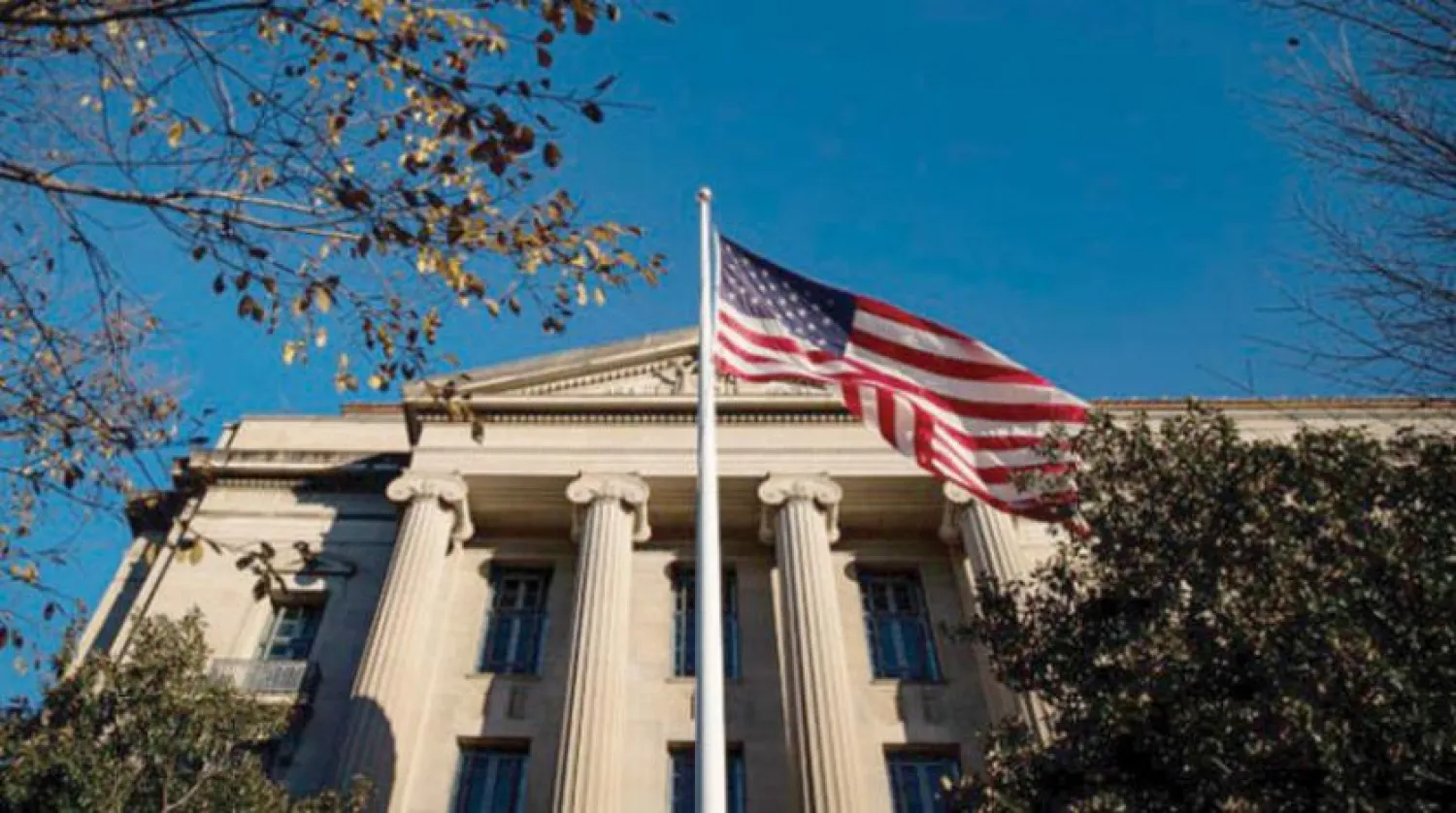
An American flag waves outside the US Department of Justice Building in Washington, US, December 15, 2020. REUTERS/Al Drago
TT

4 Iranians Sentenced and Charged for Violating US Sanctions

An American flag waves outside the US Department of Justice Building in Washington, US, December 15, 2020. REUTERS/Al Drago

Two courts, one in Texas and another in Florida, have sentenced and charged four Iranians for violating US sanctions on Iran, money laundering, and exporting military sensitive items, the Justice Department announced.

One of them was sentenced to 63 months in prison followed by three years of supervised release for violating the International Emergency Economic Powers Act (IEEPA), it said Tuesday.

Mehrdad Ansari, 40, a resident of the United Arab Emirates and Germany, was convicted by a federal jury in May 2021 for his role in a scheme to obtain military sensitive parts for Iran in violation of the Iranian Trade Embargo.

In coordination with his co-conspirators, Ansari obtained and attempted to obtain parts that had dual-use military and civilian capability and could be used in such systems as nuclear weapons, missile guidance and development, secure tactical radio communications, offensive electronic warfare, military electronic countermeasures (radio jamming) and radar warning and surveillance systems.

Evidence presented during trial revealed that Ansari attempted to transship testing equipment obtained from the US by co-defendants Taiwanese citizen Susan Yip, aka Susan Yeh, and Iranian citizen Mehrdad Foomanie, aka Frank Foomanie, using Ansari’s companies located in Dubai.

From Oct. 9, 2007 to June 15, 2011, Yip and Foomanie obtained or attempted to obtain from companies worldwide over 105,000 parts valued at approximately $2,630,800 involving more than 1,250 transactions. The defendants conducted 599 transactions with 63 different US companies in which they obtained or attempted to obtain parts from US companies without notifying the US companies these parts were being shipped to Iran or getting the required US government license to ship these parts to Iran.

In October 2012, Yip was sentenced to two years in federal prison. Mehrdad Foomanie remains a fugitive.

In the second case, three Florida residents were charged with crimes related to their violations of US sanctions on Iran, and money laundering, the Justice Department said.

Defendants Mohammad Faghihi, 52, his wife Farzeneh Modarresi, 53, and his sister Faezeh Faghihi, 50, operated Florida company Express Gene.

According to the criminal complaint affidavit, between October 2016 and November 2020, Express Gene received numerous wire transfers from accounts in Malaysia, China, Singapore, Turkey, and the United Arab Emirates, totaling almost $3.5 million. It is alleged that some of the money received was used by Express Gene and its principals to purchase genetic sequencing equipment from US manufacturers and ship them to Iran.

On Feb. 20, Faghihi arrived at Miami International Airport from Iran, where he was inspected by Customs and Border Protection (CBP) officers. According to the charging documents, during his inspection by CBP officers, Faghihi made false statements, including that he did not practice his profession in Iran or conduct any type of research in Iran.

In fact, according to the affidavit, Faghihi was the director of a laboratory within Shiraz University of Medical Science in Iran bearing his name: “Dr. Faghihi’s Medical Genetic Center,”. In addition, his luggage contained 17 vials of unknown biological substances covered with ice packs and concealed beneath bread and other food items, according to the affidavit. All the vials were subject to regulations.

From approximately 2013 to approximately 2020, Faghihi was an Assistant Professor at the Department of Psychiatry & Behavioral Sciences at the University of Miami (UM), Miller School of Medicine.

It is alleged that Express Gene and Faghihi received large deposits from international wires during this period, but they were not disclosed.

All defendants are charged with conspiring to commit an offense against the United States and conspiring to commit money laundering.



Iraq’s Top Judge in Damascus to Discuss ISIS Detainees, Judicial Cooperation

Iraq’s Supreme Judicial Council President Judge Faiq Zidan and his accompanying delegation at Tishreen Palace in Damascus, with Syrian Justice Minister Mazhar al-Wais in attendance. (SANA/Justice Ministry)
TT

Iraq’s Top Judge in Damascus to Discuss ISIS Detainees, Judicial Cooperation

Iraq’s Supreme Judicial Council President Judge Faiq Zidan and his accompanying delegation at Tishreen Palace in Damascus, with Syrian Justice Minister Mazhar al-Wais in attendance. (SANA/Justice Ministry)

Syrian Justice Minister Mazhar al-Wais met Faiq Zidan, head of Iraq’s Supreme Judicial Council, in Damascus on Thursday for talks aimed at deepening judicial cooperation, and the fate of Syrian detainees transferred to Iraq high on the agenda.

The Iraqi News Agency (INA) said Zidan arrived in the Syrian capital to discuss several issues of mutual concern, foremost among them ISIS detainees transferred to Iraqi prisons.

Al-Wais and Mohammad Taha al-Ahmad, adviser for Arab affairs at Syria’s Ministry of Foreign Affairs and Expatriates, received Zidan.

Judge Laith Jabr, head of Iraq’s Judicial Supervision Authority, said the visit opened broad prospects for judicial and legal cooperation between the two countries and included talks on detainees transferred from al-Hol camp.

Jabr told INA the Iraqi delegation, headed by Zidan, visited Damascus at the Syrian justice minister’s invitation to discuss a range of shared judicial issues.

He said the talks focused on Syrian detainees handed over to Iraq from al-Hol and their legal status, adding that Iraqi authorities had carried out judicial investigations and provided the detainees with all legal guarantees required under Iraqi law.

The two sides agreed to form joint judicial committees that would meet regularly to resolve issues linked to the detainees’ trials, Jabr said.

The meetings also covered stronger judicial coordination, expanded exchanges of information and expertise, and preparations for future memorandums of understanding between the two countries.

Sources following the visit said Zidan was expected to meet Syrian President Ahmed al-Sharaa and hold separate talks with the justice and foreign ministers and other Syrian officials.

The discussions were expected to cover ISIS members detained in Iraq, transitional justice, anti-corruption efforts and greater transparency.

Informed sources also said Iraq and Syria were close to signing a joint agreement to regulate the transfer and prosecution of Syrian detainees held by Iraqi authorities.

Al-Wais said Syria hoped the progress already made in economic and security relations would help drive closer judicial and legal coordination and strengthen ties between the two countries’ justice institutions.

Syria’s state news agency SANA quoted him as saying Damascus was committed to balanced and positive relations with its neighbors based on mutual respect and shared interests.

He said Syria’s historical ties and mutual interests with Iraq gave both countries stronger reason to expand bilateral cooperation.

Al-Wais said Syria was entering a new phase focused on building a state based on the rule of law and institutions, while strengthening national unity and justice.

He said the Justice Ministry was pursuing a broad judicial reform program to bolster judicial independence and integrity, improve judges’ efficiency, speed up the delivery of justice and simplify procedures for citizens.

Zidan, in turn, pointed to the historic and fraternal ties between Iraq and Syria and said Iraq’s judiciary was seeking new avenues of cooperation to improve judicial work and reinforce the rule of law in both countries.

He called for stronger coordination between justice institutions and greater exchanges of expertise, saying regional stability and justice required close judicial cooperation and partnership.

Iraqi and Syrian sources also said preparations were under way for a possible visit by Iraqi Prime Minister Ali al-Zaidi to Damascus for talks with Syrian President Ahmed al-Sharaa.

Asharq Al-Awsat reported on Sunday, citing sources in Baghdad, that Kurdistan Region President Nechirvan Barzani’s recent visit to Damascus had helped ease mutual concerns in Baghdad and Damascus over bilateral relations and several unresolved political and security issues.

The sources said Barzani carried messages between al-Zaidi and al-Sharaa and helped pave the way for a possible visit by the Iraqi prime minister to Damascus.


Iran Rejects Trump Claims of US Control over Hormuz as 'Lies'

An Iranian woman walks next to an anti-US billboard at the Enghelab square in central Tehran, Iran, 13 August 2026. Tensions between Iran and the US remain high as opposing claims persist over shipping control in the Strait of Hormuz.  EPA/ABEDIN TAHERKENAREH
An Iranian woman walks next to an anti-US billboard at the Enghelab square in central Tehran, Iran, 13 August 2026. Tensions between Iran and the US remain high as opposing claims persist over shipping control in the Strait of Hormuz. EPA/ABEDIN TAHERKENAREH
TT

Iran Rejects Trump Claims of US Control over Hormuz as 'Lies'

An Iranian woman walks next to an anti-US billboard at the Enghelab square in central Tehran, Iran, 13 August 2026. Tensions between Iran and the US remain high as opposing claims persist over shipping control in the Strait of Hormuz.  EPA/ABEDIN TAHERKENAREH
An Iranian woman walks next to an anti-US billboard at the Enghelab square in central Tehran, Iran, 13 August 2026. Tensions between Iran and the US remain high as opposing claims persist over shipping control in the Strait of Hormuz. EPA/ABEDIN TAHERKENAREH

Iran's military on Thursday rejected as "lies" remarks by US President Donald Trump claiming control of the Strait of Hormuz, saying the strategic waterway was fully under Iranian control.

"The false claims of the United States that ships are passing through the Strait of Hormuz normally ... are nothing more than lies and fabrications," said Ebrahim Zolfaghari, the spokesperson for Iran's central military command, Khatam-al Anbiya.

"The Strait of Hormuz is, as in the past, under the complete management and control of the Islamic Republic of Iran, and no commercial ship or tanker without the permission and supervision of the powerful Iranian armed forces has had and will have the possibility of safe passage through this strait," he said in a video carried by state television.

Iran has kept control of Hormuz, a vital energy conduit, since the outbreak of the war in the Middle East on February 28, requiring vessels to obtain permission and pay transit fees before using the waterway.

In a Wednesday Truth Social post, Trump claimed that the US "has total control over the Strait of Hormuz. I THINK WE WILL KEEP IT!"

"Our Naval Blockade is being called, by everyone, 'A WALL OF STEEL,' and there is nothing Iran can do about it," he added.

On Thursday, the head of Iran's Basij forces under the Revolutionary Guards also said that the strait was under Iranian control.

"Today, you see that the Strait of Hormuz is under the management and control of the Islamic republic, and our country continues on its path in complete security," said Hossein Taeb according to state television.

Iran's top diplomat Abbas Araghchi on Thursday said the US makes miscalculations in regard to the waterway.

"The US has long miscalculated due to intelligence failures. Case in point: The war on Iran. Now, an even bigger miscalculation on the Strait of Hormuz," he said on X.

Iranian parliamentarian and member of the national security commission Behnam Saeedi said the strait is closed to US and Israeli ships.

"Ships belonging to the Zionist regime will not have the right to pass through the Strait of Hormuz under any circumstances, whether in war or peacetime," he told state TV, adding that "US military ships will also be barred from passing through the Strait".

Iran and Oman have been in talks to establish a new route through the strait, but negotiations have not yet been finalized.

Tehran, however, says even if the talks produce a new route, that would not on its own open the waterway unless the US meets Iran's demands.


White House Press Secretary Karoline Leavitt Will Leave at the Month’s End

FILE - White House press secretary Karoline Leavitt watches as President Donald Trump speak to reporters while in flight on Air Force One to Joint Base Andrews, Md., Jan. 11, 2026. (AP Photo/Julia Demaree Nikhinson, File)
TT

White House Press Secretary Karoline Leavitt Will Leave at the Month’s End

FILE - White House press secretary Karoline Leavitt watches as President Donald Trump speak to reporters while in flight on Air Force One to Joint Base Andrews, Md., Jan. 11, 2026. (AP Photo/Julia Demaree Nikhinson, File)

White House press secretary Karoline Leavitt will leave the administration at the end of the month to spend more time with her family, President Donald Trump announced Wednesday.

Leavitt, 28, is the youngest person to hold the role. She was a press aide during Trump's first term and has been one of the most visible advocates of his “Make America Great Again” movement. Trump did not outline any plans for who might replace her, The Associated Press said.

Meanwhile, Trump said he slipped away from Air Force One after a trip last month in Türkiye because the Secret Service and military wanted him on a “different plane” due to a threat he insisted did not scare him.

He downplayed the extraordinary nature of the subterfuge involved in his flight, which saw him stow away in an airport catering container to sneak onto another plane while Air Force One was sent into the sky, essentially as a decoy.