


Kashmir Beekeepers Head Southward for Warmth, Honey and Cash

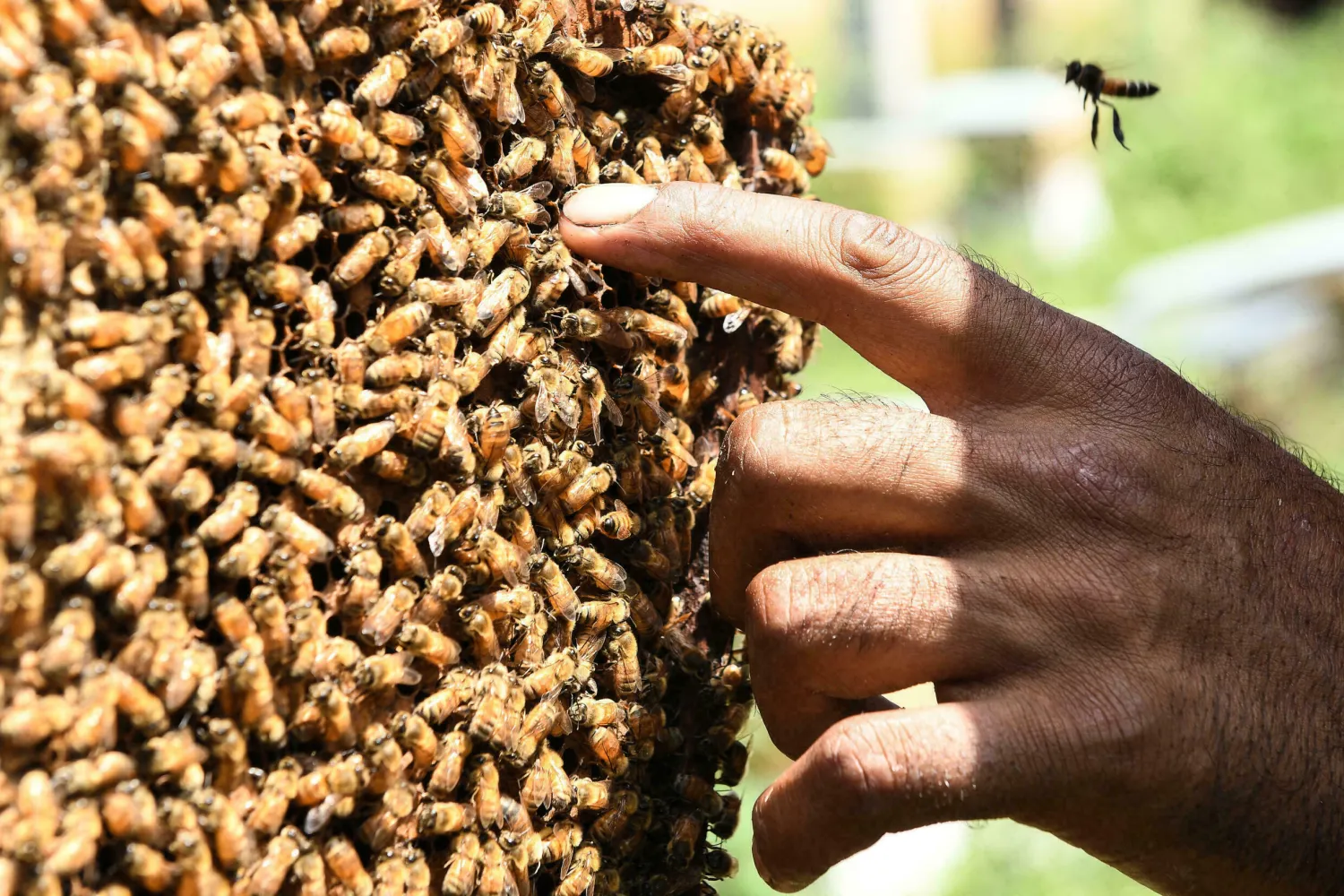
Dozens of Kashmiri beekeepers send their hives hundreds of kilometers away in the autumn to avoid the winter months. NARINDER NANU AFP
TT

Kashmir Beekeepers Head Southward for Warmth, Honey and Cash

Dozens of Kashmiri beekeepers send their hives hundreds of kilometers away in the autumn to avoid the winter months. NARINDER NANU AFP

As the winter months near, Kashmiri beekeepers like Abid Hussain are preparing for an annual migration southward in search of warmer climes, more honey and bigger payouts.

Hussain wears protective gear on his arms and face as he readies to send his convoy of bees hundreds of kilometers from the Himalayan region into the desert state of Rajasthan, AFP reported.

"Everything comes to a halt in Kashmir in winter, including nature," says Hussain, who takes his colonies 750 kilometers (465 miles) to vast mustard fields around Sri Ganganagar on the edge of Rajasthan's Thar desert.

Dozens of his fellow beekeepers make the same autumn journey, travelling across twisting mountain highways and the northern Indian plains to reach warmer provinces.

Honeymakers started taking the journey in the 1980s, when an insect disease nearly wiped out the local population and a replacement European species -- much more sensitive to the Himalayan cold -- was introduced.

Now hundreds of millions of bees feast on rich farm crops to the south of Kashmir every year and help feed a honey-making boom for the beekeepers.

Each hive can net Hussain, who transports tens of millions of bees, as much as 9,000 rupees ($120) worth of honey during his time in Sri Ganganagar.

While the bees get fed, the mustard farmers are happy to have their crops pollinated for future harvests.

For the beekeepers, the annual pilgrimage is crucial to their survival, says Parvez Ahmad Sofi, a professor at Kashmir's agriculture university.

"Migration saves the bees from the harsh weather, helps them reproduce colonies and produce honey," he said.

Without it, the beekeepers have only two harvests a year, instead of four if they travel south.

As temperatures rise in February, Hussain will begin his return north, stopping for two months in the ancient city of Pathankot near the Pakistan border.

He will lease land and wait for the flowers on lychee trees to blossom in early April, allowing him one more harvest before the final journey home.

But back in the Kashmir Valley, authorities say the region's temperatures are rising, while freak winter storms remain a threat to its wildlife.

Nearly 750 tons of honey were produced there last year and, while experts say the region could make more, storms, warmer winters and unpredictable rains have hit production in recent years.

Hussain says the changing climate in Kashmir makes the annual migration increasingly vital to his livelihood.

"Hot weather can destroy the flowers and the bees cannot collect nectar," he said.

"In recent times, there has been more heat and too much rain."


Two Holy Mosques Exhibition Welcomes Visitors for Founding Day Celebrations

The exhibition is open daily from 10:00 a.m. to 1:30 a.m - SPA
TT

Two Holy Mosques Exhibition Welcomes Visitors for Founding Day Celebrations

The exhibition is open daily from 10:00 a.m. to 1:30 a.m - SPA

In celebration of the Kingdom’s Founding Day, the Exhibition of the Two Holy Mosques Architecture in Makkah is welcoming visitors to explore a comprehensive historical journey.

The exhibition presents the evolution of the Two Holy Mosques through rare artifacts, historical photographs, and documentation of successive Saudi expansions, according to SPA.

The halls highlight the Kingdom’s long-standing dedication to serving the Two Holy Mosques. They combine heritage and modern technology to present the architectural development of Islam’s holiest sites.

The exhibition is open daily from 10:00 a.m. to 1:30 a.m.


Photos Show Filming of Ramadan TV Drama Series on the War-scarred Streets of Syria's Aleppo

Extras stand by as a television crew films an episode of the TV series “Al-Souriyoun al-Aada” (“The Syrian Enemies”), based on a novel of the same name that was banned under Bashar Assad, along a transformed street in central Aleppo, Syria, Friday, Feb. 13, 2026. (AP Photo/Ghaith Alsayed)
TT

Photos Show Filming of Ramadan TV Drama Series on the War-scarred Streets of Syria's Aleppo

Extras stand by as a television crew films an episode of the TV series “Al-Souriyoun al-Aada” (“The Syrian Enemies”), based on a novel of the same name that was banned under Bashar Assad, along a transformed street in central Aleppo, Syria, Friday, Feb. 13, 2026. (AP Photo/Ghaith Alsayed)

Ramadan in the Arab world is a month of fasting and prayer by day — and television by night. For decades, families have gathered after the iftar, the evening meal that breaks the daytime fast, to follow the season’s highly anticipated drama series, produced specially to air during the Islamic holy month.

In the week before Ramadan, a television crew in central Aleppo was busy preparing one of those productions, with a battered street in the historic city transformed into a scene from decades past.

Lamees Al-Ali, an extra in the series, poses for a photograph during the filming of an episode of the TV series “Al-Souriyoun al-Aada” (“The Syrian Enemies”), based on a novel of the same name that was banned under Bashar Assad, along a transformed street in central Aleppo, Syria, Friday, Feb. 13, 2026. (AP Photo/Ghaith Alsayed)

Classic 1970s cars lined the curb. A horse-drawn cart rolled through the frame. A vendor in a red tarboush, a brimless cone-shaped hat, stood beside steaming pots of sahlep — a sweet, thickened milk drink flavored with spices and associated with winter evenings.

Just outside the camera’s view stood a stark reminder of Syria's more recent history. Collapsed buildings and damaged facades testified to Aleppo’s role as a major battleground during the country's civil war. However, with costumes, props and careful framing, the production temporarily carried the street back to what it portrays as a more innocent era, according to The AP news.

A television crew films an episode of the TV series “Al-Souriyoun al-Aada” (“The Syrian Enemies”), based on a novel of the same name that was banned under Bashar Assad, along a transformed street in central Aleppo, Syria, Friday, Feb. 13, 2026.(AP Photo/Ghaith Alsayed)

The series being filmed — “Al-Souriyoun al-Aada,” or “The Syrian Enemies” — is based on a novel that was banned during the rule of former President Bashar Assad. The story examines painful chapters of Syria’s past, including the 1982 events in Hama, when government forces crushed an uprising led by the Muslim Brotherhood, killing or disappearing an estimated 10,000 to 40,000 people and leaving the city in ruins.

As filming continues into Ramadan, the production reflects both a cherished seasonal tradition and Syria’s complex, layered history.


How Bomb Cyclones Form and Create Dangerous Conditions 

A man works in a snowstorm, Sunday, Feb. 22, 2026, in New York. (AP)
TT

How Bomb Cyclones Form and Create Dangerous Conditions 

A man works in a snowstorm, Sunday, Feb. 22, 2026, in New York. (AP)

When turbulent weather with whipping winds and heavy snow is in the forecast, meteorologists sometimes warn that a storm could “bomb out” or become a bomb cyclone. But what exactly does this mean?

According to the US National Oceanic and Atmospheric Administration, certain storms undergo bombogenesis, which happens when a storm’s central pressure drops at least 24 millibars in 24 hours. These storms are sometimes called bomb cyclones. Storm intensity is measured by central pressure, so the lower the pressure, the stronger the storm.

Such rapidly strengthening storms are capable of producing heavy rain, blizzard conditions and intense winds that can create dangerous conditions such as downed trees and power outages.

“If you’re watching TV at night and the weather report comes on and you’re hearing ‘bomb cyclone’ being used, that usually means there’s quite a bit of active weather going on,” said Andrew Orrison, a meteorologist with the National Weather Service in College Park, Maryland.

Bomb cyclones can happen in any season, but mainly occur during fall and winter when frigid air from the Arctic can creep south and clash with warmer air masses.

“It’s really the clash of those air masses that really kind of helps to generate the areas of low pressure in the first place,” said Orrison.

Regions in North America that are prone to seeing bomb cyclones include Alaska, the Pacific Northwest and the Great Lakes region.
