

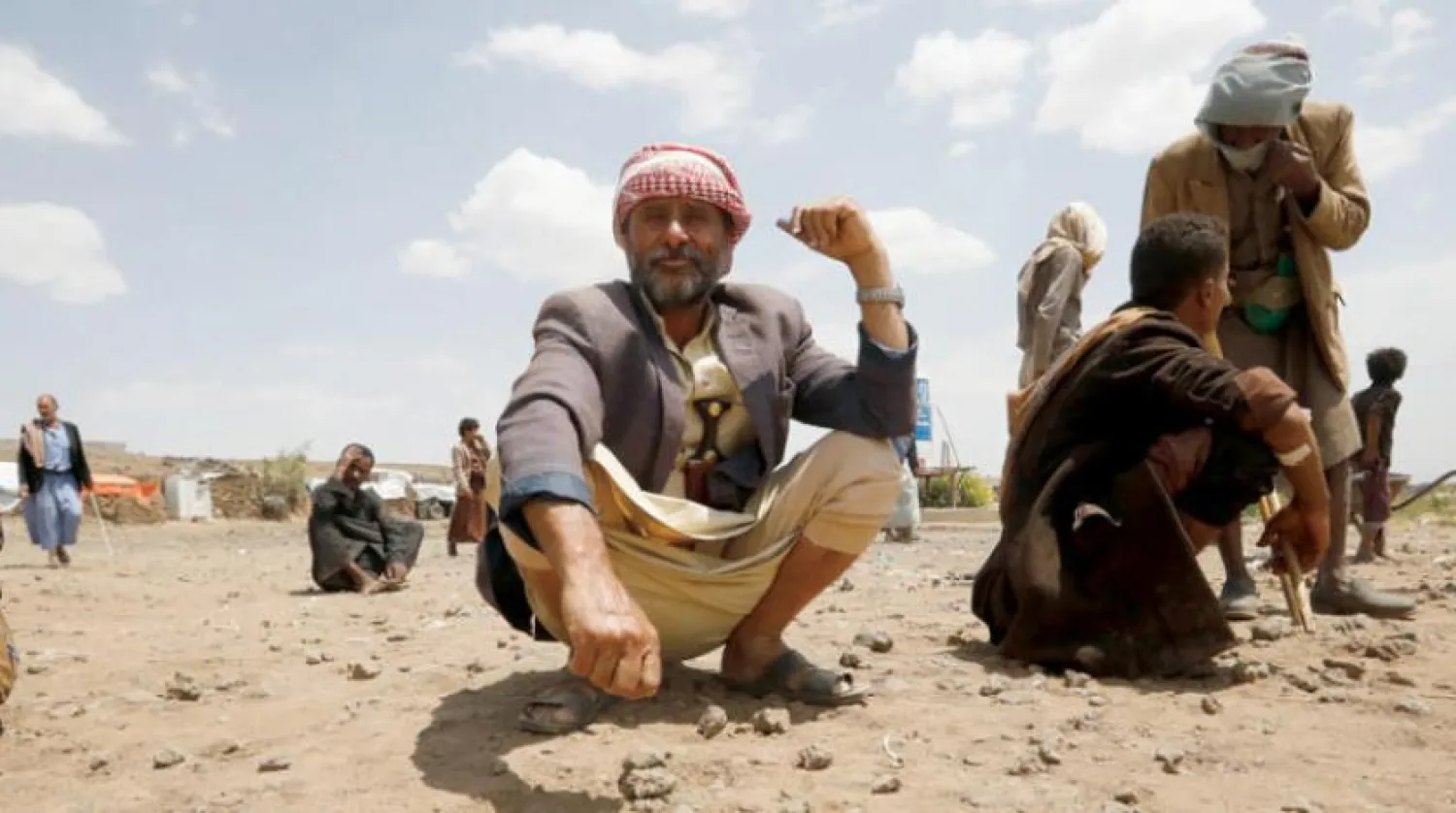

World Bank Warns of Pockets of Famine-Like Conditions in 3 Yemeni Governorates

A displaced Yemeni waits for his share of food aid in a camp for displaced people in Sanaa (EPA)
TT

World Bank Warns of Pockets of Famine-Like Conditions in 3 Yemeni Governorates

A displaced Yemeni waits for his share of food aid in a camp for displaced people in Sanaa (EPA)

Pockets of famine-like conditions have returned to Yemen for the first time in two years in Hajjah, Amran and al-Jawf, warned the World Bank (WB).

In its Policy Note on the Health Sector in Yemen, the WB indicated that availability of functioning hospitals and primary care centers has dwindled under the weight of conflict, with 80 percent of the population facing significant challenges in reaching food, drinking water, and access to health care services.

“Even prior to the most recent escalation of the conflict, Yemen was one of the poorest countries in the world, with the lowest human development indicators in the Middle East and North Africa.”

Estimates show that approximately 100,000 people died from combat and 130,000 from lack of food, health, and infrastructure, including as many as 3,000 children.

In addition, 45 percent of children who are dying are severely malnourished, and 50 percent of the victims of the conflict are women and children.

The economy has collapsed, with GDP declined by 50 percent, while 58 percent of Yemenis living in extreme poverty, as opposed to 19 percent before the conflict.

Currently, about 24.4 million people, or 80 percent of the population, need humanitarian assistance and face significant challenges in reaching food or health care.

“Despite ongoing humanitarian assistance, 16.2 million Yemenis are food insecure.”

It warned that malnutrition rates among women and children in Yemen remain among the highest in the world, with 1.2 million pregnant or breastfeeding women and 2.3 million children under 5 requiring treatment for acute malnutrition.

“The conflict has led to the virtual collapse of basic social services, including Yemen’s fragile health care system, and COVID-19 exacerbated the situation in Yemen.”

The study shows that health facilities have been damaged or destroyed, and health care workers have often been targeted throughout the conflict, decreasing the availability of infrastructure and human resources for health service provision.

It also noted that the COVID-19 outbreak, flooding, locust infestation, and climate-related hazards have further compounded the impacts of the conflict on people and country systems and underscored their vulnerability to shocks

In recent years, the dire humanitarian situation in Yemen has been exacerbated by multiple and overlapping infectious disease outbreaks such as cholera and dengue.

Not to mention, the COVID-19 pandemic has strained an already weak health system.

“Its mortality rate is high, estimated around 25 percent, and COVID-19 has reduced demand for routine health services such as immunization and maternal care.”

Yemen is ranked 193 out of 195 countries for its ability to manage an epidemic

Major donors have reduced and suspended aid in northern Yemen which created great uncertainty for health service delivery, since the onset of COVID19 and the resulting contraction of the global economy.

The report warned that aside from COVID-19 specific risks, there are also important bottlenecks with regards to the humanitarian space, including restrictions in imports, military checkpoints for humanitarian tracks, as well as bureaucratic restrictions in the front lines hindering the delivery of assistance.

It revealed that Yemen remains highly vulnerable to COVID-19, noting that the official figures of the cases are likely severe underestimates, given that testing in Yemen remains limited.

The World Health Organization believes only 26,000 tests have been conducted, less than 1 per 1,000 people, well below the rate of other countries in the region, and case numbers are regularly reported from only certain parts of the country.

Furthermore, difficulties in the provision of health services are reflected through worsening health outcomes.

Reporting on the health status of Yemenis points to deteriorating health conditions amidst the ongoing conflict, including high levels of child malnutrition, low immunization rates, and outbreaks of communicable diseases.

Maternal and child health are particularly affected by the worsening situation, with the latest estimates pointing to one mother and six newborns dying every two hours.

Additionally, the conflict has also taken a direct toll on the health of the population and is now estimated to be the third main cause of death in Yemen, following ischemic heart disease and neonatal disorders.



At Oct 7 Memorial, Netanyahu Says Will Be No Hamas Rule in Gaza

Israeli Prime Minister Benjamin Netanyahu speaks at the State Memorial Ceremony for the three year anniversary of the October 7, 2023, Hamas attack - REUTERS
TT

At Oct 7 Memorial, Netanyahu Says Will Be No Hamas Rule in Gaza

Israeli Prime Minister Benjamin Netanyahu speaks at the State Memorial Ceremony for the three year anniversary of the October 7, 2023, Hamas attack - REUTERS

Israeli Prime Minister Benjamin Netanyahu on Monday vowed there would be no Hamas rule in Gaza as he attended a memorial event marking three years since the October 7, 2023 attack.

Speaking during a state ceremony at the Mount Herzl military cemetery in Jerusalem, Netanyahu said "we have achieved enormous accomplishments, but there are still missions ahead of us, and we intend to complete them".

"There will be no Hamas rule in Gaza," he added, vowing to continue targeting anyone who was involved in the attack or who held hostages.

The Hamas-led attack resulted in the deaths of 1,221 people, according to an AFP tally based on official Israeli figures. Militants also dragged 251 hostages into Gaza, 44 of them already dead.

In response, Israel launched a massive military offensive that has killed more than 74,200 people in Gaza, according to the territory's health ministry, which is under Hamas authority and whose figures are considered reliable by the United Nations.

Since a ceasefire was declared last October, Israeli forces have killed more than 1,440 people in Gaza, according to the ministry.

Plans for Gaza's post-war governance have begun to take shape, but the issue remains largely unresolved in practice.

Since Hamas's October 2023 attack, Israel has fought wars on several fronts, including against Iran-backed Hezbollah in Lebanon.

During his speech on Monday, Netanyahu also vowed to keep striking Hezbollah to "create an opportunity for peace with a country whose people, for the most part, want peace with us".

Netanyahu also hit out at the clerical leadership in Iran, where Israel and the United States launched a joint attack on February 28, triggering the Middle East war.

"We will not allow the ayatollah regime in Tehran to threaten our existence," Netanyahu said, adding the Iranian leadership was "weaker than it has been since its establishment".


Israeli Soldiers Kill Palestinian in West Bank

A blue body bag containing the body of a Palestinian man shot by Israeli forces in an incident in which a car hit a military jeep, is guarded as it lies on the road close to the Israeli-occupied West Bank town of Bani Naim on October 5, 2026. (Photo by Ahmad GHARABLI / AFP)
TT

Israeli Soldiers Kill Palestinian in West Bank

A blue body bag containing the body of a Palestinian man shot by Israeli forces in an incident in which a car hit a military jeep, is guarded as it lies on the road close to the Israeli-occupied West Bank town of Bani Naim on October 5, 2026. (Photo by Ahmad GHARABLI / AFP)

Israeli forces killed one Palestinian and injured two others in the occupied West Bank on Monday, Palestinian authorities said, while the military said troops fired at a car that had hit an army vehicle.

The military said a "vehicle carrying three suspects... accelerated toward an army vehicle and hit it" in the area of Bani Naim, north of the city of Hebron.

In a statement, it said no injuries were reported among Israeli forces and that soldiers "responded by firing toward the vehicle, and hits were identified."

The Palestinian General Authority for Civil Affairs said "Israeli forces opened fire on a civilian vehicle" at the entrance to Bani Naim, without giving details on whether those inside had been attempting to ram soldiers, according to AFP.

"One citizen was killed and two young men sustained serious and moderate injuries," it added, saying the wounded had been transferred to hospitals inside Israel and that the identity of the deceased remained unknown.

Israel has occupied the West Bank since 1967 and violence there has surged since October 7, 2023.

More than 500,000 Israelis live in the West Bank in settlements illegal under international law, a minority of whom engage in violence towards Palestinians.

According to an AFP tally based on data from the Palestinian health ministry, Israeli forces or settlers have killed 1,112 Palestinians in the territory since the start of the Gaza war.

Israeli figures show at least 49 Israelis, including civilians and security personnel, have been killed in Palestinian attacks or during Israeli military operations during the same period.


Al-Alimi Launches ‘Yemen Dawn’ Operation to Retake Sanaa, End Houthi Rule

Yemeni President Rashad al-Alimi addresses the nation in a televised address in Riyadh, Saudi Arabia October 4, 2026. Yemen News Agency/Handout via REUTERS
TT

Al-Alimi Launches ‘Yemen Dawn’ Operation to Retake Sanaa, End Houthi Rule

Yemeni President Rashad al-Alimi addresses the nation in a televised address in Riyadh, Saudi Arabia October 4, 2026. Yemen News Agency/Handout via REUTERS

Yemeni Presidential Leadership Council Chairman Rashad al-Alimi announced on Monday the launch of a military operation dubbed Yemen Dawn aimed at restoring state institutions, retaking the capital Sanaa and ending the Iran-backed Houthi militia’s control.

In a post on X, al-Alimi said the operation would advance with the support of Yemen’s armed forces and military formations, as well as backing from allies and partners. He said Yemen was moving toward a new era of freedom, peace and stability.

The announcement came hours after the Coalition to Support Legitimacy in Yemen said it was providing full operational support to Yemeni forces and would continue backing the government until state institutions were restored and the Houthi militia’s threat to freedom of maritime navigation was ended.

On Sunday, al-Alimi had said that the government had turned to military action after exhausting peace efforts, while stressing that the campaign was not aimed at civilians and that authorities would protect civilians and property and reject retaliation.