


Turkey’s Erdogan Faces Uphill Battle to Curb ‘Exorbitant Prices’

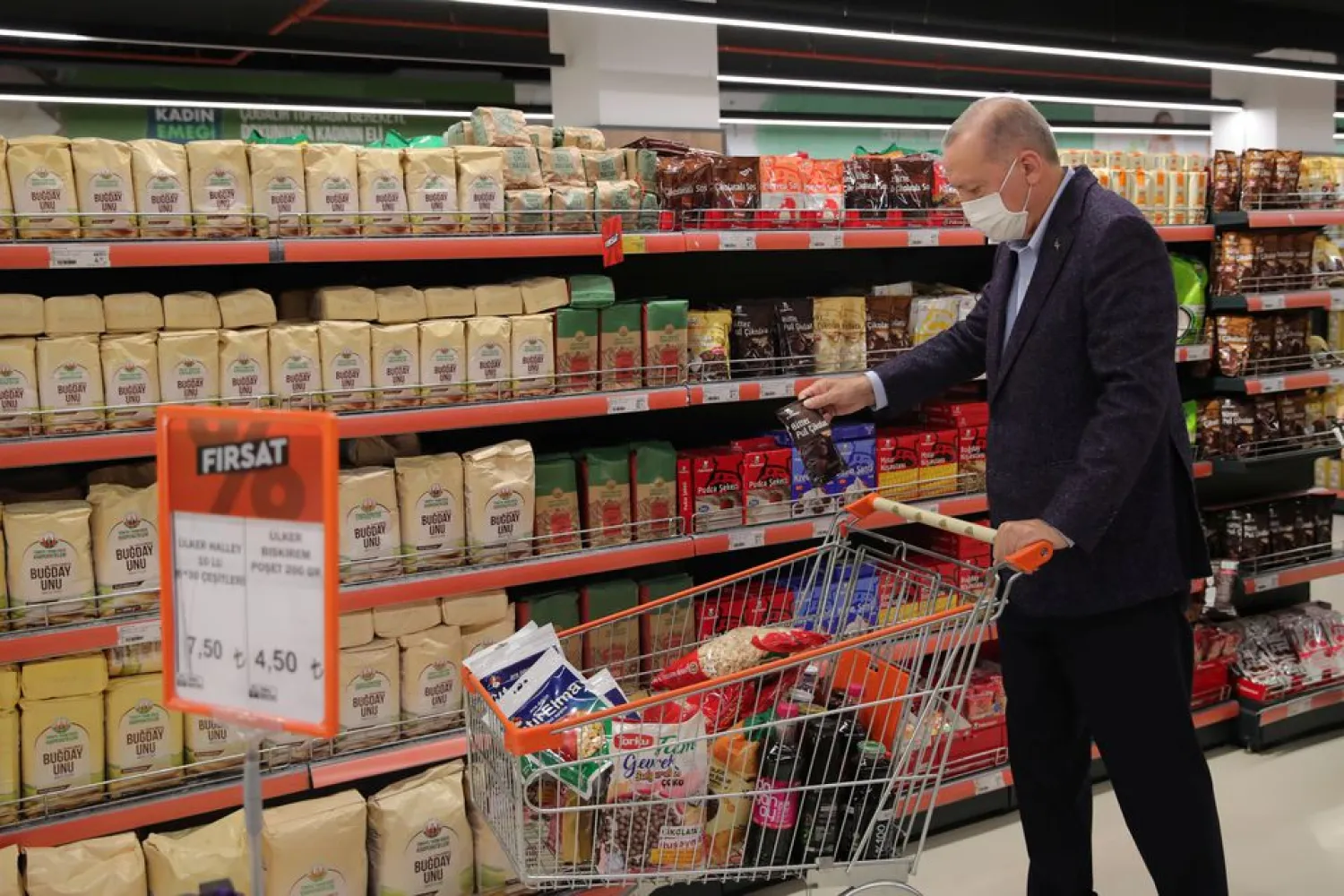
Turkish President Recep Tayyip Erdogan shops at a grocery store of the Agricultural Credit Cooperatives of Turkey, in Istanbul, Turkey October 3, 2021. Presidential Press Office/Handout via Reuters
TT

Turkey’s Erdogan Faces Uphill Battle to Curb ‘Exorbitant Prices’

Turkish President Recep Tayyip Erdogan shops at a grocery store of the Agricultural Credit Cooperatives of Turkey, in Istanbul, Turkey October 3, 2021. Presidential Press Office/Handout via Reuters

President Recep Tayyip Erdogan has wheeled a trolley around one of the new grocery stores he hopes will bring Turkey’s “exorbitant” prices under control, but his unorthodox effort to combat inflation is failing to impress shoppers and retailers.

Accompanied by his wife and daughter, Erdogan went shopping near his Istanbul home earlier this month, telling assembled media that the expanding chain of Agricultural Credit Cooperatives will help curb price rises.

Frustrated by inflation running near 20% and sliding opinion polls ahead of elections set for 2023, Erdogan has instructed the retail chain to open 1,000 stores to provide cheap, quality products and “balance the market”.

His government has also pointed the finger at major retailers and investigated potential exploitative pricing in the battle to curb prices.

But as many Turks struggle with the rising cost of living, shoppers at one such cooperative store in Istanbul were skeptical.

“This is just for show, to give the impression that there’s a solution. But it’s just a lie. I looked at the prices and they’re not different from other supermarkets,” said businessman Ozgur, 45, as he left the store after purchasing a fruit juice.

Another customer leaving the store in central Istanbul’s Sisli district, Gultekin Bora, was also not convinced it was cheaper and criticized the government’s response to economic woes.

“They’ve made a chain of mistakes. The leap in the exchange rate and inflation shows the economy caught a fever due to their economic practices,” said public sector employee Bora, 64.

Annual inflation hit 19.6% in September, its highest in two-and-a-half years, with food inflation near 29%. Efforts to lower it now face a fresh challenge as a lira slide driven by monetary easing fuels import prices.

Erdogan said last week Ankara was monitoring “opportunists” who were exploiting the situation to hike prices for profit.

Retailers ‘saddened’
Food retailers have hit back, denying excessive price rises and insisting they were competitive.

“Retail operators are sacrificing profitability and meeting consumers’ needs at prices close to cost to minimize consumer reaction,” Food Retailers Association chairman Galip Aykac, who is also a board member of major retailer BIM, said at an event on Tuesday.

Such efforts to curb inflation have been tried previously. Turkey opened state markets to sell cheap vegetables in 2019 ahead of local elections, and last month the trade ministry sent inspectors to check supermarkets for excessive pricing.

But analysts say rising prices are primarily the result of the central bank’s depleted credibility. Erdogan has fired the last three bank governors and last week sacked three central bankers.

Adeline Van Houtte, European analyst at The Economist Intelligence Unit, said pressuring supermarkets and inspecting prices “has little chance of success and ... further undermines confidence in the government´s economic policies.”

Cooperative stores general manager Bayram Ali Yildirim said his company could afford to price products 5% cheaper than other retail chains because they were supplied directly by farmers.

“We are trying to regulate the market. Because we don’t lift our prices, other retailers can’t raise theirs,” he told state-owned Anadolu news agency. His chain aims to open 700 stores by year-end and to reach Erdogan’s target of 1,000 stores in the first half of 2022.

Retired 53-year-old Ayten Kar praised the cooperative store as she emerged from it with packets of coffee, describing it as “wallet friendly”. But she had little sympathy for a government which she said needed to support poorer people, or go.

“I’m finding it hard to get by. The bills are very high. The pension that we get is inadequate. Rents have surged. The last five years have been really bad,” she said.

Pakistan Calls for US-Iran 'Negotiated Settlement' after Escalation

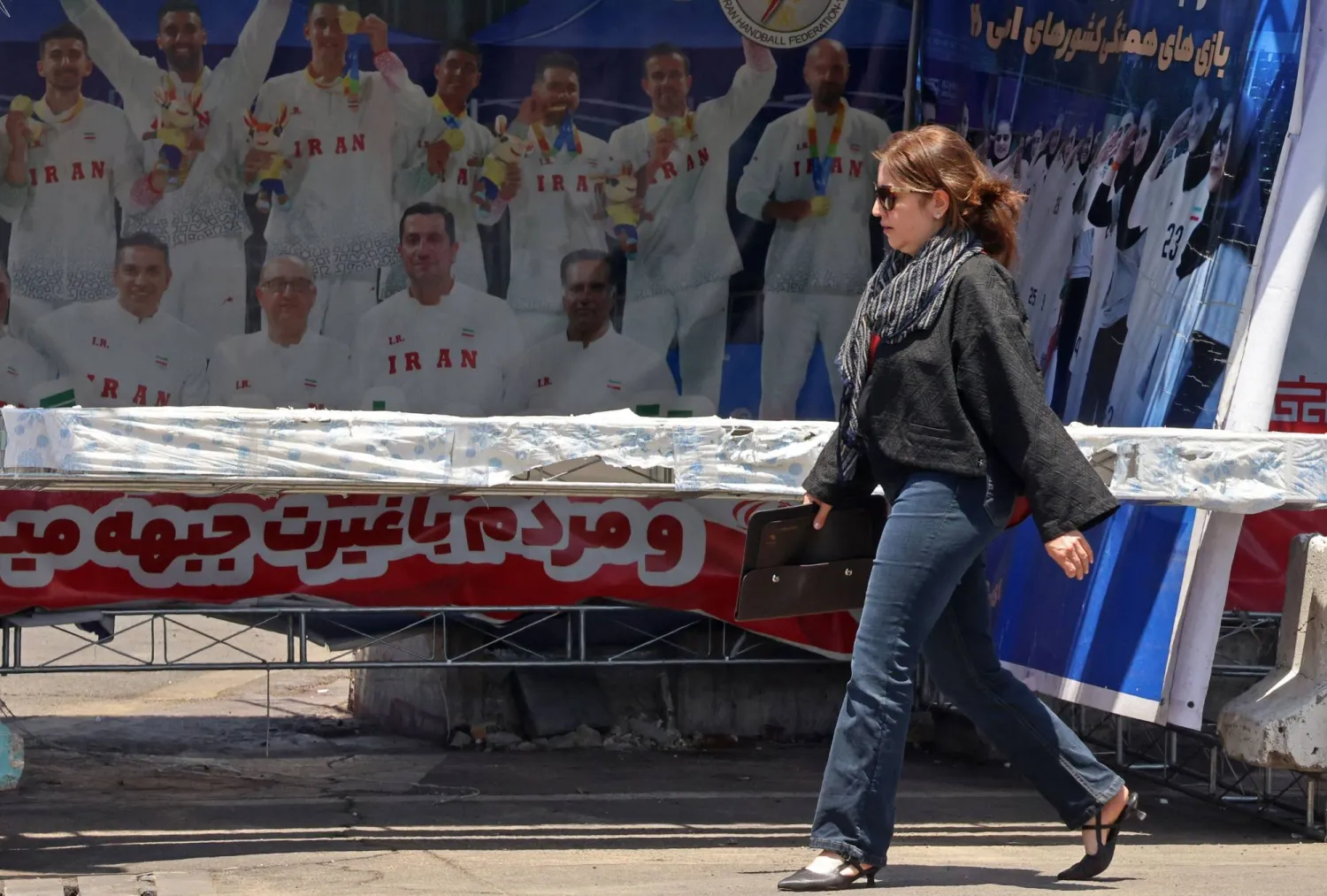
A woman walks past a banner bearing images of the members of Iranian national volleyball team, erected along a street at the Vanak Square in Tehran on June 10, 2026. (Photo by ATTA KENARE / AFP)
TT

Pakistan Calls for US-Iran 'Negotiated Settlement' after Escalation

A woman walks past a banner bearing images of the members of Iranian national volleyball team, erected along a street at the Vanak Square in Tehran on June 10, 2026. (Photo by ATTA KENARE / AFP)

Pakistan's foreign ministry said on Thursday the country's leaders would continue mediation efforts to end war between the United States and Iran despite a surge in conflict, calling for a "negotiated settlement.”

"Pakistan remains deeply concerned at the situation in the region marked by recent escalation... we are of the view that diplomacy and dialogue should be the guiding principles for achieving a negotiated settlement of all contentious issues," foreign ministry spokesman Tahir Andrabi told journalists.

The United States and Iran traded air attacks for a second straight day on Thursday, with President Donald Trump vowing further strikes if Tehran does not immediately agree to a peace deal.

The escalation in hostilities began this week with Monday's downing of a US Apache helicopter near the Strait of Hormuz, which sparked a series of tit-for-tat attacks across Iran and on Gulf countries.


Russia's Conscripts Recount Pressure to Fight in Ukraine

Russia's has hardened its once-avoidable conscription system amid the war. Alexander NEMENOV / AFP
TT

Russia's Conscripts Recount Pressure to Fight in Ukraine

Russia's has hardened its once-avoidable conscription system amid the war. Alexander NEMENOV / AFP

After Russian police started using facial-recognition cameras to identify men wanted by military authorities, a young bank worker spent weeks avoiding the Moscow metro.

But on snowy Friday evening in late 2024, heavy traffic pushed him underground to visit his mother. At the next station, two officers entered the carriage and detained him for draft evasion.

Within three days, he was sent to a military unit near Moscow for year-long mandatory service.

Like other Russian conscripts who described their experiences to AFP, he spoke on condition of anonymity for security reasons.

The cases show how, amid the war with Ukraine, Russia has hardened its once-avoidable conscription system and the pressure draftees -- officially not sent to war -- come under to sign contracts to fight in Ukraine once inside the military machine.

"Before 2022, there were many ways to avoid the draft without doing anything illegal," said Artyom Klyga, a lawyer with the Movement of Conscientious Objectors.

"Now very few legal ways remain."

- 'Record numbers' -

It used to be relatively easy to secure a medical exemption, perform alternative civilian service, or avoid the draft by staying in education.

Since invading Ukraine, Russia has made conscription year-round, raised the upper age limit from 27 to 30, tightened medical exemptions and introduced an online summons system.

Timofey Vaskin of Shkola Prizyvnika, or the School of Conscripts, said the demand to find ways out of service had "risen sharply".

In Moscow, facial-recognition cameras and a unified recruitment system have made men easier to find and faster to process.

Once conscripted, the pressure to sign a fully-fledged army contract often starts within days.

"They are without means of communication, without access to parents, right groups or journalists," Klyga said.

One common tactic is to present a military contract as a normal job, Vaskin said.

Conscripts are told they can work "from nine to six", earn far more and avoid routine duties.

Others are promised roles as drivers or clerks, or that the contract will last "just one year".

In fact, army contracts are effectively open-ended.

"It is a major success of the Russian authorities that they have convinced many people that conscripts simply serve for a year," Klyga said.

"As a result, conscripts are now ending up in the war in record numbers."

- 'People like you' -

Last year, 422,000 Russians signed voluntary contracts to fight in Ukraine, according to ex-president Dmitry Medvedev -- six per cent down on 2024.

At the same time, some 295,000 people were called up for military service.

If conscripts sign a contract to fight, they can end up on the front "within a month," Klyga said.

After being caught on the metro, the former bank worker was held for three days in a detention center without a shower or change of clothes.

No one forced him to sign-up, he said, but the idea was constantly present.

"You're a good fit, we need people like you," he was told.

"You could get a decent role, earn money and not do the usual duties," he recalled his superiors saying.

Some in his unit agreed immediately. For a while, he considered it.

A DJ from Moscow who tried to avoid service told AFP he could not obtain a driving license or international passport without proper military papers.

He gave in and was assigned to an army medical unit for a year -- where he met contract soldiers trying to find a way out.

"None of them want to serve," he said. "They all want out."

He recalled some commanders telling him: "Don't sign anything. Don't ruin your life."

- 'Break a person' -

In one case, Vaskin reported a prohibited phone was planted on a conscript, who was told to choose between detention or signing a combat contract.

Klyga's organization has documented complaints from conscripts being kept awake all night in heavy chemical protection suits, forced to dig holes and then refill them, and others who said their signatures were forged on enlistment documents.

"Under constant pressure they break a person," he said.

One conscript told AFP that a man in his unit swallowed a needle in an attempt to get discharged.

"He was covered in blood when they brought him in," he said.

He survived and was eventually discharged.

Those that end up fighting -- through pressure or coercion -- often do not tell their relatives.

"They simply leave, and the family only finds out later," Klyga said.

In some cases, parents only discover what happened after their son has been killed at the front.


US Issues Fresh Iran-Related Sanctions

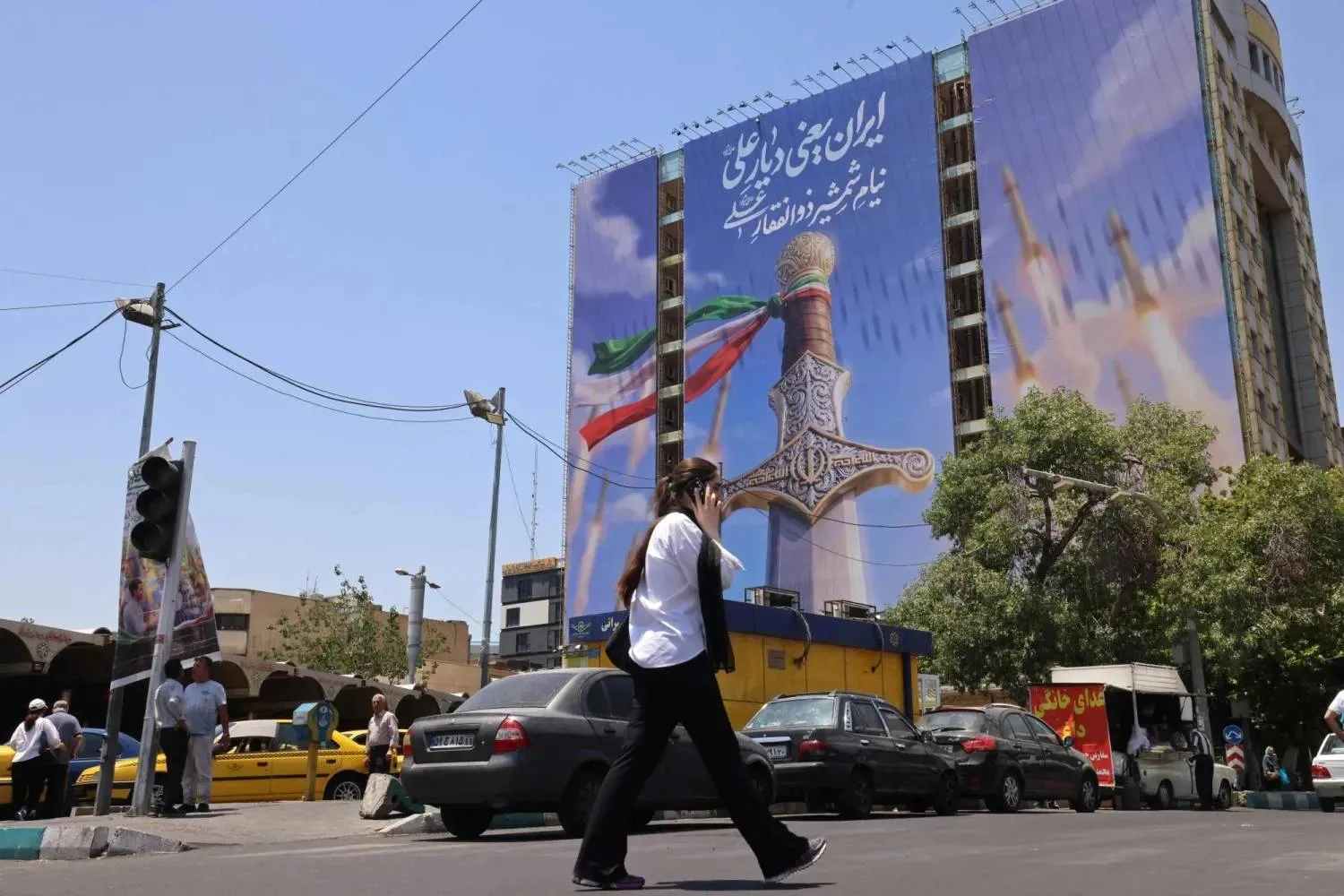
A woman walks past a giant banner depicting Iranian missiles and a sword belonging to Imam Ali, the first Imam of the Shiites, at the Vanak Square in Tehran, Wednesday (AFP) 
TT

US Issues Fresh Iran-Related Sanctions

A woman walks past a giant banner depicting Iranian missiles and a sword belonging to Imam Ali, the first Imam of the Shiites, at the Vanak Square in Tehran, Wednesday (AFP) 

The administration of US President Donald Trump has issued a fresh round of Iran-related sanctions targeting six individuals and four entities, including some tied to China, according to a notice posted on the US Department of Treasury's website on Wednesday.

The ‌US government on Wednesday said it was imposing sanctions against 11 people and entities, including several based in China and Hong Kong, ⁠for supporting weapons procurement by Iran's Revolutionary Guard Corps and the Iranian military, according to Reuters.

Nine of those designated were China- and Hong Kong-based individuals and companies that facilitated the procurement of weapons for Iran's military, and ‌a ⁠Hong Kong-based company operating within Iran’s clandestine banking network, the US Treasury's Office of Foreign Assets Control said in ⁠a statement.

The US State Department also designated two companies and individuals based in Iran ⁠and Belarus in connection with Iran's conventional arms-related activities, Treasury ⁠said.

Trump on Wednesday said Tehran has taken too long to negotiate a deal and would now “have to pay the price” after Iran and ‌the United States exchanged strikes in the region amid reported efforts to continue talks.

“Iran is all talk and no action,” Trump wrote in a social media post. “They’ve taken too long to negotiate a deal that would have been great for them, now they will have to pay the price!!!”

Trump, in a later interview with ⁠Fox News, said he was getting close to ordering new strikes targeting Iran's power plants and bridges if Tehran is unwilling to sign an agreement.

The United States and Iran traded air attacks on Thursday for a second straight day.

The escalation in hostilities began earlier this week with the downing of a US Apache helicopter near the Strait of Hormuz, which sparked a series of tit-for-tat attacks across Iran and on US bases around the ‌region.

The US military said its latest attacks targeted “military surveillance capabilities, communication systems, and air defense sites across Iran” in response to what it called Tehran's “unwarranted and continued aggression.”