


Russia's Conscripts Recount Pressure to Fight in Ukraine

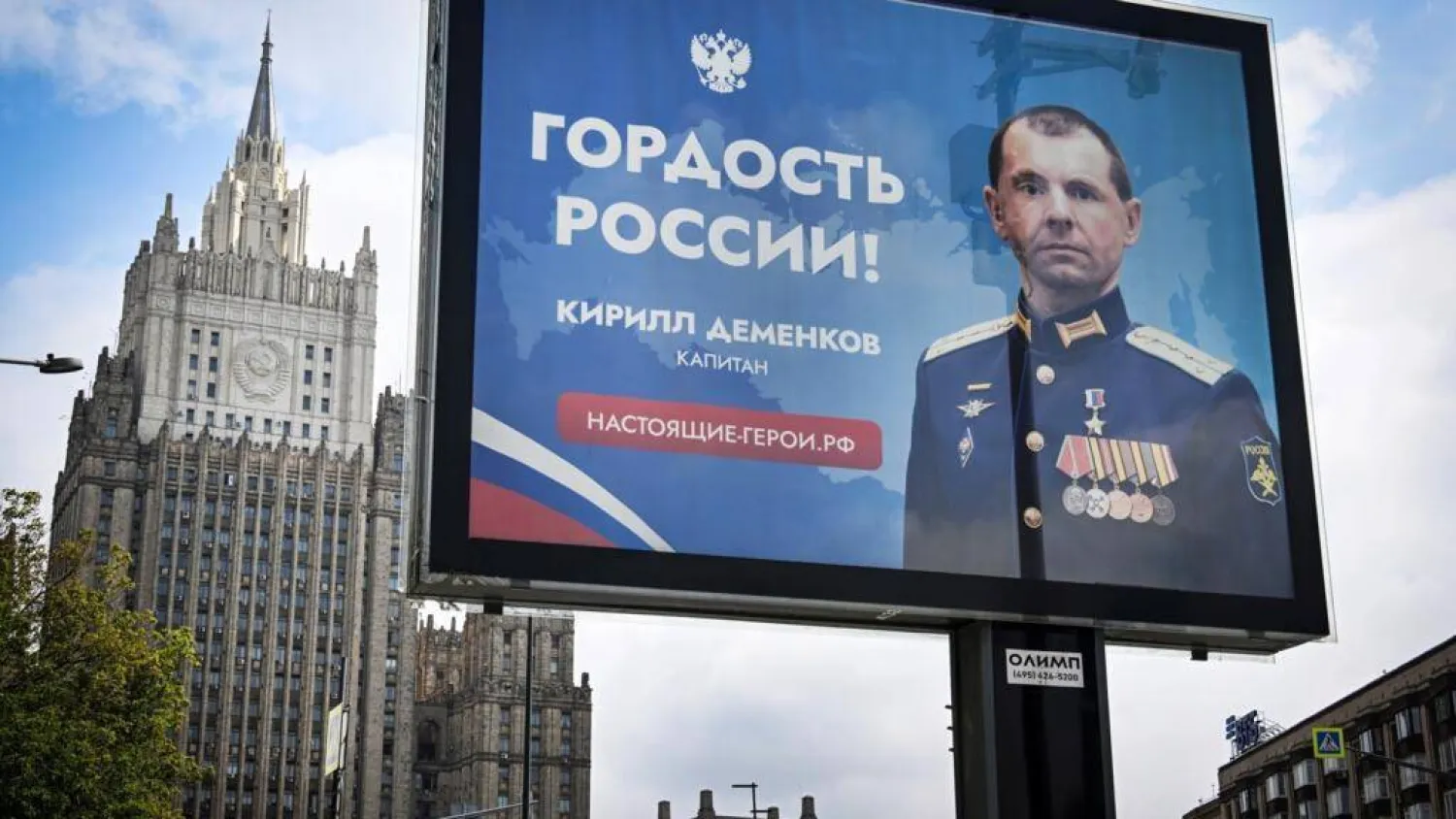
Russia's has hardened its once-avoidable conscription system amid the war. Alexander NEMENOV / AFP
TT

Russia's Conscripts Recount Pressure to Fight in Ukraine

Russia's has hardened its once-avoidable conscription system amid the war. Alexander NEMENOV / AFP

After Russian police started using facial-recognition cameras to identify men wanted by military authorities, a young bank worker spent weeks avoiding the Moscow metro.

But on snowy Friday evening in late 2024, heavy traffic pushed him underground to visit his mother. At the next station, two officers entered the carriage and detained him for draft evasion.

Within three days, he was sent to a military unit near Moscow for year-long mandatory service.

Like other Russian conscripts who described their experiences to AFP, he spoke on condition of anonymity for security reasons.

The cases show how, amid the war with Ukraine, Russia has hardened its once-avoidable conscription system and the pressure draftees -- officially not sent to war -- come under to sign contracts to fight in Ukraine once inside the military machine.

"Before 2022, there were many ways to avoid the draft without doing anything illegal," said Artyom Klyga, a lawyer with the Movement of Conscientious Objectors.

"Now very few legal ways remain."

- 'Record numbers' -

It used to be relatively easy to secure a medical exemption, perform alternative civilian service, or avoid the draft by staying in education.

Since invading Ukraine, Russia has made conscription year-round, raised the upper age limit from 27 to 30, tightened medical exemptions and introduced an online summons system.

Timofey Vaskin of Shkola Prizyvnika, or the School of Conscripts, said the demand to find ways out of service had "risen sharply".

In Moscow, facial-recognition cameras and a unified recruitment system have made men easier to find and faster to process.

Once conscripted, the pressure to sign a fully-fledged army contract often starts within days.

"They are without means of communication, without access to parents, right groups or journalists," Klyga said.

One common tactic is to present a military contract as a normal job, Vaskin said.

Conscripts are told they can work "from nine to six", earn far more and avoid routine duties.

Others are promised roles as drivers or clerks, or that the contract will last "just one year".

In fact, army contracts are effectively open-ended.

"It is a major success of the Russian authorities that they have convinced many people that conscripts simply serve for a year," Klyga said.

"As a result, conscripts are now ending up in the war in record numbers."

- 'People like you' -

Last year, 422,000 Russians signed voluntary contracts to fight in Ukraine, according to ex-president Dmitry Medvedev -- six per cent down on 2024.

At the same time, some 295,000 people were called up for military service.

If conscripts sign a contract to fight, they can end up on the front "within a month," Klyga said.

After being caught on the metro, the former bank worker was held for three days in a detention center without a shower or change of clothes.

No one forced him to sign-up, he said, but the idea was constantly present.

"You're a good fit, we need people like you," he was told.

"You could get a decent role, earn money and not do the usual duties," he recalled his superiors saying.

Some in his unit agreed immediately. For a while, he considered it.

A DJ from Moscow who tried to avoid service told AFP he could not obtain a driving license or international passport without proper military papers.

He gave in and was assigned to an army medical unit for a year -- where he met contract soldiers trying to find a way out.

"None of them want to serve," he said. "They all want out."

He recalled some commanders telling him: "Don't sign anything. Don't ruin your life."

- 'Break a person' -

In one case, Vaskin reported a prohibited phone was planted on a conscript, who was told to choose between detention or signing a combat contract.

Klyga's organization has documented complaints from conscripts being kept awake all night in heavy chemical protection suits, forced to dig holes and then refill them, and others who said their signatures were forged on enlistment documents.

"Under constant pressure they break a person," he said.

One conscript told AFP that a man in his unit swallowed a needle in an attempt to get discharged.

"He was covered in blood when they brought him in," he said.

He survived and was eventually discharged.

Those that end up fighting -- through pressure or coercion -- often do not tell their relatives.

"They simply leave, and the family only finds out later," Klyga said.

In some cases, parents only discover what happened after their son has been killed at the front.



WFP: Expanding Conflict Drives Record Hunger in Northern Nigeria

A soldier patrols outside burned homes, days after an attack in the village of Woro, Nigeria, Thursday, Feb. 5, 2026. (AP Photo/Pelumi Salako)
TT

WFP: Expanding Conflict Drives Record Hunger in Northern Nigeria

A soldier patrols outside burned homes, days after an attack in the village of Woro, Nigeria, Thursday, Feb. 5, 2026. (AP Photo/Pelumi Salako)

Hunger across Nigeria's conflict-hit north is at levels not seen in a decade as violence spreads and aid shrinks, the UN's World Food Program warned Thursday, with more than three million people "acutely food insecure".

The country has been battling an extremist insurgency centered in the northeast since 2009, with a resurgence in violence since 2025.

Extremists have also been expanding into the northwest, which is already facing a separate, overlapping crisis from armed "bandit" gangs.

"What concerns us most is how this crisis is expanding," WFP regional director for west and central Africa, Kinday Samba, said in a statement, noting the spread of violence "across a much wider area and forcing people from farmland, driving displacement and restricting humanitarian access".

Aid cuts under US President Donald Trump and other western countries have hit some of Nigeria's poorest households in recent years.

At the same time, the International Monetary Fund reported last month that poverty has risen under President Bola Tinubu, who has embarked on a raft of economic reforms supported by economists but which have also driven punishing inflation.

As conflict in the country's troubled north has expanded, so has the number of areas too dangerous for WFP to operate in, it said.

"The number of inaccessible locations has doubled: a further 15 areas are now considered partially inaccessible for WFP's frontline staff," it said,

Government control is scanty outside urban centers, leaving swathes of rural areas prone to attacks from armed groups.

More than 17 million people across northern Nigeria "are experiencing crisis, emergency, or catastrophic levels of hunger", WFP said.

"Nigeria's food security crisis is worsening faster than previously anticipated," it said. "Conflict is driving hunger in some northern states, particularly the northeast, to levels not seen in almost a decade".

In Borno state, the epicenter of the militants conflict, more than three million people are "acutely food insecure", including 10,000 people facing "catastrophic hunger".

But WFP's footprint is shrinking amid a donor shortfall, it said.

At the height of 2025 "lean season", when the previous year's foodstocks are running low but the current year's crops aren't ready for harvest, the agency delivered food and nutrition aid to 1.3 million people.

Amid "extreme funding shortfalls", it has projected it will reach slightly over half that number this year.


Iran Warns Oil Tankers to Use Approved Routes in Strait of Hormuz or Face a 'Forceful Response'

Two boys stand in shallow water with foam floats as cargo ships and other vessels are seen in the Strait of Hormuz off Bandar Abbas, Iran, Tuesday, June 30, 2026. (Amirhosein Khorgooi/ISNA via AP)
TT

Iran Warns Oil Tankers to Use Approved Routes in Strait of Hormuz or Face a 'Forceful Response'

Two boys stand in shallow water with foam floats as cargo ships and other vessels are seen in the Strait of Hormuz off Bandar Abbas, Iran, Tuesday, June 30, 2026. (Amirhosein Khorgooi/ISNA via AP)

Iran’s joint military command warned Thursday that all oil tankers moving through the Strait of Hormuz must use its approved routes or face a “forceful response,” again ratcheting up tensions over a waterway crucial for international energy supplies.

The strait, the narrow mouth of the Arabian Gulf, has emerged as one of the top issues in negotiations to reach a permanent end to the Iran war. The statement from the Khatam al-Anbiya military command, reported by Iranian state television, comes after both US and Iranian diplomats met with mediators on Wednesday in Qatar, The Associated Press said.

It wasn’t immediately clear what sparked the threat from Iran. However, the US military's Central Command had put out a statement about having a meeting with officials from Mideast nations in Bahrain that said “leaders underscored their shared commitment to the free flow of commerce through the Strait of Hormuz.”

“Any failure to comply, deviation from the designated route, or disregard for the navigation protocols of the Islamic Republic of Iran in the Strait of Hormuz will be met with an immediate and forceful response from the armed forces, endangering the security of the violating vessels,” the Iranian statement said.

It also said the continued presence of US fighter jets over the strait “causes insecurity in this waterway and threatens regional security.”

“Any attempt by the United States to interfere in security matters or any disruptive action in the Strait of Hormuz will be considered a threat to Iran’s national sovereignty and will be met with a rapid and decisive reaction,” the Iranian warning added.

Iran and the United States agreed as part of an interim deal to allow ships to pass without paying charges for 60 days. But Tehran insisted it must control the routes of the vessels and later charge fees for passage, upending decades of practice in the waterway.

An effort by Oman and a United Nations agency to launch a new route near Oman’s shore sparked attacks across the Mideast last weekend, highlighting the tensions.


Iran Warns US against Interference in Strait of Hormuz

Cargo vessel anchored in the Strait of Hormuz (AP)
TT

Iran Warns US against Interference in Strait of Hormuz

Cargo vessel anchored in the Strait of Hormuz (AP)

Iran said on Thursday that any US interference in the Strait of Hormuz would trigger a "decisive and ‌rapid" ‌response, adding ‌that ⁠the continued presence of US ⁠air assets across the waterway endangered regional security, state media ⁠reported.

Khatam al-Anbiya ‌Central ‌Headquarters, which coordinates Iran's ‌armed forces ‌operations, said all tanker and commercial vessels must follow ‌routes designated by Tehran for ⁠safe ⁠passage through the strait, adding that deviations or failure to comply with navigation protocols would face an immediate response.