


Aramco: Oil Spare Capacity to Decrease with Return of Jet Demand

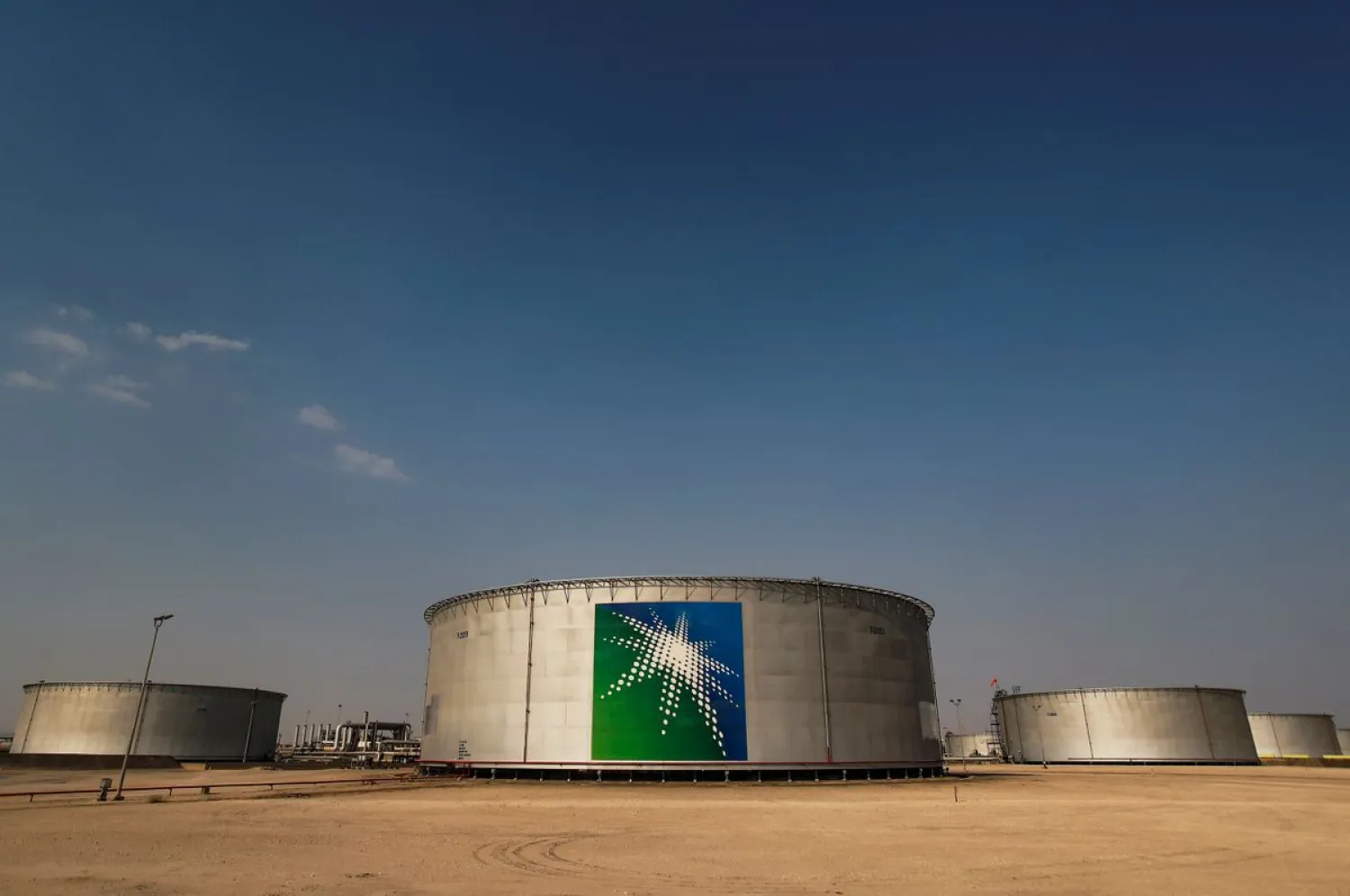
A view shows branded oil tanks at Saudi Aramco oil facility in Abqaiq, Saudi Arabia October 12, 2019. (Reuters)
TT

Aramco: Oil Spare Capacity to Decrease with Return of Jet Demand

A view shows branded oil tanks at Saudi Aramco oil facility in Abqaiq, Saudi Arabia October 12, 2019. (Reuters)

Saudi Aramco CEO Amin Nasser said on Tuesday that the spare oil production capacity worldwide could be reduced next year with the return of air travel, ending an important safety cushion in the market at the present time.

In remarks at the Nikkei Global Management Forum, Nasser estimated that global oil demand would surpass pre-pandemic levels of some 100 million barrels per day next year. He explained that jet fuel demand remains about 3 million-4 million b/d below where it was before the pandemic, and a recovery in air travel would quickly consume the world’s spare production capacity.

Spare production capacity is an important safety factor for the oil market, as it allows producers to respond quickly to unscheduled supply shortages in the market, which can cause price fluctuations.

Nasser reiterated that Saudi Arabia, the world’s largest oil exporter, intends to increase its maximum sustainable production capacity by 1 million barrels per day to 13 million barrels per day by 2027.

“Increasing the (production) capacity in our industry takes about 5-7 years, and there is not enough investment in the world to increase it. This is a major concern,” he noted.

Meanwhile, oil prices rose to nearly USD84 a barrel during trading on Tuesday, achieving gains for the third consecutive session, with the lifting of the US travel restrictions and other signs of economic recovery.

Brent crude was up USD1.35, or 1.6%, USD 84.78 per barrel, after gaining 0.8% on Monday. US oil advanced USD2.22, or 2.7%, to USD 84.15 per barrel also after a 0.8% rise the previous day.

JPMorgan Chase said that global oil demand in November almost returned to its pre-pandemic levels at one hundred million barrels per day. Despite a tight global market, US crude inventories are expected to have risen for a third consecutive week, possibly helping to curb the rise in prices.


Trump to Roll Back Some Tariffs on Steel, Aluminum

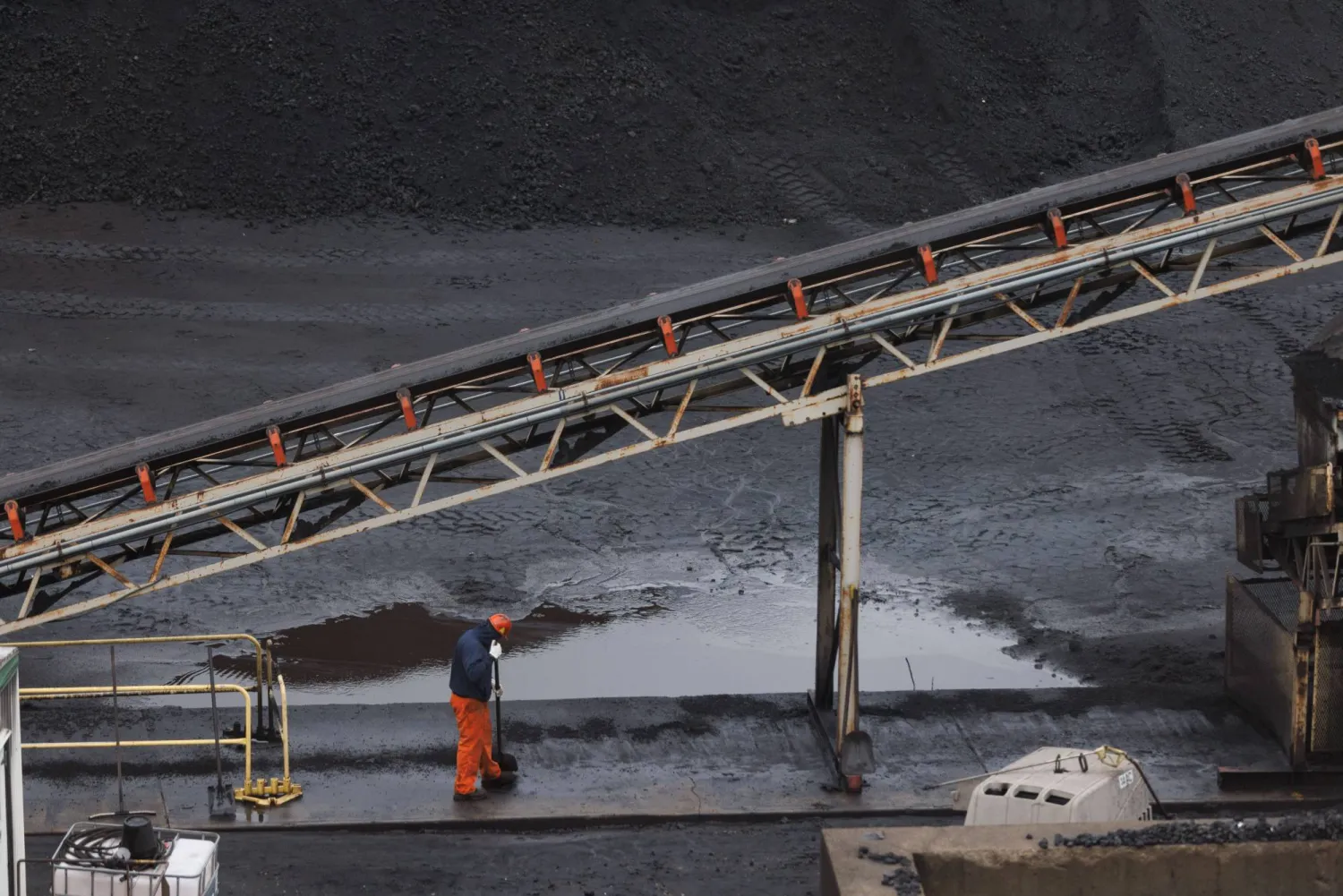
A worker in the coal fields at US Steel's Clairton Coke Works in Clairton, Pa., on Wednesday, Nov. 19, 2025. (Quinn Glabicki/Pittsburgh's Public Source via AP)
TT

Trump to Roll Back Some Tariffs on Steel, Aluminum

A worker in the coal fields at US Steel's Clairton Coke Works in Clairton, Pa., on Wednesday, Nov. 19, 2025. (Quinn Glabicki/Pittsburgh's Public Source via AP)

US President Donald Trump plans to scale back some tariffs on steel and aluminum goods, the Financial Times reported on Friday, citing people familiar with the matter.

Officials in the Commerce Department and US trade representative’s office believe the tariffs are hurting consumers by raising prices for goods including pie tins and food-and-drink cans, the FT report said.

Voters nationwide are worried about prices, and cost-of-living concerns are expected to be a major factor for Americans heading into the November midterm elections.

A recent Reuters/Ipsos poll showed that 30% of Americans approved of Trump’s handling of the rising cost of living, while 59% disapproved, including nine in 10 Democrats and one in five Republicans.

Trump hit steel and aluminum imports with tariffs of up to 50% last year and has repeatedly used levies as a negotiating tool with a range of trading partners.

The Trump administration is now reviewing a list of products affected by the levies and plans to exempt some items, halt the expansion of the lists and instead launch more targeted national security probes into specific goods, the FT report added.

Trump recently touted his economic record in Detroit, aiming to refocus attention on US manufacturing and his efforts to tackle high consumer costs as the White House seeks to show it is addressing the economic anxieties gripping US households.

The US Commerce Department last year hiked steel and aluminum tariffs on more than 400 products including wind turbines, mobile cranes, appliances, bulldozers and other heavy equipment, along with railcars, motorcycles, marine engines, furniture and hundreds of other products.

Prices Sink in Markets

Aluminum prices sank to a one-week low on Friday after the report Trump may trim some import tariffs.

On the London Metal Exchange, the benchmark three-month aluminum contract slipped more than 1.18% to $3,063.50 a ton by 0740 GMT, while the most-active contract on the Shanghai Futures Exchange fell 1.76% to 23,195 yuan ($3,355.27) a ton.

The metal has also recently received support from South32, an Australian company, which announced that it would place the Mozal aluminum plant in Mozambique, under care and maintenance next month.

Traders said the removal of tariffs would help ease the flow of aluminum into global markets, but the decision’s impact on supply and demand is limited.

On Friday, the price of aluminum dropped as trading has slowed in China since the Shanghai Futures Exchange will be closed from February 15 for the nine-day Lunar New Year break and reopen on February 24.

The most-active copper contract on the Shanghai Futures Exchange tumbled 2.24% to 100,380 yuan a metric ton.

In return, the three-month benchmark copper price rose slightly by 0.02% to $12,878 per ton, still hovering below the $13,000 level.


Saudi Industry Minister, European Commission Discuss Enhancing Economic Partnership

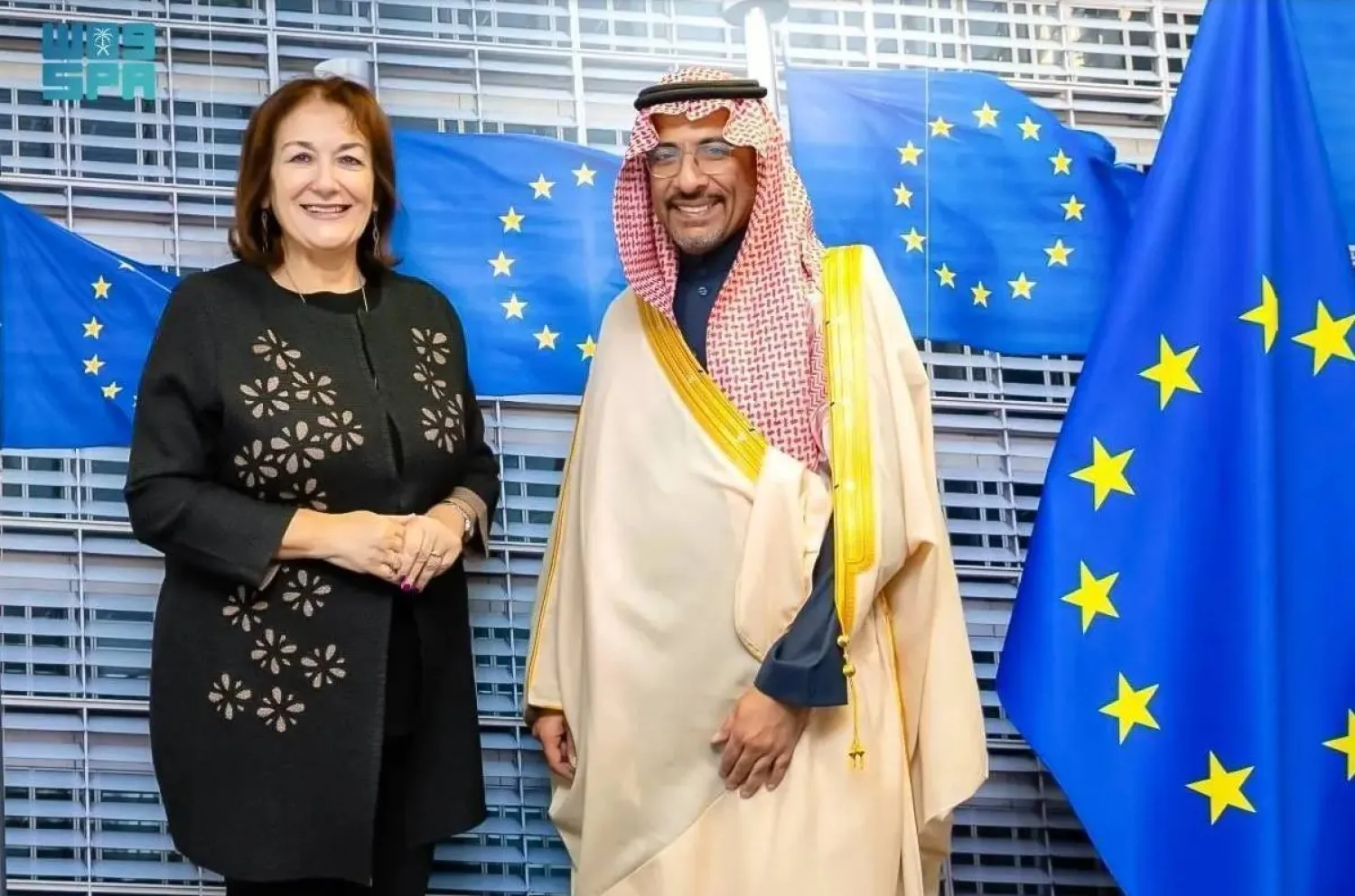
The meetings discussed cooperation between the two sides. SPA
TT

Saudi Industry Minister, European Commission Discuss Enhancing Economic Partnership

The meetings discussed cooperation between the two sides. SPA

Saudi Minister of Industry and Mineral Resources Bandar Alkhorayef has held separate meetings with European Commissioner for the Mediterranean Dubravka Suica and European Commissioner for Trade and Economic Security Maros Sefcovic in Brussels.

The meetings discussed on Friday cooperation between the two sides to strengthen the Kingdom's position as a pivotal partner in advancing economic security and integrating global supply chains, ensuring the smooth flow of international trade and securing supplies of critical minerals worldwide.

During his meeting with the European commissioner for the Mediterranean, the minister explored ways to strengthen bilateral economic cooperation and broaden the horizons of partnership between the Kingdom and the EU, affirming Saudi support for regional and global economic security and its commitment to enhancing coordination on issues of mutual interest, thereby reinforcing economic stability and resilience amid global changes and transformations.

In his meeting with the European commissioner for trade and economic security, Alkhorayef discussed prospects for trade, strengthening global supply chain security, securing supplies of critical minerals, exploring opportunities to integrate industrial value chains between the Kingdom and European Union countries, and expanding joint investments in priority sectors.

Alkhorayef’s visit to Belgium aims to exchange expertise, enhance cooperation with European countries in advanced industries, and attract high-quality investments to the Kingdom in support of the objectives of Saudi Vision 2030.

Earlier, he held a meeting with Belgium’s Deputy Prime Minister and Minister of Employment, Economy and Agriculture David Clarinval and Minister of the Middle Class, Self-Employed, and SMEs Éléonore Simonet to discuss strengthening economic ties and enhancing cooperation in the industrial and mining sectors.

The meeting underscored the distinguished bilateral economic relations between the two kingdoms and reviewed opportunities to expand investment partnerships in the industrial sector.

Discussions also explored avenues for cooperation in exchanging expertise, transferring knowledge, and adopting innovative solutions and advanced technologies in vital industries, as well as enabling SMEs to benefit from the opportunities offered by the National Industrial Strategy and the Strategy for the Mining Sector in the Kingdom, thereby promoting sustainable economic development and advancing shared interests.


US Allows Oil Majors to Resume Venezuela Operations, Broadly Okays New Energy Investments

A flame burning natural gas is seen at an heavy-crude treatment plant operated by Venezuela's state oil company PDVSA, in the oil rich Orinoco belt, near Cabrutica at the state of Anzoategui April 16, 2015. (Reuters)
TT

US Allows Oil Majors to Resume Venezuela Operations, Broadly Okays New Energy Investments

A flame burning natural gas is seen at an heavy-crude treatment plant operated by Venezuela's state oil company PDVSA, in the oil rich Orinoco belt, near Cabrutica at the state of Anzoategui April 16, 2015. (Reuters)

The US eased sanctions on Venezuela's energy sector on Friday, issuing two general licenses that allow global energy companies to resume oil and gas operations in the OPEC member and for other companies to negotiate contracts on investments in new energy operations.

The Treasury Department's Office of Foreign Assets Control issued a general license allowing Chevron, BP, Eni, Shell and Repsol to resume ‌oil and gas ‌operations in Venezuela. Those companies still have offices in the ‌country.

The ⁠authorization for the ⁠oil majors' resumption of operations requires payments for royalties and Venezuelan taxes to go through the US-controlled Foreign Government Deposit Fund.

The other license allows companies around the world to enter contracts with state oil company PDVSA for new investments in Venezuelan oil and gas. The contracts are contingent on separate permits from OFAC.

The authorization does not allow transactions with companies in Russia, Iran, or China or entities owned or controlled ⁠by joint ventures with people in those countries.

The move ‌was the biggest relaxation of sanctions on Venezuela ‌since US forces captured and removed President Nicolas Maduro last month.

The US has had ‌sanctions on Venezuela since 2019 when President Donald Trump imposed them during his ‌first administration.

Trump is now seeking $100 billion in investments by energy companies in Venezuela's oil and gas sector. US Energy Secretary Chris Wright said on Thursday, during his second day of a trip to Venezuela, that oil sales from the country since Maduro's capture have hit $1 ‌billion and would hit another $5 billion in months.

Wright said the US will control the proceeds from the sales until Venezuela ⁠stands up ⁠a "representative government."

Since last month, the Treasury issued several other general licenses to facilitate oil exports, storage, imports and sales from Venezuela. It also authorized the provision of US goods, technology, software or services for the exploration, development or production of oil and gas in Venezuela.

The Venezuelan government seized assets of Exxon Mobil and ConocoPhillips in 2007 under then-President Hugo Chavez. The Trump administration is trying to get those companies to invest in Venezuela as well. At a meeting at the White House with Trump last month, Exxon Mobil CEO Darren Woods said Venezuela was "uninvestable" at the moment.

Wright said on Thursday that Exxon, which no longer has an office in Venezuela, is in talks with the government there and gathering data about the oil sector. Exxon did not immediately comment.