


Aramco: Oil Spare Capacity to Decrease with Return of Jet Demand

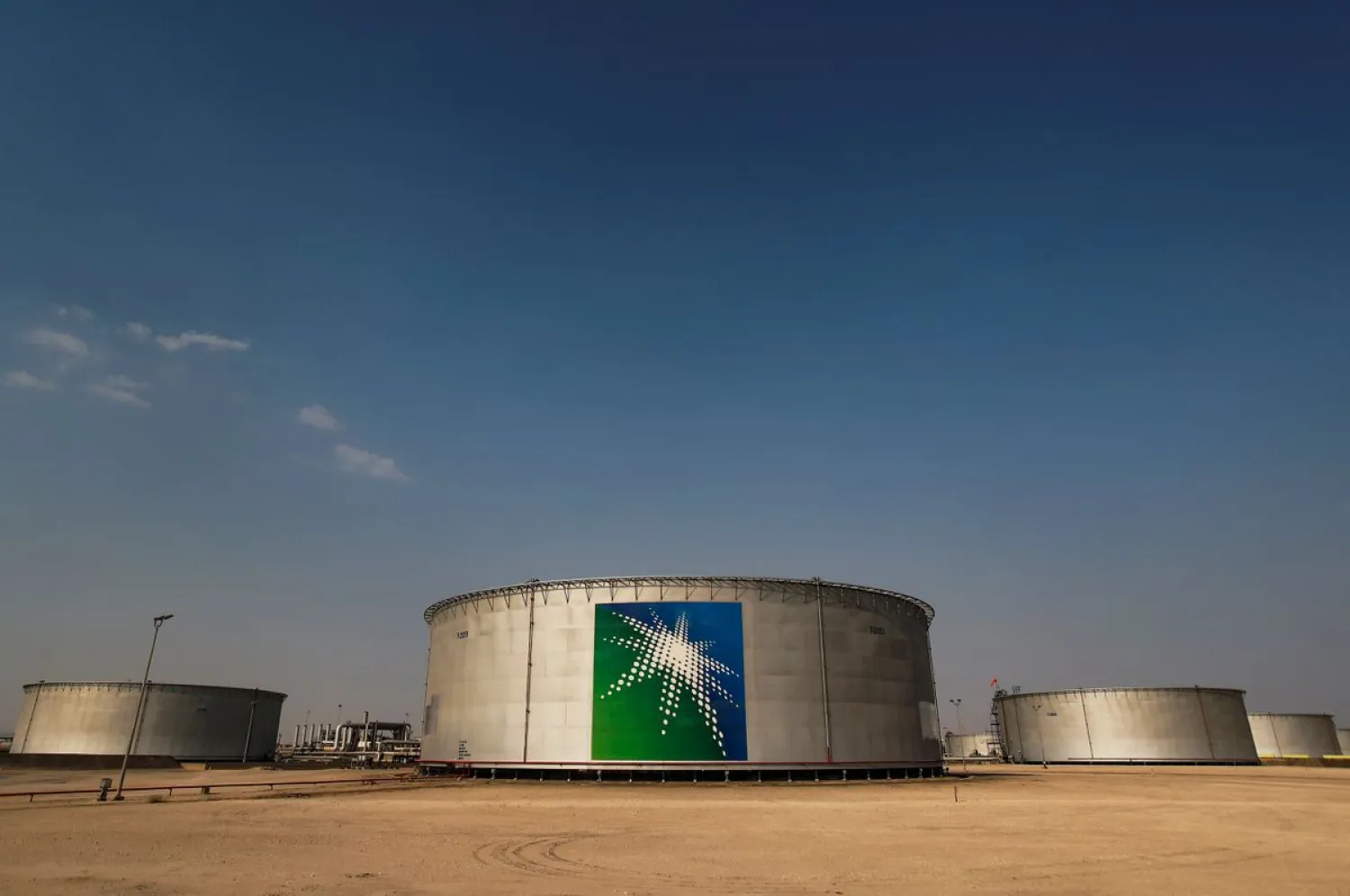
A view shows branded oil tanks at Saudi Aramco oil facility in Abqaiq, Saudi Arabia October 12, 2019. (Reuters)
TT

Aramco: Oil Spare Capacity to Decrease with Return of Jet Demand

A view shows branded oil tanks at Saudi Aramco oil facility in Abqaiq, Saudi Arabia October 12, 2019. (Reuters)

Saudi Aramco CEO Amin Nasser said on Tuesday that the spare oil production capacity worldwide could be reduced next year with the return of air travel, ending an important safety cushion in the market at the present time.

In remarks at the Nikkei Global Management Forum, Nasser estimated that global oil demand would surpass pre-pandemic levels of some 100 million barrels per day next year. He explained that jet fuel demand remains about 3 million-4 million b/d below where it was before the pandemic, and a recovery in air travel would quickly consume the world’s spare production capacity.

Spare production capacity is an important safety factor for the oil market, as it allows producers to respond quickly to unscheduled supply shortages in the market, which can cause price fluctuations.

Nasser reiterated that Saudi Arabia, the world’s largest oil exporter, intends to increase its maximum sustainable production capacity by 1 million barrels per day to 13 million barrels per day by 2027.

“Increasing the (production) capacity in our industry takes about 5-7 years, and there is not enough investment in the world to increase it. This is a major concern,” he noted.

Meanwhile, oil prices rose to nearly USD84 a barrel during trading on Tuesday, achieving gains for the third consecutive session, with the lifting of the US travel restrictions and other signs of economic recovery.

Brent crude was up USD1.35, or 1.6%, USD 84.78 per barrel, after gaining 0.8% on Monday. US oil advanced USD2.22, or 2.7%, to USD 84.15 per barrel also after a 0.8% rise the previous day.

JPMorgan Chase said that global oil demand in November almost returned to its pre-pandemic levels at one hundred million barrels per day. Despite a tight global market, US crude inventories are expected to have risen for a third consecutive week, possibly helping to curb the rise in prices.



US Allows Oil Majors to Resume Venezuela Operations, Broadly Okays New Energy Investments

A flame burning natural gas is seen at an heavy-crude treatment plant operated by Venezuela's state oil company PDVSA, in the oil rich Orinoco belt, near Cabrutica at the state of Anzoategui April 16, 2015. (Reuters)
TT

US Allows Oil Majors to Resume Venezuela Operations, Broadly Okays New Energy Investments

A flame burning natural gas is seen at an heavy-crude treatment plant operated by Venezuela's state oil company PDVSA, in the oil rich Orinoco belt, near Cabrutica at the state of Anzoategui April 16, 2015. (Reuters)

The US eased sanctions on Venezuela's energy sector on Friday, issuing two general licenses that allow global energy companies to resume oil and gas operations in the OPEC member and for other companies to negotiate contracts on investments in new energy operations.

The Treasury Department's Office of Foreign Assets Control issued a general license allowing Chevron, BP, Eni, Shell and Repsol to resume ‌oil and gas ‌operations in Venezuela. Those companies still have offices in the ‌country.

The ⁠authorization for the ⁠oil majors' resumption of operations requires payments for royalties and Venezuelan taxes to go through the US-controlled Foreign Government Deposit Fund.

The other license allows companies around the world to enter contracts with state oil company PDVSA for new investments in Venezuelan oil and gas. The contracts are contingent on separate permits from OFAC.

The authorization does not allow transactions with companies in Russia, Iran, or China or entities owned or controlled ⁠by joint ventures with people in those countries.

The move ‌was the biggest relaxation of sanctions on Venezuela ‌since US forces captured and removed President Nicolas Maduro last month.

The US has had ‌sanctions on Venezuela since 2019 when President Donald Trump imposed them during his ‌first administration.

Trump is now seeking $100 billion in investments by energy companies in Venezuela's oil and gas sector. US Energy Secretary Chris Wright said on Thursday, during his second day of a trip to Venezuela, that oil sales from the country since Maduro's capture have hit $1 ‌billion and would hit another $5 billion in months.

Wright said the US will control the proceeds from the sales until Venezuela ⁠stands up ⁠a "representative government."

Since last month, the Treasury issued several other general licenses to facilitate oil exports, storage, imports and sales from Venezuela. It also authorized the provision of US goods, technology, software or services for the exploration, development or production of oil and gas in Venezuela.

The Venezuelan government seized assets of Exxon Mobil and ConocoPhillips in 2007 under then-President Hugo Chavez. The Trump administration is trying to get those companies to invest in Venezuela as well. At a meeting at the White House with Trump last month, Exxon Mobil CEO Darren Woods said Venezuela was "uninvestable" at the moment.

Wright said on Thursday that Exxon, which no longer has an office in Venezuela, is in talks with the government there and gathering data about the oil sector. Exxon did not immediately comment.


Saudi Energy Minister, China’s NDRC Chairman Co-chair Fifth Belt and Road, Major Projects and Energy Subcommittee Meeting

Discussions covered cooperation across the energy, investment and industry - SPA
TT

Saudi Energy Minister, China’s NDRC Chairman Co-chair Fifth Belt and Road, Major Projects and Energy Subcommittee Meeting

Discussions covered cooperation across the energy, investment and industry - SPA

The fifth meeting of the Belt and Road, Major Projects and Energy Subcommittee of the Saudi–Chinese High-Level Joint Committee convened via videoconference under the co-chairmanship of Minister of Energy Prince Abdulaziz bin Salman bin Abdulaziz and Chairman of the National Development and Reform Commission (NDRC) of the People’s Republic of China Zheng Shanjie.

The meeting reaffirms both sides’ commitment to further advancing the strategic partnership between the two countries. The two sides reviewed progress in bilateral relations and discussed ways to strengthen cooperation in priority sectors, SPA reported.

They also highlighted opportunities under Saudi Vision 2030 and China’s Belt and Road Initiative to expand cooperation and achieve mutual benefits.

Discussions covered cooperation across the energy, investment, industry, minerals, space, water, transport, and major projects sectors.
The two sides agreed to continue coordination on topics of mutual interest, enhance alignment of development strategies and concrete cooperation, and identify priorities for future cooperation.

The subcommittee serves as a key bilateral mechanism for advancing cooperation between Saudi Arabia and China and supporting projects and initiatives of mutual interest aligned with Saudi Vision 2030 and China’s Belt and Road Initiative.


Russian Central Bank Cuts Key Rate to 15.5%, Signals More Cuts to Come

People walk along the Zaryadye Floating Bridge on a cold winter day, with the Kremlin in the background, in Moscow, Russia February 5, 2026. REUTERS/Anastasia Barashkova
TT

Russian Central Bank Cuts Key Rate to 15.5%, Signals More Cuts to Come

People walk along the Zaryadye Floating Bridge on a cold winter day, with the Kremlin in the background, in Moscow, Russia February 5, 2026. REUTERS/Anastasia Barashkova

Russia's central bank cut its key interest rate by 50 basis points to 15.5% on Friday and signaled that rates could fall further in a bid to shore up the slowing wartime economy, which is struggling with high borrowing costs.

Of ‌the 24 ‌analysts surveyed by Reuters ahead of ‌the decision, ⁠just eight out ⁠of 24 had predicted a 50-basis-point cut.

"The Bank of Russia will assess the need for a further key rate cut at its upcoming meetings depending on the sustainability of the inflation slowdown and the dynamics of inflation expectations," the bank said.

"The baseline scenario assumes the average key ⁠rate to be in the range from ‌13.5% to 14.5% per annum ‌in 2026," it said.

Russia's economy, which showed significant resilience ‌to Western sanctions over the course of the first ‌three years of the conflict in Ukraine, slowed down sharply last year after the central bank hiked the key rate to fight inflation.

Russia's government forecasts growth of 1.3% this year, after 1.0% ‌in 2025. The central bank sees growth at 0.5-1.5% this year.

The central bank forecast ⁠annual inflation ⁠would decline to 4.5–5.5% in 2026, but cautioned about the rise in prices in January.

Prices have risen by 2.1% since the start of the year, reaching 6.5% on an annual basis, as a result of an increase in value-added tax (VAT), which the government introduced to ensure that the budget was balanced.

"Higher VAT and excise taxes, the indexation of administered prices and tariffs, and price adjustments for fruit and vegetables led to a temporary but considerable acceleration of the current price growth in January," the bank said.