AU Delegation Discusses Supporting Somalia's Stability

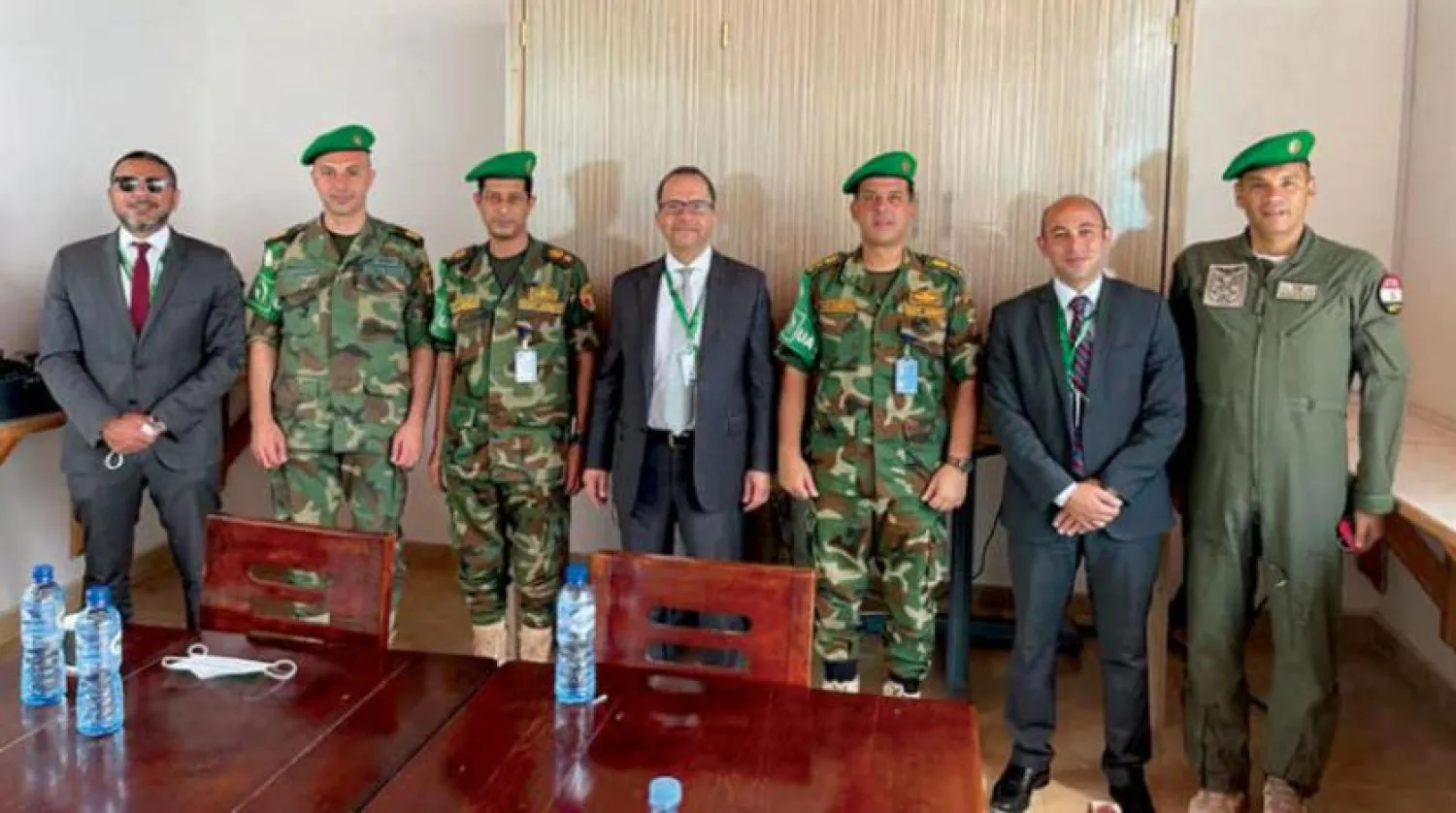
A delegation of the Peace and Security Council during its visit to Mogadishu (Egyptian Foreign Ministry)
TT

AU Delegation Discusses Supporting Somalia's Stability

A delegation of the Peace and Security Council during its visit to Mogadishu (Egyptian Foreign Ministry)

A Delegation of the Peace and Security Council (PSC) of the African Union (AU), chaired by Egypt, has concluded a visit to Mogadishu, Somalia.

Discussions during the visit focused on bolstering the AU's support to ensure stability in Somalia amid the parliamentary elections. Talks also covered the fate of the troops of the African Union Mission to Somalia (AMISOM).

The visit commenced on Nov.8 and was concluded on Nov. 10; it was led by Egypt's Ambassador to Ethiopia and Permanent Representatives to the African Union Mohamed Gad, according to a statement issued by the Egyptian Foreign Ministry.

The delegation met with several officials from the Somali government, including President of Somalia Mohamed Abdullahi Farmaajo and Prime Minister of Somalia Mohamed Hussein Roble.

It also convened with Head of AMISOM Francisco Madeira in addition to holding other meetings with the UN mission, foreign missions, and representatives of the civil community and women.

The statement said the delegation discussed the political and security developments in the country.

Discussions also highlighted means to reach a joint understanding among the federal government, the AU, and the UN towards the arrangements related to AMISOM.

AMISOM is expected to withdraw from the country by the end of this year, according to security reports. The AMISOM troops consist of more than 19,000 soldiers and 1,000 policemen.

This step represents a red flag since it indicates the return of Al-Shabaab militant group, affiliated with al-Qaeda, as revealed by the Institute for Security Studies (ISS).


Israeli Fire Kills Six in Gaza, Including Two Children, Medics Say

A father holds the body of his three‑year‑old child, Yahya Al‑Malahi, who was killed in an Israeli strike, according to medics, during his funeral in Gaza City, April 14, 2026. (Reuters)
TT

Israeli Fire Kills Six in Gaza, Including Two Children, Medics Say

A father holds the body of his three‑year‑old child, Yahya Al‑Malahi, who was killed in an Israeli strike, according to medics, during his funeral in Gaza City, April 14, 2026. (Reuters)

Israeli fire killed at least six Palestinians, including two children, in separate incidents across the Gaza Strip on Tuesday, local health officials said, in the latest violence to undermine a US-brokered ceasefire agreement.

Four people, including a young child, were killed in a strike that targeted a police vehicle in Gaza City, the Hamas-run Interior Ministry said. A police officer was among the dead, ‌while nine bystanders ‌were wounded, some critically, it said.

In ‌the ⁠north of the ⁠enclave, near Jabalia, Israeli fire killed three-year-old Yahya Al-Malahi, health authorities and his family said.

Israel's military did not immediately provide comment on either incident.

In northern Gaza, Israel's military said it killed a man who had approached the armistice line with ⁠Hamas, describing him as an armed militant.

Health ‌authorities confirmed a ‌man had been killed in the area, without providing details.

The ‌ceasefire that began last October halted two ‌years of full-blown war but left Israeli troops in control of a depopulated zone that makes up well over half of Gaza, with Hamas in power in ‌the remaining, narrow coastal strip.

Israel has escalated its attacks on Hamas-led police ⁠and security ⁠forces since October, killing dozens, the group's officials in Gaza have told Reuters, accusing Israel of trying to cause chaos and anarchy.

Israel says it aims to thwart attacks by Hamas and other armed factions.

More than 750 Palestinians have been killed since the ceasefire deal took effect, while fighters have killed four Israeli soldiers. Israel and Hamas have traded blame for ceasefire violations.

Palestinians also say Israeli forces have been expanding the zone they occupy. Israel denies this.


US Hosts Lebanese and Israeli Envoys as Israel Presses War on Hezbollah

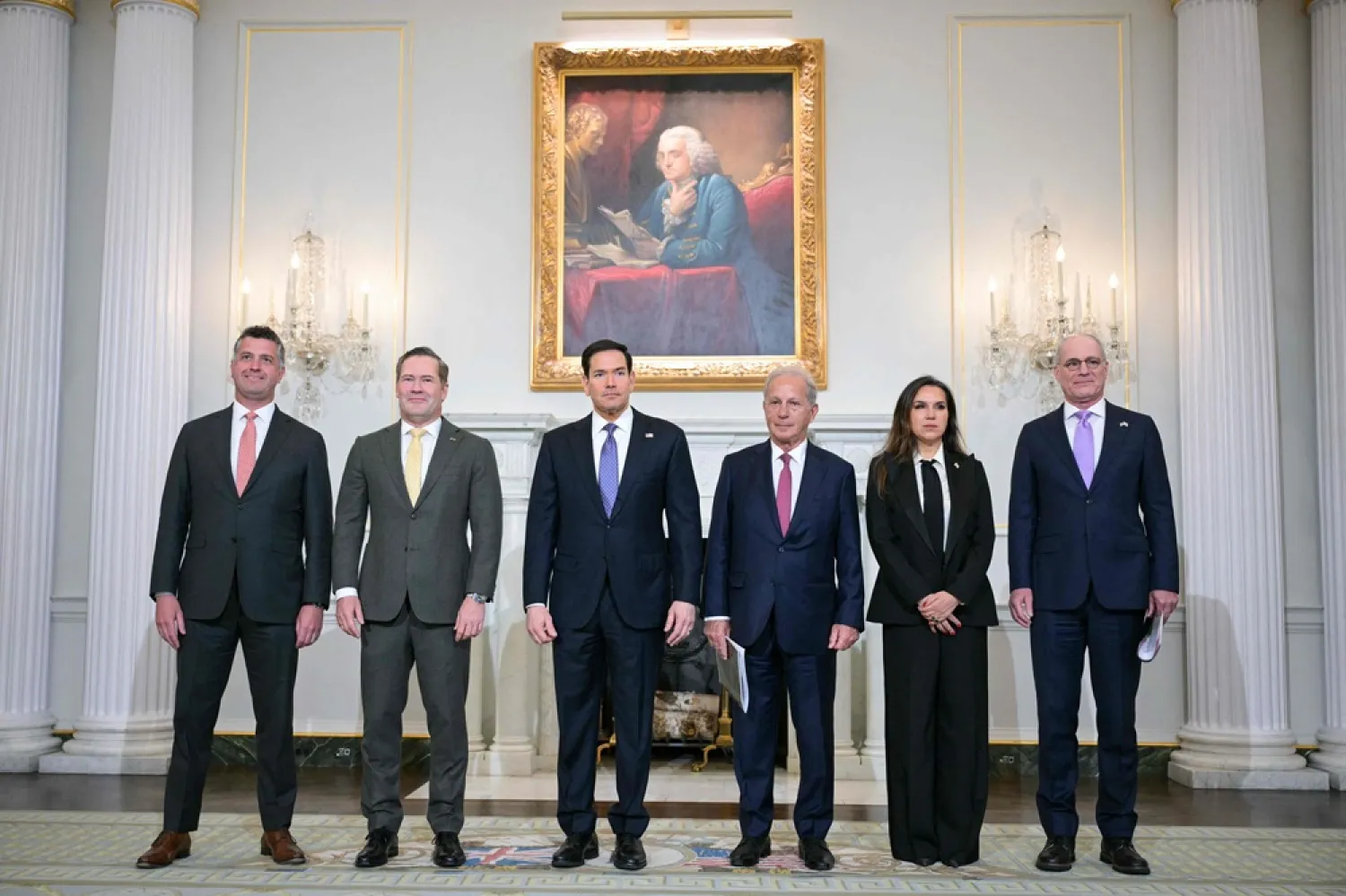
(L/R) US State Department Counselor Michael Needham, US Ambassador to the UN Mike Waltz, US Secretary of State Marco Rubio, US Ambassador to Lebanon Michel Issa, Lebanon's Ambassador to the US Nada Hamadeh Moawad, and Israeli Ambassador to the US Yechiel Leiter stand together before meeting at the State Department in Washington, DC, on April 14, 2026. (AFP)
TT

US Hosts Lebanese and Israeli Envoys as Israel Presses War on Hezbollah

(L/R) US State Department Counselor Michael Needham, US Ambassador to the UN Mike Waltz, US Secretary of State Marco Rubio, US Ambassador to Lebanon Michel Issa, Lebanon's Ambassador to the US Nada Hamadeh Moawad, and Israeli Ambassador to the US Yechiel Leiter stand together before meeting at the State Department in Washington, DC, on April 14, 2026. (AFP)

Lebanese and Israeli envoys met in Washington on Tuesday as Israel pressed its war on Iran-backed Hezbollah, a diplomatic milestone overshadowed by conflicting agendas with Israel ruling out discussion of a ceasefire and demanding Beirut disarm the group. 

The meeting comes at a critical juncture in the crisis in the Middle East, a week into a fragile ceasefire between the United States, Israel and Iran.  

Iran says Israel's campaign against Hezbollah in Lebanon must be included in any agreement to end the wider war, complicating talks mediated by Pakistan aimed at averting further economic fallout.  

The conflict has snared global energy supply and spiked oil prices, piling pressure on US President Donald Trump to find an off-ramp.  

In a sign Washington wants to see progress in the talks, Trump's top diplomat and National Security Advisor Marco Rubio appeared at the start of the meeting alongside the Israeli ambassador to the US, Yechiel Leiter, and his Lebanese counterpart, Nada Hamadeh Moawad. State Department Counselor Michael Needham, US ambassador to the United Nations ‌Mike Waltz, and ‌US ambassador to Lebanon Michel Issa, a personal friend of Trump, were also participating. 

It marks a rare ‌encounter ⁠between representatives of governments ⁠that have remained technically in a state of war since Israel was established in 1948. 

LEBANON SEEKS CEASEFIRE  

Lebanese President Joseph Aoun said in a statement on X as the meeting started that he hoped it would "mark the beginning of ending the suffering of the Lebanese people in general, and the southerners in particular." 

"The only solution lies in the Lebanese army re-deploying up to the internationally recognized border, and so being solely responsible for the security of the area and the safety of its residents, without the partnership of any other party," Aoun added. 

The Lebanese government led by Aoun and Prime Minister Nawaf Salam has called for negotiations with Israel despite objections from Hezbollah, reflecting worsening tensions between the group and its opponents. 

Hezbollah opened fire in support of Tehran on March 2, sparking an Israeli offensive that has killed more than 2,000 people and forced 1.2 million from their homes, according to Lebanese authorities. 

Lebanese officials have said Moawad ⁠only has authority to discuss a ceasefire in Tuesday's meeting. 

But Israeli government spokesperson Shosh Bedrosian said Israel ‌would not discuss a ceasefire.  

Israeli Foreign Minister Gideon Saar told reporters in Jerusalem ahead ‌of the meeting that talks would focus on the disarmament of Hezbollah, which he said must take place before Israel and Lebanon could sign ‌any peace agreement and normalize relations. 

He said Hezbollah was a problem for Israel's security and Lebanon's sovereignty "and this problem needs ‌to be addressed in order to move to a different phase." 

"We want to reach peace and normalization with the state of Lebanon," he said. 

The Lebanese state has been seeking to disarm Hezbollah peacefully since a war between the group and Israel in 2024. Any move by Lebanon to disarm it by force risks igniting conflict in a country shattered by civil war from 1975 to 1990. Moves against Hezbollah by a Western-backed government in 2008 prompted armed ‌clashes. 

The current government banned Hezbollah's military wing after it opened fire on Israel last month. 

'AT WAR WITH HEZBOLLAH, NOT LEBANON' 

Israel and the US have said the campaign ⁠against Hezbollah was not part of ⁠the Iran-US ceasefire, though Pakistan's prime minister had said the truce would include Lebanon, as Iran had demanded. 

While Israel has pressed attacks in Lebanon, it has launched no airstrikes in Beirut since last Wednesday, when it pounded the capital during a 10-minute barrage that killed hundreds of people across Lebanon. 

The following day, US President Donald Trump, in an interview with NBC News, said Israeli Prime Minister Benjamin Netanyahu had told him he would "low-key it" in Lebanon. 

A US State Department official said that Israel was at war with Hezbollah, not Lebanon, and so there was no reason they should not talk, describing the talks as direct, high-level and the first of their kind since 1993. 

The conversation would "scope the ongoing dialogue about how to ensure the long-term security of Israel's northern border and to support the Government of Lebanon's determination to reclaim full sovereignty over its territory and political life". 

Hezbollah leader Naim Qassem on Monday called on the government to cancel the meeting, saying Hezbollah would continue to confront Israeli attacks on Lebanon. 

In Lebanon, the dead include 252 women and 166 children, the health ministry says. Sources familiar with the matter said on March 27 that more than 400 Hezbollah fighters have been killed. Since March 2, 13 Israeli soldiers have been killed in Lebanon, while Hezbollah attacks have killed two Israeli civilians. 

'SEIZE THIS OPPORTUNITY' 

Foreign ministers from 17 countries, including the UK, Tuesday urged Israel and Lebanon to "seize this opportunity" in a statement ahead of the talks in Washington.  

Britain's foreign ministry posted the ministers' joint statement saying "direct negotiations can pave the way to bring lasting security for Lebanon and Israel as well as the region".  

The statement called "upon all parties to urgently deescalate and seize the opportunity offered by the ceasefire between the United States and Iran".  

It was signed by ministers from Britain and Australia and European countries such as France, Belgium, the Netherlands and Spain, but not Germany, Austria, Hungary or Italy.  

The statement said that signatories "condemn in the strongest terms" both attacks by Hezbollah on Israel and "massive Israeli strikes on Lebanon".  

The countries said they welcomed the initiative by President Aoun to open direct talks and were "ready to support" discussions. 


Iraq Hands Over Two Cleared ISIS Suspects to US, Finland

US military vehicles move along a road in a convoy transporting ISIS group detainees being transferred to Iraq from Syria, on the outskirts of Qahtaniyah in Syria's northeastern Hasakeh province on February 7, 2026. (AFP)
TT

Iraq Hands Over Two Cleared ISIS Suspects to US, Finland

US military vehicles move along a road in a convoy transporting ISIS group detainees being transferred to Iraq from Syria, on the outskirts of Qahtaniyah in Syria's northeastern Hasakeh province on February 7, 2026. (AFP)

Iraq's judiciary said Tuesday it had handed over two detained foreigners, from Finland and the United States, to their countries after finding that had not been ISIS group members.

Many prisons in Iraq are packed with ISIS suspects.

In February, the United States completed the transfer of 5,700 ISIS detainees, including hundreds of foreigners, from Syria to Iraq.

The National Center for International Judicial Cooperation (NCIJC) said it has handed "two suspects -- a minor from Finland and another from the United States -- to the competent authorities in their countries after it was confirmed that they don't belong to the ISIS terrorists."

"The handover took place after all legal and judicial procedures were completed," the judiciary said in a statement carried by the Iraqi News Agency (INA).

The judiciary did not specify whether the two detainees referred to were among those who had been transferred from Syria.

Upon the detainees' arrival in Iraq, the judiciary began interrogations before taking legal action against suspects from some 60 countries.

These include 3,543 Syrians, 467 Iraqis and 710 detainees from other Arab nations.

There are also more than 980 foreigners including from Europe, Asia, Australia and the United States.

ISIS swept across Syria and Iraq in 2014, committing massacres. Iraq, backed by US-led forces, proclaimed victory over ISIS in the country in 2017, and the Kurdish-led Syrian Democratic Forces ultimately defeated the group in Syria two years later.

Iraqi courts have handed down hundreds of death sentences and life terms to those convicted of terrorism offences, including foreign fighters.