


Endangered Gazelles Spring Back in Jerusalem Park

A mountain gazelle surrounded by common myna birds at the Gazelle Valley, an urban nature reserve in the heart of Jerusalem. (AFP)
TT

Endangered Gazelles Spring Back in Jerusalem Park

A mountain gazelle surrounded by common myna birds at the Gazelle Valley, an urban nature reserve in the heart of Jerusalem. (AFP)

A few years ago, only three mountain gazelles were left in Jerusalem's shrinking green spaces, the rest having fallen victim to predators, road kills and urban development.

Today the endangered species has bounced back and a herd of about 80 of the graceful animals roam a small nature reserve within Israel's biggest city, the Gazelle Valley Park.

Created six years ago by Jerusalem City Council and the Society for the Protection of Nature (SPN), the green oasis sits inside one of the city's most dense urban development areas.

Today the park, which can be visited free of charge, is the only one in Israel where gazelles live protected -- a sanctuary badly needed by a species under intense pressure.

The International Union for Conservation of Nature placed the mountain gazelle on its Red List in 2017, saying its population was declining due to poaching, road kills and habitat degradation.

"We place the gazelles in as natural an environment as possible, so that we don't make them dependent on humans and so that we can release some of them into the wild in the future," said park director Yael Hammerman-Solar.

Endemic to the Levant, the population of mountain gazelles in Israel is now estimated at about 5,000, but falling due to urbanization and other pressures, said a recent study by Yoram Yom-Tov of Tel Aviv University and Uri Roll of Ben Gurion University in Beersheva.

In Jerusalem several years ago, the construction of a ring road suddenly "blocked the corridor that allowed the gazelles to reach other open spaces outside Jerusalem," said Hammerman-Solar.

"The animals, stuck in the valley, were decimated by stray dogs and jackals or were run over by cars on the ring road."

The SPN then fenced off the about 25 hectare (60 acres) green space and reintroduced a dozen animals, a breeding herd that has since grown to more than 80 individuals.

The park is bordered to the east by a future tramway line, and to the west by a clifftop real estate complex called Holyland.

The Gazelle Valley Park, with a series of ponds, brings other benefits too to the Holy City, said Amir Balaban, head of urban flora and fauna at SPN.

Home to diverse native plants and rich birdlife, it acts like a green lung and recreational space "by regulating temperature, producing oxygen ... and offering residents a place to connect with nature".



Italy’s Catania Airport Shuts Again as Etna Ash Halts Flights

Volcanic material and fumes rise from Mount Etna during an eruption under a starry sky in Sicily, Italy, July 30, 2026. (Reuters)
TT

Italy’s Catania Airport Shuts Again as Etna Ash Halts Flights

Volcanic material and fumes rise from Mount Etna during an eruption under a starry sky in Sicily, Italy, July 30, 2026. (Reuters)

Flights at Italy's Catania airport were suspended again on Monday due to volcanic ash from Mount Etna's ongoing activity, ‌the company ‌operating the Sicilian ‌hub ⁠said.

All arrivals at ⁠the airport, Italy's fifth-busiest by passenger traffic, will be suspended until ⁠4 p.m. ‌local ‌time (1400 GMT), airport ‌operator SAC ‌said in a Facebook post.

Mount Etna, Europe's highest ‌and most active volcano, frequently disrupts flights ⁠at ⁠Catania, but ash emissions have been particularly intense this summer, affecting thousands of travelers during the peak holiday season.


South Korea Aims to Save Seniors Lost in Digital Age

Elderly people using tablets during a government-organized digital survival training course at a senior community center in Suwon. Jung Yeon-je / AFP
TT

South Korea Aims to Save Seniors Lost in Digital Age

Elderly people using tablets during a government-organized digital survival training course at a senior community center in Suwon. Jung Yeon-je / AFP

A little cheer rose for 79-year-old Hwang Sun-hee after she managed to place an online order at a training session in South Korea, which has one of the world's starkest digital divides for seniors.

Age gaps in digital literacy are a global concern, yet the gulf has widened massively in the hyper-connected and fast-ageing country, prompting national campaigns to bridge it, said AFP.

"You can't do anything without smartphone apps or a kiosk machine... It's too much for old folks," Hwang said at a senior community center in Suwon, south of Seoul, during government-organized digital survival training.

The so-called grey digital divide has provided some striking examples in the nation of about 52 million, home to world-leading smartphone and memory chipmakers.

Last year, several baseball clubs began reserving a small number of tickets for on-site sales after reports that older fans, cash in hand, approached younger people at stadiums and pleaded with them to buy tickets from machines.

Nearly 90 percent of taxi drivers use ride-hailing apps, yet more than 80 percent of South Koreans over 60 still hail cabs by hand, a survey showed.

A 71-year-old retired public servant at the same training session as Hwang recalled spending over 30 minutes trying to flag down a taxi on a busy Seoul street.

The cabs kept passing him to pick up younger riders just meters away who were using smartphone apps to hail their rides.

"I felt utterly useless," the man, who gave only his surname, Park, told AFP.

- South Korea's wide divide -

The digital divide can also pose a real threat, leaving older people vulnerable to high-tech crimes such as online scams or limiting their access to medical services, experts say.

A state survey last year found that 60 percent of South Koreans over 60 struggle to use public and commercial services due to lack of digital skills -- compared with just six percent of those under 40.

"The intergenerational digital divide (in South Korea) appears wider than elsewhere," said Kim Jeung-kun, professor of senior business at Kangnam University in Seoul.

He noted that the nation's "intensely compressed" industrialization happened in just a few decades, while it took centuries in many Western countries.

South Korea -- which had a GDP per capita below $100 in the wake of its 1950-1953 war -- is now the world's 15th largest economy, according to the IMF.

"Many of our elderly grew up at a time when many had no electricity, landline phones or proper schooling," Kim added.

The nation's older cohort is massive -- South Korea is what the UN calls a "super-aged society", where more than 20 percent of the population is over 65.

In response, South Korea's public tech training for the elderly began in 2020, when businesses and services turned online during the Covid-19 lockdown.

- A wish to be 'born young' -

Hwang, echoing others in the two-hour class, said she's made it this far by relying on her children for daily tasks she once managed herself -- including enrolling in her favorite dance class at the local community center.

"Before, I could easily do all of these just by calling or showing up in person," Hwang said.

Officials now provide nationwide training for the "digitally vulnerable" for using mobile devices, apps, and AI. Vans packed with tech devices and mock kiosks drive to community centers and regional festivals popular among the elderly.

In 2025, over 65,000 sessions were held for some 650,000 people over 60.

Hwang gathered along with 30 neighbors for a session in August, practicing how to pay hospital bills at mock kiosks, patting a prancing robot dog, or asking their phones: "Gemini, tell me about tomorrow's weather."

She has undergone similar training several times -- and said the lessons helped her confidence -- but noted she was "so envious of young people who can do all this so easily".

"I wish I had been born young in today's world," Hwang added.


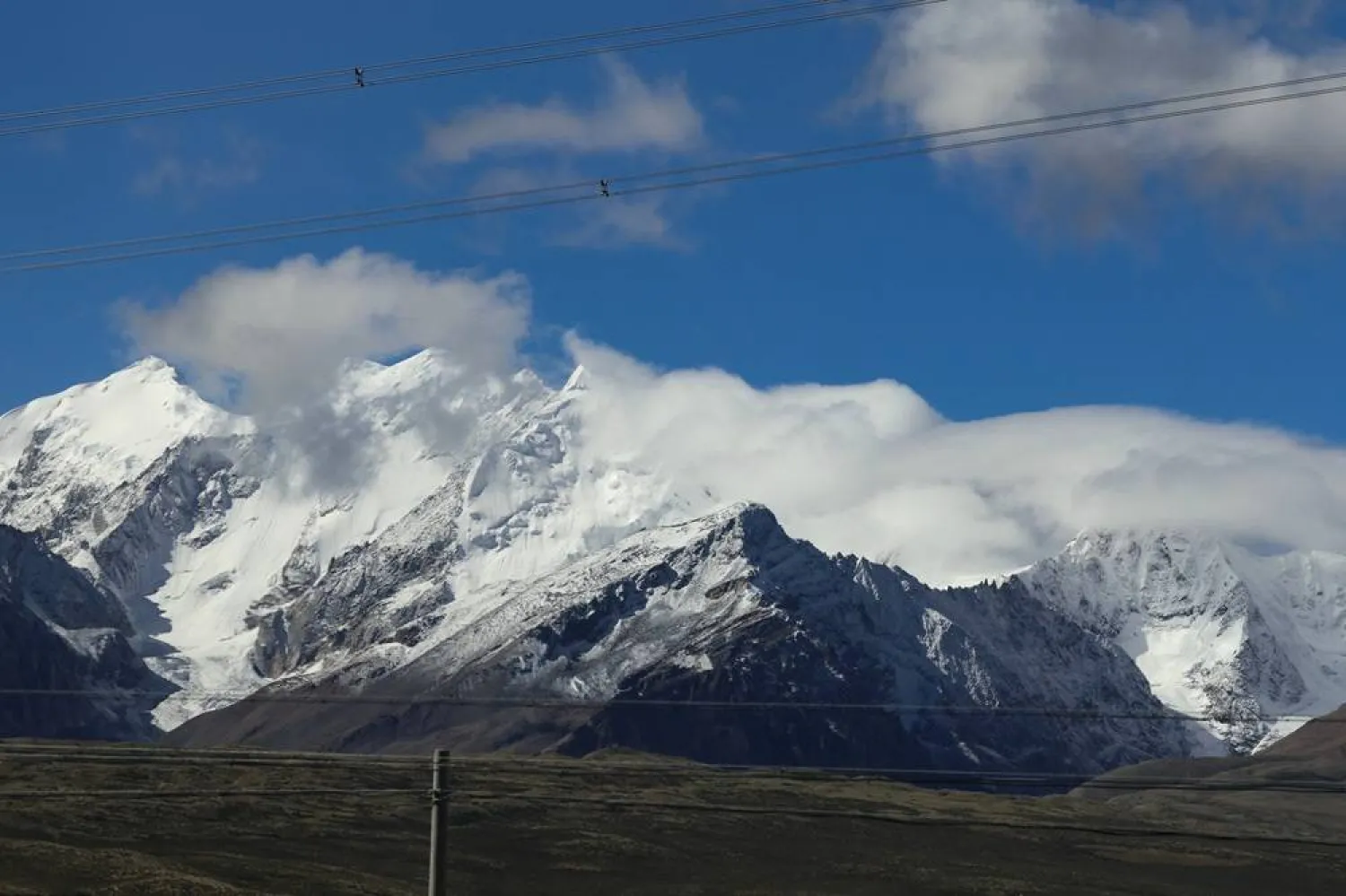
Himalayas Approaching Tipping Point, Millions of Livelihoods at Stake, Says Report

Snow-covered peaks of the Himalayas are seen during a media tour, from Shigatse, Tibet autonomous region, China, Sunday, Sept. 6, 2026. (Tingshu Wang/Pool Photo via AP)
TT

Himalayas Approaching Tipping Point, Millions of Livelihoods at Stake, Says Report

Snow-covered peaks of the Himalayas are seen during a media tour, from Shigatse, Tibet autonomous region, China, Sunday, Sept. 6, 2026. (Tingshu Wang/Pool Photo via AP)

The Himalayas ‌are approaching a tipping point as glaciers melt faster than a decade ago, threatening water security as the region approaches "peak water" by mid-century, according to a study released this month.

The findings come after the collapse of a Himalayan glacier in late August along the Nepal-Tibet border, which caused cascading landslides and flash floods in the valleys below. At least 1,300 people have been confirmed dead and more ‌than 5,300 are ‌missing across Nepal and China's ‌Tibet ⁠region.

As glaciers retreat, ⁠they are leaving behind unstable glacial lakes held back by little more than loose rock and ice, above valleys where millions of people live, the study found.

The study was produced by Systemiq, a sustainability advisory firm, together with the Integrated Mountain ⁠Initiative, the International Centre for Integrated Mountain ‌Development, and India's G.B. Pant ‌National Institute of Himalayan Environment.

Himalayan glacier mass loss had ‌accelerated in recent decades, while only 21 glaciers were ‌currently monitored on the ground out of an estimated 40,000 glaciers across the Hindu Kush-Himalaya region, a vast mountain system spanning eight countries from Afghanistan to Myanmar, the ‌study found.

Close to 200 glacial lakes in India had been identified as high ⁠risk, ⁠with 56 classified as "very high risk", leaving millions exposed downstream.

As the region neared "peak water", the point when river flows stop rising and start declining, it would have profound implications for water security. As the Himalayas underpinned more than 20% of India's GDP, the region made up a key piece of the country's national economic infrastructure, upon which hundreds of millions of people depended.

Though making up around 18% of India's land, the Himalayan region accounted for roughly 35% of the country's natural disasters.