


WHO Says No Omicron Deaths Yet, as Variant Spreads Worldwide

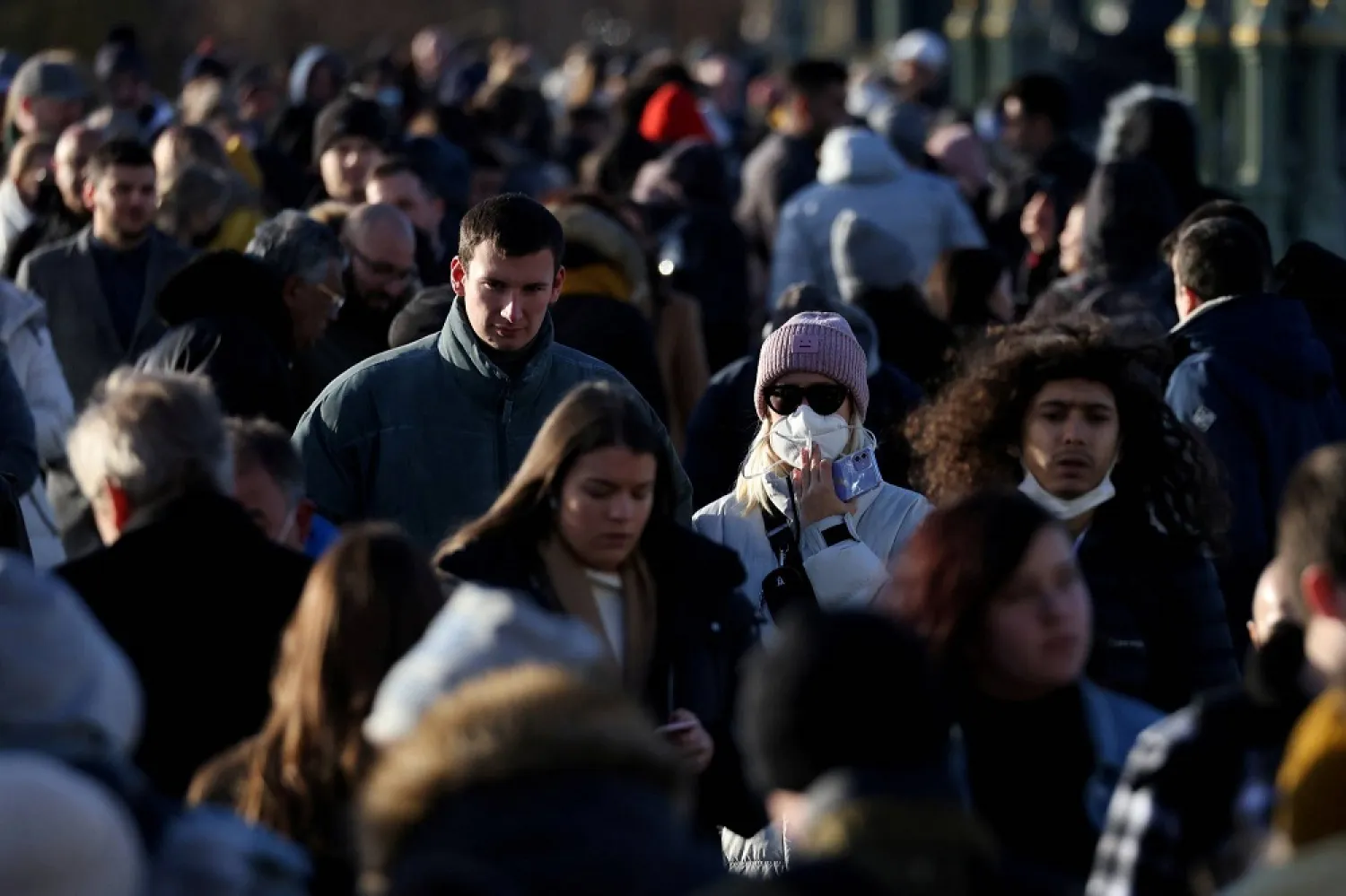
People walk across Westminster Bridge in London on Sunday after new measures were announced due to the Omicron coronavirus variant. (Reuters)
TT

WHO Says No Omicron Deaths Yet, as Variant Spreads Worldwide

People walk across Westminster Bridge in London on Sunday after new measures were announced due to the Omicron coronavirus variant. (Reuters)

The Omicron variant has been detected in 38 countries but no deaths have yet been reported, the WHO said on Friday, as authorities worldwide rushed to stem the spread of the heavily mutated Covid-19 strain.

The United States and Australia became the latest countries to confirm their first locally transmitted cases of the variant, as the number of Omicron infections from a Christmas party in Norway rose to 13.

The World Health Organization has warned it could take weeks to determine how infectious the variant is, whether it causes more severe illness and how effective current treatments and vaccines are against it.

"We're going to get the answers that everybody out there needs," WHO emergencies director Michael Ryan said.

The WHO said on Friday it had still not seen any reports of deaths related to Omicron, but the new variant's spread has cast recovery into doubt and led to warnings that it could cause more than half of Europe's Covid cases in the next few months.

A preliminary study by researchers in South Africa, where the new variant was first reported on November 24, suggests the strain is three times more likely to cause reinfections compared to the Delta or Beta strains.

Doctors said there had been a spike in the number of children under five admitted to hospital since Omicron emerged, but stressed it was too early to know if young children were particularly susceptible.

"The incidence in those under-fives is now second-highest, and second only to the incidence in those over 60," said Wassila Jassat from the National Institute for Communicable Diseases.

In the United States, two cases involved residents with no recent international travel history -- showing that Omicron is already circulating inside the country.

"This is a case of community spread," the Hawaii Health Department confirmed.

US President Joe Biden on Thursday unveiled his plans to battle Covid-19 during the winter, with new testing requirements for travelers and a surge in vaccination efforts.

'Too scared'
All incoming travelers will need to test negative within a day of their flights, and rapid tests that currently cost $25 will be covered by insurance and distributed free to the uninsured.

Australia on Friday reported three students had tested positive for the variant.

The cases, detected in the country's largest city of Sydney, come despite a sweeping ban on non-citizens entering the country and restrictions on flights from southern Africa, with multiple countries rushing to limit travel from the region in the last week.

"It's quite a kick in the nuts," said Sabine Stam, who runs a South African tour company and whose customers are demanding refunds for the peak December season. "Everyone is too scared to set a new travel date," she told AFP.

In Norway, officials said at least 13 people who contracted Covid-19 after an office Christmas party in the capital Oslo last week were confirmed as having the Omicron variant.

All of those who have tested positive have so far only had mild symptoms, such as headaches, sore throats and coughs, city health official Tine Ravlo told AFP.

But the Norwegian government ushered in a slew of restrictions in greater Oslo after fears of the cluster first surfaced.

On Friday, Malaysia also reported a first Omicron infection in a foreign student arriving from South Africa on November 19. Sri Lanka also announced its first case, a citizen returning from South Africa.

The variant's detection and spread represent a major challenge to efforts to end the pandemic.

Rising infections of the Delta variant had already forced European governments to reintroduce mandatory mask-wearing, social distancing measures, curfews or lockdowns, leaving businesses fearing another grim Christmas.

Belgian authorities said on Friday that primary schools would close a week early for the Christmas holidays.

Germany had already announced its regional leaders had agreed new measures including a ban on fireworks at new year parties to discourage large gatherings.

In the UK, various government ministers have been expressing diverging opinions, not only on the idea of hosting Christmas parties, but also on the kind of conduct deemed acceptable.

"For what it's worth, I don't think there should be much snogging under the mistletoe," said one minister, Therese Coffey.



Russia's Lavrov Warns against Any New US Strike on Iran

FILE PHOTO: Russia's Foreign Minister Sergei Lavrov speaks during an annual press conference in Moscow, Russia, January 14, 2025. REUTERS/Evgenia Novozhenina/File Photo
TT

Russia's Lavrov Warns against Any New US Strike on Iran

FILE PHOTO: Russia's Foreign Minister Sergei Lavrov speaks during an annual press conference in Moscow, Russia, January 14, 2025. REUTERS/Evgenia Novozhenina/File Photo

Russian Foreign Minister Sergei Lavrov, in ‌an interview made public on Wednesday, said that any new US strike on Iran would have serious consequences and called for restraint to find a solution to enable Iran to pursue a peaceful nuclear program.

Lavrov's interview with Saudi Arabia's Al-Arabiya television was aired a day after US and Iranian negotiators held indirect talks in Geneva to head off a new mounting crisis between Washington and Tehran, Reuters said.

"The consequences are not good. There have already been strikes on Iran on ‌nuclear sites ‌under the control of the International Atomic ‌Energy ⁠Agency. From what ⁠we can judge there were real risks of a nuclear incident," Lavrov said in the interview, which was posted on his ministry's website.

"I am carefully watching reactions in the region from Arab countries, Gulf monarchies. No one wants an increase in tension. Everyone understands this is playing with fire."

Boosting ⁠tensions, he said, could undo the ‌positive steps of recent years, including ‌improved relations between Iran and nearby countries, notably Saudi Arabia.

A senior ‌US official told Reuters on Wednesday that Iran was ‌expected to submit a written proposal on how to resolve its standoff with the United States after the talks in Geneva.

US national security advisers met in the White House on Wednesday and ‌were told all US military forces deployed to the region should be in place ⁠by mid-March, ⁠the official said.

The United States wants Iran to give up its nuclear program, and Iran has adamantly refused and denied it is trying to develop an atomic weapon.

Lavrov said Arab countries were sending signals to Washington "clearly calling for restraint and a search for an agreement that will not infringe on Iran's lawful rights and ... guarantee that Iran has a purely peaceful nuclear enrichment program".

Russia, he said, remained in close, regular contact with Iran's leaders "and we have no reason to doubt that Iran sincerely wants to resolve this problem on the basis of observing the Nuclear Non-Proliferation Treaty".


AI Cannot Be Left to 'Whims of a Few Billionaires', UN Chief Says

India's Prime Minister Narendra Modi speaks with United Nations Secretary-General Antonio Guterres during a welcoming ceremony at AI Impact Summit, in New Delhi, India, February 18, 2026. India's Press Information Bureau/Handout via REUTERS
TT

AI Cannot Be Left to 'Whims of a Few Billionaires', UN Chief Says

India's Prime Minister Narendra Modi speaks with United Nations Secretary-General Antonio Guterres during a welcoming ceremony at AI Impact Summit, in New Delhi, India, February 18, 2026. India's Press Information Bureau/Handout via REUTERS

UN chief Antonio Guterres warned technology leaders Thursday of the risks of artificial intelligence, saying its future cannot be left to "the whims of a few billionaires".

Speaking at a global AI summit in India, the UN chief called on tech tycoons to support a $3 billion global fund to ensure open access to the fast-advancing technology for all.

"AI must belong to everyone," he said.

"The future of AI cannot be decided by a handful of countries -- or left to the whims of a few billionaires," he added, warning the world risked deepening inequality unless urgent steps were taken.

"Done right, AI can... accelerate breakthroughs in medicine, expand learning opportunities, strengthen food security, bolster climate action and disaster preparedness and improve access to vital public services," he said.

"But it can also deepen inequality, amplify bias and fuel harm."

The UN has set up an AI scientific advisory body to help countries make decisions about the revolutionary technology.

Guterres warned that people must be protected from exploitation, and that "no child should be a test subject for unregulated AI".

He pressed for global guardrails to ensure oversight and accountability, and the creation of "Global Fund on AI" to build basic capacity.

"Our target is $3 billion," he told the conference, which includes national leaders as well as tech CEOs, including Sam Altman of OpenAI and Google's Sundar Pichai.

"That's less than one percent of the annual revenue of a single tech company. A small price for AI diffusion that benefits all, including the businesses building AI."

Without investment, "many countries will be logged out of the AI age", exacerbating global divides, he said.

He also cautioned that as AI's energy and water demands soar, data centers must switch to clean power, rather than "shift costs to vulnerable communities".


US Military Tells Trump It's ‘Ready’ to Strike Iran as Soon as Saturday

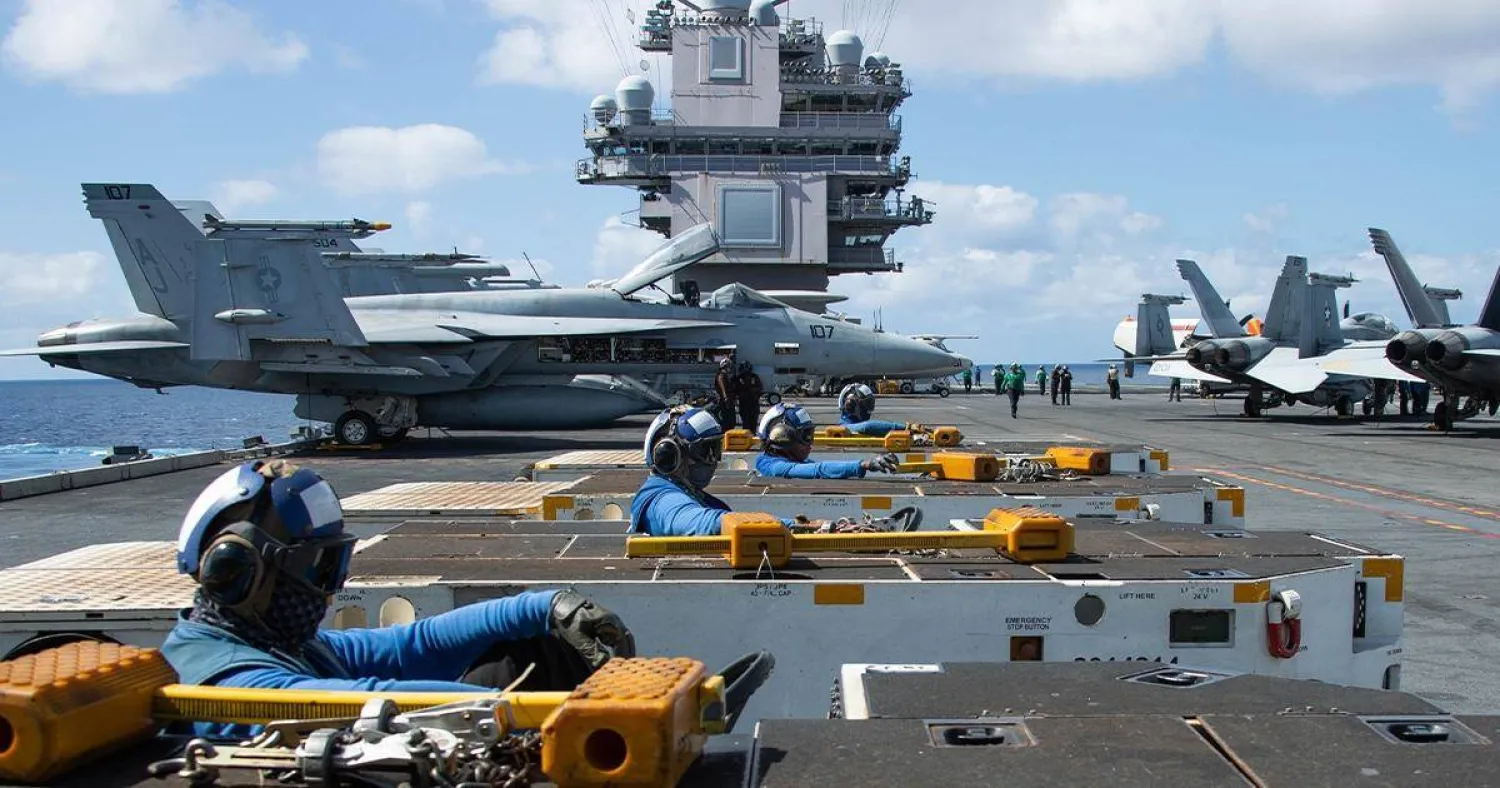
A shot showing personnel preparations aboard the US aircraft carrier "Gerald Ford" (US Navy)
TT

US Military Tells Trump It's ‘Ready’ to Strike Iran as Soon as Saturday

A shot showing personnel preparations aboard the US aircraft carrier "Gerald Ford" (US Navy)

Top national security officials have told US President Donald Trump the military is ready for potential strikes on Iran as soon as Saturday, but the timeline for any action is likely to extend beyond this weekend, sources familiar with the discussions told CBS News.

Trump has not yet made a final decision about whether to strike, said the officials, who spoke under condition of anonymity to discuss sensitive national matters.

The conversations have been described as fluid and ongoing, as the White House weighs the risks of escalation and the political and military consequences of restraint, added CBS.

Over the next three days, the Pentagon is moving some personnel temporarily out of the Middle East region — primarily to Europe or back to the United States — ahead of potential action or counterattacks by Iran if the US were to move ahead with its operation, according to multiple officials.

It's standard practice for the Pentagon to shift assets and personnel ahead of a potential US military activity and doesn't necessarily signal an attack on Iran is imminent, one of the sources told CBS.

Contacted by CBS News on Wednesday afternoon, a Pentagon spokesperson said they had no information to provide.

Iran was discussed in the White House Situation Room on Wednesday, a US official and a senior military official told CBS News. All military forces deployed to the region are expected to be in place by mid-March.

Axios had also said that a war between the United States and Iran is looming — and there are several factors suggesting President Trump might push the button soon.

On Wednesday, Iran's top diplomat Abbas Araghchi said that Tehran was "drafting" a framework for future talks with the United States, as the US energy secretary said Washington would stop Iran's nuclear ambitions "one way or another".