


Physics Nobel Belies Italy's Scientific Brain Drain

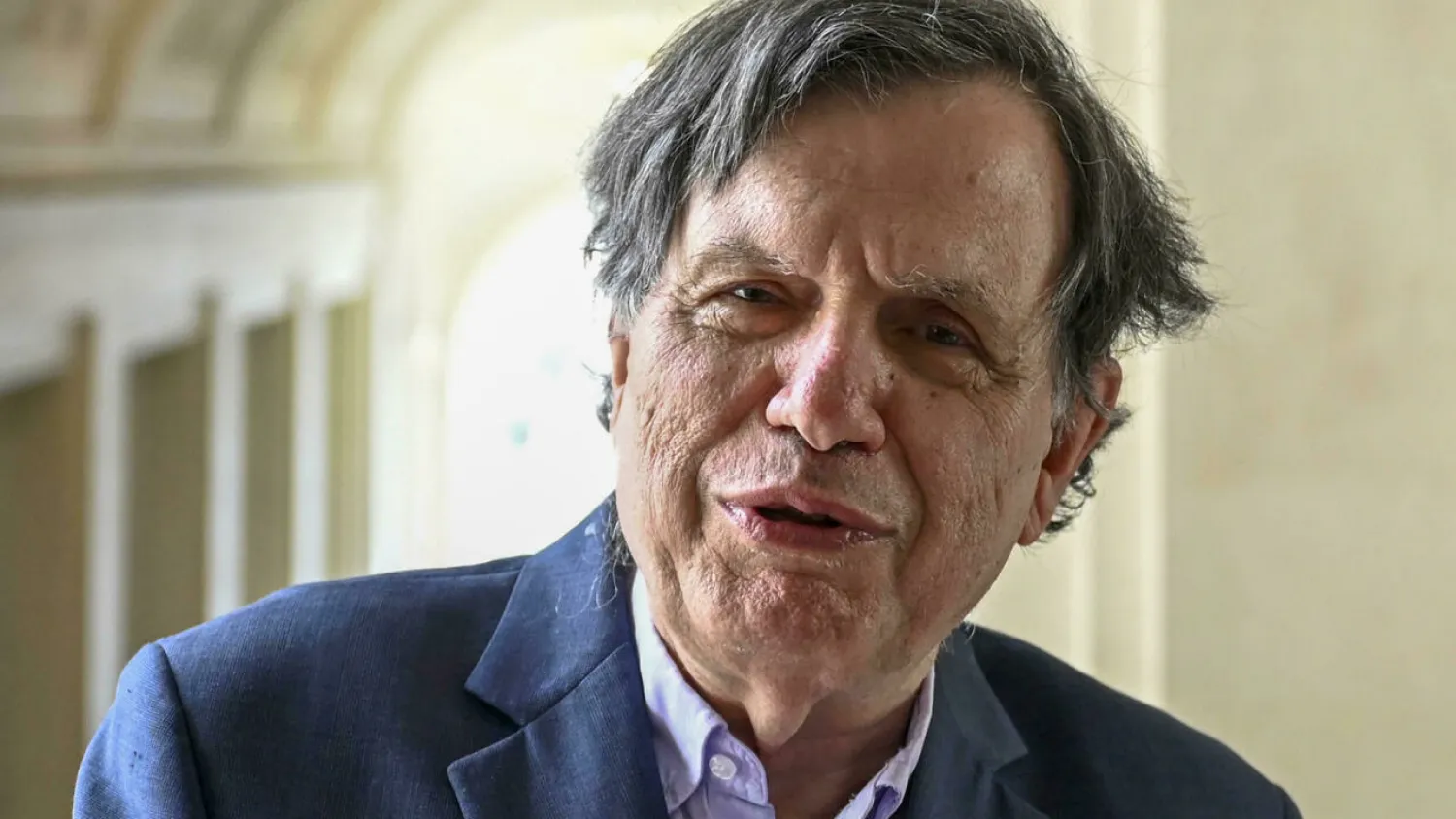
Giorgio Parisi will share this year's physics Nobel with US and German scientists Alberto PIZZOLI AFP
TT

Physics Nobel Belies Italy's Scientific Brain Drain

Giorgio Parisi will share this year's physics Nobel with US and German scientists Alberto PIZZOLI AFP

Italian physicist Giorgio Parisi will receive a shared Nobel prize at a ceremony Monday, but behind the celebrations is consternation at the brain-drain that for years has seen many young scientists leave to work abroad.

Some 14,000 Italian researchers quit the country between 2009 and 2015, according to Italy's national statistics agency Istat -- a trend explained in large part by a lack of investment, AFP reported.

"Italy is not a welcoming country for researchers, whether Italian or foreign," Parisi said in October after being awarded the Nobel prize for his work on the interplay of disorder and fluctuations in physical systems.

"Research is underfunded and the situation has worsened over the past 10-15 years."

Government funding fell from 9.9 billion euros ($11.2 billion) in 2007 to 8.3 billion in 2015 -- the latest figures available -- while in 2019, research spending in the eurozone's third largest economy was significantly below the EU average.

As well as Parisi, Italy has produced some top scientists in recent decades, notably Carlo Rubbia, the CERN physicist who won a Nobel in 1984, and neuroembryologist Rita Levi-Montalcini, who won in 1986.

But commentators note that research budgets were slashed after the 2008 financial crisis, while Italy's notorious bureaucracy also plays a role in sending young talent abroad.

"In Italy, unfortunately, there are big obstacles to getting a university job," said Eleonora D'Elia, a 35-year-old biologist from Rome, who has been teaching for the past four years at Imperial College London.

She cited "a lack of funding, and jobs available, the contacts needed and a highly complex system based on the number of articles published".

- Like a vegetable garden -
The scale of the problem was confirmed by Roberto Antonelli, head of the prestigious Lincean Academy in Rome, who told AFP there had been "an enormous reduction in funds for universities and Italian research facilities".

This was accompanied by "a reduction in the quality of positions available for young people compared to other countries".

The number of professors and of long-term contracts at universities has fallen from 60,882 in 2009 to 48,878 in 2016 -- a drop of almost 20 percent.

In London, d'Elia told AFP, there is "more support in terms of salary and research budget", whereas in Italy, where she hopes one day to return to be with her family and friends, she "would have to constantly fight to get that".

The Italian government has vowed to use some of the massive post-pandemic recovery funds it expects to receive from the European Union between now and 2026 to help boost home-grown research.

Research Minister Cristina Messa in October promised six billion euros in funding for 60 projects.

- 'Like a vegetable garden' -
Antonelli welcomed the funds, but warned: "The problem is the continuity of funding... what will happen after 2026?"

He said research must be measured in percentage of GDP, which ranges from "the highest such as in Finland, Japan and South Korea, to the lowest among developed countries such as Italy, which do not invest comparable funds when compared to neighbours such as Germany or France".

Italy spent just 1.45 percent of gross domestic product (GDP) on research in 2019, below the EU average of 2.19 percent and Germany's 3.17 percent, according to data from European agency Eurostat.

Parisi has also emphasised the importance of a long-term view.

"Research is like a vegetable garden, if you think you can water it every fortnight, things will go wrong," he said.



Heavy Snow in Poland Leaves Drivers Stranded in Tailbacks of up to 20 Km

Cars drive on a road during heavy snowfall in central Warsaw, Poland, 30 December 2025. (EPA)
TT

Heavy Snow in Poland Leaves Drivers Stranded in Tailbacks of up to 20 Km

Cars drive on a road during heavy snowfall in central Warsaw, Poland, 30 December 2025. (EPA)

Heavy snowfall in Poland caused tailbacks stretching as far as 20 km (12.43 miles) on a motorway between ​the capital Warsaw and the Baltic port city of Gdansk during the night, police said on Wednesday.

While the situation left hundreds of people trapped in their cars in freezing conditions, by the early hours of ‌Wednesday morning traffic ‌was moving again, ‌according ⁠to ​police.

"The ‌difficult situation began yesterday after 4 p.m., when the first trucks on the S7 route... began having trouble approaching the slopes," said Tomasz Markowski, a spokesperson for police in the northern city of ⁠Olsztyn.

"This led to a traffic jam stretching approximately ‌20 kilometers overnight." Deputy Infrastructure Minister ‍Stanislaw Bukowiec ‍told a press conference that nobody had ‍been hurt as a result of the difficult situation on the roads.

Anna Karczewska, a spokesperson for police in Ostroda, said officers had ​tried to help drivers who found themselves stuck. Ostroda lies on ⁠the highway about 40 km west of Olsztyn.

"We helped as much as we could, and we had coffee and hot tea for the drivers, which the Ostroda City Hall had prepared for us," she said.

State news agency PAP reported that there had also been some disruption to railways and airports, ‌but that services were returning to normal.


Infant Screen Exposure Shapes Long-Term Brain Changes and Teen Anxiety, Study Finds  

The study concluded that children exposed to high levels of screen time before age two are exposed to endure adolescent mental health. (The University of Queensland)
TT

Infant Screen Exposure Shapes Long-Term Brain Changes and Teen Anxiety, Study Finds  

The study concluded that children exposed to high levels of screen time before age two are exposed to endure adolescent mental health. (The University of Queensland)

Children exposed to high levels of screen time before age two showed changes in brain development that were linked to slower decision-making and increased anxiety by their teenage years, according to new study released by the Agency for Science, Technology and Research in Singapore.

Prepared in collaboration with the National University of Singapore (NUS) Yong Loo Lin School of Medicine, the study focuses on infancy, a period when brain development is most rapid and especially sensitive to environmental influences.

The amount and type of screen exposure in infancy are largely determined by parental and caregiver awareness and parenting practices, highlighting a critical window for early guidance and intervention, showed the study, published in eBioMedicine on Tuesday.

It said the researchers followed 168 children before age two and conducted brain scans at three time points (ages 4.5, 6, and 7.5), which allowed them to track how brain networks developed over time rather than relying on a single snapshot.

Children with higher infant screen time showed an accelerated maturation of brain networks responsible for visual processing and cognitive control.

The researchers suggest this may result from the intense sensory stimulation that screens provide. Notably, screen time measured at ages three and four did not show the same effects, underscoring why infancy is a particularly sensitive period.

The study showed that children with high screen exposure, the networks controlling vision and cognition specialized faster, before they had developed the efficient connections needed for complex thinking. This can limit flexibility and resilience, leaving the child less able to adapt later in life.

It said this premature specialization came at a cost: children with these altered brain networks took longer to make decisions during a cognitive task at age 8.5, suggesting reduced cognitive efficiency or flexibility.

Those with slower decision-making, in turn, reported higher anxiety symptoms at age 13. These findings suggest that screen exposure in infancy may have effects that extend well beyond early childhood, shaping brain development and behavior years later.

In a related study, the same team found that infant screen time is also associated with alterations in brain networks that govern emotional regulation — but that parent-child reading could counteract some of these brain changes.

Researchers found that their results give a biological explanation for why limiting screen time in the first two years is crucial.

“But it also highlights the importance of parental engagement, showing that parent-child activities, like reading together, can make a real difference,” said Asst Prof Tan Ai Peng, Clinician-Scientist at NUS, and the study's senior author.

The study concluded that children exposed to high levels of screen time before age two are exposed to endure adolescent mental health, particularly on cognitive performance and anxiety levels.


Indonesia Raises Alert for Mount Bur Ni Telong Volcano after Spike of Activity

Explosive activity concentrates at the north-east crater of the Mount Etna, as an eruption started on Dec. 24 continues, in Sicily, Italy, Monday Dec. 29, 2025. (AP Photo/Salvatore Allegra)
TT

Indonesia Raises Alert for Mount Bur Ni Telong Volcano after Spike of Activity

Explosive activity concentrates at the north-east crater of the Mount Etna, as an eruption started on Dec. 24 continues, in Sicily, Italy, Monday Dec. 29, 2025. (AP Photo/Salvatore Allegra)

Indonesian authorities have raised the alert level for the Mount Bur Ni Telong volcano in the country’s westernmost province of Aceh to its second highest following a series of increased activity and volcanic earthquakes, official said Wednesday.

The 2,624-meter (8,600-foot) stratovolcano in Aceh's Bener Meriah regency recorded at least seven earthquakes on Tuesday evening that were felt about five kilometers (three miles) away, while seismographs also detected seven shallow volcanic earthquakes along with 14 deep quakes and two tectonic quakes, said Lana Saria, the acting head of the Geological Agency at Energy and Mineral Resources Ministry.

She said based on the results of visual and instrumental monitoring which show the occurrence of increased volcanic activity for Mount Bur Ni Telong, scientists raised the alert level from the third to the second highest level Tuesday evening.

“Aftershocks following local tectonic events indicate magma activity is easily triggered by tectonic disturbances,” Saria said, adding that the increase in seismic activity has been ongoing since July and became more intense and shallow in the past two months.

According to The Associated Press, the agency's visual monitoring showed the volcano clearly visible with no crater smoke. However, she warned of possible eruption, including phreatic blasts and hazardous volcanic gases near areas with fumaroles and solfataras, openings in the Earth’s crust that emit steam and gases.

Authorities urged residents and visitors to stay at least 4 kilometers (2.4 miles) from the crater and avoid fumarole and solfatara zones during cloudy or rainy weather because gas concentrations can be life-threatening.

The heightened alert came as the Bener Meriah area is still recovering from catastrophic floods and landslides earlier this month that struck 52 cities and regencies on Sumatra island, leaving 1,141 people dead with 163 residents still missing and more than 7,000 injured, the National Disaster Management Agency said. In Bener Meriah alone, 31 people died and 14 are still missing after the floods and landslides hit the regency, disrupting access to remote villages and displacing more than 2,100 residents.

Local media said people living in three villages within a 2-kilometer (1.2-mile) radius from the crater are being evacuated as officials fear that heavy rains combined with volcanic activity could worsen conditions and complicate evacuation efforts.

Indonesia, an archipelago of more than 280 million people, has over 120 active volcanoes. It is prone to volcanic activity because it sits along the “Ring of Fire,” a horseshoe-shaped series of seismic fault lines around the Pacific Ocean.