


Arab Coalition: Terrorist Hezbollah Responsible for Targeting Civilians in Saudi Arabia, Yemen

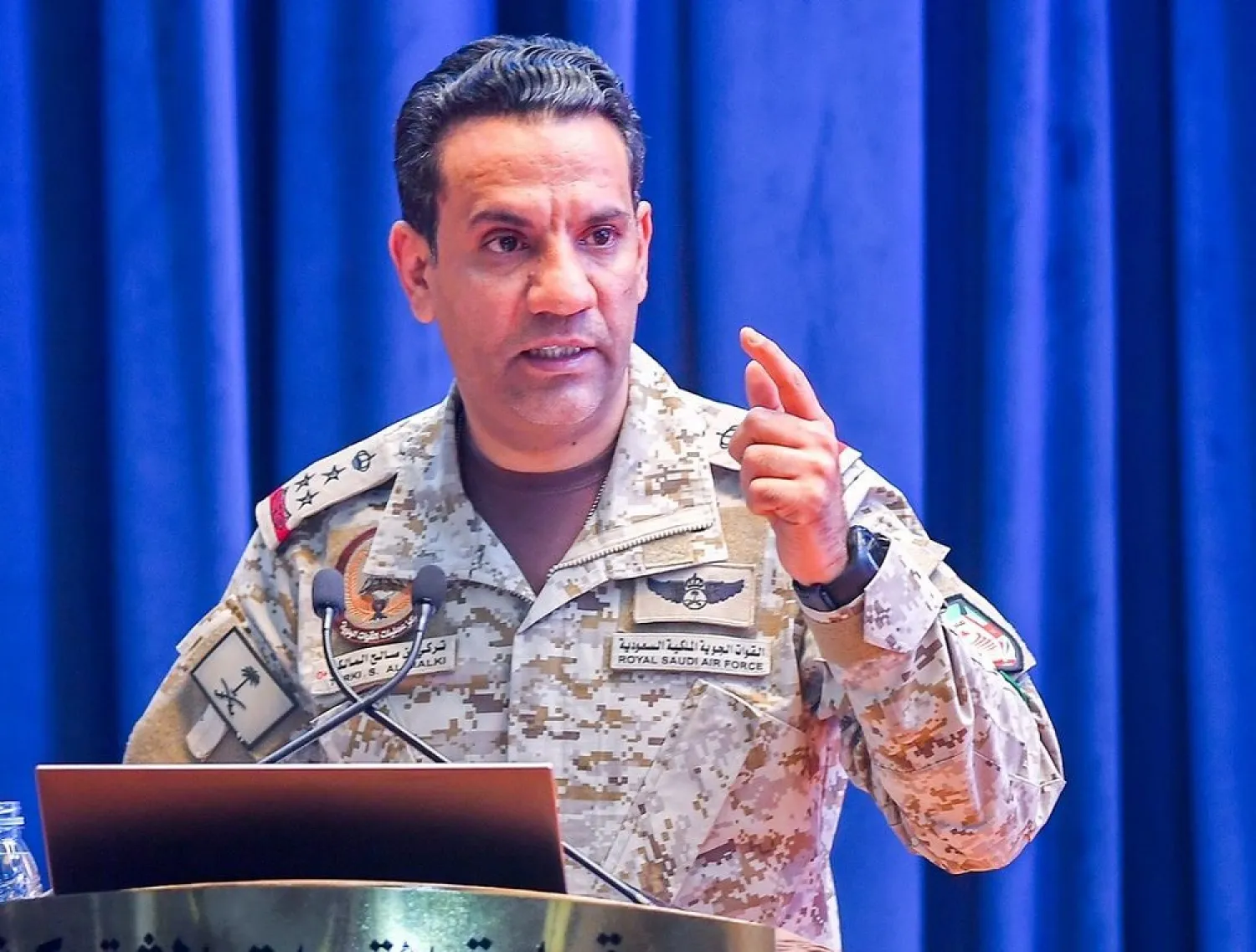
Coalition spokesman Turki al-Malki during his press conference. (SPA)
TT

Arab Coalition: Terrorist Hezbollah Responsible for Targeting Civilians in Saudi Arabia, Yemen

Coalition spokesman Turki al-Malki during his press conference. (SPA)

The Saudi-led Arab coalition revealed on Sunday evidence that proves the involvement of the Hezbollah militias in Lebanon with the Iran-backed Houthi militias in Yemen.

In a press conference, coalition spokesman Turki al-Malki held Hezbollah responsible for targeting civilians in Saudi Arabia and Yemen and of using Sanaa International Airport to attack the Kingdom.

The coalition presented photos and videos that showed Hezbollah members training the Houthis on how to launch drones.

Malki said the Houthis have fired 851 drones and 430 ballistic missiles at Saudi Arabia. The militias have threatened marine navigation by planting over 247 naval mines.

The terrorist Hezbollah is responsible for spreading destruction in the region and the world, added Malki.

The party is responsible for targeting civilians in Saudi Arabia and Yemen, he stated.

"Hezbollah is a cancer that has infected Lebanon and spread beyond its borders," he stressed. "But the terrorist Hezbollah does not represent the Lebanese people."

Furthermore, Malki accused the Iranian regime of sponsoring armed groups in the region. The regime is built on destruction and chaos.

The Houthis have adopted Iran's sectarian ideology, he went on to say.

Moreover, Iran is responsible for spreading sectarian ideology in Iraq, Syria and Lebanon, Malki charged.

The Houthis do not have the power to independently make decisions and so they cannot be part of the political solution in Yemen, Malki remarked.

The Arab coalition supports all international efforts to resolve the crisis in Yemen according to the three references, he stressed.

The military operations in Yemen are aimed at restoring security and stability in Yemen and Operation Decisive Storm and Operation Restoring Hope were launched at the request of the Yemeni president, he emphasized.

Malki said the war in Yemen is socio-ideological and sectarian as is the case in Lebanon.

The political solution in Yemen is the best solution, but the Houthis have rejected all United Nations efforts to end the crisis politically.

The Houthis are taking advantage of the de-escalation of fighting and are mobilizing their forces on several fronts. The coalition, however is monitoring their actions around the clock, Malki said.

"The war in Yemen is a battle between the peace that we desire and the destruction that Iran wants," he said.

"We warn the terrorist elements that the civilians in Saudi Arabia are a red line," he added.


Iranian Attacks Target Energy Facilities in Kuwait, UAE

Mina al-Ahmadi refinery in Kuwait (KUNA) 
TT

Iranian Attacks Target Energy Facilities in Kuwait, UAE

Mina al-Ahmadi refinery in Kuwait (KUNA) 

Iranian attacks struck key energy infrastructure in Kuwait and the United Arab Emirates on Friday, prompting air defense responses across the Gulf and causing casualties and material damage, authorities said.

In Kuwait, drones targeted the Mina al-Ahmadi refinery as well as a power generation and water desalination plant. In Abu Dhabi, operations were suspended at the Habshan gas facilities after debris fell following a successful interception, officials said. The incident killed an Egyptian resident and injured four others from Egypt and Pakistan, and sparked two fires.

Emirates Global Aluminium said it shut down its Al Taweelah site — one of the world’s largest aluminum production complexes — after it sustained severe damage in what it described as Iranian missile and drone attacks.

The incidents come amid Gulf efforts to repel Iranian strikes targeting energy installations and vital infrastructure, which have caused injuries and limited material damage.

Saudi air defenses intercepted and destroyed 14 drones on Friday, according to defense ministry spokesman Major General Turki al-Maliki.

Kuwait

Kuwait’s defense ministry spokesman Colonel Saud al-Atwan said seven ballistic missiles, two cruise missiles and 26 hostile drones were detected in the country’s airspace over a 24-hour period.

Interior ministry spokesman Brigadier Nasser Bousleib said nine reports of falling debris were recorded in the same period, bringing the total since the start of the Iranian attacks to 649. Warning sirens were activated five times in 24 hours, for a total of 164 activations since the attacks began.

Kuwait Petroleum Corporation said the Mina al-Ahmadi refinery was hit by drones early Friday, causing fires in several operational units. Emergency and firefighting teams were deployed immediately and were working to contain the blaze and prevent it from spreading. No casualties were reported, the company underlined.

It added that precautionary measures were taken to ensure worker safety and protect facilities, and that coordination was ongoing with environmental authorities to monitor air quality. No negative environmental impact had been recorded so far.

The electricity and water ministry said one of its power generation and water desalination plants sustained material damage, according to spokeswoman Fatima Hayat, adding that technical teams were working to maintain operations.

Meanwhile, National Guard spokesman Brigadier Jadaan Fadhel denied reports circulating on social media of a possible radiation leak, saying readings in the country’s airspace and territorial waters remained within normal levels. He told state news agency KUNA that monitoring systems were operating around the clock.

United Arab Emirates

The UAE said its air defenses intercepted 18 ballistic missiles, four cruise missiles and 47 drones launched from Iran on Friday, bringing the totals since the start of the attacks to 475 ballistic missiles, 23 cruise missiles and 2,085 drones.

The defense ministry said the attacks had killed two members of the armed forces and a Moroccan civilian contractor, as well as eight others of various nationalities.

A total of 203 people have been injured since the attacks began, with injuries ranging from minor to severe.

The Abu Dhabi Media Office said authorities dealt with debris falling at the Habshan gas facilities after a successful interception, prompting a temporary suspension of operations and a fire at the site.

It later said an Egyptian resident was killed during the evacuation, while four others — two Egyptians and two Pakistanis — were injured. Two fires broke out but were brought under control by emergency response teams. The office said the incident caused significant damage to facilities, with assessments ongoing.

In a separate incident, debris fell in the Ajban area, injuring six Nepalese residents and five Indians, with one Nepalese sustaining serious injuries.

Emirates Global Aluminium said its Al Taweelah complex in Khalifa Economic Zone Abu Dhabi (KEZAD) suffered severe damage, triggering a full emergency shutdown of operations, including the aluminum smelter, casting facilities, power plant, alumina refinery and recycling plant.

The company said restoring full primary aluminum production could take up to 12 months, depending on damage assessments, while some operations at the alumina refinery and recycling plant may resume earlier.

Bahrain

Bahrain’s National Communication Center said 16 drones targeting the country were intercepted and destroyed over 24 hours, bringing the total since the start of Iranian attacks to 188 missiles and 445 drones.

The Bahrain Defense Force said targeting civilian sites and private property with ballistic missiles and drones constituted a flagrant violation of international humanitarian law and the UN Charter, warning the attacks posed a direct threat to regional peace and security.

Authorities urged residents to remain indoors except when necessary, avoid damaged areas and suspicious objects, refrain from filming military operations or debris sites, and rely on official sources for information.

The interior ministry said four Bahraini citizens sustained minor injuries and homes were damaged in the Sitra area due to falling debris from an intercepted Iranian drone. Civil defense and ambulance services were responding at the scene.

Qatar

Qatar’s defense ministry said the country was targeted by several Iranian drones, all of which were successfully intercepted.

The environment and climate change ministry said air quality remained within normal and safe limits and was being continuously monitored through a nationwide network.

In a post on platform X, the ministry advised precautionary measures during periods of increased fine particulate matter, including staying indoors — especially for vulnerable groups — keeping windows closed, wearing masks when outside and avoiding outdoor activities.


Saudi Foreign Minister, Pakistani Counterpart Review Relations, Discuss Latest Developments

Saudi Minister of Foreign Affairs Prince Faisal bin Farhan bin Abdullah (R) and Minister of Foreign Affairs of Pakistan Ishaq Dar (L). (Saudi Ministry of Foreign Affairs)
TT

Saudi Foreign Minister, Pakistani Counterpart Review Relations, Discuss Latest Developments

Saudi Minister of Foreign Affairs Prince Faisal bin Farhan bin Abdullah (R) and Minister of Foreign Affairs of Pakistan Ishaq Dar (L). (Saudi Ministry of Foreign Affairs)

Saudi Minister of Foreign Affairs Prince Faisal bin Farhan bin Abdullah held phone talks on Friday with Deputy Prime Minister and Minister of Foreign Affairs of Pakistan Ishaq Dar, the Saudi Press Agency reported.

During the call, the two sides reviewed the brotherly relations between the two countries, discussed the latest developments, and affirmed continued coordination and consultation in this regard.


Saudi Crown Prince, Italian PM Discuss Fallout of Military Escalation in the Region

Saudi Crown Prince and Prime Minister, Prince Mohammed bin Salman, meets Italian Prime Minister Giorgia Meloni in Jeddah (SPA)
TT

Saudi Crown Prince, Italian PM Discuss Fallout of Military Escalation in the Region

Saudi Crown Prince and Prime Minister, Prince Mohammed bin Salman, meets Italian Prime Minister Giorgia Meloni in Jeddah (SPA)

Saudi Crown Prince Mohammed bin Salman bin Abdulaziz met Italian Prime Minister Giorgia Meloni in Jeddah on Friday to review bilateral ties and explore ways to strengthen cooperation.

The two officials also discussed regional developments, including the risks of ongoing military escalation to global trade, energy security, and the world economy, while stressing coordination to support Middle East stability.

Meloni’s visit marks the first by a European Union leader to the region since the outbreak of the US-Israeli war on Iran on February 28, according to Reuters.

In an interview with Italian state television, Meloni said her country stands with Gulf states against Iranian attacks, describing them as “friends and strategic partners,” and calling her visit “a gesture of solidarity.”

Speaking from Jeddah, she stated that her trip is primarily focused on oil, noting that Gulf countries supply about 15% of Italy’s needs. She stressed the importance of securing stable energy supplies.

Meloni arrived in Jeddah Friday and was received at King Abdulaziz International Airport by Prince Saud bin Mishaal bin Abdulaziz, Deputy Governor of the Makkah Region and other Saudi figures.
