
Health Sector Ailing in Iraq’s Mosul

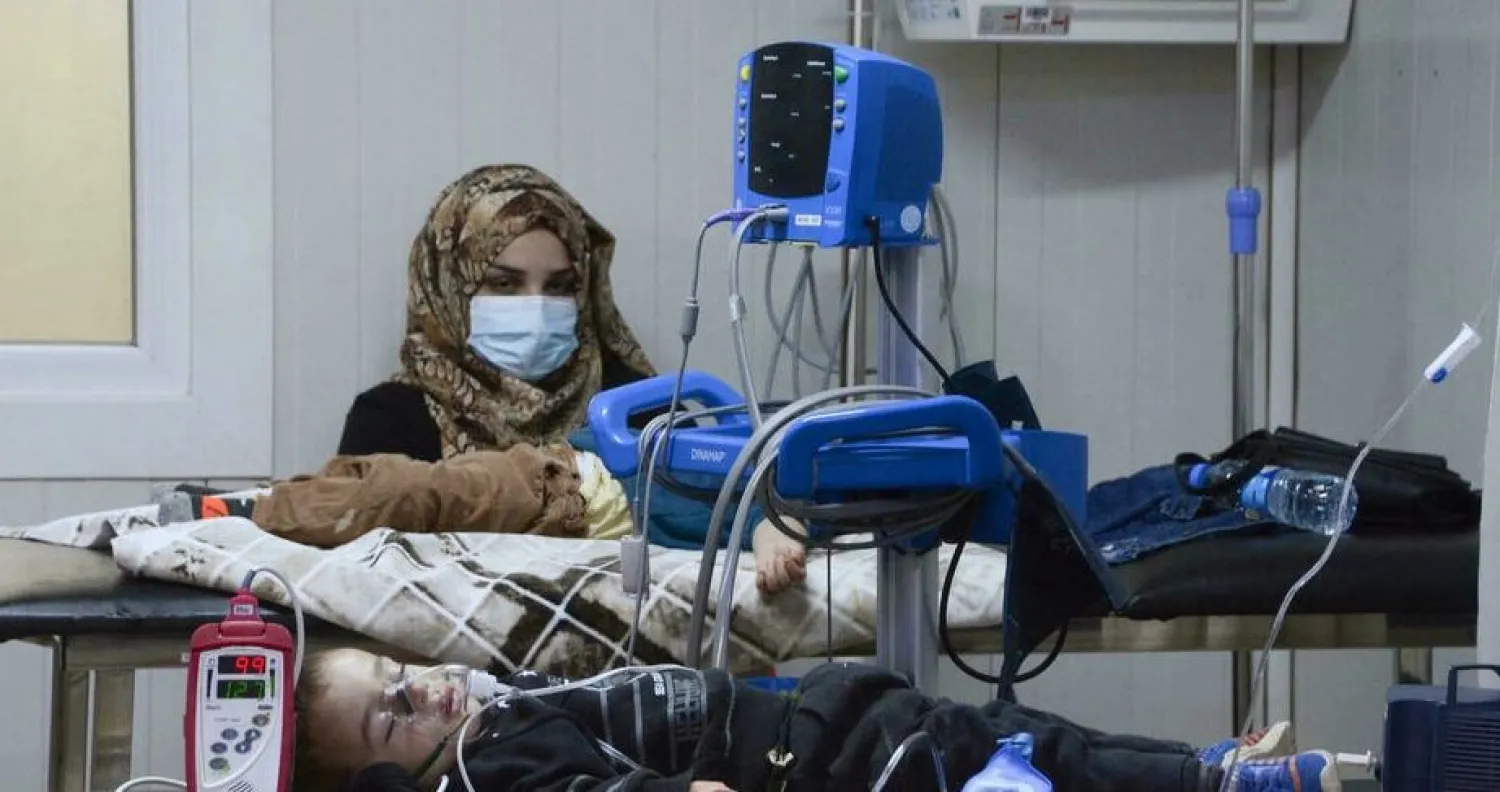
Nablus hospital, run by Doctors Without Borders (MSF) in Iraq's northern city of Mosul, delivers nearly 900 infants on average every month Zaid AL-OBEIDI AFP
TT

Health Sector Ailing in Iraq’s Mosul

Nablus hospital, run by Doctors Without Borders (MSF) in Iraq's northern city of Mosul, delivers nearly 900 infants on average every month Zaid AL-OBEIDI AFP

Months after a minor motorbike accident, Amer Shaker is still suffering from poor treatment at a hospital in Iraq's Mosul, forcing him like many others to seek help elsewhere.

"At public hospitals, we have to pay for everything," said Shaker. "As soon as we arrived, we paid for the medicine, bandages, the anesthesia."

But for the past seven months, he has been treated free of charge at Al-Wahda hospital, opened by Doctors Without Borders (MSF) in Mosul in 2018.

Having spent a small fortune in current Iraqi terms -- about $8,000 -- on medical care after an initial surgery by a Mosul doctor who failed to heal his leg, which had been fractured in three places, Al-Wahda was a godsend for the construction worker.

"The doctor had inserted a platinum plate, but it was not done right. I tried to find another doctor, but none of them were any good," said the 21-year-old, AFP reported.

On his left leg, MSF doctors have attached an external fixator, an impressive frame of pins and screws -- nearly impossible to find elsewhere in Mosul, he said.

His case is symptomatic of the wider affliction that ails Iraq's health sector, which like other public services has suffered from dilapidated infrastructure and the effects of successive conflicts.

The former stronghold of the ISIS group, Mosul was devastated by the battle to oust the militants that ended in summer 2017.

More than four years on, the northern metropolis remains a patchwork of gutted concrete carcasses interspersed between buildings under construction.

Five hospitals are being refurbished or reconstructed in the city, according to a public official, and nine health institutions are functioning -- leaving a total of 1,800 beds for a population of 1.5 million.

In the coming weeks, Shaker will need to undergo a sixth operation to remove 13 centimetres (about five inches) of dead bone.

At Al-Wahda hospital, patients vary in profile, from Khawla Younes, the 60-year-old housewife who broke her leg in a fall, to Mahmud al-Meemari, undergoing his "16th or 17th surgery" for an injury from a 2017 bomb blast.

Majid Ahmed, an official in the public health authority of Nineveh province -- of which Mosul is the capital -- acknowledges "a lack of hospital beds and care units".

The destruction "has affected 70 percent of our health facilities", he said.

Before the rise of ISIS in 2014, Nineveh had 3,900 hospital beds, compared to 600 in 2017 after the government wrested back control of Mosul, Ahmed explained.

Today, the province has about 2,650 beds.

"The destruction that has struck health institutions in the province requires a significant budget," Ahmed added.

After the conflict, the medical sector was at ground zero, according to orthopaedic surgeon Hisham Abdel Rahman, who works with MSF alongside his job in the public health sector.

"With time, we see improvement, but it's very slow," he said.

At Al-Wahda hospital "we offer services that will not be available in other facilities in Mosul for many years", he continued.

He said Mosul needs new hospitals, medical equipment and medicine, especially for cancer treatment.

MSF also runs the Nablus hospital and maternity ward in Mosul, where nearly 900 infants are delivered on average every month.

"This hospital has been filling a gap," said Kyi Par Soe, MSF's medical activity manager at the hospital, adding that the two other maternity hospitals in Mosul are "overloaded".

On a positive note, the public health authority's Ahmed said the number of Covid-19 cases officially recorded in Mosul was "very low", with 30 percent of capacity in public hospitals reserved for patients with serious infections.

Apart from the hospitals, the rest of Mosul is also struggling to regain a sense of normalcy.

Residents crowd into cafes and restaurants, many of which have opened under buildings left in a suspended state of construction, their top floors scarred by gaping holes.

Less than 15 percent of residents of eastern Mosul, where fighting for the city ended, have "enough water to meet their daily needs", according to the International Committee of the Red Cross.

In western Mosul, that figure is 35 percent.

And despite the restoration of certain historic sites, entire swathes of the Old City in central Mosul remain a pile of debris.

Reconstruction efforts have rumbled on at such a slow pace that it is not unusual to uncover bodies under the rubble to this day.

In December, civil defense teams found more than a dozen corpses from the battle for Mosul.


Former Syrian Regime Officer Arrested

Syrian Ministry of Interior in Damascus (Official Website)
TT

Former Syrian Regime Officer Arrested

Syrian Ministry of Interior in Damascus (Official Website)

Syria's Interior Ministry announced on Saturday the arrest of a former officer in Bashar al-Assad's regime holding the rank of major general and accused of committing crimes and violations.

In a statement, the ministry said that "based on precise monitoring and surveillance operations, Internal Security Forces carried out a special security operation that resulted in the arrest of criminal Mohammed Mohsen Nayouf."

"The criminal held the rank of major general under the former regime and occupied several prominent military and leadership positions, including service in the Third Corps, command of the 18th Tank Division, chief of staff of the 11th Division in 2020, and commander of the 105th Republican Guard Brigade in 2016."

According to the statement, the detainee was referred to the relevant authorities to complete investigations and take the necessary legal measures before being referred to the judiciary.

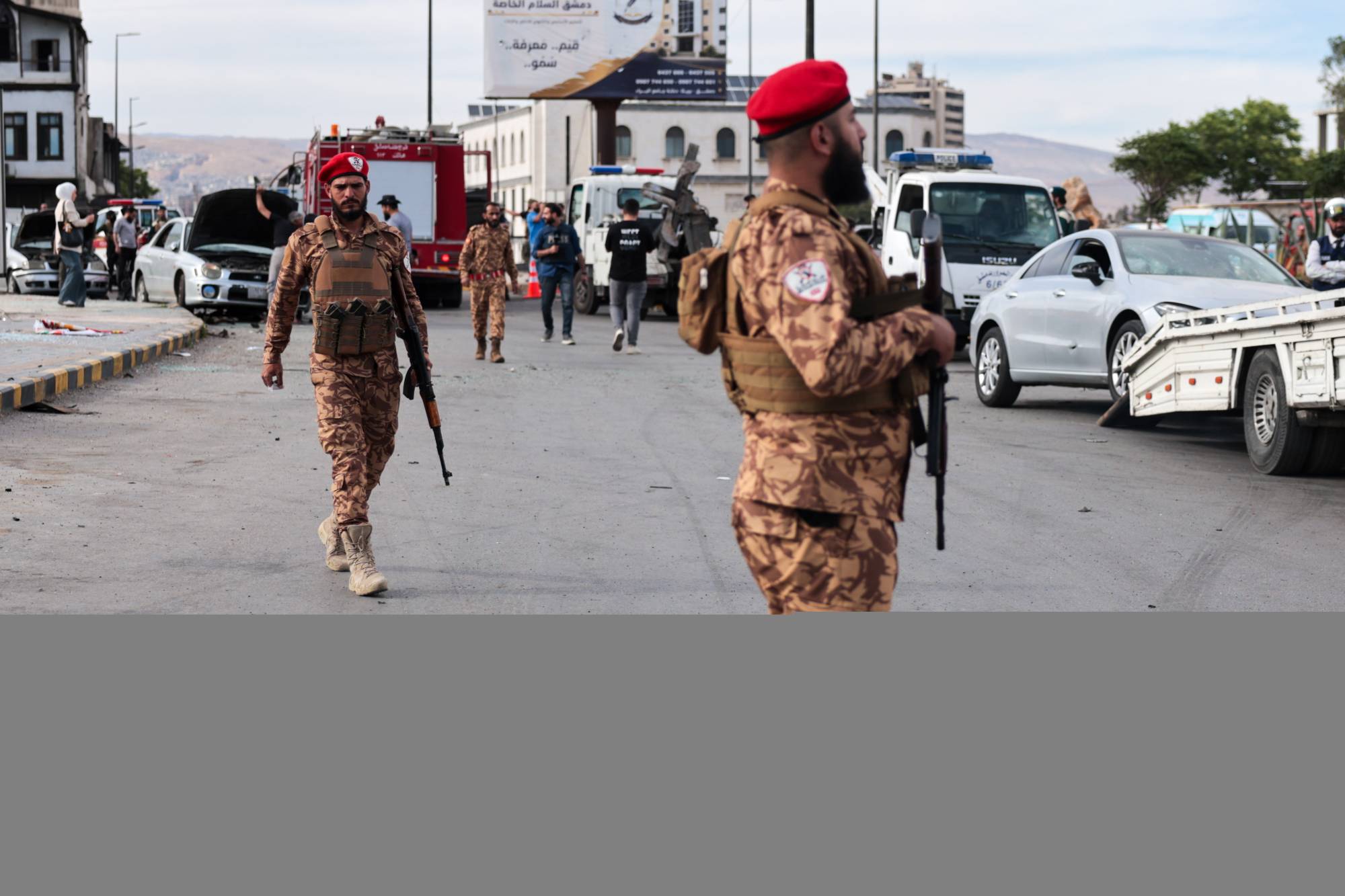
Syrian military police deployed near the explosion site in Bab Sharqi, near the headquarters of the Syrian Defense Ministry in Damascus, Syria, May 19, 2026. EPA/MOHAMMEDALRIFAI

The Syrian Arab News Agency (SANA) reported that the operation, carried out on Friday by the Salamiyah Security Directorate, which is affiliated with the Internal Security Command in Hama, comes "as part of the Interior Ministry's and relevant authorities' efforts to pursue and hold accountable those involved in crimes and violations committed against the Syrian people during the former regime, based on the principle of ending impunity, achieving transitional justice, and guaranteeing the rights of victims and their families."

Earlier on Friday, the Interior Ministry announced the arrest of Mohammed Imad Mahrez, one of the guards at Saydnaya prison during the former regime, making this the second such operation.


Hezbollah Says Message from Iran Shows it 'Will Not Give up' on Group

Displaced residents wave Hezbollah flags, including one bearing a picture of its leader, Naim Qassem, as they pass rubble of destroyed buildings in Dahiyeh, Beirut's southern suburbs, Lebanon, Friday, April 17, 2026, following a ceasefire between Israel and Hezbollah. (AP Photo/Bilal Hussein)
TT

Hezbollah Says Message from Iran Shows it 'Will Not Give up' on Group

Displaced residents wave Hezbollah flags, including one bearing a picture of its leader, Naim Qassem, as they pass rubble of destroyed buildings in Dahiyeh, Beirut's southern suburbs, Lebanon, Friday, April 17, 2026, following a ceasefire between Israel and Hezbollah. (AP Photo/Bilal Hussein)

Hezbollah said Saturday that a message from Tehran showed that Iran would not abandon the Lebanese militant group and that the Islamic republic's latest proposal to end the US-Iran war included a ceasefire in Lebanon.

Iran-backed Hezbollah said in a statement that its chief Naim Qassem had received a message from Tehran's Foreign Minister Abbas Araghchi, which indicated that Iran "will not give up its support for movements demanding justice and freedom, foremost among them Hezbollah".

In Iran's latest proposal through Pakistani mediators aimed at achieving "a permanent and stable end to the war, the demand to include Lebanon in the ceasefire was emphasised", the statement added.


South Lebanon Hospital Damaged in Israeli Strikes

Volunteers from the Lebanese Red Cross rescue a woman in the city of Nabatieh in South Lebanon (AFP)
TT

South Lebanon Hospital Damaged in Israeli Strikes

Volunteers from the Lebanese Red Cross rescue a woman in the city of Nabatieh in South Lebanon (AFP)

Israel kept up strikes on Lebanon on Saturday, hours after overnight raids on the country's south and east, including one that damaged a hospital, its chief executive told AFP.

Lebanon's state-run National News Agency (NNA) reported Israeli airstrikes on around a dozen locations in the south on Saturday including one targeting an agricultural area, "wounding several Syrian workers".

The NNA said an overnight strike in the southern city of Tyre that targeted a site near the hospital caused "severe damage" to the facility.

An AFP correspondent saw shattered glass, ceiling panels blown out and damaged medical equipment at the multi-storey Hiram hospital.

The Israeli military late on Friday night had issued evacuation warnings ahead of strikes on two locations in Tyre, saying it would target "Hezbollah facilities".

Accompanying maps advised people to leave areas within 500 metres (yards) of the target buildings, with the Hiram hospital shown within the advised evacuation area.

The hospital's CEO Dr Salman Aydibi told AFP that around 40 patients were in the facility when the warning was issued, including seven in intensive care.

"We took the patients to a safer location" elsewhere inside the hospital, he said, adding that none were harmed but some 30 staff sustained minor injuries.

He said an evaluation of the damage was ongoing and that the hospital has remained operational, though the emergency department briefly closed.

He said it was the third strike near the facility since the latest Israel-Hezbollah war erupted on March 2.

Israel's army said Saturday that it had targeted "Hezbollah infrastructure sites in Tyre" overnight where operatives from the Iran-backed group worked to "plan and execute attacks" against Israeli soldiers.

"Prior to the strike, steps were taken to mitigate harm to civilians, including the issuing of advance warnings, the use of precise munitions, and aerial surveillance," it added.

Another AFP correspondent saw heavy damage at both targeted sites in Tyre, with a man searching for his belongings among the debris at one location.

Israel's army also targeted east Lebanon overnight, saying it struck a "Hezbollah underground compound" used to manufacture weapons.

Lebanon's Hamas-aligned Islamist group Jamaa Islamiya and its armed wing the Al-Fajr Forces said Saturday in a statement that one of its members was killed in an Israeli strike in east Lebanon.

Under the terms of the ceasefire published by Washington, Israel reserves the right to act against "planned, imminent or ongoing attacks".