


Betty White, TV’s Golden Girl, Dies at 99

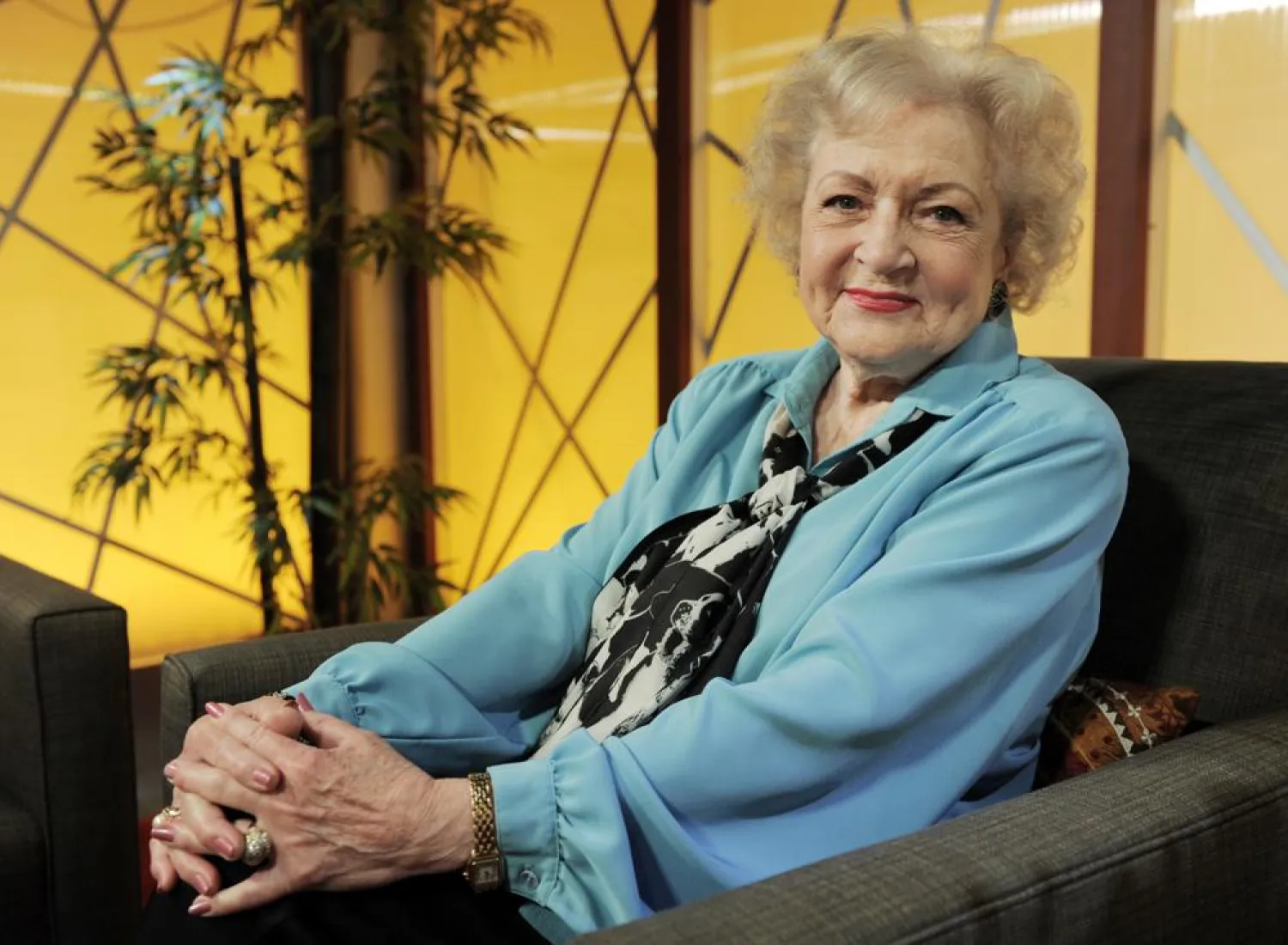
Actress Betty White poses for a portrait following her appearance on the television talk show "In the House," in Burbank, Calif., Tuesday, Nov. 24, 2009. (AP)
TT

Betty White, TV’s Golden Girl, Dies at 99

Actress Betty White poses for a portrait following her appearance on the television talk show "In the House," in Burbank, Calif., Tuesday, Nov. 24, 2009. (AP)

Betty White, whose saucy, up-for-anything charm made her a television mainstay for more than 60 years, whether as a man-crazy TV hostess on “The Mary Tyler Moore Show” or the loopy housemate on “The Golden Girls,” has died. She was 99.

White's longtime agent and friend Jeff Witjas confirmed her death Friday. She had no diagnosed illness, and it was unclear if she died Thursday night or Friday, he said.

She would have turned 100 on Jan. 17.

Her death brought tributes from celebrities and politicians alike.

“We loved Betty White,” first lady Jill Biden said as she left a Delaware restaurant with President Joe Biden, who added: “Ninety-nine years old. As my mother would say, God love her.”

“She was great at defying expectation,” Ryan Reynolds, who starred alongside her in the comedy “The Proposal,” tweeted. “She managed to grow very old and somehow, not old enough. We’ll miss you, Betty.”

White launched her TV career in daytime talk shows when the medium was still in its infancy and endured well into the age of cable and streaming. Her combination of sweetness and edginess gave life to a roster of quirky characters in shows from the sitcom “Life With Elizabeth” in the early 1950s to oddball Rose Nylund in “The Golden Girls” in the ’80s to “Boston Legal,” which ran from 2004 to 2008.

But it was in 2010 that White’s stardom erupted as never before.

In a Snickers commercial that premiered during that year’s Super Bowl telecast, she impersonated an energy-sapped dude getting tackled during a backlot football game.

“Mike, you’re playing like Betty White out there,” jeered one of his chums. White, flat on the ground and covered in mud, fired back, “That’s not what your girlfriend said!”

The instantly-viral video helped spark a successful Facebook campaign to have her host “Saturday Night Live.” The much-watched episode won her a seventh Emmy.

A month later, cable’s TV Land premiered “Hot In Cleveland,” which starred Valerie Bertinelli, Jane Leeves and Wendie Malick as three past-their-prime show-biz veterans who move to Cleveland to escape the youth obsession of Hollywood.

They move into a home being looked after by an elderly Polish widow — a character, played by White, who was meant to appear only in the pilot episode.

But White stole the show, and became a key part of the series, an immediate hit. She was voted the Entertainer of the Year by members of The Associated Press.

“It’s ridiculous,” White said of the honor. “They haven’t caught on to me, and I hope they never do.”

By then, White had not only become the hippest star around, but also a role model for how to grow old joyously.

“Don’t try to be young,” she told the AP. “Just open your mind. Stay interested in stuff. There are so many things I won’t live long enough to find out about, but I’m still curious about them.”

White remained youthful in part through her skill at playing bawdy or naughty while radiating niceness. The horror spoof “Lake Placid” and “The Proposal” were marked by her characters’ surprisingly salty language. And her character Catherine Piper killed a man with a skillet on “Boston Legal.”

Her role as “Happy Homemaker” Sue Anne Nivens in “The Mary Tyler Moore Show," which was already a huge hit, was planned as a one-off appearance in 1973, but it would last until the show ended in 1977.

“While she’s icky-sweet on her cooking show, Sue is really a piranha type,” White once said. The role brought her two Emmys as supporting actress in a comedy series.

In 1985, White starred on NBC with Bea Arthur, Rue McClanahan and Estelle Getty in “The Golden Girls.” Its cast of mature actors, playing single women in Miami retirement, presented a gamble in a youth-conscious industry. But it proved a solid hit and lasted until 1992.

White played Rose, a gentle, dim widow who drove her roommates crazy with off-the-wall tales of childhood in fictional St. Olaf, Minnesota.

The role won her yet another Emmy, and she reprised it in a short-lived spinoff, “The Golden Palace.”

White began her television career as $50-a-week sidekick to local Los Angeles TV personality Al Jarvis in 1949. White proved to be a natural for the new medium.

“I did that show 5½ hours a day, six days a week, for 4½ years,” she recalled in 1975.

A sketch she had done with Jarvis turned into a syndicated series, “Life With Elizabeth,” which won her first Emmy.

Off-screen, White tirelessly raised money for animal causes, hosting a syndicated TV show and writing three books on her animal love, which she said stemmed from her family taking care of as many as 15 dogs at a time during the Depression.

Are there any critters she doesn’t like?

“No,” White told the AP. “Anything with a leg on each corner.”

Then what about snakes?

“Ohhh, I LOVE snakes!”

She was born Betty Marion White in Oak Park, Illinois, and the family moved to Los Angeles when she was a toddler.

“I’m an only child, and I had a mother and dad who never drew a straight line: They just thought funny,” she told The Associated Press in 2015. “We’d sit around the breakfast table and then we’d start kicking it around.”

Her early ambition was to be a writer, and she wrote her grammar school graduation play, giving herself the leading role.

At Beverly Hills High School, her ambition turned to acting, and she appeared in several school plays. Her parents hoped she’d go to college, but instead she took roles in a small theater and played bit parts in radio dramas.

After two very brief marriages in the 1940s, White wed her third and final husband, actor and game show host Allen Ludden, in 1963. They remained married until his death in 1981.

When asked in 2011 how she had managed to be universally beloved during her decades-spanning career, she summed up with a dimpled smile: “I just make it my business to get along with people so I can have fun. It’s that simple.”



Hollywood Studios and Actors’ Union Find Common Ground on AI

 SAG-AFTRA chief negotiator Duncan Crabtree-Ireland attributed the mostly drama-free agreements with studios during this round of negotiations to a new mindset. (AFP)
SAG-AFTRA chief negotiator Duncan Crabtree-Ireland attributed the mostly drama-free agreements with studios during this round of negotiations to a new mindset. (AFP)
TT

Hollywood Studios and Actors’ Union Find Common Ground on AI

 SAG-AFTRA chief negotiator Duncan Crabtree-Ireland attributed the mostly drama-free agreements with studios during this round of negotiations to a new mindset. (AFP)
SAG-AFTRA chief negotiator Duncan Crabtree-Ireland attributed the mostly drama-free agreements with studios during this round of negotiations to a new mindset. (AFP)

As Hollywood's performers cast their ballots to approve the latest negotiated contract, union leaders say they have made some progress in conversations with studio bosses since the massive strike in 2023, especially when it comes to concerns about artificial intelligence.

SAG-AFTRA chief negotiator Duncan Crabtree-Ireland attributed the mostly drama-free agreements in this round of negotiations to a new mindset, "because the studios and streamers came to the table with a different perspective."

With 160,000 members working in film, television and video games, SAG-AFTRA is the largest and most influential union of its kind globally.

Members of the actors' union are voting on a newly negotiated agreement that was approved by the national board earlier this month, ahead of the current contract's expiration at the end of June.

"The tone of the negotiation was much more collaborative and a lot more creativity was brought by both sides, so I really believe that the 2023 strikes -- while they were very difficult for all of us -- did help effectuate a reset in the relationship between the studios and the unions in general," Crabtree-Ireland told AFP.

Approval would mean avoiding a repeat of disastrous 2023 strikes that shuttered productions, costing studios billions of dollars, while actors stood their ground against AI and other issues.

- AI's evolutions -

The strike by the Screen Actors Guild-American Federation of Television and Radio Artists (SAG-AFTRA) lasted 118 days, with star-studded picket lines outside major studios in Los Angeles and New York, marking the longest such revolt in Hollywood history.

AI technology was a sticking point for many, and that tension persists, Crabtree-Ireland said.

"They do feel more secure than they did in 2023 but there's still a very, very strong concern about AI -- and especially because the generative AI tools have advanced so much in the last three years," he said.

The latest agreement does not close the door on AI, but it does introduce new protections.

Under the new contract, digital replicas -- which use AI or any technology to replicate an actual living or deceased performer -- must "have informed consent and fair compensation," Crabtree-Ireland said.

The contract allows for limited use of synthetics, under "unusual circumstances," when a generative AI system can be used to create a character who is not based on any actual person in the world.

"There's now process in place which would require the companies to come to the union if they want to use a synthetic in a project, they have to demonstrate to us that this synthetic brings a significant additional value to the production," Crabtree-Ireland said.

"While this doesn't rise quite to the level of a complete prohibition, it's a very strong disincentive."

Voting on the latest contract closes June 4.


Oscar-Winning ‘Star Wars’ Editor Marcia Lucas Dies at 80

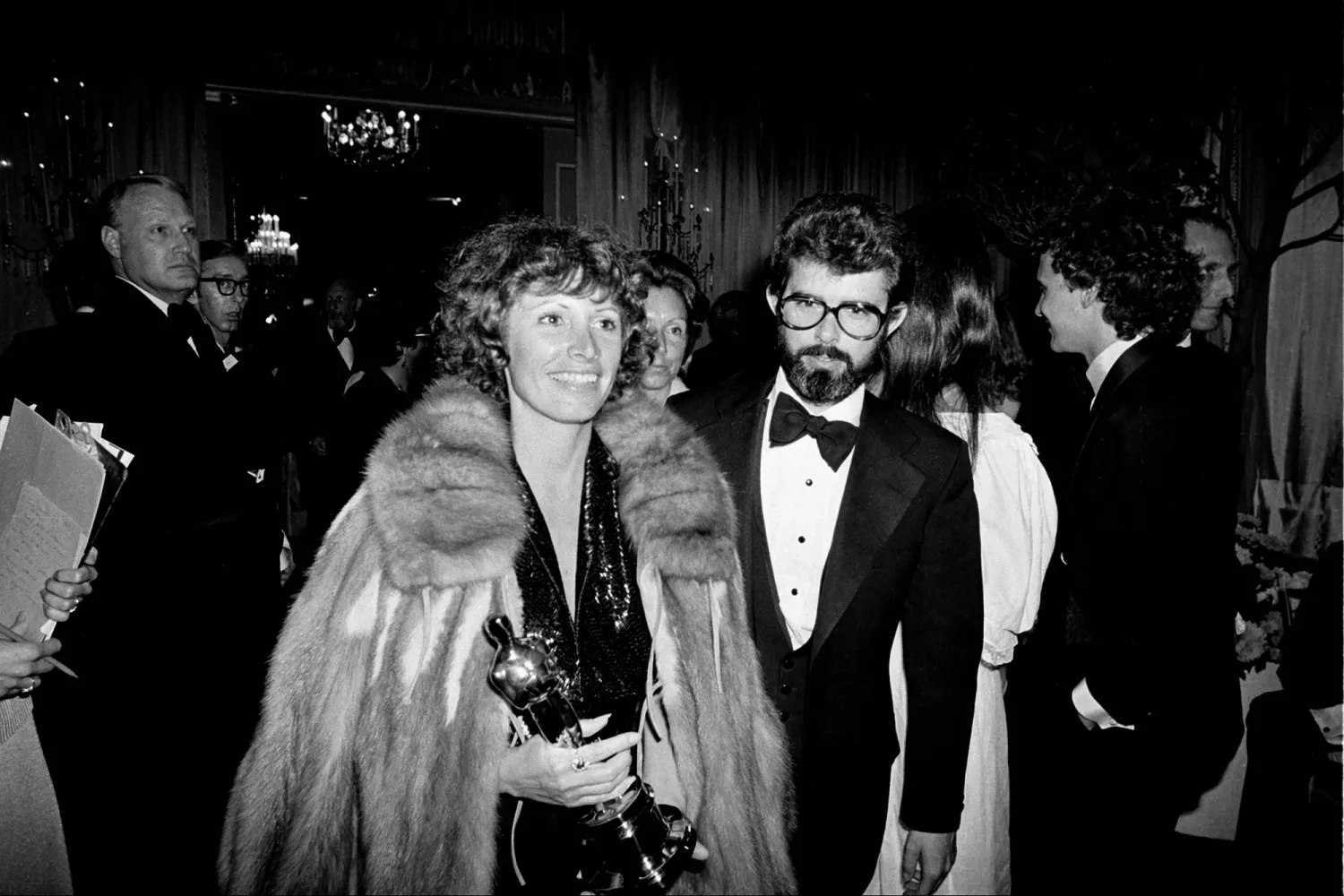
Marcia Lucas, wife of director George Lucas, right, carries her Oscar statuette as they arrive at a post Academy Awards party at the Beverly Hilton Hotel in Los Angeles, April 4, 1978. (AP)
TT

Oscar-Winning ‘Star Wars’ Editor Marcia Lucas Dies at 80

Marcia Lucas, wife of director George Lucas, right, carries her Oscar statuette as they arrive at a post Academy Awards party at the Beverly Hilton Hotel in Los Angeles, April 4, 1978. (AP)

Marcia Lucas, who won an Oscar as editor of the original 1977 “Star Wars" and was part of a group of women whose editing was essential to film's New Hollywood era, has died, a lawyer for her family said Friday. She was 80.

Lucas, who was married to “Star Wars” creator George Lucas from 1969 to 1983, died Wednesday from metastatic cancer, attorney Deidre Von Rock said in an email to The Associated Press. She died in Rancho Mirage, California, surrounded by loved ones, Von Rock said.

Marcia Lucas was the editor on 1983's “Return of the Jedi” and the pre-“Star Wars” George Lucas-directed films “THX 1138” and “American Graffiti.”

She was also part of the editing team for director Martin Scorsese's 1970s films “Taxi Driver,” “Alice Doesn't Live Here Anymore” and “New York, New York.”

Editor was a rare senior creative position where a woman could find a foothold in Hollywood. Marcia Lucas became one of several women whose work in the editing chair made sense of the work of the overwhelmingly male directors of the New Hollywood of the late 1960s through the early 1980s, including Dede Allen, editor of “Bonnie and Clyde” and “Dog Day Afternoon”; Verna Fields, editor of “Paper Moon” and “Jaws"; and Thelma Schoonmaker, editor of most of Scorsese's films starting with 1980's “Raging Bull.”

Lucas was often called the unsung hero of “Star Wars,” the original film that after sequels, prequels and spinoffs has come to be known by its subtitle, “A New Hope.”

She convinced her then-husband that he should have Obi-Wan Kenobi, played by Alec Guinness, die in his lightsaber battle with Darth Vader and become a spirit guide to Mark Hamill's Luke Skywalker.

And she had to make sense of raw footage that could have been a mess in the wrong hands, including the climactic rebel attack on the Death Star.

“It was extremely complex and we had 40,000 feet of dialogue footage of pilots saying this and that. And she had to cull through all that, and put in all the fighting as well,” George Lucas told Rolling Stone in an interview a few months after the film came out. “Nobody really has ever tried to interweave an actual plot story into a dogfight, and we were trying to do that."

Lucas was born Marcia Griffin in Modesto, California shortly after the end of World War II. She moved to Los Angeles with her mother after her parents divorced when she was a small child.

She began working as a film librarian and moved into working as an editor on commercials, trailers and promotional films. She was an assistant editor on the documentary “Journey to the Pacific” for Fields, who also hired George Lucas, then a film student at the University of Southern California.

The couple became engaged soon after. Their marriage would essentially end in 1982, but they kept their divorce under wraps until after the release of “Return of the Jedi” in 1983. Marcia Lucas was then married to Tom Rodrigues, a production manager at the Skywalker Ranch production center, from 1983 to 1993.

She is survived by her daughters, Amanda Lucas and Amy Soper, and grandchildren Felix Hallikainen, Aeliana Hallikainen and Knox Soper.

"Her influence on film is indelible, but those who knew her best will remember the way she made life feel more vivid, more beautiful, more fun, and more full of love,” a family statement said. “Her work was known for its emotional intelligence, rhythm, and humanity — a rare ability to find the truth of a scene and bring heart, momentum, and clarity to the screen.”


The Golden Trailer Awards: Hollywood’s ‘Oscars’ for Movie Previews

The gala started in 1999 when co-founders Monica Brady and Evelyn Watters were looking for a team to produce a trailer. (Getty Images/AFP)
TT

The Golden Trailer Awards: Hollywood’s ‘Oscars’ for Movie Previews

The gala started in 1999 when co-founders Monica Brady and Evelyn Watters were looking for a team to produce a trailer. (Getty Images/AFP)

The Golden Trailer Awards, which recognize the people behind Hollywood's best-made movie previews, returned for its 26th edition Thursday.

The gala started in 1999 when co-founders Monica Brady and Evelyn Watters were looking for a team to produce a trailer, only to find that those who worked in the field were practically anonymous.

"Trailer editors, the people creating some of the most memorable moments of the moviegoing experience, were completely unrecognized," Brady told AFP.

"They weren't credited on trailers, they weren't credited in films, and there wasn't even a directory to find them."

The pair, who remain as executive producers on the award show, oversaw 19 prizes given out during the inaugural ceremony in New York.

The ceremony was held in Los Angeles and recognized achievements in more than 100 categories.

The night's most coveted statuette for Best of Show went to the trailer for sci-fi movie "Project Hail Mary", starring Ryan Gosling, which was created by Wild Card Creative Group.

But what makes one movie trailer stand out from the rest?

"What makes a great trailer, first and foremost, is a great hook," Watters said.

- 'A tempting appetizer' -

An honoree will likely have "a fresh storyline, compelling characters, an emotional moment, and something audiences haven't seen before," she explained ahead of the ceremony.

"A winning trailer is a tempting appetizer, it is not the whole meal."

Taylor Engel, a creative director at Create Advertising Group -- which received 16 nominations this year for the company's work on trailers for "Sinners,Tron: Ares" and "Only Murders in the Building" -- said editing a trailer is like putting together pieces of a puzzle.

"We get materials at the beginning of the project, and it could be anything. Sometimes you get the movie, sometimes you get just dailies, you know, just the scenes that they shot," Engel said.

The challenge lies in combining the audio, video and editing effects to "tell maybe a different story or showcase the movie in some way."

Like film editing, movie trailers have evolved over the decades in Hollywood, and the crowded marketplace for attention has led to fierce competition.

Sometimes, the trailer ends up being better than the movie itself -- something that has become its own category in the Golden Trailer Awards.

Dubbed the "Golden Fleece," this year's nominees include trailers for the horror film "Shell" starring Elisabeth Moss and "The Strangers: Chapter 3."

- No AI used -

Despite the intense competition and demand, Engel said that the work in making movie trailers is not under the same pressure to utilize artificial intelligence as other sectors of Hollywood.

"Every cut is very specific in why you pair a shot with a certain piece of music," Engel said.

AI tools "may get better at recreating what's been done in the past, but what's exciting about trailers is when you see something that you've never seen before, you see it done in a different way," the creative director said.