Jeff Goldblum, Kyle MacLachlan Bookend Prada Menswear Show

Jeff Goldblum wears a creation as part of the Prada men's Fall-Winter 2022-23 collection, unveiled during the Fashion Week in Milan, Italy, Sunday, Jan. 16, 2022. (AP)
TT

Jeff Goldblum, Kyle MacLachlan Bookend Prada Menswear Show

Jeff Goldblum wears a creation as part of the Prada men's Fall-Winter 2022-23 collection, unveiled during the Fashion Week in Milan, Italy, Sunday, Jan. 16, 2022. (AP)

Jeff Goldblum infused Milan Fashion Week with some levity on Sunday as he shimmied down the Prada runway in a dark overcoat that cast a dramatic silhouette.

The latest menswear collection in the two-year-old collaboration between Miuccia Prada and Raf Simons as co-creative directors was at once elemental and celebratory, presenting elevated versions of everyday pieces.

“We were thinking about meaningful fashion, pieces that make sense,” Prada said in show notes. “Clothes that make people feel important, and that are therefore, in themselves, important, not something to discard.’’

Kyle MacLachlan and Goldblum respectively opened and closed the runway show that featured eight other actors, chosen by the designers to represent “real men, recognized figures,” enhancing reality.

Both wore long overcoats. Goldblum’s was set off dramatically with furry trim, while MacLachlan’s was contrasted with shimmering pants and shirt in light blue. Closing the show, Goldblum emerged hilariously from a purple-lit tunnel, as if surprised to find himself on a runway, then sashayed merrily along.

Guests at the Fondazione Prada’s exhibition space were seated in well-spaced velvet-covered theater seats.

Outerwear and work clothes formed the backbone of the collection, sturdy, durable pieces. Statement pieces like long overcoats were trimmed in technical mohair, thick along the hem, and ringing the upper arms. At times, shoulders were accentuated, and a belt pulled tight at the waist for maximum form.

The designers continued their exploration of the uniform, as the world makes on-again, off-again moves back into the office amid the coronavirus pandemic, proposing elegant, lightweight and nearly formless coveralls in silk tech, leather and cotton.

“They replace the traditional, historical shirt/tie/bow tie, and give a new energy and reality, a younger attitude also,” Simons said.

The designers also gave the collection flashes of color, in orange, yellow and icier hues. Looks were finished with matching colored gloves. Statement earrings were shaped like robots or the new Prada triangular logo. Bags included futuristic triangular shapes or double-cylinder backpacks.

With the pandemic still raging, fashion designers took differing, even opposing, views of the current moment: That we are moving out of the darkness and toward the light — or that it is time to hunker down.

Indian designer Dhruv Kapoor took the former view, in a collection that unites masculine forms with psychedelic designs with the underling message that it is mind over matter.

“I really want to push the power of the mind through this collection,” said Kapoor. “That is what I want, to spread love through the brand.”

“Linear time is an illusion” is embroidered in a burst of pink on a tailored overcoat, a job that takes 20-25 days to complete. Another slogan promotes “parallel worlds,” the notion that we can be in more than one place at a time. Felt hats with thick fringe represent dreadlocks worn by yogis and considered auspicious.

By contrast, Rome-based American designer Justin Gall’s debut Milan runway collection exuded the need for protection, to hunker down and wait it out.

The looks could outfit squads of survivalists caught in a dystopia, with a mashup of puffer jackets, vests and quilted trousers, layered or alternated with faux fur elements. Hoods were cinched tight over dark sunglasses, and pants alternated between heavy-duty leather with utility pockets and light-weight parachute pants.

“A motivation of mine is survival. That is what we are trying to do now,” Gall said backstage.


French Designer Threads a Path in London Fashion Week

This photo taken on February 6, 2026 shows French fashion designer Pauline Dujancourt posing for a photograph in her studio in south London. (Photo by Ben STANSALL / AFP)
TT

French Designer Threads a Path in London Fashion Week

This photo taken on February 6, 2026 shows French fashion designer Pauline Dujancourt posing for a photograph in her studio in south London. (Photo by Ben STANSALL / AFP)

Just days before her third runway show, French designer Pauline Dujancourt was riding a wave of excitement and nerves.

The 31-year-old admitted she had begun having strange, nightmarish dreams ahead of her big moment at London Fashion Week on Sunday.

The British capital will once again host its Autumn/Winter fashion week from Thursday to Monday, after New York's bonanza and before the catwalk carousel moves to Milan and Paris.

London, known for its raw creative energy and rising talents, is where Dujancourt launched her label in April 2022 after training at the renowned arts and design school Ecole Duperre in Paris, and fashion hub Central Saint Martins in London.

She and her team began work in November on her autumn-winter 2026/27 collection to be unveiled before some 450 guests -- journalists, buyers and VIP clients.

For designers, everything comes down to those few precious minutes on the catwalk. It's no wonder nervousness mixes with the creative buzz.

"I go through every emotion," Dujancourt told AFP with a smile. "Some days I'm super excited, full of ideas, and others I'm like: why did I pick this color, this fabric?"

The questions and worries snowball: "Will everyone be on time? Will there be last-minute hitches on the day?"

In recent weeks, she has been running her daily schedule with military precision.
Dujancourt works year-round with four assistant designers, but the team swells to around 50 people ahead of the show.

And she works with a community of knitters in Lima, Peru, with handknitting -- "something that my grandmother taught me as a child" -- being a hallmark of her garments.

"She was so skillful and so humble about it. And no one really realized how much work it takes and how much technique it takes," she said.

Known for her sensual, airy knitwear, Dujancourt was a finalist for the LVMH Prize, won Elle UK's young talent award, and is supported by the British Fashion Council.

Her clients span the globe from Japan to the United States, France and the UK, with regular requests for wedding dresses.

Her new collection pays tribute to women persecuted during historical witch hunts.

"I really want to celebrate the fact that there are so many women around the world who are working so humbly on domestic skills ... like sewing, hand knitting," she said.

Two weeks before the show, young seamstresses were crocheting floral motifs in mohair and Japanese metallic thread at a south London studio overlooking the Thames river and Big Ben.

Workers were hunched over their desks pouring over designs, with the looks still "in pieces".

Then comes the moment when everything is assembled. "It's the magical stage, when the clothes start to come alive," she said, her blue eyes lighting up her face framed by long dark hair.

Less than a week before the show, fittings begin with an in-house model, followed by the castings to find the right models.

On the eve of the show come final fittings, hair and make-up tests. And finally, on Sunday morning, the full rehearsal.

Show day always brings surprises. At Dujancourt's last catwalk in September, several models arrived extremely late, held up by another show.

"They turned up still wearing the other show's make-up. We had to dress them and redo everything ... I nearly died," she recalled.

What is her worst nightmare? A model tripping or garments ripping in front of the cameras.

"I once dreamt I'd forgotten to get dressed before coming out to greet the audience -- that would be a bit embarrassing," she joked.

Around 25 outfits will strut the catwalk on Sunday, a moment that "goes by in a flash".
Afterwards comes the crash.

"We barely see it happening ... because we are backstage in the madness and the chaos of it," she said.

But then it's finished "and there's a bit of baby blues afterwards," as she comes down off the adrenaline rush.

Dujancourt heads to Paris after London Fashion Week to meet buyers, before work begins again for her next show, in September.


Fashion Commission, Saudi Retail Academy to Develop National Talent 

Fashion Commission, Saudi Retail Academy to Develop National Talent 
TT

Fashion Commission, Saudi Retail Academy to Develop National Talent 

Fashion Commission, Saudi Retail Academy to Develop National Talent 

The Saudi Fashion Commission signed a memorandum of understanding (MoU) with the Saudi Retail Academy to develop national capabilities and boosting specialized skills in the fashion and retail sectors, reported the Saudi Press Agency on Monday.

The MoU aims to support local talent and the creation of sustainable employment opportunities in this vital industry. It stems from the two sides’ keenness to cooperate in the fields of training and professional development.

The agreement was signed on the sidelines of the graduation ceremony of the academy’s first cohort.

The Fashion Commission focuses on developing local talent, transferring global expertise, and advancing the fashion sector in the Kingdom, while the Saudi Retail Academy is a non-profit institute and a specialized entity in training and development in the retail field and in building professional competencies and skills related to retail and sales.

The MoU aims to establish a framework for cooperation to design and implement specialized training programs that boost the readiness of national cadres and qualify them according to the highest professional standards, with a focus on developing skills in sales, customer experience, and store management to meet labor market requirement and the needs of the growing fashion sector.

Fashion Commission chief executive Burak Cakmak said that developing human capital is a fundamental pillar for the long-term growth of the Kingdom’s fashion sector.

The partnership reflects the commitment to strengthening the capabilities that form the foundation of a competitive and sustainable industry through investment in specialized skills within retail and customer experience, enabling brands to grow and supporting the sector’s confident evolution, he added.

Saudi Retail Academy chief executive Hend Al-Dhaban stressed that the partnership embodies a shared vision to empower national talent and elevate professionalism in the retail sector.

The agreement will help channel training expertise to meet the specialized needs of the fashion sector and equip young men and women with the practical skills required to succeed in the labor market, thereby boosting service quality and supporting localization targets and economic growth, she explained.

This cooperation is part of the Fashion Commission’s ongoing efforts to develop the fashion value chain through building strategic partnerships with specialized training and education entities, expanding professional opportunities for national talent, and linking education and training outputs with labor-market needs.

Through their partnership, the commission and the academy will help in building an integrated ecosystem that connects education, vocational qualification, and employment, bolstering the competitiveness of the fashion and retail sectors and supporting the objectives of Saudi Vision 2030 in empowering national cadres, localizing jobs, and improving quality of life.


Saudi 100 Brands Debuts Landmark Fashion Presentation at Saudi Cup 2026

The experience introduced global audiences to Saudi Arabia’s dynamic and growing fashion ecosystem - SPA
TT

Saudi 100 Brands Debuts Landmark Fashion Presentation at Saudi Cup 2026

The experience introduced global audiences to Saudi Arabia’s dynamic and growing fashion ecosystem - SPA

The Fashion Commission launched its Saudi 100 Brands showcase at the Saudi Cup 2026, marking a historic milestone for the world-renowned equestrian event at King Abdulaziz Racecourse in Riyadh.
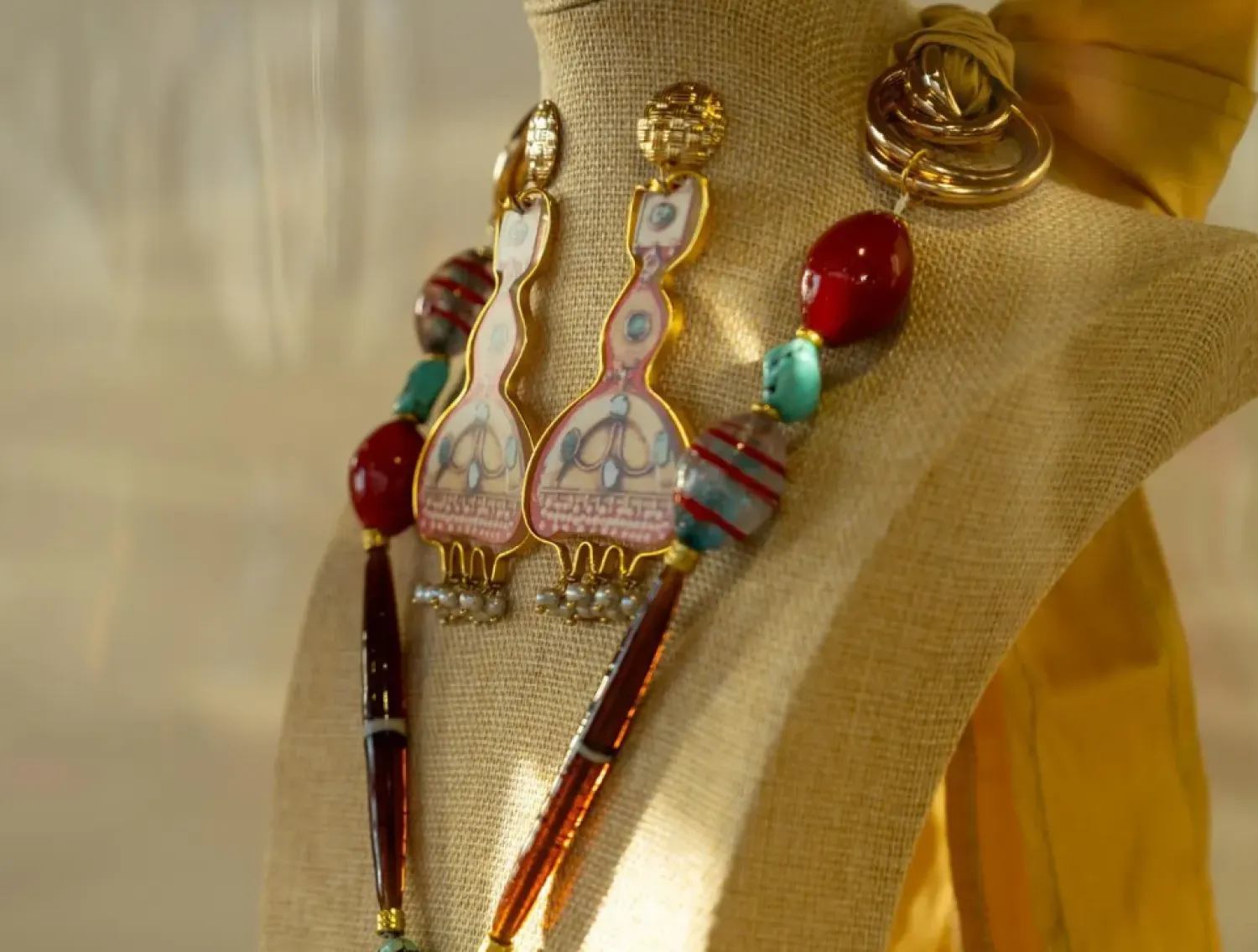
The collections celebrate Saudi heritage by blending traditional and contemporary design. Jewelry and accessory brands also exhibited throughout, providing Saudi designers with a platform to reach a broader global audience. These showcases emphasize the fusion of heritage and modern design, offering a new perspective on the Kingdom's creative identity.
The Saudi 100 Brands program, a flagship initiative of the Fashion Commission, supports emerging designers by providing tools, expertise, and platforms to grow their global presence. This collaboration with the Saudi Cup underscores the importance of celebrating cultural heritage while advancing design innovation.

Each piece in the exhibition incorporates heritage motifs, textiles, and storytelling, reimagined through innovative design to appeal to modern and international audiences.

The exhibition aims to celebrate national identity, highlight local creative talent, and present the evolving direction of Saudi fashion, SPA reported.

Visitors explored the intersection of craftsmanship and cultural expression, discovering how designers honor tradition while advancing fashion design.

The experience also introduced global audiences to Saudi Arabia’s dynamic and growing fashion ecosystem.

This participation reflects the Fashion Commission’s vision to develop a thriving fashion sector rooted in cultural heritage and global ambition. By combining cultural narratives with innovative design, the commission enables Saudi fashion to contribute to global creative industries, nurture talent, and position Saudi brands for sustained success.