


At Sundance, Documentaries Resurrect Lost Eras of Music

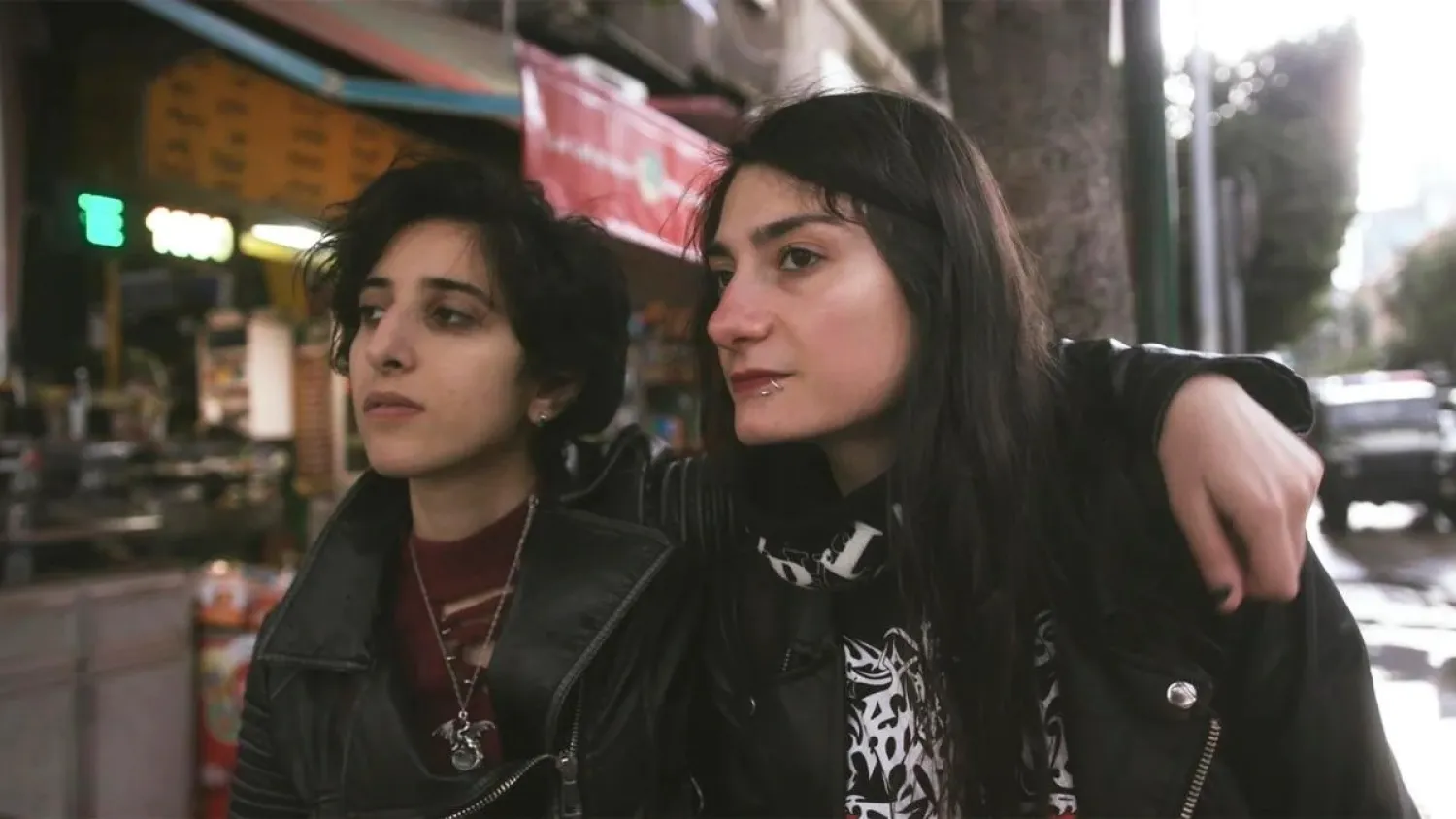
Lilas Mayassi, left, and Shery Bechara appear in "Sirens," a documentary by Rita Baghdadi, an official selection of the World Cinema: Documentary Competition at the 2022 Sundance Film Festival. (Rita Baghdadi/Sundance Institute via AP)
TT

At Sundance, Documentaries Resurrect Lost Eras of Music

Lilas Mayassi, left, and Shery Bechara appear in "Sirens," a documentary by Rita Baghdadi, an official selection of the World Cinema: Documentary Competition at the 2022 Sundance Film Festival. (Rita Baghdadi/Sundance Institute via AP)

Can a music scene still develop the way grunge did in 1990's Seattle or hip-hop did in the Bronx in the 1970s? Or has the digital makeover of music made such geographical-based explosions obsolete?

It's a question that hovers over the Sundance Film Festival documentary “Meet Me in the Bathroom,” a vivid and shambolic time capsule of early 2000s New York when bands like the Yeah Yeah Yeahs, TV on the Radio, the Strokes, Interpol and LCD Soundsystem made the city — and Brooklyn in particular — one the last easily identifiable hotbeds of rock music.

The film, which debuted Sunday at Sundance, is directed by Dylan Southern and Will Lovelace, and adapted from Lizzy Goodman’s book, “Meet Me in the Bathroom: Rebirth and Rock and Roll in New York City 2001-2011." Focusing mainly on the first handful of those years, the documentary is an ode to an already far-gone era when a wave of bands revitalized New York's music scene, capturing the gritty romance of the city. Brief interludes of news footage hint at a broader digital narrative forming largely outside the scene's bubble: Y2K fears, the onset of Napster, the introduction of the iPod.

“One of the things we kept asking is: Is it even possible for a scene to emerge in one place with such intensity?” Southern, who with Lovelace made the 2012 LCD Soundsystem documentary “Shut Up and Play the Hits,” said in a recent interview. “Now the way we consume music is different, the way we listen or even make music is different. The Guardian newspaper, when they reviewed the book, they described it as a flashbulb moment before everything changed.”

“Everything is so democratized and spread out,” adds Lovelace. “People don’t seem to buzz around music the way they once did.”

At Sundance, though, there is always buzz around music documentaries. At last year's virtual festival, Questlove's “Summer of Soul (or... The Revolution Will Not Be Televised)," which documented the 1969 Harlem Cultural Festival, was arguably the festival's biggest breakout hit. This year's Sundance, which is also happening virtually and runs through Sunday, abounds in music documentaries. Among this year's crop is the first film of a three-part Netflix documentary on Ye (formerly Kanye West), “jeen-yuhs," and the Sinéad O'Connor doc “Nothing Compares.”

The films differ widely in subject and style but they each resurrect a musical past that feels very distant from our present.

In the first part of “jeen-yuhs," which debuts next month on Netflix, a not-yet-famous Ye is struggling to score a record deal, selling beats and yearning for the kind of ubiquity that has followed for him, more or less nonstop, since his 2004 debut album, “The College Dropout." His hustle is all-consuming, as is his confidence. “Even me doing this documentary, it's a little narcissistic or whatever,” Ye says in a self-reflective moment that now seems prophetic.

But there are also tender scenes in the film, directed by Coodie and Chike, that speak to what propelled Ye in the first place — like the touchingly sweet support of his late mother, Donda. She's the most encouraging of mothers, rapping along to her son's lyrics and telling him, “You play tracks the way Michael Jordan shoots free throws.”

Such a maternal relationship never existed for O'Connor, who speaks about the abuse she suffered from her mother in Kathryn Ferguson's “Nothing Compares." To many, O'Connor has been largely reduced to a caricature — that fiery bald Irish singer who tore up an image of the pope on “Saturday Night Live.” But “Nothing Compares," by laying out O'Connor's life, which she discusses in off-camera interviews heard through the film, gives O'Connor's music and career the depth it deserves by tracing the pain that drove it. She was just 20, and pregnant, when her 1987 debut album came out.

And from the start, O'Connor was outspoken on a wide range of issues, from the Catholic Church she had be schooled under, to the Grammy Awards' ghettoizing of rap. Sometimes her protests came with self-aggrandizement, but you can't watch “Nothing Compares” (which unfortunately, since the Prince estate didn't allow it, doesn't include “Nothing Compares 2 U”) and not think that O'Connor's rage came from a genuine place. And the intervening years, which have seen much uncovered about long-concealed abuse by Catholic priests, have cast her criticisms in a different light.

“I was always being crazied by the media, made out to be crazy,” she says in film. But the abuse of children by priests, she says: “That was crazy."

"Nothing Compares” suggests O'Connor, in speaking out the way she did, was ahead of her time. Yet the documentary stays largely in the past, effectively ending in the mid-'90s and not following O'Connor's life since her brief mega-stardom. A Sundance standing ovation might have been a crowning moment of redemption for O'Connor. The film's festival Q&A was canceled after her 17-year-old son, Shane O'Connor, recently killed himself.

Rita Baghdadi's “Sirens" is set against a recent past and a more tumultuous political backdrop. It is, without a doubt, the most compelling portrait of a female Lebanese thrash metal band you've ever seen. But it's also a clear standout at Sundance and far more than a novelty act. In a documentary genre that can easily slide into cliché, “Sirens” exists another world. Its characters, the members of the Beirut-based Slave to Sirens, are wrestling with more extreme issues than most black-clad, tattoo-covered bands confront. For them, freedom of speech battles and rights blur with power chords.

It's a classic tale of band dynamics, too, focusing largely on the friendship and disagreement of Lilas Mayassi and Shery Bechara, the band's two guitarists. Their squabbles sometimes sound like those of any band. But in other occasions, resistance on stage and off joins in harmony. In one scene, Mayassi and Bechara meet and converse on sidewalk, only to be engulfed by a marching protest, which they casually join.

Southern and Lovelace made “Meet Me in the Bathroom” (the title comes from a Strokes song) mostly during the pandemic. Though they always intended to focus largely on archival footage, the circumstance led them to keep the film entirely in its period, without the modern-day reflections of talking heads. Instead, “Meet Me in the Bathroom” captures the feeling of limitless potential — of seemingly born-to-perform singers like Karen O and Julian Casablancas making their first steps onto a stage. The directors considered each thread a coming-of-age story.

“In a weird way, COVID helped us because in lockdown, people had time on their hands and they were happy to climb into the attic or go into their storage unit and find these things that had been there for 20 years,” says Southern. “What we didn’t want to do was make a typical behind-the-music rock-doc where you have talking head interviews with the bands 20 years later and it really takes you out of the time. We wanted as much as possible to situate the audience back in that time.”



‘Godfather’ and ‘Apocalypse Now’ Actor Robert Duvall Dead at 95 

Actor Robert Duvall arrives at the 72nd Golden Globe Awards in Beverly Hills, California January 11, 2015. (Reuters)
TT

‘Godfather’ and ‘Apocalypse Now’ Actor Robert Duvall Dead at 95 

Actor Robert Duvall arrives at the 72nd Golden Globe Awards in Beverly Hills, California January 11, 2015. (Reuters)

Robert Duvall, who played the smooth mafia lawyer in "The Godfather" and stole the show with his depiction of a surfing-crazed colonel in "Apocalypse Now," has died at the age of 95, his wife said Monday.

His death Sunday was confirmed by his wife Luciana Duvall.

"Yesterday we said goodbye to my beloved husband, cherished friend, and one of the greatest actors of our time. Bob passed away peacefully at home," she wrote.

Blunt-talking, prolific and glitz-averse, Duvall won an Oscar for best actor and was nominated six other times. Over his six decades-long career, he shone in both lead and supporting roles, and eventually became a director. He kept acting in his 90s.

"To the world, he was an Academy Award-winning actor, a director, a storyteller. To me, he was simply everything," Luciana Duvall said. "His passion for his craft was matched only by his deep love for characters, a great meal, and holding court."

Duvall won his Academy Award in 1983 for playing a washed-up country singer in "Tender Mercies."

But his most memorable characters also included the soft-spoken, loyal mob consigliere Tom Hagen in the first two installments of "The Godfather" and the maniacal Lieutenant Colonel William Kilgore in Francis Ford Coppola's 1979 Vietnam War epic "Apocalypse Now."

"It was an honor to have worked with Robert Duvall," Oscar winner Al Pacino, who acted alongside Duvall in "The Godfather" films, said in a statement.

"He was a born actor as they say, his connection with it, his understanding and his phenomenal gift will always be remembered. I will miss him."

As Colonel Kilgore, Duvall earned an Oscar nomination and became a bona fide star after years playing lesser roles, in a performance where he utters what is now one of cinema's most famous lines.

"I love the smell of napalm in the morning," his war-loving character -- bare chested, cocky and sporting a big black cowboy hat -- muses as low-flying US warplanes bomb a beachfront tree line where he wants to go surfing.

That character was originally created to be even more over the top -- his name was at first supposed to be Colonel Carnage -- but Duvall had it toned down, demonstrating his meticulous approach to acting.

"I did my homework," Duvall told veteran talk show host Larry King in 2015. "I did my research."

Cinema giant Francis Ford Coppola -- who directed Duvall in "Apocalypse Now" and "The Godfather" -- called his loss "a blow."

"Such a great actor and such an essential part of American Zoetrope from its beginning," Coppola said in a statement on Instagram.

- A 'vast career' -

Duvall was sort of a late bloomer in Hollywood -- he was already 31 when he delivered his breakout performance as the mysterious recluse Boo Radley in the 1962 film adaptation of Harper Lee's novel "To Kill a Mockingbird."

He would go on to play myriad roles -- a bullying corporate executive in "Network" (1976), a Marine officer who treats his family like soldiers in "The Great Santini" (1979), and then his star turn in "Tender Mercies."

Duvall often said his favorite role, however, was one he played in a 1989 TV mini-series -- the grizzled, wise-cracking Texas Ranger-turned-cowboy Augustus McCrae in "Lonesome Dove," based on the novel by Larry McMurtry.

British actress Jane Seymour, who worked with Duvall on the 1995 film "The Stars Fell on Henrietta," took to Instagram to share a heartfelt tribute to the star.

"We were able to share in his love of barbecue and even a little tango," Seymour captioned a photo of herself with Duvall. "Those moments off camera were just as memorable as the work itself."

US actor Alec Baldwin made a short video tribute to Duvall, speaking about the star's "vast career."

"When he did 'To Kill A Mockingbird' he just destroyed you with his performance of Boo Radley, he used not a single word of dialogue, not a single word, and he just shatters you," Baldwin said.

Film critic Elaine Mancini once described Duvall as "the most technically proficient, the most versatile, and the most convincing actor on the screen in the United States."


Songwriter Billy Steinberg Dies at 75

Grammy-winning songwriter Billy Steinberg (L) was behind several top hits of the 1980s and 1990s including Madonna's 'Like A Virgin'. Paul A. Hebert / GETTY IMAGES NORTH AMERICA/AFP/File
TT

Songwriter Billy Steinberg Dies at 75

Grammy-winning songwriter Billy Steinberg (L) was behind several top hits of the 1980s and 1990s including Madonna's 'Like A Virgin'. Paul A. Hebert / GETTY IMAGES NORTH AMERICA/AFP/File

Award-winning US songwriter Billy Steinberg, who wrote several top hit songs including Madonna's "Like a Virgin," died Monday at age 75, according to media reports.

Steinberg wrote some of the biggest pop hits of the 1980s and 1990s and was behind songs performed by singers from Whitney Houston and Celine Dion to Madonna and Cyndi Lauper.

He died following a battle with cancer, his attorney told the Los Angeles Times and BBC News.

"Billy Steinberg's life was a testament to the enduring power of a well-written song -- and to the idea that honesty, when set to music, can outlive us all," his family said in a statement to the outlets.

Steinberg was born in 1950 and grew up in Palm Springs, California, where his family had a table grape business. He attended Bard College in New York and soon began his career in songwriting.

He helped write five number one singles on the Billboard Hot 100 list. Among those was "Like a Virgin," co-written with Tom Kelly, which spent six consecutive weeks at the top of the charts.

Steinberg won a Grammy Award in 1997 for his work on Celine Dion's "Falling Into You."

He was inducted into the Songwriters Hall of Fame in 2011.


'Train Dreams,' 'The Secret Agent' Nab Spirit Wins to Boost Oscars Campaigns

'Train Dreams' director Clint Bentley speaks to the audience after his film grabbed best feature at the Film Independent Spirit Awards, as it continues its best picture Oscars campaign. KEVIN WINTER / GETTY IMAGES NORTH AMERICA/AFP
TT

'Train Dreams,' 'The Secret Agent' Nab Spirit Wins to Boost Oscars Campaigns

'Train Dreams' director Clint Bentley speaks to the audience after his film grabbed best feature at the Film Independent Spirit Awards, as it continues its best picture Oscars campaign. KEVIN WINTER / GETTY IMAGES NORTH AMERICA/AFP

Period drama "Train Dreams" took home the Spirit Awards win for best feature Sunday, as both it and "The Secret Agent" gathered momentum ahead of the Academy Awards.

"The Secret Agent" notched best international film as its team hopes to win in the same category at the Oscars next month.

The annual Film Independent Spirit Awards ceremony only celebrates movies made for less than $30 million.

"Train Dreams," director Clint Bentley's adaptation of the Denis Johnson novella, follows a railroad worker and the transformation of the American northwest across the 20th century.

The film won three of its four categories, also grabbing wins for best director and best cinematography. The movie's lead, Joel Edgerton, however, did not take home best actor, which went to Rose Byrne for "If I Had Legs I'd Kick You."

"Train Dreams" producer Teddy Schwarzman told AFP the film "is a singular journey, but it hopefully helps bring people together to understand all that life entails: love, friendship, loss, grief, healing and hope."

"Train Dreams" will compete for best picture at the Oscars, among other honors.

Big win for Brazil

After "The Secret Agent" nabbed best international film, director Kleber Mendonca Filho hailed the win as one that hopefully "gives more visibility to Brazilian cinema."

The film follows a former academic pursued by hitmen amid the political turmoil of Brazil under military rule.

It prevailed Sunday over contenders including rave-themed road trip movie "Sirat," which will compete alongside "The Secret Agent" for best international feature film at the Oscars, capping Hollywood's awards season.

"The Secret Agent" will also be up for best picture, best actor and best casting.

Brazil's "I'm Still Here" won best international feature at the Oscars last year.

Other Spirit winners on Sunday included "Lurker," for best first screenplay and best first feature film.

"Sorry, Honey" nabbed best screenplay and "The Perfect Neighbor" scored best documentary.

The Academy Awards will be presented on March 15.