


Travel Ban Imposed on Iraq Finance Minister amid Dispute with Sadr

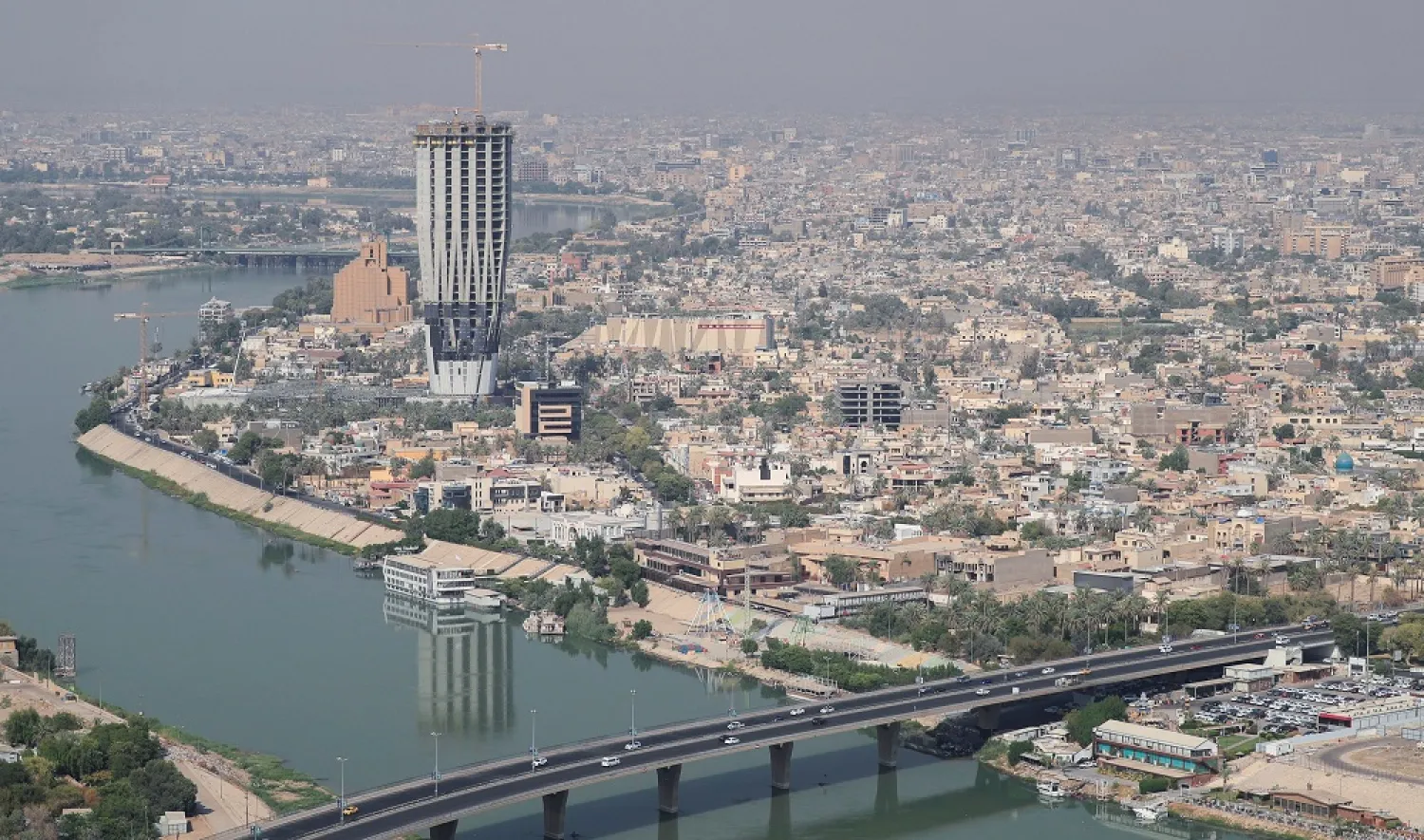
An aerial view of Baghdad, Iraq, Aug. 11, 2021. (Reuters)
TT

Travel Ban Imposed on Iraq Finance Minister amid Dispute with Sadr

An aerial view of Baghdad, Iraq, Aug. 11, 2021. (Reuters)

Criticism by Iraqi Finance Minister Ali Abdul-Amir Allawi against Sadrist movement leader cleric Moqtada al-Sadr and Deputy parliament Speaker Hakim al-Zamili has sparked wide debate in the country.

It marked the first time a minister openly criticizes Sadr, who enjoys a very loyal support base in the millions in Baghdad and other Iraqi regions. He also holds the parliamentary majority, with 73 lawmakers.

The criticism prompted a retort from Zamili, who slammed Allawi on Saturday for his failure in running his ministry. Zamili is also a member of the Sadrist movement.

The dispute between the Sadrists and Allawi goes back to popular demands to restore the dinar's exchange rate to match the global oil prices. In 2020, the central bank, with the Finance Ministry's backing, lowered the exchange rate by 23 percent against the dollar.

In a tweet on Friday, Sadr called on the parliament to summon Allawi and the central bank governor for a debriefing over the exchange rate and other financial issues.

Allawi responded with a strongly-worded message to Prime Minister Mustafa al-Kadhimi, refusing to appear before parliament and criticizing the way he was summoned by Zamili.

In his message, Allawi confirmed that he received a summons by the deputy parliament speaker, criticizing how it was made shortly after Sadr made his tweet.

"This entire process is unacceptable and no one should remain silent over it, for the sake of the dignity of the government, mine as a minister and mine personally and for my family," he remarked.

"The government does not stand accountable before any political party. It is responsible before the Iraqi people through the elected parliament," he continued.

"If we, as a government, do not reject this heinous meddling in the affairs of government by political parties, then we might as well relinquish the independence of the government," he went on to say.

Allawi stressed his "categorical rejection" of the summons by the deputy parliament speaker, because such an order is beyond his jurisdiction.

"I also categorically refuse to see the government being run through tweets by political leaders, regardless of their popularity and standing," he declared.

The minister defended his support of lowering the dinar exchange rate, noting that it had enjoyed the support of the international community, government, central bank and political parties at the time.

Moreover, he stressed that he was ready to defend his stance and economic and financial policies "before the lawmakers as a whole, not before a certain parliamentary group."

Central bank Governor Mustafa Ghaleb and his deputy did show up for the summons on Saturday.

A statement from Zamili's office said a travel ban will be imposed on Allawi for refusing to appear before parliament.

He confirmed that the parliament will convene at the end of the week at the request of 50 MPs to discuss the financial policy, exchange rate and other relevant issues.

He also slammed Allawi for his "failed management of companies outside of Iraq," adding that he "has offered nothing to this country." He said he was partially to blame for Iraq's debt "rising to 27 trillion dinars in one year alone."

Kadhimi had yet to comment on the dispute.


Chad Govt Shuts Sudan Border Until Further Notice 

Children poke their heads and arms through holes in makeshift fabric fences in the strategic opposition-controlled town of Akobo, Jonglei State, on February 12, 2026. (AFP)
TT

Chad Govt Shuts Sudan Border Until Further Notice 

Children poke their heads and arms through holes in makeshift fabric fences in the strategic opposition-controlled town of Akobo, Jonglei State, on February 12, 2026. (AFP)

Chad's government said on Monday it was closing the border with Sudan until further notice, following several clashes between Chadian soldiers and armed groups involved in the civil war across the frontier.

"This decision follows repeated incursions and violations committed by the forces involved in the conflict in Sudan on Chadian territory," Communications Minister Mahamat Gassim Cherif said in a statement, adding that he wanted to halt "any risk of the conflict spreading" to his country.

Sudan's paramilitary Rapid Support Forces have been fighting government troops for almost three years in a conflict that has killed tens of thousands of people and forced 11 million to flee their homes, triggering what the UN says is one of the world's worst humanitarian crises.

The paramilitaries have conducted several operations near the Chad border and at least nine Chadian soldiers have been killed in separate incidents since December.

Monday's statement said Chad "reserves the right to retaliate against any aggression or violation of the inviolability of its territory and its borders".

"Cross-border movements of goods and people are suspended," the text said, adding that "exceptional exemptions" for humanitarian reasons would still be possible.


Report: US Forces to Complete Withdrawal from Syria within a Month 

Men watch as a US military mine-resistant ambush protected (MRAP) armored fighting vehicle moves in a convoy along a highway outside Qamishli in Syria's northeastern Hasakah province on February 23, 2026. (AFP)
TT

Report: US Forces to Complete Withdrawal from Syria within a Month 

Men watch as a US military mine-resistant ambush protected (MRAP) armored fighting vehicle moves in a convoy along a highway outside Qamishli in Syria's northeastern Hasakah province on February 23, 2026. (AFP)

US forces that led the anti-ISIS coalition in Syria will complete their withdrawal from the country within a month, three sources told AFP on Monday.

"Within a month, they will have withdrawn from Syria and there will no longer be any military presence in the bases," a Syrian government official said, with a Kurdish source confirming the development.

A third source, a diplomat, said the withdrawal should be completed within 20 days.

The United States began withdrawing on Monday from a major base in a northeastern region still under the control of Kurdish forces.


Israeli Team in Peace Council Reveals Vision for Gaza Reconstruction

A female member of the al-Ghafir family, sits of the debris of the al-Hasayna Mosque as she recites from a copy of the Quran, during the holy month of Ramadan in western Gaza City on February 21, 2026. (Photo by Omar AL-QATTAA / AFP)
TT

Israeli Team in Peace Council Reveals Vision for Gaza Reconstruction

A female member of the al-Ghafir family, sits of the debris of the al-Hasayna Mosque as she recites from a copy of the Quran, during the holy month of Ramadan in western Gaza City on February 21, 2026. (Photo by Omar AL-QATTAA / AFP)

While many observers remain skeptical about the chances of success for President Donald Trump’s comprehensive Middle East peace plan, figures close to the US administration are projecting confidence. Among them are three Israelis selected for key roles in the project, though they do not formally represent the Israeli government.

According to a report in Yedioth Ahronoth, the officials insist the initiative is already underway, with Egypt, Türkiye and Qatar playing influential roles in persuading Hamas to cooperate. Despite skepticism within parts of Israel’s political and military leadership regarding the feasibility of the plan — and the ability of Trump advisers Steve Witkoff and Jared Kushner to implement it — the Peace Council members argue that progress so far is “encouraging.”

The Israeli members of the council are Israeli-Cypriot businessman Yakir Gabay, high-tech entrepreneur Liran Tancman, and Michael Eisenberg, who serves as Prime Minister Benjamin Netanyahu’s representative at the US coordination headquarters in Kiryat Gat.

They contend that Hamas’ agreement to disarm, coupled with reforms to Palestinian school curricula to promote “a culture of peace and tolerance,” would transform Trump’s initiative into “a historic opportunity to turn Gaza into a true Riviera.”

Gabay outlined the first phase: removing 70 million tons of rubble and unexploded ordnance, recycling usable materials, demolishing and sealing hundreds of kilometers of tunnels, and establishing rapid temporary housing in reinforced tents. Parallel efforts would focus on building infrastructure and permanent residential towers.

Plans also include modern hospitals, schools, factories, agricultural zones, road and rail networks, energy and water facilities, data centers, a seaport and an airport. Contractors experienced in constructing millions of housing units across the Middle East would be recruited, with funding reportedly secured. Hundreds of thousands of jobs are expected to be created. In addition to housing and workplaces, 200 hotels are planned.

Tancman, who advises Israel’s national cyber directorate, pledged to introduce advanced technological solutions in cooperation with American, Arab and Palestinian partners. This includes upgrading Gaza’s internet network from 2G to 5G and making access free of charge. Mechanisms for exporting Gaza-made goods are also under development.

A “New Era”?

Officials told Yedioth Ahronoth that reconstruction has effectively begun in Rafah and is expected to take three years. Israel is currently clearing debris, with 100,000 homes slated for construction in the first phase to house 500,000 residents. Infrastructure alone is projected to cost $5 billion. Ultimately, 400,000 homes are planned, with total infrastructure costs estimated at $30 billion, alongside a similar sum for construction.

A senior Peace Council member suggested that if Hamas responds positively, Israel could consider measures such as amnesty for its leaders or even purchasing weapons for cash. “Gaza and its people could enter a new era—connected and open to the world,” he said.

Separately, The Times of Israel cited a US official confirming that funds would not flow before Hamas agrees to disarm, adding that Israel must also act constructively.

An Arab diplomat cautioned that sustained pressure on both sides would be essential to ensure the plan’s success and the establishment of a technocratic administration in Gaza.
