


Saudi Crown Prince Launches New Strategy for National Development Fund

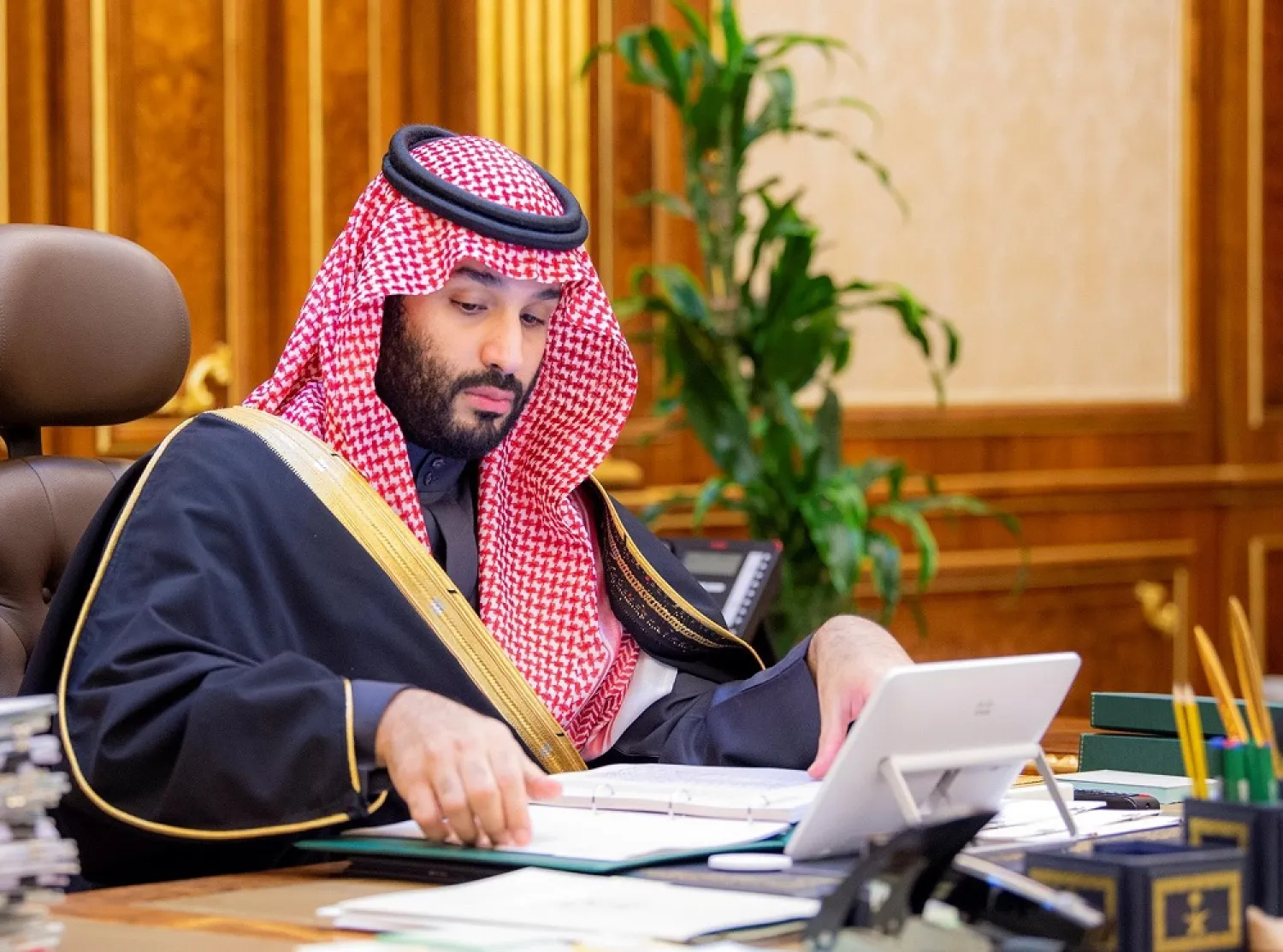
Saudi Crown Prince Mohammed bin Salman. (SPA)
TT

Saudi Crown Prince Launches New Strategy for National Development Fund

Saudi Crown Prince Mohammed bin Salman. (SPA)

Saudi Crown Prince Mohammed bin Salman, Deputy Prime Minister, and Chairman of the National Development Fund (NDF), launched on Monday the Fund’s strategy.

The strategy was announced during a meeting of the NDF’s Board of Directors.

The strategy aims to make the fund a pivotal enabler for the economic and social objectives of the Saudi Vision 2030 and overcome existing development challenges, in line with global best practices, reported the Saudi Press Agency.

"NDF’s strategy aspires to create a long-term and sustainable economy through transforming the Fund into a Development Finance Institution (DFI) that will contribute to achieving the objectives of Vision 2030," said Crown Prince Mohammed.

It seeks through its development funds and banks to stimulate a threefold increase in the private sector's development impact on the Kingdom's economy by 2030.

Moreover, NDF will contribute to Saudi Arabia's real GDP growth by injecting more than SAR 570 billion by 2030, added Crown Prince Mohammed.

Additionally, NDF targets to achieve more than a threefold increase of non-oil GDP to reach SAR 605 billion, in addition to generating many job opportunities in the Kingdom by 2030.

The NDF’s strategy activates the Kingdom’s development objectives by securing liquidity for the development funds and banks, in addition to enabling it to achieve a sustainable business model portfolio, and mobilizing the private sector to boost its role in development finance and take advantage of the harmonization, commercial and operational integration to serve the beneficiaries of the affiliated entities in securing long-term sustainable economic growth.

Furthermore, the NDF’s strategy aims to inaugurate initiatives concerned with improving performance and transparency, increasing efficiency and effectiveness, along developing the internal capabilities required to meet the aspirations and objectives of NDF for long-term development finance.

Muhammad bin Mazyad Al-Tuwaijri, NDF Vice Chairman of the Board, said the launch of the strategy "is a step that reflects our firm commitment to transform into an integrated development financing institution, which contributes to the development and diversification of the Saudi economy and boosts its prosperity; to consolidate the Kingdom's position at the global level."

"We intend to achieve these goals by transforming the Kingdom’s economy from an economy dependent on government spending to an economy led and integrated by the private sector," he stressed.

"We are confident that the National Development Fund will be one of the main pillars to turn these plans into a tangible reality," he added.

Stephen Groff, Governor of the NDF, said: "At NDF, we have a huge opportunity to enhance the efficiency of government development funds and banks in terms of identifying and investing in financing opportunities across the Kingdom."

"Our goal is to become a global brand of excellence in development finance through integration, alignment, and facilitation of synergies between partners. These plans are centered around cementing robust and sustainable financial institutions that function according to global best practices," he continued.

"As the NDF's strategy gains momentum, we will bear fruit in ensuring high levels of prosperity, improving the quality of life, generating new and sustainable jobs, and positioning the Kingdom as a new hub of foreign investments. Today, we are at the crossroads of big things to come, venturing forward in our quest to make the Crown Prince's Vision a reality and lead the world in different areas," he stressed.

The NDF was established by the Crown Prince's recommendation to set affiliated development funds and banks with robust and sustainable development that functions according to global best practices. The NDF is mandated to blaze a path for Vision 2030 goals and development agendas to be transformed into reality. The Fund oversees the financing activities carried out by its development funds and banks and aligns its various policies.

The NDF has injected more than SAR 690 billion through its affiliates since its inception, becoming one of the largest development finance funds in terms of the ratio of assets to GDP in G20 economies, with assets amounting to SAR 496 billion.



Saudi Stocks Close Higher at 11,122 Points amid Mixed Performance

A market display screen inside the headquarters of the Saudi Tadawul Group in Riyadh (Asharq Al-Awsat)
TT

Saudi Stocks Close Higher at 11,122 Points amid Mixed Performance

A market display screen inside the headquarters of the Saudi Tadawul Group in Riyadh (Asharq Al-Awsat)

Saudi Arabia’s main stock index (TASI) ended Sunday’s session up 0.1 percent to close at 11,122 points, with liquidity of about 3.6 billion riyals ($960 million).

Among leading stocks, Al Rajhi Bank rose 1 percent to 69.1 riyals, while SABIC gained 2 percent to 58.4 riyals.

Petro Rabigh topped the list of gainers, rising 10 percent to 12.65 riyals, following the company’s announcement of its first-quarter 2026 financial results.

In contrast, Saudi Aramco, the index’s heaviest-weighted stock, fell 0.22 percent to 27.16 riyals.

Shares of NADEC and Alawwal Bank declined 4 percent each, while Kingdom Holding Company fell 3 percent.

Ban topped the list of decliners, dropping 8 percent.


Saudi Economy Surpasses $1 Trillion Mark, Grows 80% Since Vision 2030’s Launch

The Saudi Center for Competitiveness and Business offers support for investors in the local market (SPA)
TT

Saudi Economy Surpasses $1 Trillion Mark, Grows 80% Since Vision 2030’s Launch

The Saudi Center for Competitiveness and Business offers support for investors in the local market (SPA)

Saudi Arabia’s economy has surpassed the $1 trillion mark for the first time, expanding by 80 percent since the launch of Vision 2030, according to the Kingdom’s 2025 Vision 2030 report.

The milestone underscores the impact of fiscal reforms and diversification efforts aimed at reducing dependence on oil. Non-oil activities now account for 55 percent of the economy, up from 45 percent in 2016, while non-oil government revenues have risen more than 170 percent, from SAR185.7 billion ($49.5 billion) in 2016 to SAR505 billion ($134.6 billion) last year.

The report said the gains reflected investment in growth sectors, legal reforms and a more attractive business climate.

Fiscal discipline, rising liquidity

Saudi authorities noted that fiscal policy remained anchored in spending discipline and sustainability, with deficit targets ranging between 5 percent and 7 percent of gross domestic product.

Liquidity reached a record SAR3.167 trillion in 2025, up from about SAR1.799 trillion in 2016.

Officials said expansionary spending had been directed toward strategic sectors linked to economic growth and living standards.

Debt low, reserves rise

Despite higher spending, Saudi Arabia has maintained one of the lowest debt burdens in the G20, with public debt below 50 percent of GDP. Foreign reserves rose to SAR1.7 trillion ($453.3 billion), their highest level in five years.

Real GDP growth accelerated from 1.7 percent in 2016 to 4.5 percent last year, the report said.

Competitiveness gains

Saudi Arabia rose 15 places between 2021 and 2025 in the IMD World Competitiveness Yearbook to rank 17th globally, placing fourth among G20 countries last year.

The government introduced more than 1,000 reforms and 1,200 regulatory measures in recent years, including allowing full foreign ownership in most sectors and implementing a new bankruptcy law. The measures improved transparency, dispute resolution and legal certainty for investors.

Saudi Arabia has also expanded support for small and medium-sized enterprises through Monshaat, the SME Bank and Saudi Venture Capital Company.

The number of SMEs exceeded 1.7 million by the end of 2025, employing around 8.88 million people and contributing 22.9 percent to GDP. More than 474,000 businesses are owned by young Saudis, according to the report.

Growth outlook

The International Monetary Fund projects Saudi growth of 3.1 percent this year and 4.5 percent in 2027. The World Bank forecasts growth of 4.3 percent in 2026 and 4.4 percent next year.

The Organization for Economic Cooperation and Development (OECD) expects growth of 4 percent this year and 3.6 percent in 2027. For its part, Saudi Arabia’s Finance Ministry forecasts growth of 4.6 percent in 2026 and 3.7 percent next year.


Vision 2030 Redefines Saudi Arabia's Wealth from Oil Supplier to Global Energy Hub

Solar power in Saudi Arabia (SPA)
TT

Vision 2030 Redefines Saudi Arabia's Wealth from Oil Supplier to Global Energy Hub

Solar power in Saudi Arabia (SPA)

Saudi Arabia has chosen to rethink its relationship with its resources, asking a different question: How can we make what we have work to its fullest potential in a rapidly changing world?

This was the essence of Vision 2030, which saw valuable opportunities in diversifying energy sources and maximizing the value of oil and gas to achieve greater prosperity, keeping pace with global environmental changes.

The first clear sign of this shift was the renaming of the Ministry of Petroleum and Mineral Resources to the Ministry of Energy, a clear indication of expanding the horizon from oil and gas alone to a comprehensive energy system that includes renewables at its core.

A Naturally Qualified Land

This choice was not made without study. The Kingdom possesses geographical enablers that give it an exceptional competitive position: a climate conducive to successful solar energy projects, vast areas suitable for wind power projects, and geographical diversity that contributes to the development of hydrogen energy, all supported by accumulated investment capabilities and research expertise.

On this fertile ground, a series of initiatives and projects were launched: The National Renewable Energy Program, the Custodian of the Two Holy Mosques Renewable Energy Initiative, and the establishment of the National Renewable Energy Data Center, followed by solar and wind power projects aimed at enhancing electricity generation efficiency.

The results speak clearly: The production capacity for electricity generation from renewable sources increased from 3 gigawatts in 2020 to 46 gigawatts in 2025. The total number of projects related to this sector reached 64, distributed among 40 solar power projects, 9 wind power projects, and 15 energy storage projects.

Hydrogen: The Big Bet

At the heart of NEOM, an unparalleled project is being born: the green hydrogen project, the largest and first of its kind globally, with a production capacity of 600 tons of green hydrogen per day.

To support this direction, the first phase of the Yanbu Green Hydrogen Hub was launched, equipped with facilities for generating electricity from renewable sources, desalination plants, electrolysis units, facilities for converting hydrogen into green ammonia, and a dedicated export terminal.

The Battery Race

Figures in the energy storage sector are no less exciting; the Kingdom is approaching China in the global battery storage project cost race, with a cost of $409 per kilowatt for projects with a four-hour storage capacity, compared to $404 for China.

The total capacity of proposed energy storage projects reached 30 gigawatt-hours, while 8 gigawatt-hours have been connected to the electricity grid.

In a remarkable achievement, Aramco successfully operated the world's first renewable energy storage system to support gas well production operations, with a capacity of 1 megawatt-hour, capable of supporting 5 wells for 25 years.

This system relies on a Saudi patent and represents a reliable alternative to traditional solar energy solutions, offering high efficiency in harsh climatic conditions and intelligent response to changing energy needs.

SPARK... When Industry Becomes the Value

Vision 2030 recognized that production alone is no longer sufficient, and that true value lies in building industries, localizing supply chains, and enhancing local content. This is where the idea for King Salman Energy Park "SPARK" was born, with investments exceeding 12 billion Saudi Riyals (3.2 billion dollars) and involving more than 60 local and international investors.

SPARK is located in a strategic position close to energy sources, shipping, and export networks, and includes a dry port allowing faster access. So far, 7 factories have been opened, while another 14 are currently under construction.

Balance, Not Compromise

While the world moves towards transitioning to alternatives to oil and gas, the Kingdom adopts a different vision, believing that an accelerated transition could harm global security and growth, given that renewable energy alone cannot fully meet developmental needs.

Therefore, the Kingdom continues to invest in exploring and developing oil fields, most notably the development of the unconventional Jafurah field, the largest of its kind in the Middle East, which will contribute to maximizing the value chains of gas and petrochemical industries.

Thus, the Kingdom walks a fine line, balancing the preservation of global energy supplies with investment in technologies that eliminate carbon emissions, positioning itself today as a comprehensive energy hub and a model of prudent management.