

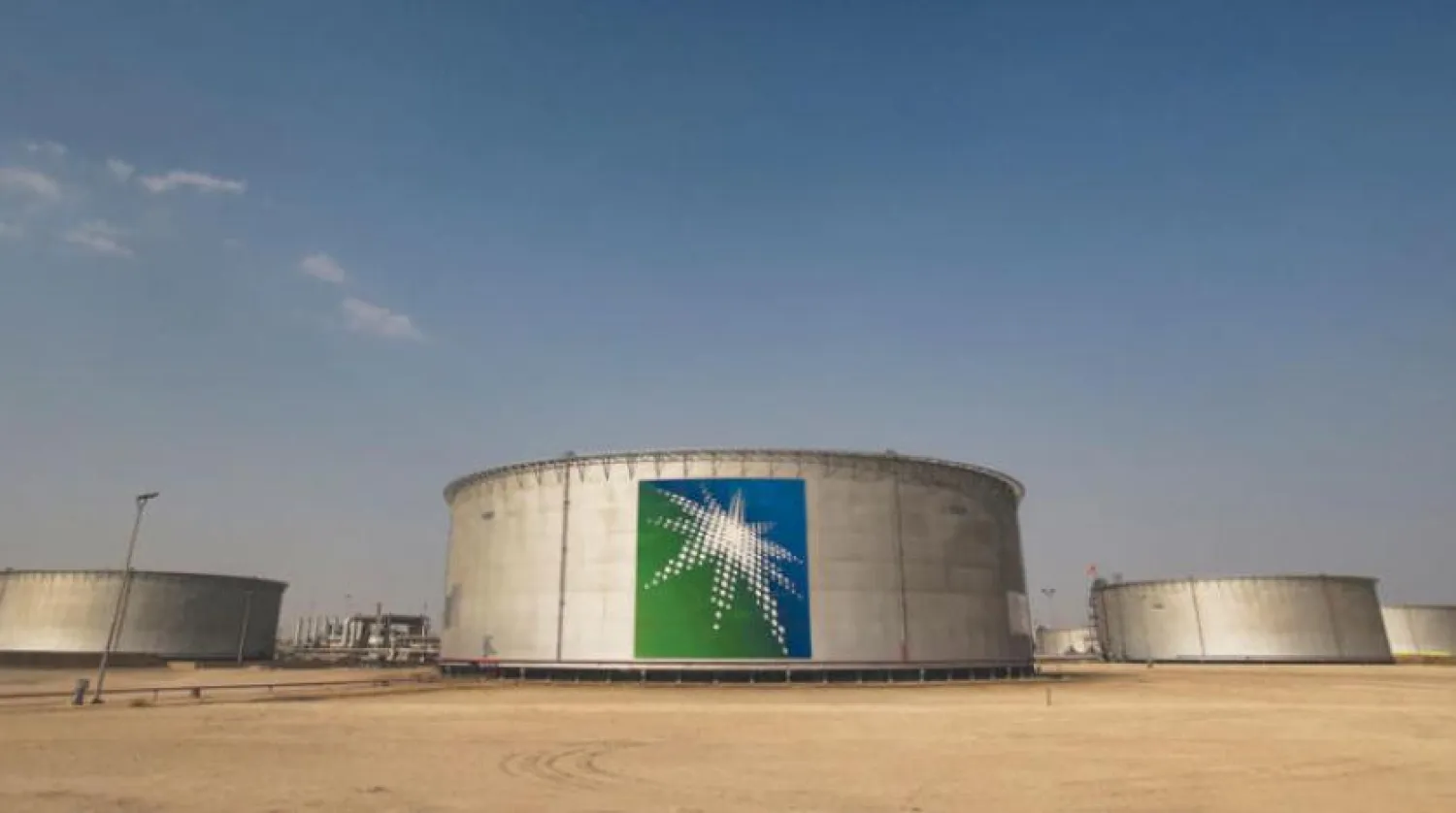

Saudi Arabia is China's Top Crude Supplier Again

Arrivals of Saudi crude totaled 14.61 million tons in January-February. Reuters
TT

Saudi Arabia is China's Top Crude Supplier Again

Arrivals of Saudi crude totaled 14.61 million tons in January-February. Reuters

Saudi Arabia regained the spot as China's top crude supplier in the first two months of 2022, having been leapfrogged by Russia in December, while Russianshipments dropped 9% as a cut in import quotas led independent refiners to scale back purchases.

Arrivals of Saudi crude totaled 14.61 million tons in January-February, equivalent to 1.81 million barrels per day (bpd), down from 1.86 million bpd a year earlier, data from the General Administration of Customs showed on Sunday.

Imports from Russia totaled 12.67 million tons in the two months, or 1.57 million bpd. That compares to 1.72 million bpd in the corresponding 2021 period.

Demand for Russia's flagship ESPO crude from Chinese independent refineries, known as teapots, was hit by Beijing's crackdown on tax evasion and illegal trading of import quotas.

The government also cut its first batch of 2022 crude import allowances to teapots, aiming to eliminate inefficient refining capacity.

Imports from Russia could tumble in March as buyers worldwide shun its cargoes in the wake of the intensifying Ukraine crisis. But Reuters reported that Russian producer Surgutneftegaz was working with China to bypass Western sanctions and keep up oil sales.

Sunday's customs data showed that 259,937 tons of Iranian crude oil arrived in China in January, around the same level as in December 2021, the first imports recorded by official Chinese data since December 2020.

The shipments came as Tehran and Western nations hold talks on reviving a 2015 nuclear deal, pointing to a possible lifting of US sanctions on Iranian oil exports.

No Iranian cargo were recorded by Chinese customs in February.

China's official data also showed no imports from Venezuela, which is under US sanctions as well, in January and February.



Riyadh to Host Middle East’s Largest General Aviation Airshow in November 

The AERO Middle East x Sand & Fun 2026 will be held in Riyadh from November 24 to 28. (SPA)
TT

Riyadh to Host Middle East’s Largest General Aviation Airshow in November 

The AERO Middle East x Sand & Fun 2026 will be held in Riyadh from November 24 to 28. (SPA)

The Saudi Aviation Club announced that it will organize the AERO Middle East x Sand & Fun 2026 in Riyadh from November 24 to 28, reported the Saudi Press Agency on Tuesday.

The event is set to be the largest of its kind for general aviation in the Middle East, combining international business, investment, and innovation with live flying displays and interactive public experiences. It is being held in partnership with Messe Frankfurt Saudi Arabia.

Held at Thumamah Airport, the exhibition will bring together leading global companies operating in the general aviation industry, including aircraft and components manufacturers, avionics and navigation systems providers, as well as maintenance, repair, and overhaul (MRO) companies, offering an integrated platform that covers the full value chain of the sector.

The event will also spotlight startups in advanced air mobility (AAM) and innovators of electric vertical take-off and landing (eVTOL) aircraft, showcasing technologies and business models shaping the future of aviation.

General Supervisor of the Saudi Aviation Club Dr. Ahmed Alfahaid stated that AERO Middle East x Sand & Fun 2026 represents a qualitative leap for the Kingdom’s aviation sector and reinforces its positioning as a global hub for general aviation and advanced air mobility.

The partnership with Messe Frankfurt Saudi Arabia goes beyond presenting global innovations to providing a vital platform for international investment and strategic collaboration, he stressed.

Moreover, the event contributes to achieving Saudi Vision 2030 objectives, including the Kingdom’s ambition to rank among the world’s top 10 general aviation markets, he added.


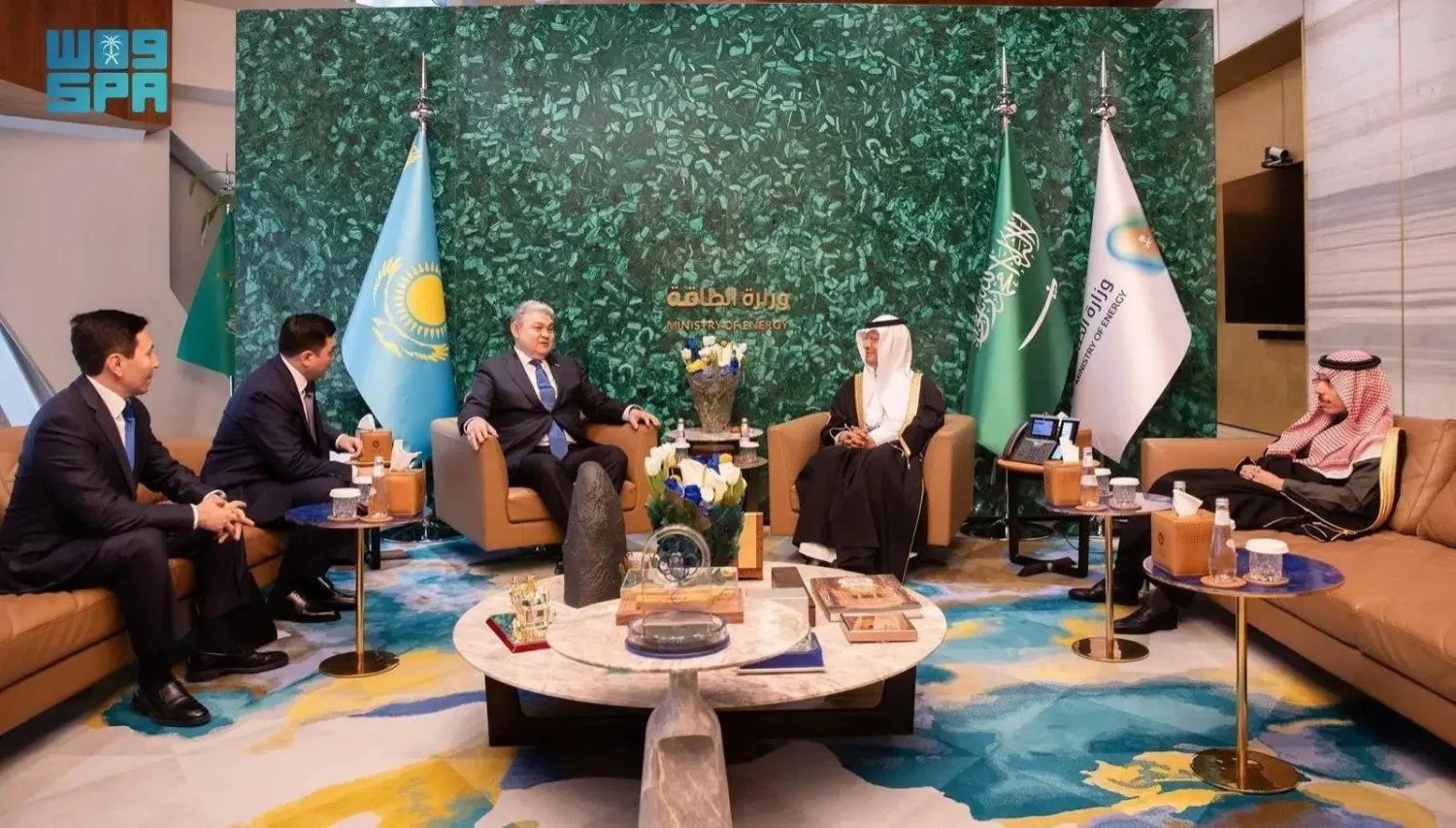
Saudi Arabia, Kazakhstan Agree to Establish Coordination Council

Saudi Minister of Energy Prince Abdulaziz bin Salman bin Abdulaziz receives Kazakhstan’s Foreign Minister Yermek Kosherbayev in Riyadh. (SPA)
TT

Saudi Arabia, Kazakhstan Agree to Establish Coordination Council

Saudi Minister of Energy Prince Abdulaziz bin Salman bin Abdulaziz receives Kazakhstan’s Foreign Minister Yermek Kosherbayev in Riyadh. (SPA)

Saudi Arabia and Kazakhstan agreed to establish a Saudi-Kazakh Coordination Council, reported the Saudi Press Agency on Tuesday.

Saudi Minister of Energy Prince Abdulaziz bin Salman bin Abdulaziz received in Riyadh Kazakhstan’s Foreign Minister Yermek Kosherbayev. Saudi FM Prince Faisal bin Farhan bin Abdullah and Minister of Energy of Kazakhstan Yerlan Akkenzhenov also attended the meeting.

The talks tackled the establishment of the coordination council, which will be chaired by the Saudi minister of energy and Kazakhstan’s foreign minister. The council reflects the two countries’ commitment to strengthening cooperation and expanding their bilateral partnership.

Prince Abdulaziz and Kosherbayev signed an agreement on the establishment of the council, which aims to boost coordination and consultation between the two countries and develop frameworks for cooperation across various sectors of mutual interest, elevating bilateral relations to broader levels.

Prince Abdulaziz and Kosherbayev discussed relations between their countries and ways to develop them further, especially in the energy field. They tackled opportunities for cooperation and investment in renewable energy and energy storage systems and discussed oil market developments.


Saudi-Qatari Partnership Paves Way for Logistics Corridors to Boost Regional Trade Efficiency 

The MoU was signed by Mawani President Eng. Suliman Almazroua and CEO of Qatar Ports Management Company Captain Abdullah Mohammed Al-Khanji. (QNA)
TT

Saudi-Qatari Partnership Paves Way for Logistics Corridors to Boost Regional Trade Efficiency 

The MoU was signed by Mawani President Eng. Suliman Almazroua and CEO of Qatar Ports Management Company Captain Abdullah Mohammed Al-Khanji. (QNA)

The Saudi Ports Authority (Mawani) and Qatar Ports Management Company signed on Tuesday a memorandum of understanding (MoU) aimed at boosting maritime and logistics cooperation between the two sides.

The agreement will contribute to the development of the ports sector, raising operational efficiency, and supporting regional and international trade flows.

The MoU was signed by Mawani President Eng. Suliman Almazroua and CEO of Qatar Ports Management Company Captain Abdullah Mohammed Al-Khanji. Qatari Ambassador to Saudi Arabia Bandar bin Mohammed Al Attiyah attended the signing ceremony.

The agreement reflects Saudi Arabia and Qatar’s commitment to building effective partnerships, exchanging expertise, establishing an organized framework for cooperation management, and developing joint investment opportunities in line with Saudi Vision 2030 and Qatar National Vision 2030.

The MoU outlines eight key areas of cooperation, including the exchange of best practices in port management and operations, and the study of opportunities for direct maritime and land connectivity between the ports of both countries to enhance trade flow efficiency.

It includes collaboration in logistics services, exploring the establishment of joint maritime corridors serving bilateral and regional trade, and assessing the feasibility of creating shared regional distribution centers.

In the fields of digital transformation and artificial intelligence, the two sides agreed to deepen cooperation on developing smart systems, data governance, and the unified maritime window, thereby boosting operational efficiency and keeping pace with technological advancements in the maritime sector.

The MoU places strong emphasis on maritime safety and environmental protection, including exchanging expertise in combating marine pollution and emergency response; developing joint maritime emergency plans; establishing an emergency communication line between the two countries; and cooperating to ensure compliance with international conventions, conduct joint exercises, and develop risk monitoring systems.

The cooperation also covers human capital development through joint training programs and field-exchange of expertise, as well as academic and research collaboration in maritime transport and logistics.

In terms of joint investment, both sides will study local and global investment opportunities in ports and related services and coordinate with the private sector to support these initiatives.

The MoU further includes cooperation in cruise tourism through enhanced maritime connectivity and joint promotion of Gulf cruise routes, as well as international and regional representation by coordinating positions in international maritime organizations and supporting joint initiatives, notably “Green Ports” and “Safe Sea Corridors.”

The agreement reflects the commitment of Mawani and Qatar Ports Management Company to advancing the ports sector and boosting its role as a key driver of trade and economic growth, contributing to Gulf integration and enhancing regional competitiveness in maritime and marine services.