

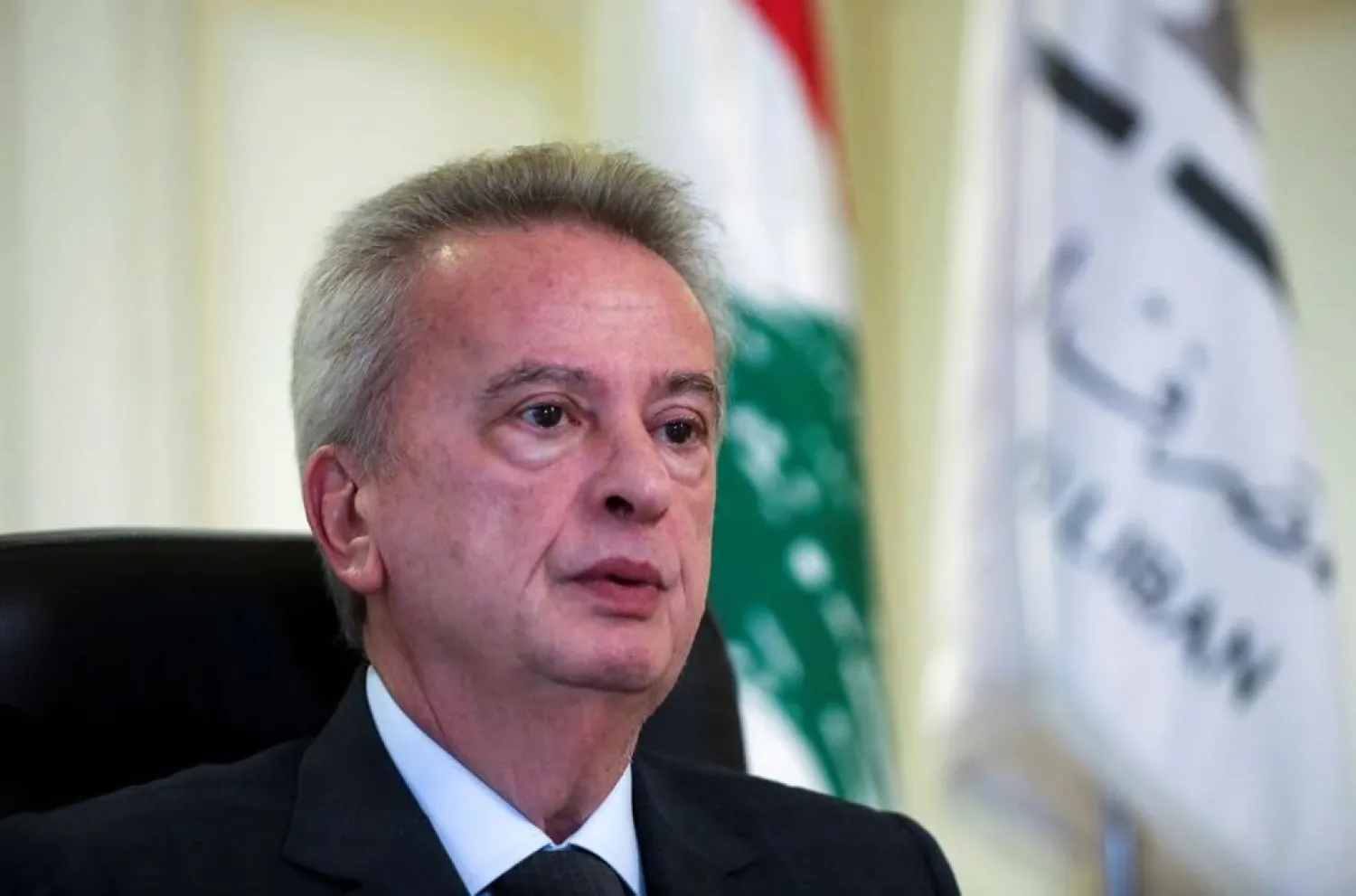

Lebanon’s Central Bank Chief Is Suspect in 120 Mln Euro Asset Freeze Case

Lebanon's Central Bank Governor Riad Salameh speaks during an interview for Reuters Next conference, in Beirut, Lebanon November 23, 2021. (Reuters)
TT

Lebanon’s Central Bank Chief Is Suspect in 120 Mln Euro Asset Freeze Case

Lebanon's Central Bank Governor Riad Salameh speaks during an interview for Reuters Next conference, in Beirut, Lebanon November 23, 2021. (Reuters)

Lebanese central bank governor Riad Salameh is a suspect in a case the European Union's criminal justice agency said on Monday had led to the freezing of some 120 million euros ($132 million) of Lebanese assets, prosecutors in Germany said.

The properties and bank accounts, linked to five people suspected of embezzling some $330 million and 5 million euros between 2002 and 2021, were seized in France, Germany, Luxembourg, Monaco and Belgium, Eurojust said in a statement, which did not identify any suspects.

An email from Munich prosecutors said the Eurojust statement referred to investigations concerning Salameh, whose wealth is being investigated in at least five European states and who was charged last week by a Lebanese judge with illicit enrichment.

A Eurojust spokesperson declined to comment further and declined to name the suspects, in line with regulations.

Asked by text message about the asset freeze and whether he was linked to it, Salameh told Reuters he was not aware and would check. He has previously denied accusations against him, amid mounting scrutiny of his nearly three decades as governor.

A spokesperson for the central bank did not respond to a request for comment on Monday. A lawyer for Salameh did not immediately respond to emailed questions from Reuters on Monday.

Eurojust has been involved in coordinating meetings between countries probing Salameh, who Swiss prosecutors suspect of embezzling some $330 million along with his brother, Raja, according to a letter the Swiss attorney general sent to Lebanese officials last year, which was seen by Reuters.

Germany, France, Luxembourg and Lichtenstein are also investigating Salameh.

A diplomat from one of the countries where the assets were seized confirmed that the freeze was related to the probes into Salameh and his brother.

The Eurojust statement said the assets seized included some 35 million euros worth in Germany that included properties in Hamburg and Munich, two property complexes in Paris worth 16 million euros and Monaco bank accounts worth 46 million euros.

The case in which Salameh was charged in Lebanon is related to the purchase and rental of Paris apartments, including some to the central bank.

Denying the charge against him in Lebanon last week, Salameh told Reuters he had ordered an audit that showed that public funds were not a source of his wealth.

His brother has been arrested for more than a week on a charge of complicity in the same case. A lawyer for Raja Salameh has called the charge against his client unfounded.

Riad Salameh has previously accused Judge Ghada Aoun, who brought the charges against him and his brother, of politicization. Aoun has been publicly backed by President Michel Aoun and the Free Patriotic Movement party he founded, and the party has called for the governor's removal.

Ghada Aoun says she is simply applying the law.

Salameh still has the backing of some of the most powerful people in the land, including Prime Minister Najib Mikati, who has invited Salameh to a Wednesday Cabinet session, in a move widely seen as a sign of support.

The session comes one day before a hearing scheduled by an investigative judge for Salameh in the illicit enrichment case brought against him by Ghada Aoun.



Iraq Closes Three Iran Crossings, Pursues Those Behind Attacks on Saudi Arabia

Travelers at the Shalamsheh border crossing between Iraq and Iran after Iraqi authorities ordered its closure as a precautionary measure following the latest drone attacks on Saudi Arabia on September 12, 2026 (Reuters)
TT

Iraq Closes Three Iran Crossings, Pursues Those Behind Attacks on Saudi Arabia

Travelers at the Shalamsheh border crossing between Iraq and Iran after Iraqi authorities ordered its closure as a precautionary measure following the latest drone attacks on Saudi Arabia on September 12, 2026 (Reuters)

Iraq closed three border crossings with Iran on Saturday, officials told AFP, after a drone attack on a Saudi Arabian pipeline that both Riyadh and Baghdad said was launched from Iraq.

An Iraqi security source and a government official told AFP that authorities ordered the closing of three border crossings with Iran.

The security source said the decision was "part of an intelligence effort to track down the perpetrators and prevent their escape... and to hinder the smuggling of drones through these crossings".

Both sources, who spoke on condition of anonymity because they were not allowed to speak to the media, could not specify when the crossings would reopen.

The closed crossings are Shalamsheh in Basra province, al-Shib in Missan and al-Mandali in the central province of Diyala.

Other border crossings with Iran are still open.

A security official said that "security forces found drone launchers near the Iraq-Iran border in the al-Tib" region, a remote part of Missan, close to the al-Shib crossing. A second security source gave the same account.

Military spokesperson Sabah al-Numan said the prime minister had approved "Iran's request to conduct a joint investigation into finding drone launch platforms near the Iraq-Iran border".

The government's security media cell said earlier that authorities "have started administrative and security reorganization operations at several border crossings".

It added that they had stepped up "intelligence activities" to determine "the breaches and violations that took place at these crossings".

It later announced that passengers stranded for hours at two crossings were permitted to pass.


Al-Halbousi Condemns Attacks on Saudi Arabia

Iraqi Speaker of parliament Mohammed al-Halbousi speaks with the news media as he departs the Department of State after meeting with Secretary of State Mike Pompeo, in Washington, on March 28, 2019. (AP)
TT

Al-Halbousi Condemns Attacks on Saudi Arabia

Iraqi Speaker of parliament Mohammed al-Halbousi speaks with the news media as he departs the Department of State after meeting with Secretary of State Mike Pompeo, in Washington, on March 28, 2019. (AP)

Speaker of the Iraqi Council of Representatives Haibat Al-Halbousi strongly condemned the attacks targeting the Kingdom of Saudi Arabia that originated from within Iraqi territory.

In a statement issued on Saturday, Al-Halbousi rejected the use of Iraq's territory or airspace to threaten Saudi Arabia's security or that of any neighboring state, describing such actions as unacceptable violations that contradict Iraq's national interests, stated foreign policy, and regional relations.

Al-Halbousi emphasized the critical need to restrict weapons exclusively to the state and its constitutional institutions under the authority of the commander-in-chief of the Armed Forces.

He stressed that enforcing state control over arms is vital to reinforcing national sovereignty, preserving domestic stability, and preventing Iraq from being drawn into wider regional conflicts.


Lebanese Army Detains Bashar Assad’s Relative on Weapons and Drugs Charges

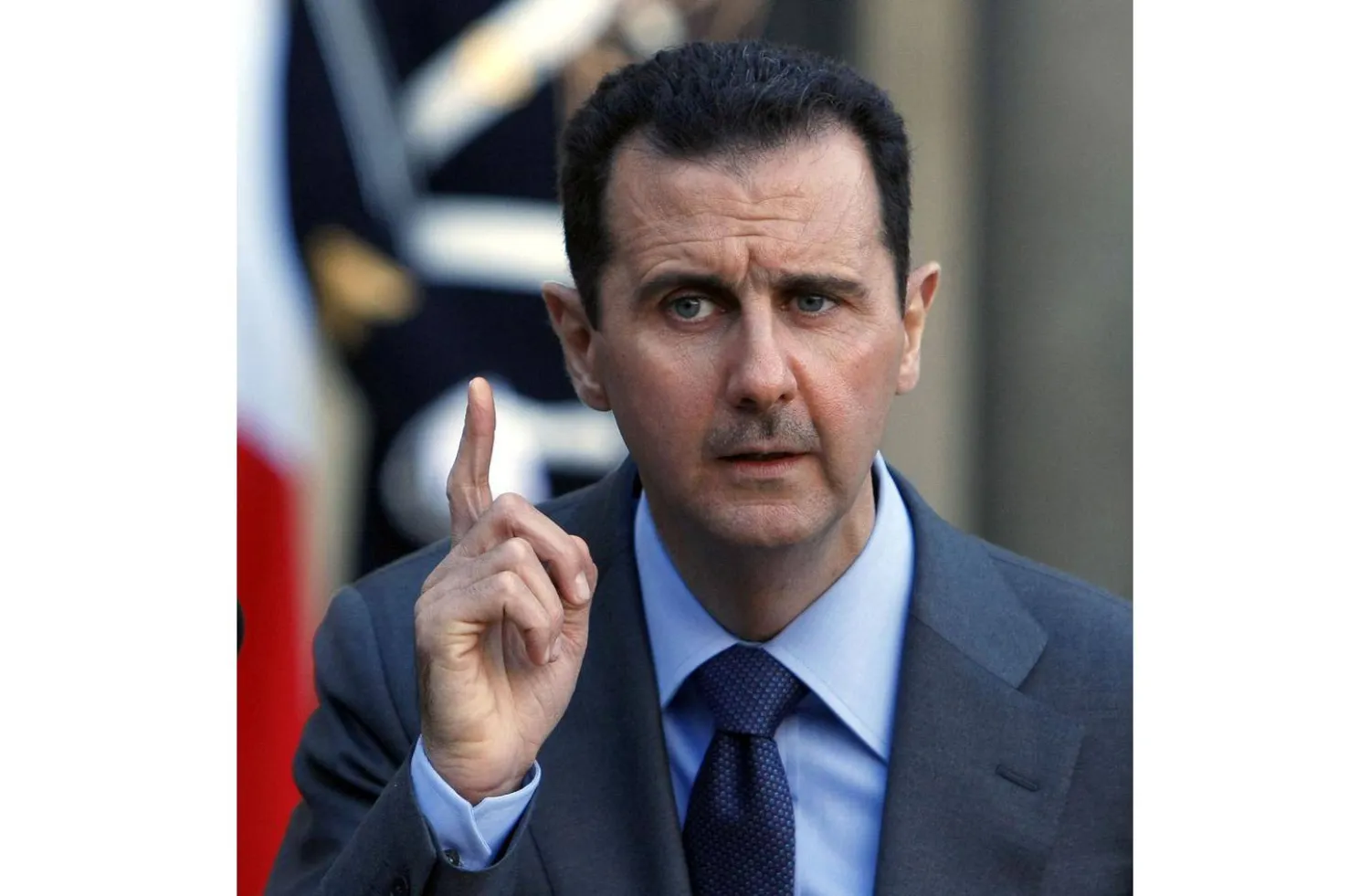
Ousted Syrian President Bashar Assad - File Photo
TT

Lebanese Army Detains Bashar Assad’s Relative on Weapons and Drugs Charges

Ousted Syrian President Bashar Assad - File Photo

Lebanese authorities have detained a relative of ousted Syrian President Bashar Assad along with the son of a notorious drug dealer in northeast Lebanon on charges of carrying weapons and drugs, officials and the Lebanese army said Saturday.

Suleiman Assad and Ali Zeiter, son of Noah Zeiter, the suspected drug trafficker arrested last year, were detained Friday near the northeastern city of Baalbek, said the two judicial officials, who spoke on condition of anonymity because they were not authorized to speak to the media. Suleiman Assad is the son of Hilal Assad, a cousin of the ousted president, The AP news reported.

A number of Syrian officials and relatives of Assad have fled from Syria to other countries including Lebanon, after the five-decade Assad family rule came to an end in December 2024, when the opposition seized power. Bashar Assad and his younger brother, Maher, have been living in Russia.

The Lebanese army said in a statement that it detained three people, including a Syrian citizen who did not have documents proving that he is staying legally in Lebanon.

The army said they had weapons with them along with hashish, a drug that is processed from cannabis that are widely planted in northeast Lebanon. The army did not release the names but the initials of their first and family names matched those of Assad and Zeiter. The army said they were questioned under the supervision of judicial officials.

The arrest of Suleiman Assad comes weeks after Lebanon handed over to Syrian authorities a retired major general who commanded a division in Bashar Assad’s army.