Russia Says Turkey Warned in Advance about Syria Flights Ban

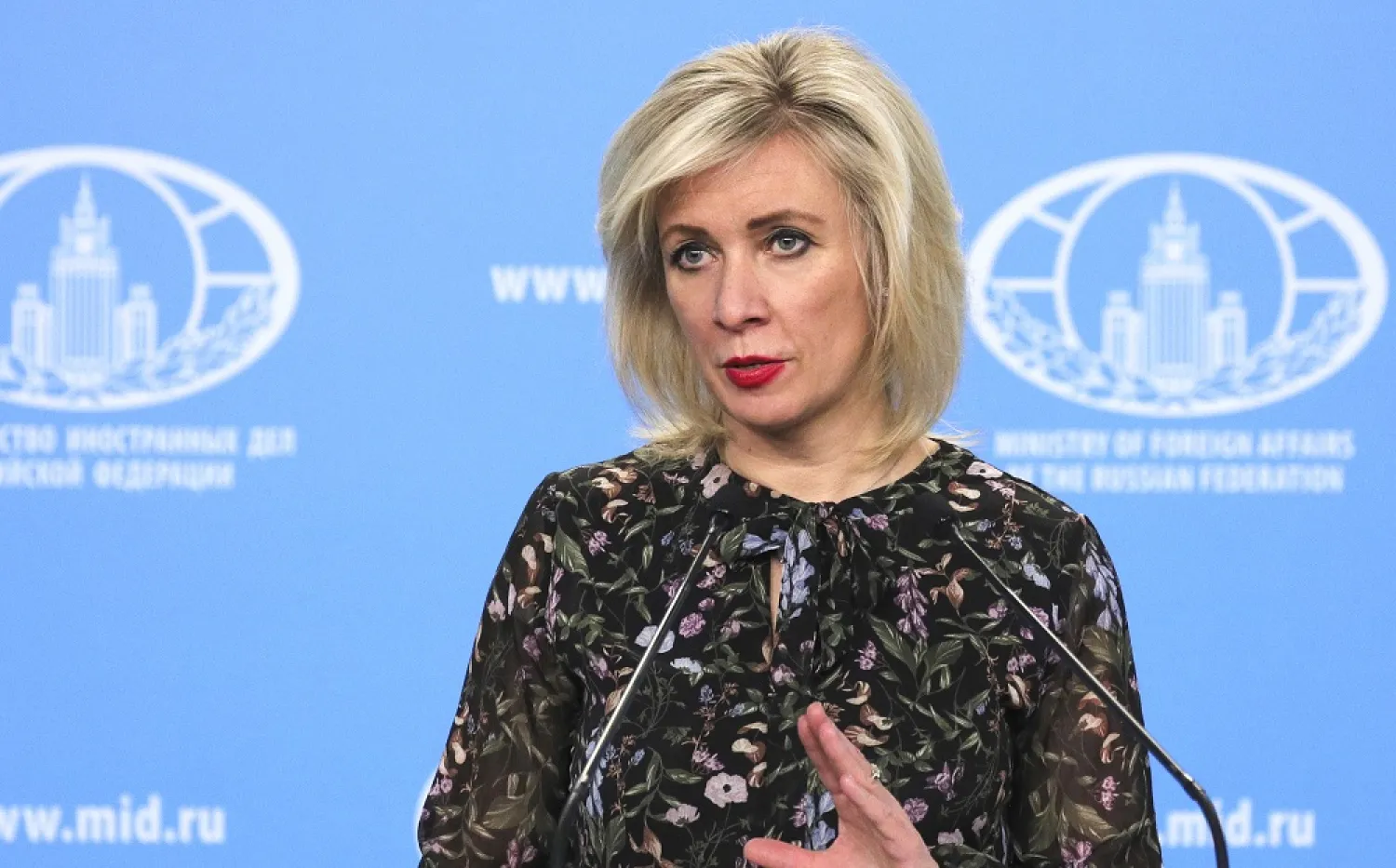
In this photo released by the Russian Foreign Ministry Press Service, Russian Foreign Ministry's spokeswoman Maria Zakharova speaks in Moscow, Russia, Thursday, Apr. 28, 2020. (AP)
TT

Russia Says Turkey Warned in Advance about Syria Flights Ban

In this photo released by the Russian Foreign Ministry Press Service, Russian Foreign Ministry's spokeswoman Maria Zakharova speaks in Moscow, Russia, Thursday, Apr. 28, 2020. (AP)

Turkey had warned Russia in advance before moving to bar Russian planes from flying to Syria over its territory, the Russian Foreign Ministry said Thursday.

The ministry's spokeswoman, Maria Zakharova, said that Turkey had asked Russia more than a month ago not to send Syria-bound planes over its territory.

She added that "the reasons for that were clear to us and the Russian side isn't using that route."

Zakharova made the comments at a briefing when asked about the Turkey's announcement over the weekend that it had halted Russian flights to Turkey over its territory from the start of this month.

Her remarks follow a statement by Turkish Foreign Minister Mevlut Cavusoglu, who said over the weekend that he asked Moscow to stop using the airspace during a visit there in March, and that Moscow agreed to the Turkish request.

Russia and Turkey have backed the opposite sides in Syria's war, with Moscow joining efforts with Tehran to shore up President Bashar Assad's government, and Turkey backing the opposition.

Despite the sharp differences, Moscow and Ankara worked together to negotiate a series of ceasefires in northern Syria.

Russia has used a shortcut through Turkish airspace to send warplanes to its base in Syria where they have been deployed since 2015 and fly cargo planes with supplies for troops stationed there.

The Turkish ban would now force Russian planes to take a longer route via Iran and Iraq, forcing them to take more fuel and reduce the payload. The Russian planes already used that path during a period of high tensions with Turkey sparked by the 2015 downing of a Russian warplane by Turkish fighter jets on the border with Syria.

Tensions later abated after Russian President Vladimir Putin and Turkish President Recep Tayyip Erdogan held a series of talks to negotiate compromises on Syria and other issues.

It wasn't clear if the latest Turkish ban on Russian flights to Syria was aimed to hinder the possible transfer of Syrian fighters to Ukraine. Russian officials have said that some Syrians have volunteered to join the Russian troops in Ukraine.

Some observers said that the Turkish move reflected the weakening of Russia's positions as its troops have been bogged down in military action in Ukraine.

NATO-member Turkey has been trying to balance its close relations with Moscow and Kyiv and has positioned itself as a mediator between the two, hosting a round of talks last month between Russian and Ukrainian negotiators. It hasn't joined international sanctions against Russia, but has closed the straits at the entrance of the Black Sea to some Russian warships.


EU Urges US to Reconsider Visa Denial to Palestinian Delegation for UN Meeting

President of the State of Palestine Mahmoud Abbas speaks via video conference during the General Debate of the 80th session of the United Nations General Assembly at United Nations headquarters in New York, New York, USA, 25 September 2025.  EPA/SARAH YENESEL
President of the State of Palestine Mahmoud Abbas speaks via video conference during the General Debate of the 80th session of the United Nations General Assembly at United Nations headquarters in New York, New York, USA, 25 September 2025. EPA/SARAH YENESEL
TT

EU Urges US to Reconsider Visa Denial to Palestinian Delegation for UN Meeting

President of the State of Palestine Mahmoud Abbas speaks via video conference during the General Debate of the 80th session of the United Nations General Assembly at United Nations headquarters in New York, New York, USA, 25 September 2025.  EPA/SARAH YENESEL
President of the State of Palestine Mahmoud Abbas speaks via video conference during the General Debate of the 80th session of the United Nations General Assembly at United Nations headquarters in New York, New York, USA, 25 September 2025. EPA/SARAH YENESEL

The European Union said on Saturday it regretted Washington's decision to deny visas for the second year running to Palestinian officials seeking to attend the UN General Assembly, urging a rethink, AFP said.

The US State Department said this week it was refusing to grant visas to Palestinian leader Mahmoud Abbas and other members of his delegation ahead of next week's meeting in New York.

"We regret the decision to extend the denial of entry visas for members of the Palestinian delegation for a second year in a row," said Anouar El Anouni, a spokesman for the EU's diplomatic service.

"In light of its existing headquarters agreements with the UN and its obligations as host state, we urge the United States for this decision to be reconsidered."

The administration of US President Donald Trump denied visas for the Palestinian delegation also last year, forcing Abbas, a regular at the UN General Assembly, to address the body of global leadership by video.

The General Assembly voted 152-3 on Thursday for Abbas to be able to appear virtually once again this year.

As it stands, only members of the Palestinian mission to the UN will be able to attend the meeting, which begins Tuesday.

On Friday, UN Secretary-General Antonio Guterres also expressed regret at Washington's decision, adding he was concerned about its impact "on the ability of the State of Palestine to participate fully in the work of the United Nations".

The United States and Israel have objected to the Palestinian Authority's historical payments to families of imprisoned or slain Palestinians, including those who carried out attacks against Israelis.

The PA recently reformed this system, allocating welfare payments to families on a needs basis rather than political affiliation or prisoner status.

The State Department said Washington also opposed Palestinian "actions to internationalize the Israeli-Palestinian conflict including through the International Criminal Court (ICC) and International Court of Justice (ICJ), seeking to bypass negotiations through seeking unilateral recognition".

They accused them of "continuing to pay stipends to terrorists and to glorify acts of terrorism and terrorists in public pronouncements and school textbooks".

The United States is at odds with the 142 UN member states that recognized a Palestinian state at the United Nations last year.

The decision to deny Abbas a US entry visa comes as violence by Israeli settlers against Palestinians has escalated in recent months in the West Bank.


Mokha after Houthi Takeover: Looting, Poverty, Fear and Displacement

Houthi militia members returning from Mokha to Sanaa escort a convoy believed to be carrying looted goods and detainees (AP) 
TT

Mokha after Houthi Takeover: Looting, Poverty, Fear and Displacement

Houthi militia members returning from Mokha to Sanaa escort a convoy believed to be carrying looted goods and detainees (AP) 

Since the Houthis seized the western Yemeni coastal city of Mokha a week ago, widespread looting has targeted homes, private property, government facilities and humanitarian organizations, while deteriorating basic services and soaring prices have added to pressure on residents, thousands of whom have fled fearing Houthi reprisals.

Local sources reported that Houthis raided dozens of homes and apartments, in Al-Hali neighborhood, seizing furniture, appliances and other belongings and transporting them out of Mokha by truck. Government offices were also subjected to looting directed by senior leaders, with their contents taken to unknown locations.

According to the sources, the Houthi militia entered the city’s airport and initially tried to remove some items before masked gunmen, believed to belong to Houthi intelligence services, arrived, prevented the removal of the looted property and took control of the entire civilian facility, barring other armed men from the site and its surroundings.

Another group of masked men in civilian clothes appeared, based on their look, bags and actions, to be an engineering team tasked with dismantling equipment and packing it into special boxes and bags.

The masked men left several hours later in three small vehicles with tinted windows. When the earlier group returned, the sources recounted, the airport had been stripped of equipment, files and records.

They also described the looting of records, files and computers from Mokha’s local authority headquarters, along with contents from the city’s branch of the Central Bank of Yemen. It was not known where the items were taken.

Houthi leaders also targeted homes belonging to officers in the National Resistance forces, while raids extended to the homes of civilian employees. Residents recounted that Houthi members justified some of the looting by claiming the properties belonged to people linked to forces led by Presidential Leadership Council member Tareq Saleh.

Aid and Services Hit

Relief and charity workers reported that the Houthi militia seized the offices of humanitarian organizations and charities and transported their contents outside the city under the supervision of unidentified individuals believed to belong to Houthi security and intelligence agencies.

The UN Office for the Coordination of Humanitarian Affairs condemned the seizure of a humanitarian compound housing UN agencies and international organizations in Mokha, reporting that Houthi members confiscated eight vehicles belonging to the city’s UN humanitarian center after storming it.

Multiple rights sources estimated that raids on humanitarian organizations and charities affected around 18,000 families that had been receiving food assistance from the United Nations and local organizations, as poor households face worsening living conditions.

Houthi military operations, looting and seizures also halted support for 30 health facilities across six coastal districts: Mokha, Dhubab, Al-Wazi’iyah and Mawza in Taiz, and Hays and Al-Khawkhah in Hodeidah, affecting medicines, medical supplies and staff salaries.

Loss of Security

More than 1,500 humanitarian workers have been left without jobs or sources of income after several organizations suspended or halted operations, amid disrupted services and rising prices.

Mokha residents complained that electricity had been almost completely cut off since the Houthi takeover. The price of a household gas cylinder rose from about $3.50, or 5,400 Yemeni rials, to $11.60, or 18,000 rials, based on the exchange rate in government-held areas of 1,550 rials to the dollar.

The Houthis have begun imposing the exchange rate used in areas under their control, 535 rials to the dollar, while banning banknotes issued by the Central Bank in Aden and replacing them with old, worn banknotes or newly introduced alternative coins approved by the group. Many residents of Mokha and Yemen’s western coast rely on fishing and daily manual work.

Marsadak, the Media Freedoms Observatory affiliated with the Studies and Economic Media Center, announced that 117 journalists, media workers and employees of media organizations were displaced in September. It noted that most had left their homes fearing arrest or abduction, while others reported raids on journalists’ homes and the looting of their contents.

The developments have left Mokha residents facing a crisis extending beyond the loss of property, with displacement and fears of arrest compounded by deteriorating services and the disruption of some humanitarian assistance as the city grapples with the consequences of its sudden transition to Houthi control.


Yemeni Army Thwarts Houthi Attempts to Consolidate Gains in West

Yemeni army forces battle the Houthis in a war of attrition on the Taiz fronts (Military Media) 
TT

Yemeni Army Thwarts Houthi Attempts to Consolidate Gains in West

Yemeni army forces battle the Houthis in a war of attrition on the Taiz fronts (Military Media) 

Yemeni government forces have repelled Houthi attempts to seize strategic high ground east of Bab al-Mandab and west of Taiz, as the group seeks to consolidate its control of the strait, Mayyun Island and the western coast by securing key mountain positions and supply routes.

The Kahboub and Al-Wazi’iyah fronts saw heavy fighting over the past 24 hours, accompanied by airstrikes targeting Houthi gatherings and vehicles. Government military sources said the forces had thwarted attacks and attempted advances, inflicting casualties and equipment losses.

At Kahboub, in the highlands separating Lahj and Taiz and overlooking Bab al-Mandab, the Yemeni army announced it had repelled a Houthi attack lasting more than three hours, breaking the assault three times and forcing the attackers to retreat.

Government forces are also seeking to secure positions in the Kahboub mountain range, including Jabal San Sanfa, and open the Al-Nabiyah route linking coastal areas around Ras al-Ara with the highlands. The positions are particularly important because they overlook roads leading to the coast and areas surrounding the strait.

In Al-Wazi’iyah, west of Taiz, the Houthis sent reinforcements and attempted to advance toward new high ground, while government forces responded with ground attacks and airstrikes.

A military source in the Taiz command said the clashes killed 30 Houthis and wounded more than 60 others, while six combat vehicles and two tanks were destroyed.

Local sources reported that warplanes struck Houthi vehicles and gatherings in the Al-Dharifah area, while armed forces spokesman Col. Majed al-Nazili said government forces targeted Houthi supplies and positions in Mokha and on several Taiz fronts.

Preventing Consolidation

The operations are part of government forces’ efforts to prevent the Houthis from turning their control of Bab al-Mandab, Mayyun Island and the western coast into an entrenched military reality. After seizing those coastal positions, the group needs to secure the surrounding territory, particularly high ground controlling routes between the coast and the interior.

The Kahboub and Al-Wazi’iyah mountains form part of the highland belt separating the coast from inland areas, making control of them important to protecting or threatening coastal positions. The Houthis are therefore seeking to capture additional peaks and elevated positions, while government forces are working to keep the area contested, preventing the group from consolidating its defenses and expanding its control.

Clashes have also intermittently spread to the southern and western outskirts of Taiz, particularly around Jabal Jardad toward Al-Shamayatayn district via the Rasn axis, as well as Al-Rahidah, Al-Dimnah and Mafraq Al-Dhikrah, accompanied by airstrikes on Houthi positions.

Civilian Toll

In Al-Wazi’iyah, Houthi shelling of Al-Turairah village in the Al-Dharifah subdistrict killed three children Friday, according to official sources. They were Nour al-Din Yaqoub Abdo al-Dharafi, 4; Asawer Fahd Mohammed Ghanem al-Dharafi, 14; and Tala Mohammed Ahmed al-Dharafi, 2.

In Marib, cautious fighting continued on the western and southern fronts, with government forces using artillery, snipers, drones and warplanes to target Houthi positions and movements.

Brig. Gen. Akram al-Adimi, commander of the 13th Infantry Brigade, said his forces had neutralized dozens of Houthi fighters and seized weapons and equipment.

On the political front, Presidential Leadership Council Chairman Rashad al-Alimi, during a meeting with French Ambassador to Yemen Catherine Corm-Kammoun, affirmed that government forces were capable of regaining the initiative on the western coast, pointing to continuing operations in Taiz, Marib, Lahj, Al-Jawf, Hajjah, Al-Bayda and Al-Dhalea.

Al-Alimi said the repositioning of forces and strengthening of their capabilities were aimed at preventing any temporary battlefield gain from becoming a fait accompli or a platform for threatening waterways, stressing that the state was working to secure its territory, coastline and territorial waters.