


A Poem to Arab Beauty: The Fashion Designs of Hana Sadiq

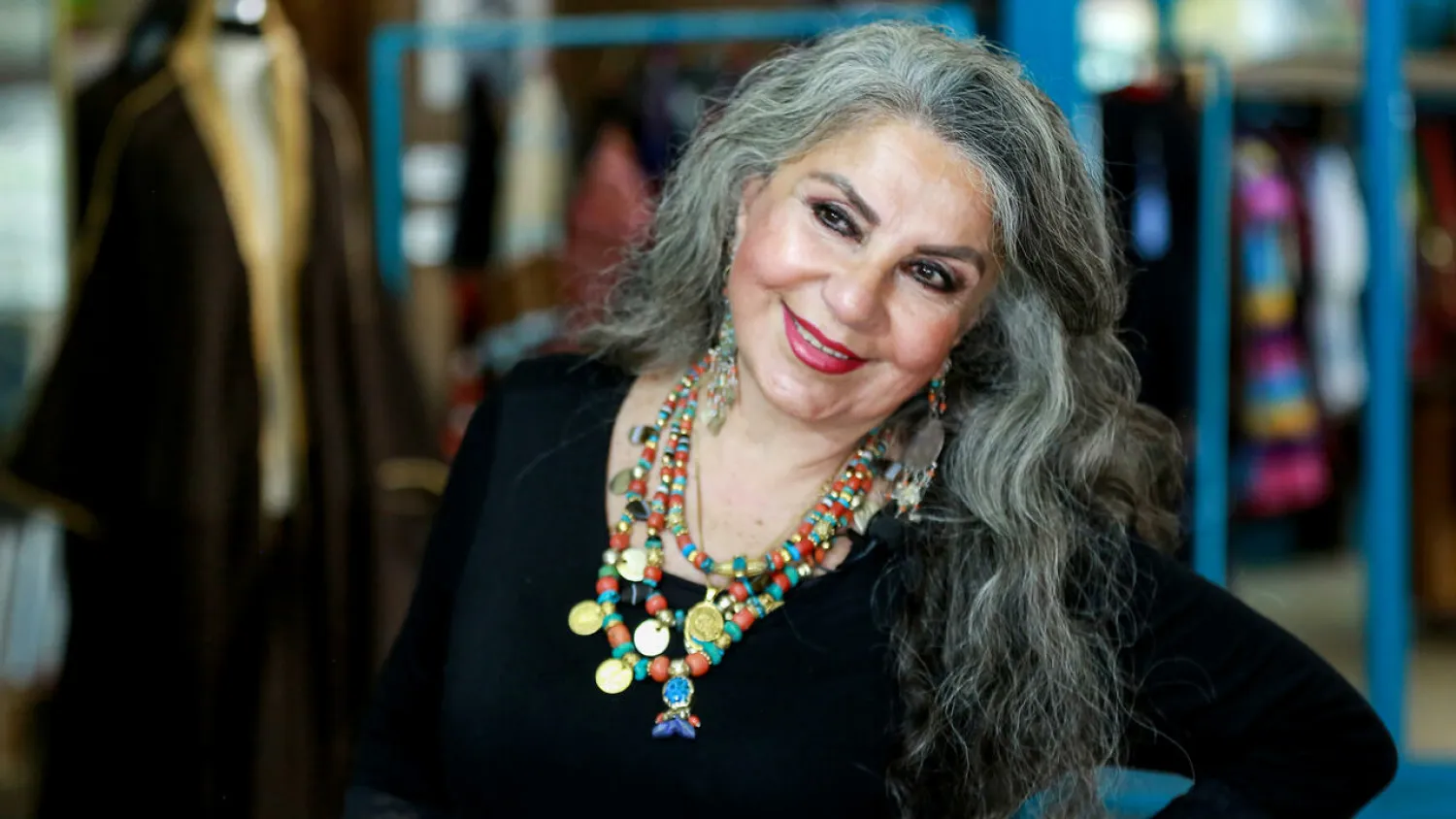
"Arabic calligraphy is the most beautiful," says Hana Sadiq, a Franco-Iraqi fashion designer who lives in Jordan. Khalil MAZRAAWI AFP/File
TT

A Poem to Arab Beauty: The Fashion Designs of Hana Sadiq

"Arabic calligraphy is the most beautiful," says Hana Sadiq, a Franco-Iraqi fashion designer who lives in Jordan. Khalil MAZRAAWI AFP/File

With verses from love poems and flowing calligraphy, Jordan-based fashion designer Hana Sadiq stitches a testament to the beauty of Arab women.

In a career spanning decades, Iraqi-born Sadiq has shown her creations worldwide and dressed the stars, but she remains rooted in the traditions of her homeland.

The artistic handwriting of Arabic script dominates her embroidered modern designs, with poetry or letters scattered in bright colors, AFP said.

She uses various calligraphic styles, from the elaborate Diwani to the curving Thuluth, and features on some of her outfits the lines of renowned Arab poets including Mahmoud Darwish and Nizar Qabbani.

"Arabic calligraphy is the most beautiful," says Sadiq, 72, showing off her love of jewelry with strings of beads around her neck, dangling earrings, and unusual stone rings.

At her home workshop in downtown Amman, Sadiq notes that the earliest writing was born several millennia before Christ in what is now Iraq, arguing that it was a place "without which all the other civilizations would not have existed".

Sadiq has split her time between Amman and Paris since 1982, having both French and Jordanian nationality as well as Iraqi citizenship.

'How beautiful she is'
She has exhibited from Europe to the United States as well as the Middle East, returning home with an extensive collection of antique silver ornaments, along with thousands of pieces of Arab textiles and costumes.

Her kaftans, traditional robes, feature bright and stunning colors. They reflect the influence of her grandmother who wore a traditional Iraqi "Hashemite dress" and walked "elegantly like a peacock".

The folk outfit is made of very thin fabric with wide sleeves and transparent sides, decorated with beautiful floral ornaments, golden or silver, on a black base. It was the favorite of Iraqi women in the 1950s and 60s.

Sadiq traces her interest in fashion to her childhood, when she would visit her grandfather's textile shop in Baghdad.

She went on to design for celebrities and royals, including Jordan's Queen Rania and Queen Noor. But whoever the client, her work has been guided by pride in the Arab woman's femininity.

Unlike more revealing Western fashion, her designs envelope the woman's body, "but it shows high femininity," says Sadiq, who is also the author of a book, "Arab Costumes and Jewelry, a Legacy without Borders".

She argues that Western clothes are not the best fit for the bodies of Arab women but have spread to the region anyway. "Unfortunately this is the result of globalization," she says.

"What matters to me, in all my work, is that the woman remains female and that a man is attracted to her as a female," she adds. "Which means when a woman passes in front of him, he must notice and see how beautiful she is."



Nike Shares Rise as Apple’s Cook Doubles His Bet on CEO Hill’s Overhaul Effort

A jogger wearing Nike shoes runs along the Charles River in Cambridge, Massachusetts, US, March 18, 2019. (Reuters)
TT

Nike Shares Rise as Apple’s Cook Doubles His Bet on CEO Hill’s Overhaul Effort

A jogger wearing Nike shoes runs along the Charles River in Cambridge, Massachusetts, US, March 18, 2019. (Reuters)

Nike shares rose 5% in early trading on Wednesday after Apple CEO Tim Cook doubled his personal stake in the sportswear maker, raising his bets on the margin-pinching turnaround efforts led by CEO Elliott Hill.

Cook, who has been on Nike's board since 2005, bought 50,000 shares at $58.97 ‌each, according to ‌a regulatory filing. As of December ‌22, ⁠he holds about ‌105,000 shares, which is now worth nearly $6 million.

It was the largest open market stock purchase for a Nike director or executive and possibly the largest in more than a decade, said Jonathan Komp, analyst at Baird Equity Research.

"(We see) Cook's move as a positive signal for the progress under CEO Elliott Hill and Nike's 'Win ⁠Now' actions," Komp said.

The purchase comes days after Nike reported weaker quarterly margins and weak ‌sales in China even as CEO ‍Hill tries to revive demand ‍through fresh marketing plans and innovation focused on running and sports, ‍while phasing out lagging lifestyle brands.

He has also attempted to mend Nike's ties with wholesalers such as Dicks Sporting Goods to increase visibility among shoppers amid stiff competition from newer brands.

However, the strategy has strained Nike's margins, which have been declining for over a year, while its efforts to win back its ⁠premier position in discount-friendly China appears to be faltering.

Nike's shares have slumped nearly 13% since it reported results on December 18 and are on track for the fourth straight year of declines. They were trading at $60.19 on Wednesday.

Cook has been a lead independent director of Nike since 2016 when co-founder Phil Knight stepped down as its chairman.

The Apple CEO "remains extremely close" with Knight, Komp said, adding that he has advised Nike through key strategic decisions including Hill's appointment last year.

Board director and former Intel CEO ‌Robert Swan also bought about 8,700 shares for about $500,000 this week.


Etro Founding Family Exits Group as New Investors Including Türkiye's RAMS Global Join

L Catterton, a private equity firm backed by French luxury giant LVMH, will remain Etro's majority owner. Reuters
TT

Etro Founding Family Exits Group as New Investors Including Türkiye's RAMS Global Join

L Catterton, a private equity firm backed by French luxury giant LVMH, will remain Etro's majority owner. Reuters

The founding family of Italian fashion house Etro has sold the minority stake it still owned in the brand to a group of investors including Turkish group RAMS Global, the company said on Friday.

L Catterton, a private equity firm backed by French luxury giant LVMH, will remain Etro's majority owner and "will continue to actively support the brand's long-term growth strategy," Etro added, according to Reuters.

The new investors comprise also Italian fashion group Swinger International and small private equity firm ⁠RSI.

In addition to buying the stake, they all subscribed to a capital increase that will lower L Catterton's holding in Etro to between 51% and 55% from around 65%.

When including both the acquisition and the capital increase, the deal is worth around 70 ⁠million euros ($82 million), two sources close to the matter said. Etro did not disclose financial details.

Chief Executive Fabrizio Cardinali will remain at the helm, while Faruk Bülbül, representing RAMS Global, will become chairman of the board.

L Catterton bought a 60% stake in the brand known for its paisley motif four years ago, and it slightly increased the holding over the years.

The company, founded by Gimmo Etro in 1968, has ⁠been struggling with its turnaround. Last year it posted a net loss of 23 million euros with net revenues declining to 245 million euros from 261 million euros, according to filings with the local chambers of commerce reviewed by Reuters.

Rothschild advised L Catterton and the Etro family on the deal.

Rothschild had been hired in 2024 to look for a new investor who could buy all or part of the Etro fashion group, sources had previously told Reuters.


Paris Court Rejects Bid to Suspend Shein Platform in France

A customer holds shopping bags with a Shein logo in the first physical space of Chinese online fast-fashion retailer Shein on the day of its opening inside the Le BHV Marais department store, the Bazar de l'Hotel de Ville, in Paris, France, November 5, 2025. REUTERS/Sarah Meyssonnier/File Photo
TT

Paris Court Rejects Bid to Suspend Shein Platform in France

A customer holds shopping bags with a Shein logo in the first physical space of Chinese online fast-fashion retailer Shein on the day of its opening inside the Le BHV Marais department store, the Bazar de l'Hotel de Ville, in Paris, France, November 5, 2025. REUTERS/Sarah Meyssonnier/File Photo

A Paris court on Friday rejected a government request to suspend Chinese fast-fashion platform Shein in France after authorities found illegal weapons and child-like sex dolls for sale on the fast-fashion giant’s website.

Shein welcomed the decision, saying it remains committed to strengthening its control processes in cooperation with French authorities.

“Our priority remains protecting French consumers and ensuring compliance with local laws and regulations," the company said in an emailed statement to The Associated Press.

The controversy dates to early November, when France’s consumer watchdog and Finance Ministry moved toward suspending Shein’s online marketplace after authorities said they had found childlike sex dolls and prohibited “Class A” weapons listed for sale, even as the company opened its first permanent store in Paris.

French authorities gave Shein hours to remove the items. The company responded by banning the products and largely shutting down third-party marketplace listings in France.

French officials have also asked the European Commission to examine how illegal products were able to appear on the platform under EU rules governing large online intermediaries.