


Palestinians Warn against Plans to Weaken their UN Agency

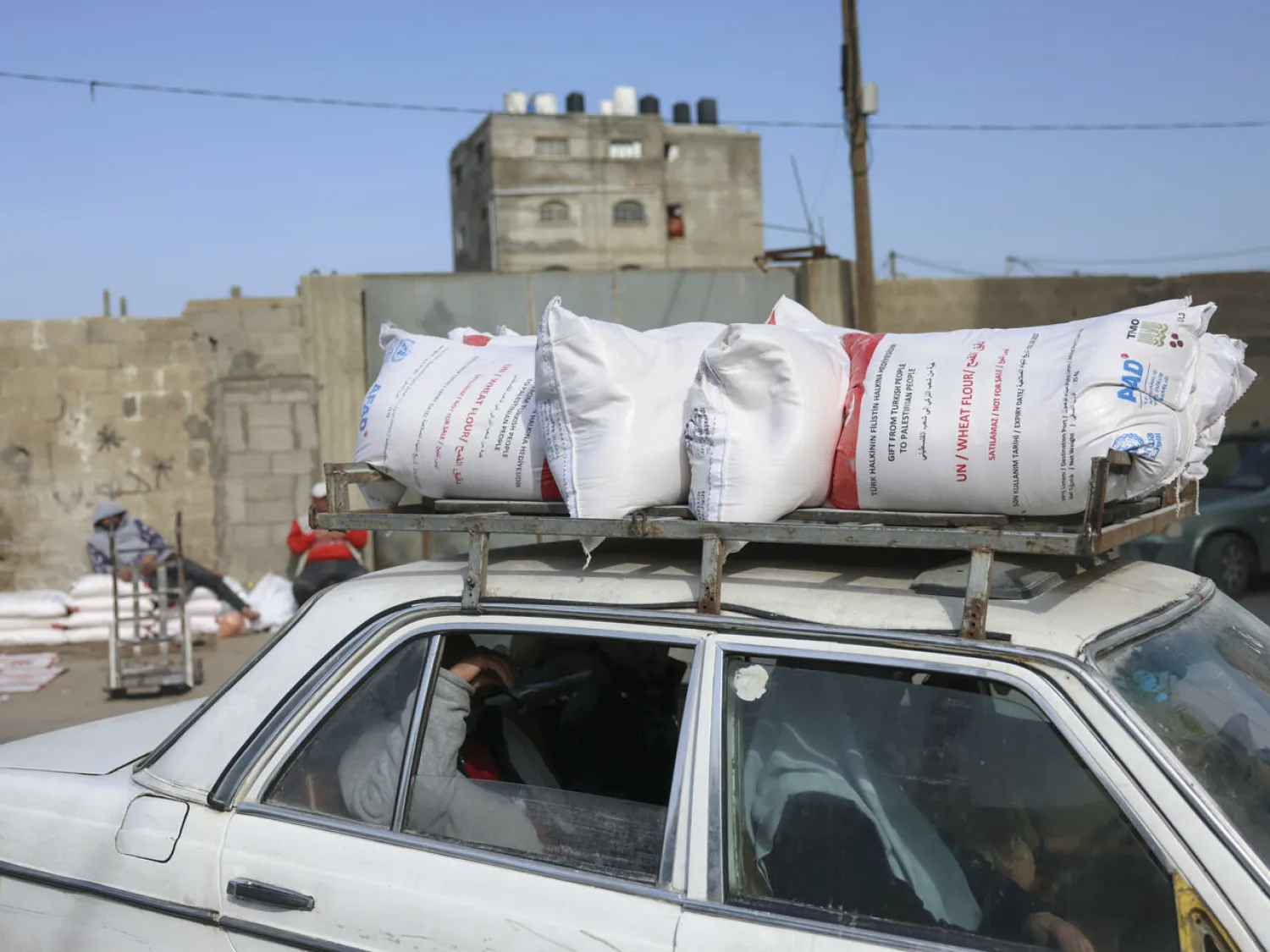
The UNRWA for Palestinian refugees is the only major UN body dedicated exclusively to one conflict and one people. MOHAMMED ABED AFP/File
TT

Palestinians Warn against Plans to Weaken their UN Agency

The UNRWA for Palestinian refugees is the only major UN body dedicated exclusively to one conflict and one people. MOHAMMED ABED AFP/File

A proposal by the UN agency for Palestinian refugees to delegate some services to other United Nations agencies has sparked outrage among Palestinians, who have warned of a plot to "dismantle" the body.

Established in 1949, a year after Israel was created, UNRWA is the only major UN body dedicated exclusively to one conflict and one people, and holds a symbolic role that experts say matches its importance as provider for Palestinian refugees.

The agency has long been a target of Israeli criticism, with accusations it has fueled the conflict in part by teaching anti-Zionist messages at its schools.

UNRWA is "not just about the delivery of services", said Muhammed Shehada from the Swiss-based Euro-Mediterranean Human Rights Monitor.

"As long as UNRWA is there, it's a reminder that the international community has a responsibility to solve the issue of Palestinian refugees," he told AFP.

The agency tasked with assisting Palestinians who were forced from their homes during the war surrounding Israel's creation -- and their descendants -- has faced a funding crunch for years, regularly falling tens of millions of dollars short of its stated needs.

At first glance, the announcement last month by agency chief Philippe Lazzarini that UNRWA could ask other UN bodies to help with service delivery may have looked like a bland, bureaucratic cost-sharing plan.

Counting primarily "on voluntary funding from donors would not be reasonable" going forward, he said in a statement.

"One option that is currently being explored is to maximize partnerships within the broader UN system."

Palestinians saw those remarks as a potentially devastating blow to UNRWA's long-term mission.

Palestinian prime minister Mohammad Shtayyeh said the plan would "violate" the UN resolutions that set up UNRWA, while the Palestine Liberation Organization said refugees would be outraged.

Mohammad al-Madhoun, a senior official with the Hamas group, which controls the Gaza Strip, described the proposal as "an attempt to dismantle UNRWA as a prelude to ending its work".

- Budget gaps -
With more than 30,000 employees and a budget of some $1.6 billion this year, UNRWA is a frontline provider of healthcare, education and other services to some 5.7 million Palestinian refugees spread across the Gaza Strip and the occupied West Bank as well as in Lebanon, Syria and Jordan.

Former US president Donald Trump publicly sided with Israel in blasting UNRWA and cut off its funding.

The agency has firmly defended its school curriculum against pro-Israel critics, though Lazzarini told European Union lawmakers last year that problematic issues were being "addressed".

President Joe Biden's administration has since restored funding, but Lazzarini warned in November that UNRWA was facing an "existential threat" over budget gaps.

Agency spokeswoman Tamara Alrifai told AFP that this year would see another $100 million shortfall that could worsen given "the increased cost of commodities and food that the ongoing Ukraine crisis has provoked".

- 'Green light' -
For Samer Sinijlawi, head of the Jerusalem Development Fund, which specializes in Palestinian humanitarian affairs, Lazzarini's proposal was in part an attempt to test "the Palestinian pulse" ahead of a 2023 UN General Assembly vote on renewing UNRWA's mandate.

But it also gave "a green light" to countries that have been trying "to manipulate this mandate and gradually end the work of UNRWA", Sinijlawi told AFP.

He accused Lazzarini of overstepping his authority, arguing the Swiss national's job was not to consider scaling back UNRWA's work but rather to implement UN resolutions on Palestinian refugees, especially on the right of return.

Former agency spokesman Chris Gunness said that "even if UNRWA is dismantled or its services farmed out, Palestine refugees remain human beings with inalienable rights."

He stressed that while any blow to UNRWA's future could be perceived as a win for Israel, it would not mean that "Palestinian refugees and their right of return will magically evaporate".

But Shehada from Euro-Med Monitor argued that any "de-prioritization" of the agency would be seen as diminishing "the Palestinian cause in general".



Houthi Pressure Isolates Taiz from Its Southern Countryside Amid Fierce Resistance

Yemen government soldiers gather near the Jabal Han front, west of the city of Taiz, (Photo by AHMAD AL-BASHA / AFP)
TT

Houthi Pressure Isolates Taiz from Its Southern Countryside Amid Fierce Resistance

Yemen government soldiers gather near the Jabal Han front, west of the city of Taiz, (Photo by AHMAD AL-BASHA / AFP)

The Iran-aligned Houthi group has deployed its full weight in the southwestern countryside of Taiz to seize the main roads linking the city with its southern rural areas and cut lines of communication toward Lahj province and the city of Aden. Government forces, backed by popular resistance, are meanwhile engaged in fierce fighting to halt the advance, alongside airstrikes targeting the group's reinforcements and military capabilities.

The front has gained particular importance as the Houthis continue to push forces into new areas in southern Taiz. Reports said the group took control on Sunday of the areas of Al-Safiya and Al-Barkani and cut the road linking Al-Turbah, the administrative center of Al-Shamayatayn district in the south, with Taiz city to the north. This would isolate the latter from the liberated areas of Lahj and Aden.

The front nevertheless remains open to intense fighting, amid indications that the Houthis are determined to maintain pressure along this axis. Field sources warned of the risks posed by continued attacks and the need for immediate reinforcements for government forces in the area.

Alongside the fighting in the southwestern countryside, government forces and popular resistance had made gains on several Taiz fronts, regaining control of the areas of Al-Maqarm and Al-Zakira in Al-Shamayatayn district, south of the province, following fierce clashes with the Houthis. The Houthis subsequently regained control of the areas.

Government forces on the southeastern front, with support from fighters from Sama district, also took control of Sama Fort before advancing toward the strategic Jabal Al-Jaasha after securing Jabal Sama Fort.

Sources said the operations resulted in significant human and material losses among the Houthis, including dozens killed or wounded, while a number of the group's militants fled the areas of confrontation. Fighting also continued, according to the same sources, on the Jabal Habashi and Al-Kadaha fronts.

On the Jabal Han and Hadhran front, west of Taiz city, fierce clashes broke out and ended, according to the Taiz Military Axis, with the defeat of the attacking forces and the killing of the Houthi commander who led the attack on government positions at Jabal Han.

257 Operations in One Day

At the same time as the ground fighting, government forces intensified operations against Houthi positions and movements across several fronts.

Yemeni Armed Forces spokesman Colonel Majid Al-Nazili said the forces carried out 257 precision strikes against Houthi positions, movements, and military capabilities using fighter aircraft, drones, artillery, missiles, and rocket launchers.

He said the operations covered Sanaa, Midi in Hajjah, Baqim in Saada, and fronts in Al-Jawf, Marib, Al-Bayda, and Lahj, with the operational focus on the Taiz fronts. He said the targets included command and control centers, gatherings, mobilization sites, combat reserves, as well as weapons and ammunition depots and military supply lines and means of transport.

According to Al-Nazili, the operations resulted, based on preliminary field estimates, in at least 700 Houthi militants being put out of action and the destruction of 170 combat vehicles and military assets. He said this had a direct impact on the group's combat capabilities and limited its ability to continue attacks against civilians in their homes and villages.

The Yemeni Armed Forces had also announced, in a separate development, that they had carried out 97 precision strikes against Houthi military reinforcements on the Tor Al-Baha front and the Taiz axis.

Al-Nazili said the operations involved fighter aircraft, drones, artillery, missiles, and snipers, resulting in 260 group members being put out of action and 44 military vehicles and means of transport and supply being destroyed or disabled.

The air force also announced strikes against Houthi targets in Sanaa and Saada, while the armed forces had earlier announced an attack against Houthi military targets in the capital, Sanaa.

These figures bring Houthi losses to nearly 6,000 killed or wounded over the course of a week, according to successive statements by the Yemeni Armed Forces.

Mobilization and State of Alert

The developments on the ground in Taiz coincided with the government and armed forces moving to a higher level of military mobilization and preparedness.

The Ministry of Defense and the General Staff launched a general mobilization and public call to arms, in implementation of directives from Presidential Leadership Council Chairman Rashad Al-Alimi.

The announcement came during an expanded meeting chaired by Defense Minister Lieutenant General Taher Al-Aqili in Aden. General Staff Chief and Joint Operations Commander Lieutenant General Sagheer bin Aziz participated by video link from Marib, alongside the deputy defense minister, the deputy chief of staff, and heads of military departments and directorates.

Al-Aqili said the ministry had taken practical measures to implement the general mobilization and public call to arms, activate human resources and reserve mobilization channels, organize reception centers, and task the relevant authorities with beginning their assigned duties.

The Yemeni defense minister affirmed that the armed forces were carrying out their duty to defend the country and its sovereignty, defeat the Houthis, and restore state institutions, stressing military discipline and command, the mobilization of resources, and the integration of efforts.

For his part, bin Aziz said the declaration of general mobilization represented a national decision requiring an organized transition to the highest levels of preparedness, the unification of efforts and capabilities, improving the efficiency of the armed forces, and strengthening their ability to carry out their duties.

He stressed the need to complete the inventory of personnel, equipment, and requirements, organize call-up and reinforcement operations, raise levels of discipline and readiness, strengthen training and qualification, and work to build an integrated military and community effort.

Amid the intensifying fighting, the chief of staff held calls with military and field commanders in Taiz, including Major General Yousef Al-Sharaji, a member of the Supreme Military Committee and commander of the Taiz front; Major General Khaled Fadel, commander of the Taiz Military Axis; Major General Abdulaziz Al-Majidi, chief of staff of the axis; and Taiz Resistance Commander Rashid Shamsan.

Bin Aziz received briefings on the course of operations and the field situation across the province's various fronts. He praised the people of Taiz for their support for the armed forces and their initiative to participate in the fighting.

He affirmed that the armed forces across the various fronts and sectors stood alongside the forces fighting in Taiz, praising what he described as the fighters' efficiency and combat capabilities, as well as the performance of the fighter aircraft and drones.


Baghdad Secures Limited US Approval for Iranian Flights

 An Airbus A340-600 operated by Iran’s Mahan Air. (File photo/Reuters)
An Airbus A340-600 operated by Iran’s Mahan Air. (File photo/Reuters)
TT

Baghdad Secures Limited US Approval for Iranian Flights

 An Airbus A340-600 operated by Iran’s Mahan Air. (File photo/Reuters)
An Airbus A340-600 operated by Iran’s Mahan Air. (File photo/Reuters)

Under pressure from armed factions, Prime Minister Ali al-Zaidi’s government secured US approval for Iranian airlines, excluding Mahan Air, to operate 40 daily flights to and from Najaf airport, drawing praise from Iran-aligned figures and groups in Iraq.

The US Treasury Department issued a tightly restricted, one-month license last Tuesday, allowing Iraqi Airways to fly to Iran exclusively from Najaf airport.

It did not cover Iranian airlines operating flights in the opposite direction. The license also strictly limited eligible passengers to specified categories, including students, patients and visitors to religious sites.

The prime minister’s media office said in a statement that al-Zaidi had undertaken “close follow-up and a series of contacts” before securing a US license allowing Iranian airlines to resume flights to and from Najaf International Airport.

“The efforts resulted in an agreement allowing Iranian airlines, excluding Mahan Air, to operate 40 flights daily to and from Najaf International Airport,” it said.

According to the statement, al-Zaidi welcomed “the US government’s positive response to Iraqi efforts and its cooperation in granting the requested exemption, helping resolve this issue and facilitate travel for pilgrims and other passengers, particularly those traveling for treatment, religious visits and tourism.”

“Air traffic is more than transport between two airports; it is a bridge connecting peoples,” the statement quoted al-Zaidi as saying.

“Among the passengers are patients waiting to reach treatment facilities, pilgrims heading to holy shrines and families waiting to reunite easily, alongside the importance of these flights for tourism, the economy and social ties.”

It remains unclear whether the new US license will be open-ended or expire on Oct. 28, as stipulated in Washington’s initial authorization.

Sources told Asharq Al-Awsat, however, that the license grants specific exemptions for humanitarian needs, medical treatment, education and religious tourism. Its primary purpose is to facilitate travel between the two countries for Iranian and Iraqi passengers and pilgrims.

Transporting cash

Even under the new license, sources said, the ban will remain in force on transporting large amounts of cash or shipping goods intended for the Revolutionary Guards, the military, or Iranian entities under US sanctions.

The exemption also prohibits “the export or re-export of any technology or software to Iran” and permits only personal baggage and aviation safety supplies, the sources said.

Al-Zaidi’s government had faced fierce criticism from Iran-aligned factions, political figures and sympathizers in Iraq over its compliance with US Treasury sanctions on Iranian civilian airlines.

Some staged protests denouncing the government and threatened to shut all airports if it maintained its position.

That stance shifted today, with the same groups beginning to praise the government’s efforts after it secured the US exemption.

A member of the Coordination Framework who heads the Imam Ali Brigades praised the government’s efforts, as did Badr Organization leader Hadi al-Amiri, who welcomed the work that led to the resumption of Iranian flights to Najaf airport.

Disarming the factions

Separately, groups within the Coordination Framework renewed their full support for the government's efforts to bring all weapons under state control and to disarm the factions. They also backed the continued work of a four-member committee previously formed by the alliance to resolve the weapons issue.

The ruling alliance met on Friday evening, with al-Zaidi attending, to discuss current political and security developments and priorities following “Sovereignty Day.” The term refers to Sept. 30, when US-led international coalition forces withdrew from Iraq after a mission to help the country fight ISIS.

The secretary-general of Kataib Hezbollah, Abu Hussein al-Hamidawi, announced the day after the coalition’s withdrawal “a complete halt to all military operations and mobile logistical activities.”


‘Between the Lines’: Lebanon’s Constitution Under the Microscope at 100

The presidential palace in Lebanon (National News Agency)
TT

‘Between the Lines’: Lebanon’s Constitution Under the Microscope at 100

The presidential palace in Lebanon (National News Agency)

Lebanon’s Culture Ministry is putting the constitution under the microscope on its centenary, urging citizens, especially young people, to examine their rights and the gap between the text and a century of political practice.

The aim is to help Lebanese people read between the lines to understand “their constitutional rights and the political system it established,” Culture Minister Ghassan Salame told Asharq Al-Awsat.

It also seeks to “open a debate about the gap between what the constitution stipulates and what has been implemented over a hundred years, exploring the relationship between the constitutional text and political practice in the country,” he said.

The centenary events begin with an exhibition titled “Between the Lines of the Constitution,” as Lebanon debates its political system and how its institutions function.

Drafting of the 1926 constitution began under the French mandate. Its draft then underwent extensive debate and consultation involving Lebanese figures.

Contrary to an easy assumption, it did not copy the French constitution. France had a parliamentary system; Lebanon’s was parliamentary in name, presidential in practice.

From the 1926 constitution to the Taif Agreement

The exhibition opens on Oct. 8 and runs through the end of the year. Tracing the constitution’s history, Salame stressed that its origins under the French mandate did not make it a replica of France’s constitution.

“After independence, the constitution underwent various amendments, some aimed at removing the vestiges of the mandate. The most significant came in 1990, following the adoption of the Document of National Accord, the Taif Agreement,” he said.

The Taif Agreement’s importance, Salame said, lies in having “incorporated its proposed amendments into the constitution itself.”

“If someone wants to take a major step that would contravene the constitution, that requires a special vote,” he said. “This respects the constitution. Implicitly, the political authorities acknowledge that there is a book they must respect, rather than doing whatever they please.”

Constitutional breaches and political exceptions

Salame also pointed to cases he considers constitutional breaches, urging Lebanese people to learn about them and debate them as part of their understanding of the constitution.

He cited exceptional amendments that allowed a president to be elected outside the timeframe or conditions set by the constitutional text.

He warned against treating breaches lightly or turning exceptions into routine political practice. Departures from the text should not become the rule through repetition or appeals to political necessity, he said.

Salame also cited political understandings reached outside the constitutional text. Among them was the “troika,” an arrangement among the president, parliament speaker and prime minister in the 1990s that concentrated key decisions in their hands.

Another was the 2008 Doha Agreement, which left no constitutional imprint comparable to that of the Taif Agreement.

“A political understanding does not, in itself, acquire constitutional status unless it is translated into a constitutional text,” he said.

Reading the constitution closely

The exhibition began with a basic question, Salame said: How well do Lebanese people know their constitution?

“That is why, for the first time, we have brought original documents held in France, including the document signed by the French high commissioner, and other documents that Lebanese people will be able to see for the first time,” he said.

The exhibition will go beyond historical documents. It will offer a detailed reading of the constitution in accessible language — an approach reflected in its title, “Between the Lines of the Constitution.”

“We want to make the constitution part of Lebanese citizens’ political culture,” Salame said.

Constitutional conventions and interpreting the text

“No country relies solely on the text. There are constitutional conventions,” Salame said.

But he stressed the distinction between constitutional conventions and political practice.

Repeating a practice does not automatically make it a constitutional rule.

“I want Lebanese people to think: Was this justified? Was it legitimate? These questions must be asked,” he said.

Constitutional rights and freedoms

“The constitution not only organizes the political system. It also sets out fundamental rights,” Salame said.

He highlighted freedom of belief and expression, saying their survival through Lebanon’s crises and wars is a central part of its constitutional experience.

“It is no small matter that, after 50 years of all the calamities that have struck Lebanon, everyone can still speak freely, and freedom of opinion and belief remains a constitutionally acquired right that we refuse to relinquish. That is something great,” he said.

Documents from the republic’s founding

Some original documents were borrowed from France and elsewhere, Salame said. They will be returned to their owners or the institutions that hold them after the exhibition closes. The National Library will retain facsimile copies.

The Culture Ministry is targeting young people, particularly school students, seeking to turn the centenary from a historical commemoration into an opportunity to understand Lebanon’s constitutional system.

Salame said the exhibition would remain open through the end of the year, with efforts underway to add afternoon hours for school and student visits.